Results by title
22 books match the query 'Philanthropists'
American Philanthropy
Robert H. Bremner
University of Chicago Press, 1988
"[This] book, as Bremner points out, is not encyclopedic. It is what he intended it to be, a pleasant narrative, seasoned with humorous comments, briefly but interestingly treating its principal persons and subjects. It should serve teacher and student as a springboard for further study of individuals, institutions and movements."—Karl De Schweinitz, American Historical Review
"[American Philanthropy] is the starting point for both casual readers and academic scholars. . . . a readable book, important beyond its diminutive size."—Richard Magat, Foundation News

An Exaltation of Parks
John D. Rockefeller Jr.'s Crusade to Save America's WonderlandsSteve Kemp
University of Utah Press, 2025
America’s national parks are facing unprecedented challenges. With visitation pressures mounting and the National Park Service struggling to keep up, author and former park ranger Steve Kemp looks toward one exceptionally effective historical example of conservation philanthropy and park building—the collaboration between John D. Rockefeller Jr. and NPS legends Stephen Mather, Horace Albright, and Arno Cammerer.
An Exaltation of Parks reveals the inspiring story of this collaboration, showing how the partnership transformed some of America's most cherished national parks, including Acadia, Grand Teton, Great Smoky Mountains, Yellowstone, and Yosemite. It recounts Rockefeller’s lifelong dedication to conservation, digging into his own pockets and toiling as a volunteer to achieve his goals for converting private land into public use. Bringing to life the history and significance of America’s most magnificent landscapes, this volume is both a tribute to past conservation victories and a call to action for the future, emphasizing the need for continued vigilance to preserve these national treasures for generations to come.
An Open Secret
The Family Story of Robert and John Gregg AllertonNicholas L. Syrett
University of Chicago Press, 2021
An Open Secret tells the striking story of these two iconoclasts, locating them among their queer contemporaries and exploring why becoming father and son made a surprising kind of sense for a twentieth-century couple who had every monetary advantage but one glaring problem: they wanted to be together publicly in a society that did not tolerate their love. Deftly exploring the nature of their design, domestic, and philanthropic projects, Nicholas L. Syrett illuminates how viewing the Allertons as both a same-sex couple and an adopted family is crucial to understanding their relationship’s profound queerness. By digging deep into the lives of two men who operated largely as ciphers in their own time, he opens up provocative new lanes to consider the diversity of kinship ties in modern US history.
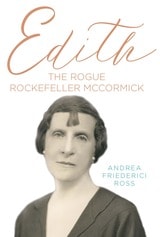
Edith
The Rogue Rockefeller McCormickAndrea Friederici Ross
Southern Illinois University Press, 2021
WINNER, 2021 Chicago Writers Association Book of the Year in Traditional Nonfiction!
Chicago’s quirky patron saint
This thrilling story of a daughter of America’s foremost industrialist, John D. Rockefeller, is complete with sex, money, mental illness, and opera divas—and a woman who strove for the independence to make her own choices. Rejecting the limited gender role carved out for her by her father and society, Edith Rockefeller McCormick forged her own path, despite pushback from her family and ultimate financial ruin.
Young Edith and her siblings had access to the best educators in the world, but the girls were not taught how to handle the family money; that responsibility was reserved for their younger brother. A parsimonious upbringing did little to prepare Edith for life after marriage to Harold McCormick, son of the Reaper King Cyrus McCormick. The rich young couple spent lavishly. They purchased treasures like the jewels of Catherine the Great, entertained in grand style in a Chicago mansion, and contributed to the city’s cultural uplift, founding the Chicago Grand Opera. They supported free health care for the poor, founding and supporting the John R. McCormick Memorial Institute for Infectious Diseases. Later, Edith donated land for what would become Brookfield Zoo.
Though she lived a seemingly enviable life, Edith’s disposition was ill-suited for the mores of the time. Societal and personal issues—not least of which were the deaths of two of her five children—caused Edith to experience phobias and panic attacks. Dissatisfied with rest cures, she ignored her father’s expectations, moved her family to Zurich, and embarked on a journey of education and self-examination. Edith pursued analysis with then-unknown Carl Jung. Her generosity of spirit led Edith to become Jung’s leading patron. She also supported up-and-coming musicians, artists, and writers, including James Joyce as he wrote Ulysses.
While Edith became a Jungian analyst, her husband, Harold, pursued an affair with an opera star. After returning to Chicago and divorcing Harold, Edith continued to deplete her fortune. She hoped to create something of lasting value, such as a utopian community and affordable homes for the middle class. Edith’s goals caused further difficulties in her relationship with her father and are why he and her brother cut her off from the family funds even after the 1929 stock market crash ruined her. Edith’s death from breast cancer three years later was mourned by thousands of Chicagoans.
Respectful and truthful, Andrea Friederici Ross presents the full arc of this amazing woman’s life and expertly helps readers understand Edith’s generosity, intelligence, and fierce determination to change the world
Essayons
Autobiography of John W. SweetlandJohn W. Sweetland
Michigan Publishing Services, 2019
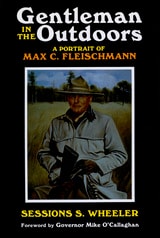
Gentleman in the Outdoors
Sessions S Wheeler
University of Nevada Press, 1985
The material which Wheeler collected for his book, Gentleman in the Outdoors : A Portrait of Max C. Fleischmann is particularly rich and complete; Mrs. Sarah H. Fleischmann gave Wheeler several boxes of her husband's files and photographs related to his outdoor activities such as fishing, hunting, sailing, and scientific expeditions. In addition, the Fleischmann materials included a thick binder, the contents of which Wheeler used extensively in his book. The binder included some material duplicated in the other Fleischmann files as well as correspondence between Wheeler and Fleischmann.
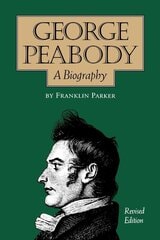
George Peabody, A Biography
Franklin Parker
Vanderbilt University Press, 1995
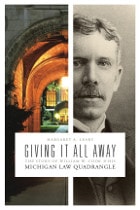
Giving It All Away
The Story of William W. Cook and His Michigan Law QuadrangleMargaret A. Leary
University of Michigan Press, 2011
“Margaret Leary's carefully researched book illuminates a complex man who marked his university in a truly enduring way."
---Francis X. Blouin Jr., Director, Bentley Historical Library, and Professor, School of Information and Department of History, University of Michigan
“Generations of Michigan Law grads have passed on myths about their generous but eccentric benefactor. . . . Now Margaret Leary has given us the real story, and it reads like a gripping whodunit."
---Theodore J. St. Antoine, James E. and Sarah A. Degan Professor Emeritus of Law and Past Dean, University of Michigan Law School
“In an absorbing book, Margaret Leary unstintingly investigates unpublished, archival material to unravel enigmas surrounding William Wilson Cook. She brings to life Cook's brilliant interactions with powerful moguls of the early twentieth century as she traces his lofty, philanthropic mission to elevate the legal profession."
---Ilene H. Forsyth, Arthur F. Thurnau Professor of the History of Art, emerita, University of Michigan
William W. Cook, born in 1858 and a graduate of the University of Michigan and of its law school, made his fortune by investing in the burgeoning telegraph and communications industry, as well as in representing the Mackay Company in their frequent tumultuous battles with Western Union and the U.S. government. Though Cook entered New York society and never returned to Michigan after receiving his law degree, he decided not just to give his alma mater the finest physical facility of any existing law school, but to donate permanent resources that would permit the law school to engage in groundbreaking legal research. However, his generosity proved controversial and eventually very litigious. Margaret A. Leary places Cook's story in the rich social and cultural context of his time and paints a fascinating portrait of a complex figure whose legacy continues to shape the University of Michigan.
Cover photographs: (left) Gregory Fox Photography; (right) Ann B. Cook collection, photo by Russell R. Serbay
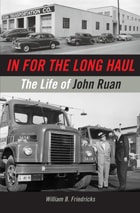
In for the Long Haul
The Life of John RuanWilliam B. Friedricks
University of Iowa Press, 2003
Driven by grit and determination during the Depression, John Ruan parlayed a one-truck business into Ruan Transportation Management Systems, one of the nation’s leading trucking, leasing, and logistics companies. The trucking business made John Ruan one of the wealthiest and most influential people in Iowa and was the foundation for his vast fortune which included interests in insurance, banking, financial services, international trade, and real estate.
In the 1970s and 80s, Ruan led Des Moines’s renaissance with the construction of the 36-story original Ruan Center, the Marriott Hotel tower, and the Two Ruan Center office complex. But his contributions reached far beyond the confines of Iowa. As a philanthropist, Ruan was a long-time sponsor of the World Food Prize, which recognizes the importance of a nutritious and sustainable food supply for all people.
Based on extensive interviews with Ruan, family members, business associates, friends, and colleagues, as well as privately held papers and archives, In for the Long Haul presents a discerning portrait of this hard-charging yet compassionate businessman.
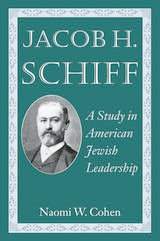
Jacob H. Schiff
A Study in American Jewish LeadershipNaomi W. Cohen
Brandeis University Press, 1999
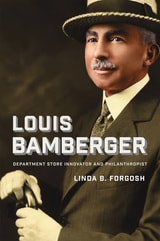
Louis Bamberger
Department Store Innovator and PhilanthropistLinda B. Forgosh
Brandeis University Press, 2016
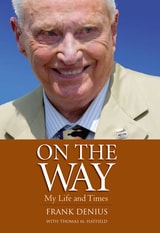
On the Way
My Life and TimesBy Frank Denius
University of Texas Press, 2016
Frank Denius was not yet twenty-one when he fought his way across Europe and was awarded four Silver Stars, a Presidential Unit Citation, and two Purple Hearts. On the Way describes Denius’s formative experiences during World War II in gripping detail and will cause any reader to wonder how he or she might have held up under similar pressure. The powerful opening chapters are followed by a detailed account of Denius’s life and career after the war, assembled into a first-person memoir from conversations between Denius and Thomas Hatfield, and published by the Briscoe Center for American History at the University of Texas at Austin.
Discharged from the army in October 1945, Denius enrolled at the University of Texas within a week. He is a lifelong supporter of the university: as part of the Texas Exes, as a donor to numerous academic programs, and as a fan of Longhorn football. Former UT football coach Mack Brown liked to say, “Frank has been to more practices than I have.”
Denius graduated from the University of Texas School of Law and joined one of Austin’s leading law firms in the late 1940s. Denius recounts how Texas operated in Lyndon Johnson’s prime, observes power plays in the Texas energy industry, and describes his role in building a regional university into a global leader.
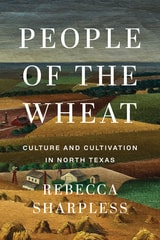
People of the Wheat
Culture and Cultivation in North TexasRebecca Sharpless
University of Texas Press, 2026
How wheat growing, milling, and baking shaped the people and culture of North Texas.
In the national imaginary, America’s amber fields of grain lie in the country’s center, but for more than a century, they also grew across one pocket of the South: North Texas. From the 1840s to the 1970s, the state's agriculture, dominated in lore by cotton in the east and livestock in the open range, was heavily invested in the cultivation, processing, sale, and consumption of wheat. Recalling a forgotten history, Rebecca Sharpless shows how the rhythms of the wheat harvest—and the evolution of the milling, distribution, and baking industries—governed daily life in what is now known as the Dallas–Fort Worth Metroplex.
In the 1840s, Anglo settlers discovered that grain flourished in North Texas and quickly built an economy that included wheat in fields, mills, and kitchens. After the Civil War, hand labor gave way to mechanization, greatly increasing production. Commercial bakeries churned out novel confections, and big cities were built on the bounty of the countryside. In the second half of the twentieth century, as production moved northward, industrial milling and baking declined, but home baking boomed, flour advertising supported regional music, and wheat fortunes financed the region’s cultural life. Sharpless covers 150 years of wheat’s very human history and shows how the labor that cultivated it, the sustenance it provided, and the prosperity it generated left an indelible mark on the people and institutions of Texas.
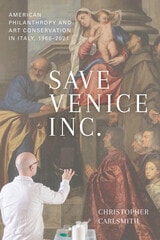
Save Venice Inc.
American Philanthropy and Art Conservation in Italy, 1966-2021Christopher Carlsmith
University of Massachusetts Press, 2022
In 1966, the most destructive flood in the history of Venice temporarily submerged the city and threatened its extraordinary art and architecture. Among the organizations that mobilized to protect this fragile heritage was Save Venice Inc. Founded in Boston and now headquartered in New York City, this nonprofit has become the largest and most active committee dedicated to preserving the artistic legacy of Venice.
Christopher Carlsmith tells the fascinating story of Save Venice Inc., from its origins to its fiftieth anniversary. It continues to provide an influential model for philanthropy in the cultural sector, raising substantial funds to conserve and restore paintings, sculptures, books, mosaics, and entire buildings at risk from human and environmental impacts. Employing extensive archival research, oral interviews, and newspaper accounts, Save Venice Inc. explores a range of topics, including leadership, conservation projects, fundraising, and educational outreach. Using a range of methodologies from cultural history and art history, Carlsmith traces the achievements and challenges faced by this and other historic preservation organizations and by this unique city on the sea.
Sir John Templeton
Supporting Scientific Research For Spiritual DiscoveriesRobert Herrmann
Templeton Press, 2004
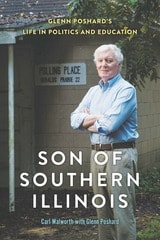
Son of Southern Illinois
Glenn Poshard’s Life in Politics and EducationCarl Walworth with Glenn Poshard
Southern Illinois University Press, 2023
A life of principles, service, and faith
This first biography of Glenn Poshard traces the life of a young man who rose from rural poverty in Southern Illinois to become a United States congressman and president of the Southern Illinois University system. This profound portrait unveils a life and career dedicated to making higher education affordable and improving the quality of life for the community of Southern Illinois.
Beginning with his childhood in a two-room home near Herald, Illinois and the early, tragic loss of his sister, this biography navigates Poshard’s service in the military, his time as a state senator and United States congressman, his run for governor, his years at Southern Illinois University, and the establishment of the Poshard Foundation for Abused Children. Intimacies of his personal life are disclosed, such as his struggles with and treatment for depression, his passion for education, and the lasting bonds he formed with his teachers. His unpopular decision to refuse PAC donations is also highlighted, along with the work that went into sponsoring the Illinois Wilderness Act, and his relationship with civil rights activist John Lewis. Glenn Poshard’s efforts for the Wilderness Act designated Southern Illinois’s famous Garden of the Gods as a National Wilderness Preservation System, which continues to attract visitors from around the world.
Poshard’s path from poverty was riddled with hardship, but his perseverance and family values ultimately allowed for longstanding personal and civic growth. From an admirable work ethic to a steadfast commitment to problem-solving, this biography illuminates the life and accomplishments of an impressive and generous leader.
Strategic Giving
The Art and Science of PhilanthropyPeter Frumkin
University of Chicago Press, 2006
The philanthropic landscape is changing dramatically as a new generation of wealthy donors seeks to leave its mark on the public sphere. Peter Frumkin reveals in Strategic Giving why these donors could benefit from having a comprehensive plan to guide their giving. And with this thoughtful and timely book, he provides the much-needed framework to understand and develop this kind of philanthropic strategy.
After listening for years to scores of individual and institutional funders discuss the challenges of giving wisely, Frumkin argues here that contemporary philanthropy requires a thorough rethinking of its underlying logic. Philanthropy should be seen, he contends, as both a powerful way to meet public needs and a meaningful way to express private beliefs and commitments. He demonstrates that finding a way to simultaneously fulfill both of these functions is crucial to the survival of philanthropy and its potential to support pluralism in society. And he goes on to identify the five essential elements donors must consider when developing a philanthropic strategy—the vehicle through which giving will flow, the way impact will be achieved, the level of engagement and profile sought, the time frame for giving, and the underlying purpose of the gift. Frumkin’s point is that donors must understand strategic giving as the integration of these five critical dimensions to giving.
Essential reading for donors, researchers, and anyone involved with the world of philanthropy, Strategic Giving provides a new basis for understanding philanthropic effectiveness and a promising new way for philanthropy to achieve the legitimacy that has at times eluded it.
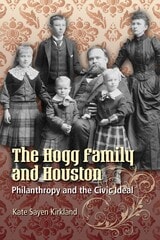
The Hogg Family and Houston
Philanthropy and the Civic IdealBy Kate Sayen Kirkland
University of Texas Press, 2009
Progressive former governor James Stephen Hogg moved his business headquarters to Houston in 1905. For seven decades, his children Will, Ima, and Mike Hogg used their political ties, social position, and family fortune to improve the lives of fellow Houstonians.
As civic activists, they espoused contested causes like city planning and mental health care. As volunteers, they inspired others to support social service, educational, and cultural programs. As philanthropic entrepreneurs, they built institutions that have long outlived them: the Houston Symphony, the Museum of Fine Arts, Memorial Park, and the Hogg Foundation. The Hoggs had a vision of Houston as a great city—a place that supports access to parklands, music, and art; nurtures knowledge of the "American heritage which unites us"; and provides social service and mental health care assistance. This vision links them to generations of American idealists who advanced a moral response to change.
Based on extensive archival sources, The Hogg Family and Houston explains the impact of Hogg family philanthropy for the first time. This study explores how individual ideals and actions influence community development and nurture humanitarian values. It examines how philanthropists and volunteers mold Houston's traditions and mobilize allies to meet civic goals. It argues that Houston's generous citizens have long believed that innovative cultural achievement must balance aggressive economic expansion.
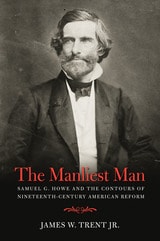
The Manliest Man
Samuel G. Howe and the Contours of Nineteenth-Century American ReformJames W. Trent
University of Massachusetts Press, 2012
A native of Boston and a physician by training, Samuel G. Howe (1801–1876) led a remarkable life. He was a veteran of the Greek War of Independence, a fervent abolitionist, and the founder of both the Perkins School for the Blind and the Massachusetts School for Idiotic and Feeble-Minded Children. Married to Julia Ward Howe, author of “Battle Hymn of the Republic,” he counted among his friends Senator Charles Sumner, public school advocate Horace Mann, and poet Henry Wadsworth Longfellow.
Always quick to refer to himself as a liberal, Howe embodied the American Renaissance's faith in the perfectibility of human beings, and he spoke out in favor of progressive services for disabled Americans. A Romantic figure even in his own day, he embraced a notion of manliness that included heroism under fire but also compassion for the underdog and the oppressed. Though hardly a man without flaws and failures, he nevertheless represented the optimism that characterized much of antebellum American reform.
The first full-length biography of Samuel G. Howe in more than fifty years, The Manliest Man explores his life through private letters and personal and public documents. It offers an original view of the reformer's personal life, his association with social causes of his time, and his efforts to shape those causes in ways that allowed for the greater inclusion of devalued people in the mainstream of American life.
Timon of Athens
William Shakespeare
Arizona Center for Medieval and Renaissance Studies, 2021
Never performed in Shakespeare’s lifetime, Timon of Athens presents an intriguing puzzle for contemporary audiences. The disjointed plot and many gaps in the story have led scholars to believe it was a collaboration between Shakespeare and Thomas Middleton, a younger writer known for his satires, and productions for decades have faced choices about the most effective way to present the play. In this translation, Cavander acts as a third playwright in this collaborative process. Wrangling the voices of Shakespeare and Middleton on the page, Cavander unveils poetic lines and phrases that have sat stubbornly in the cobwebs, cutting these voices through the time barrier and into the world as we know it.
This translation was written as part of the Oregon Shakespeare Festival’s Play On! project, which commissioned new translations of thirty-nine Shakespeare plays. These translations present the work of "The Bard" in language accessible to modern audiences while never losing the beauty of Shakespeare’s verse. These volumes make these works available for the first time in print—a new First Folio for a new era.
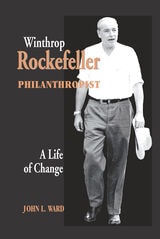
Winthrop Rockefeller, Philanthropist
A Life of ChangeJohn Ward
University of Arkansas Press, 2004
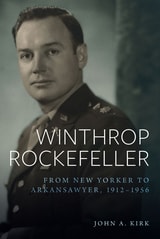
Winthrop Rockefeller
From New Yorker to Arkansawyer, 1912-1956John A. Kirk
University of Arkansas Press, 2022
Winner, 2024 J. G. Ragsdale Book Award, Arkansas Historical Association
Winner, 2024 Booker Worthen Literary Prize
Why did Winthrop Rockefeller, scion of one of the most powerful families in American history, leave New York for an Arkansas mountaintop in the 1950s? In this richly detailed biography of the former Arkansas governor, John A. Kirk delves into the historical record to fully unravel that mystery for the first time. Kirk pursues clues threaded throughout Rockefeller’s life, tracing his family background, childhood, and education; his rise in the oil industry from roustabout to junior executive; his military service in the Pacific during World War II, including his involvement in the battles of Guam, Leyte, and Okinawa; his postwar work in race relations, health, education, and philanthropy; his marriage to and divorce from Barbara “Bobo” Sears; and the birth of his only child, future Arkansas lieutenant governor Win Paul Rockefeller. This careful examination of Winthrop Rockefeller’s first forty-four years casts a powerful new light on his relationship with his adopted state, where his legacy continues to be felt more than half a century after his governorship.