Results by title
18293 books match the query 'United States' and 472 start with e
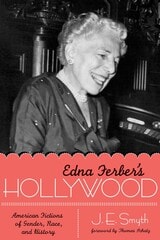
Edna Ferber's Hollywood
American Fictions of Gender, Race, and HistoryBy J. E. Smyth
University of Texas Press, 2009
Edna Ferber's Hollywood reveals one of the most influential artistic relationships of the twentieth century—the four-decade partnership between historical novelist Edna Ferber and the Hollywood studios. Ferber was one of America's most controversial popular historians, a writer whose uniquely feminist, multiracial view of the national past deliberately clashed with traditional narratives of white masculine power. Hollywood paid premium sums to adapt her novels, creating some of the most memorable films of the studio era—among them Show Boat, Cimarron, and Giant. Her historical fiction resonated with Hollywood's interest in prestigious historical filmmaking aimed principally, but not exclusively, at female audiences.
In Edna Ferber's Hollywood, J. E. Smyth explores the research, writing, marketing, reception, and production histories of Hollywood's Ferber franchise. Smyth tracks Ferber's working relationships with Samuel Goldwyn, Leland Hayward, George Stevens, and James Dean; her landmark contract negotiations with Warner Bros.; and the controversies surrounding Giant's critique of Jim-Crow Texas. But Edna Ferber's Hollywood is also the study of the historical vision of an American outsider—a woman, a Jew, a novelist with few literary pretensions, an unashamed middlebrow who challenged the prescribed boundaries among gender, race, history, and fiction. In a masterful film and literary history, Smyth explores how Ferber's work helped shape Hollywood's attitude toward the American past.
Educated Out
How Rural Students Navigate Elite Colleges—And What It Costs ThemMara Casey Tieken
University of Chicago Press, 2025
A former third-grade teacher in rural Tennessee, education researcher Mara Casey Tieken watched as her former students graduated high school. She was shocked at how few were heading to college—and none were going to elite four-year schools. These students were representative of a larger national phenomenon: In 2021, 31 percent of rural adults aged twenty-five and older held a postsecondary degree, compared to 45 percent of urban adults, and rural students are especially unlikely to pursue degrees from private, selective schools. Why, Tieken wondered? And what happens to the handful of rural students who do attend elite colleges, colleges that may feel worlds away from home?
Tieken addresses these questions in Educated Out—a study that shows how geography shapes rural, first-generation students’ access to college, their college experiences, and their postgraduation plans and opportunities. Tieken closely follows a group of nine students for their college years and beyond at an elite New England private school that she calls Hilltop. Interviews with these students reveal the critical moments in the students’ educational careers when their rural origins mattered most: when applying to college, she shows how students are hindered by limited college counseling resources. Once on campus, they learn that many of the school’s opportunities are not available to them: they cannot access spring break trips, job networks, or low-pay-but-important internships. These students discover that home and college are very different worlds with different academic, social, and political climates—and, over time, they start to question both. As they near graduation and navigate a job market in which the highest-paying and most prestigious opportunities are located in urban centers, they begin to feel the complicated burden of their schooling: they’ve been “educated out.” Their stories show the costs of college for rural students: If they do not pursue higher education, they lose the opportunity for social mobility; if they do, they face a more permanent departure. These costs are individual, but rural families and communities also suffer—they lose young people with talent and skills.
In addition to advocating for a higher education landscape that truly includes rural students, Tieken critiques a system that requires people to leave their rural homes in search of opportunities. Our current economy depends on inexpensive rural labor. Without meaningful change, some students will have to make the impossible decision to leave home—and far more will remain there, undereducated and overlooked.
Both engaging and accessible, Educated Out presents important and timely questions about rurality, identity, education, and inequality.
Educated by Initiative
The Effects of Direct Democracy on Citizens and Political Organizations in the American StatesDaniel A. Smith and Caroline J. Tolbert
University of Michigan Press, 2004
--Kristina Wilfore, Executive Director, Ballot Initiative Strategy Center and Foundation
Educated by Initiative moves beyond previous evaluations of public policy to emphasize the educational importance of the initiative process itself. Since a majority of ballots ultimately fail or get overturned by the courts, Smith and Tolbert suggest that the educational consequences of initiative voting may be more important than the outcomes of the ballots themselves. The result is a fascinating and thoroughly-researched book about how direct democracy teaches citizens about politics, voting, civic engagement and the influence of special interests and political parties. Designed to be accessible to anyone interested in the future of American democracy, the book includes boxes (titled "What Matters") that succinctly summarize the authors' data into easily readable analyses.
Daniel A. Smith is Associate Professor of Political Science at the University of Florida.
Caroline J. Tolbert is Associate Professor of Political Science at Kent State University.
Educated in Romance
Women, Achievement, and College CultureDorothy C. Holland and Margaret A. Eisenhart
University of Chicago Press, 1990
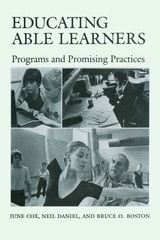
Educating Able Learners
Programs and Promising PracticesBy June Cox, Neil Daniel, and Bruce O. Boston
University of Texas Press, 1985
American education has long been under a microscope. In a time when all aspects of our school system face close scrutiny, educators, administrators, and parents are asking critical questions about how we educate those superior students we call “able learners.”
Our schools reward behavior inappropriate for an independent thinker, researcher, or artist. Programming for our most capable students is fragmented and discontinuous. And yet there are schools and programs that hold significant promise.
This four-year national study from the Sid W. Richardson Foundation provides a broad database, looks into the backgrounds of a few unusually creative individuals, and examines programs with a record of success. It argues in favor of comprehensive programming for able learners, providing a steady challenge for all students, helping to insure that no individual talent withers for want of opportunity. Included are recommendations for discovering and nurturing talent in students (including traditionally neglected groups, the economically disadvantaged, and the culturally diverse), building and administering sound programs, developing appropriately trained staff and teachers, and evaluating effectiveness of programs to assure accountability and add credibility.
Compiling data from diverse sources—including 35 MacArthur Foundation Fellows, 400 schools, 1,172 school districts, and countless school personnel and students—the study looks at programs for able learners throughout the country, from Project Pegasus in Iowa to Oaks Academy in Texas, from Bronx High School of Science in New York to Bishop Carroll High School in Alberta, Canada. The authors’ conclusions based on this broad investigation provide an impassioned call for coordinated schooling and cooperation among all segments of society to develop a new generation of creative, self-motivated students.
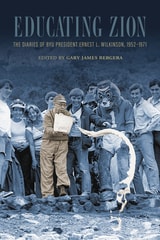
Educating Zion
The Diaries of BYU President Ernest L. Wilkinson, 1952–1971Gary James Bergera
Signature Books, 2025
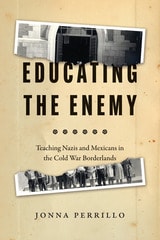
Educating the Enemy
Teaching Nazis and Mexicans in the Cold War BorderlandsJonna Perrillo
University of Chicago Press, 2022
Educating the Enemy begins with the 144 children of Nazi scientists who moved to El Paso, Texas, in 1946 as part of the military program called Operation Paperclip. These German children were bused daily from a military outpost to four El Paso public schools. Though born into a fascist enemy nation, the German children were quickly integrated into the schools and, by proxy, American society. Their rapid assimilation offered evidence that American public schools played a vital role in ensuring the victory of democracy over fascism.
Jonna Perrillo not only tells this fascinating story of Cold War educational policy, but she draws an important contrast with another, much more numerous population of children in the El Paso public schools: Mexican Americans. Like everywhere else in the Southwest, Mexican American children in El Paso were segregated into “Mexican” schools, where the children received a vastly different educational experience. Not only were they penalized for speaking Spanish—the only language all but a few spoke due to segregation—they were tracked for low-wage and low-prestige careers, with limited opportunities for economic success. Educating the Enemy charts what two groups of children—one that might have been considered the enemy, the other that was treated as such—reveal about the ways political assimilation has been treated by schools as an easier, more viable project than racial or ethnic assimilation.
Listen to an interview with the author here and read an interview in Time and a piece based on the book in the Boston Review.
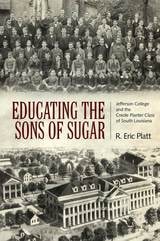
Educating the Sons of Sugar
Jefferson College and the Creole Planter Class of South LouisianaR. Eric Platt
University of Alabama Press, 2017
The education of individual planter classes—cotton, tobacco, sugar—is rarely treated in works of southern history. Of the existing literature, higher education is typically relegated to a footnote, providing only brief glimpses into a complex instructional regime responsive to wealthy planters. R. Eric Platt’s Educating the Sons of Sugar allows for a greater focus on the mindset of French Creole sugar planters and provides a comprehensive record and analysis of a private college supported by planter wealth.
Jefferson College was founded in St. James Parish in 1831, surrounded by slave-holding plantations and their cash crop, sugar cane. Creole planters (regionally known as the “ancienne population”) designed the college to impart a “genteel” liberal arts education through instruction, architecture, and geographic location. Jefferson College played host to social class rivalries (Creole, Anglo-American, and French immigrant), mirrored the revival of Catholicism in a region typified by secular mores, was subject to the “Americanization” of south Louisiana higher education, and reflected the ancienne population’s decline as Louisiana’s ruling population.
Resulting from loss of funds, the college closed in 1848. It opened and closed three more times under varying administrations (French immigrant, private sugar planter, and Catholic/Marist) before its final closure in 1927 due to educational competition, curricular intransigence, and the 1927 Mississippi River flood. In 1931, the campus was purchased by the Society of Jesus (Jesuits) and reopened as a silent religious retreat. It continues to function to this day as the Manresa House of Retreats. While in existence, Jefferson College was a social thermometer for the white French Creole sugar planter ethos that instilled the “sons of sugar” with a cultural heritage resonant of a region typified by the management of plantations, slavery, and the production of sugar.
Education Of A Public Man
My Life and PoliticsHubert Humphrey
University of Minnesota Press, 1991
A candid look into the private and political life of Minnesota's native son.
Education and Democracy
The Meaning of Alexander Meiklejohn, 1872–1964Adam R. Nelson
University of Wisconsin Press, 2001
This definitive biography of the charismatic Alexander Meiklejohn tracks his turbulent career as an educational innovator at Brown University, Amherst College, and Wisconsin’s “Experimental College” in the early twentieth century and his later work as a civil libertarian in the Joe McCarthy era. The central question Meiklejohn asked throughout his life’s work remains essential today: How can education teach citizens to be free?
Education and Democratic Citizenship in America
Norman H. Nie, Jane Junn, and Kenneth Stehlik-Barry
University of Chicago Press, 1996
Norman H. Nie, Jane Junn, and Kenneth Stehlik-Barry provide answers by uncovering the causal relationship between education and democratic citizenship. They argue that citizenship encompasses both political engagement in pursuit of interests and commitment to democratic values that temper what citizens can do to win in politics. Education affects the two dimensions in distinct ways. Especially significant is the influence of education on political engagement through occupational prominence and position in social networks. Formal education orders the distribution of social position and connections and creates an uneven political playing field.
Education and Equality
Danielle Allen
University of Chicago Press, 2016
Allen argues that education plays a crucial role in the cultivation of political and social equality and economic fairness, but that we have lost sight of exactly what that role is and should be. Drawing on thinkers such as John Rawls and Hannah Arendt, she sketches out a humanistic baseline that re-links education to equality, showing how doing so can help us reframe policy questions. From there, she turns to civic education, showing that we must reorient education’s trajectory toward readying students for lives as democratic citizens. Deepened by commentaries from leading thinkers Tommie Shelby, Marcelo Suárez-Orozco, Michael Rebell, and Quiara Alegría Hudes that touch on issues ranging from globalization to law to linguistic empowerment, this book offers a critical clarification of just how important education is to democratic life, as well as a stirring defense of the humanities.
Education and the Cult of Efficiency
Raymond E. Callahan
University of Chicago Press, 1964
Education and the Culture of Print in Modern America
Adam R. Nelson
University of Wisconsin Press, 2010
Offering perspectives from print culture history, library and information studies, literary studies, labor history, gender history, the history of race and ethnicity, the history of science and technology, religious studies, and the history of childhood and adolescence, Education and the Culture of Print in Modern America pioneers an investigation into the intersection of education and print culture.
Education for Liberation
The American Missionary Association and African Americans, 1890 to the Civil Rights MovementJoe M. Richardson
University of Alabama Press, 2009
Even after the optimism of Reconstruction was shattered by violence, fraud, and intimidation and the white South relegated African Americans to segregated and disfranchised second-class citizenship, the AMA never abandoned its claim that blacks were equal in God’s sight, that any “backwardness” was the result of circumstance rather than inherent inferiority, and that blacks could and should become equal citizens with other Americans. The organization went farther in recognition of black ability, humanity, and aspirations than much of 19th and 20th century white America by publicly and consistently opposing lynching, segregation, disfranchisement, and discrimination.
Education in a New Society
Renewing the Sociology of EducationEdited by Jal Mehta and Scott Davies
University of Chicago Press, 2018
The sociology of education, the contributors show, largely works with themes, concepts, and theories that were generated decades ago, even as both the actual world of education and the discipline of sociology have changed considerably. The moment has come, they argue, to break free of the past and begin asking new questions and developing new programs of empirical study. Both rallying cry and road map, Education in a New Society will galvanize the field.
Education in the School of Dreams
Travelogues and Early Nonfiction FilmJennifer Lynn Peterson
Duke University Press, 2013
Peterson describes the travelogue's characteristic form and style and demonstrates how imperialist ideologies were realized and reshaped through the moving image. She argues that although educational films were intended to legitimate filmgoing for middle-class audiences, travelogues were not simply vehicles for elite ideology. As a form of instructive entertainment, these technological moving landscapes were both formulaic and also wondrous and dreamlike. Considering issues of spectatorship and affect, Peterson argues that scenics produced and disrupted viewers' complacency about their own place in the world.
Education, Justice, and Democracy
Edited by Danielle Allen and Rob Reich
University of Chicago Press, 2013
Education, Skills, and Technical Change
Implications for Future US GDP GrowthEdited by Charles R. Hulten and Valerie A. Ramey
University of Chicago Press, 2018
Education, Skills, and Technical Change explores various facets of these questions and provides an overview of educational attainment in the United States and the channels through which labor force skills and education affect GDP growth. Contributors to this volume focus on a range of educational and training institutions and bring new data to bear on how we understand the role of college and vocational education and the size and nature of the skills gap. This work links a range of research areas—such as growth accounting, skill development, higher education, and immigration—and also examines how well students are being prepared for the current and future world of work.
Educational and Developmental Aspects of Deafness
Donald F. Moores
Gallaudet University Press, 1990
Educational and Developmental Aspects of Deafness details the ongoing revolution in the education of deaf children. More than 20 researchers contributed their discoveries in anthropology, education, linguistics, psychology, sociology, and other major disciplines, with special concentration upon the education of deaf children.
Divided into two parts on education at home and in school, this incisive book documents breakthroughs such as the public's interest in sign language, the increasing availability of interpreters, the growing perception of deafness as a social condition, not a pathology, and other positive trends. It is unique as the first purely research-based text and reference point for further study of the education of deaf children.
Edward Abbey
A LifeJames M. Cahalan
University of Arizona Press, 2001
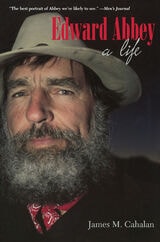
It separates fact from fiction, showing that much of the myth surrounding Abbey—such as his birth in Home, Pennsylvania, and later residence in Oracle, Arizona—was self-created and self-perpetuated. It also shows that Abbey cultivated a persona both in his books and as a public speaker that contradicted his true nature: publicly racy and sardonic, he was privately reserved and somber. Author James Cahalan studied all of Abbey’s works and private papers and interviewed many people who knew him—including the models for characters in The Brave Cowboy and The Monkey Wrench Gang—to create a complete picture of the writer’s life. He examines Abbey’s childhood roots in the East and his love affair with the West, his personal relationships and tempestuous marriages, and his myriad jobs in continually shifting locations—including sixteen national parks and forests.
He also explores Abbey’s writing process, his broad intellectual interests, and the philosophical roots of his politics. For Abbey fans who assume that his “honest novel,” The Fool’s Progress, was factual or that his public statements were entirely off the cuff, Cahalan’s evenhanded treatment will be an eye-opener.
More than a biography, Edward Abbey: A Life is a corrective that stands the test of time, showing that Abbey was neither simply a countercultural cowboy hero nor an unprincipled troublemaker, but instead a complex and multifaceted person whose legacy continues to be appreciated. The book contains thirty photographs, capturing scenes ranging from Abbey’s childhood to his burial site.
Edward Everett Hale
By Jean Holloway
University of Texas Press, 1956
Edward Everett Hale is remembered by millions as the author of The Man Without a Country. This popular and gifted nineteenth-century writer was an outstanding and prolific contributor to the fields of journalism, fiction, essay, and history. He wrote more than 150 books and pamphlets (one novel sold more than a million copies in his lifetime) and was intimately associated with the publication of many of the early American journals, among them the North American Review, Atlantic Monthly, and Christian Examiner. He served as editor of Old and New and was a frequent contributor to the foremost newspapers and periodicals of his time.
Yet the writings of this “journalist with a touch of genius” were only incidental to Hale’s Christian ministry in New England and in Washington, D.C., where he was for five years Chaplain of the Senate. His literary creed reflected that of his ministry, for Hale’s interpretation of the social gospel comprised an active concern with all phases of human affairs.
Confidant of poets and editors, friend to diplomats and statesmen, Hale helped mold public opinions in economics, sociology, history, and politics through three-quarters of what he called “a most extraordinary century in history.” In recounting Hale’s life and times, Holloway vividly portrays this fascinating and often turbulent era.
Edward Lansdale's Cold War
Jonathan Nashel
University of Massachusetts Press, 2005
The man widely believed to have been the model for Alden Pyle in Graham Greene's The Quiet American, Edward G. Lansdale (1908–1987) was a Cold War celebrity. A former advertising executive turned undercover CIA agent, he was credited during the 1950s with almost single-handedly preventing a communist takeover of the Philippines and with helping to install Ngo Dinh Diem as president of the American-backed government of South Vietnam. Adding to his notoriety, during the Kennedy administration Lansdale was put in charge of Operation Mongoose, the covert plot to overthrow the government of Cuba's Fidel Castro by assassination or other means.
In this book, Jonathan Nashel reexamines Lansdale's role as an agent of American Cold War foreign policy and takes into account both his actual activities and the myths that grew to surround him. In contrast to previous portraits, which tend to depict Lansdale either as the incarnation of U.S. imperialist ambitions or as a farsighted patriot dedicated to the spread of democracy abroad, Nashel offers a more complex and nuanced interpretation. At times we see Lansdale as the arrogant “ugly American,” full of confidence that he has every right to make the world in his own image and utterly blind to his own cultural condescension. This is the Lansdale who would use any conceivable gimmick to serve U.S. aims, from rigging elections to sugaring communist gas tanks. Elsewhere, however, he seems genuinely respectful of the cultures he encounters, open to differences and new possibilities, and willing to tailor American interests to Third World needs.
Rather than attempting to reconcile these apparently contradictory images of Lansdale, Nashel explores the ways in which they reflected a broader tension within the culture of Cold War America. The result is less a conventional biography than an analysis of the world in which Lansdale operated and the particular historical forces that shaped him—from the imperatives of anticommunist ideology and the assumptions of modernization theory to the techniques of advertising and the insights of anthropology.
Edward Said
Continuing the ConversationEdited by Homi K. Bhabha and W. J. T. Mitchell
University of Chicago Press, 2005
The essays, imagining and recalling the cadences of Said's conversation, take various forms, including elaborations on his ideas, applications of his thought to new problems, and recollections of the indescribable electricity that made conversation with him intense and memorable. This lively, personal tone is a direct result of editors Homi Bhabha and W. J. T. Mitchell urging contributors to write in the spirit of a conversation interrupted, a call on hold, a letter waiting for a reply, a question hanging in the air. This is a work of immense imaginative and intellectual force and compelling candor, honoring Said's legacy as an activist intellectual.
This collection includes essays by Lila Abu-Lughod, Daniel Barenboim, Akeel Bilgrami, Paul Bové, Timothy Brennan, Noam Chomsky, Ranajit Guha, Harry Harootunian, Saree Makdisi, Aamir Mufti, Roger Owen, Gyan Prakash, Dan Rabinowitz, Jacqueline Rose, and Gayatri Spivak.
Edward Stanly
Whiggerys Tarheel ConquerNorman Brown
University of Alabama Press, 1974
A Southern Whig, a Unionist firebrand—Edward Stanly’s fight for principle in a fractured nation.
This biography of Edward Stanly relates the major political events of his life: his emergence, while still in his twenties, as a fiery and controversial leader of the Whig Party in North Carolina, his role as one of the ablest champions of Whiggery in the United States House of Representatives, 1837–1843; his candidacy for governor of California on the Republican ticket in 1857; his appointment by President Abraham Lincoln as military governor of North Carolina in 1862; and his support in California of President Andrew Johnson’s Reconstruction policy.
Raised under the “Ancient Standard of Federalism,” Edward Stanly was a southern nationalist in the tradition of the two great Virginia Federalists, George Washington and John Marshall. An outspoken opponent of the nullification and secession doctrines of party of section in national politics.

Edwin Hubble
Mariner of the NebulaeGale E. Christianson
University of Chicago Press, 1996
end of the decade, he proved that the universe is expanding, thus laying
the very cornerstone of the big bang theory. A revealing portrait of a
scientific genius at work, this book also offers an incisive narrative
of the history of astronomy, and an evocation of what we see when gazing
at the stars.
"Highly entertaining. . . . Hubble may have been the most important
astronomer since Galileo. Perhaps since Copernicus."—Dick Teresi,
New York Times Book Review
"Hubble's own story has not been adequately told until now. . . . A
riveting portrait of a great scientist and a haunted man, and the best
look we are likely to have of the real Hubble."—Dennis Overby, Los
Angeles Times Book Review
"Displays remarkable strength in its steadfast balance and scrupulous
honesty. The greatness of the discoveries is set off against the
contrasting pettiness of the man."—Hans Christian von Baeyer,
Boston Sunday Globe
"Fascinating. . . . This is one of the most impressive scientific
biographies of recent years."—Kirkus Review, starred review
— "Notable Books for the Year 1995" selection, New York Times Book
Review
—"Best Books of 1995" selection, Library Journal
—Selected as one of the five best science books in 1995 by Carl Sagen,
Washington Post
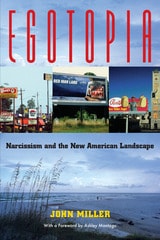
Egotopia
Narcissism and the New American LandscapeJohn Miller
University of Alabama Press, 1999
Egotopia explains why individual political and economic interests have eclipsed aesthetic considerations in the rampant billboards, malls, and urban sprawl of the New American Landscape
Egotopia begins where other critiques of the American landscape end: identifying the physical ugliness that defines and homogenizes America's cities, suburbs, and countryside. Believing that prevailing assessments of the American landscape are inadequate and injudicious, John Miller calls into question the conventional wisdom of environmentalists, urban planners,and architects alike. In this precedent-shattering examination of what he sees as the ugliness that is the American consumer society, Miller contends that our aesthetic condition can be fully understood only by explorers of the metaphoric environment.Metaphorically, the ugliness of America's great suburban sprawl is the physical manifestation of our increasing narcissism- our egotopia. The ubiquity of psychotherapy as a medium promoting self-indulgence has deified private man as it has demonized public man. The New American Landscape, Miller argues, is no longer the physical manifestation of public and communal values. Instead it has become a projection of private fantasies and narcissistic self-indulgence. Individual interests and private passions can no longer tolerate, nor even recognize, aesthetic concerns in such a landscape dedicated to uncompromising notions of utility.
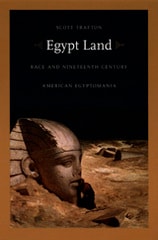
Egypt Land
Race and Nineteenth-Century American EgyptomaniaScott Trafton
Duke University Press, 2004
Drawing on literary and cultural studies, art and architectural history, political history, religious history, and the histories of archaeology and ethnology, Trafton illuminates anxieties related to race in different manifestations of nineteenth-century American Egyptomania, including the development of American Egyptology, the rise of racialized science, the narrative and literary tradition of the imperialist adventure tale, the cultural politics of the architectural Egyptian Revival, and the dynamics of African American Ethiopianism. He demonstrates how debates over what the United States was and what it could become returned again and again to ancient Egypt. From visions of Cleopatra to the tales of Edgar Allan Poe, from the works of Pauline Hopkins to the construction of the Washington Monument, from the measuring of slaves’ skulls to the singing of slave spirituals—claims about and representations of ancient Egypt served as linchpins for discussions about nineteenth-century American racial and national identity.
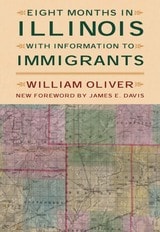
Eight Months in Illinois
With Information to ImmigrantsWilliam Oliver. Foreword by James E. Davis
Southern Illinois University Press, 2002
The Illinois frontier offered abundant opportunity, noted English traveler William Oliver after his journey to America in 1841–42, but life there was hard. Accordingly, Oliver advised the wealthy and comfortable to remain in England and counseled the unprosperous to seek their fortunes in America. Written for the poor who would migrate and published in 1843, his Eight Months in Illinois: With Information to Immigrants sought only to provide pertinent, valid, and practical information about what people might encounter in the frontier state. What Oliver actually accomplished, however, was much more: he imparted invaluable insights into and analyses of American life during an era of sweeping social, economic, and political change.
In his new foreword to this edition, James E. Davis stresses Oliver’s sincere desire to help British immigrants succeed in America. Oliver, Davis notes, “devoted dozens of pages of advice on numerous matters: various routes to Illinois and their advantages and disadvantages, processes of settling, qualities of western houses, costs of obtaining a new farm.” Oliver discussed other practical matters, such as the importance of having sons. He also assured his intended readership that “in the West, distinction of classes is little known and seldom recognized.”
As a document covering the middle west in the 1840s, Eight Months in Illinois: With Information to Immigrants has few equals. Its portrayal of farming and trade in relatively primitive times is historically accurate. It paints a plain picture, laying out the essential facts and presenting the typical incidents that enable us to trace the course of a settler’s simple, diligent, laborious day-to-day life. According to Davis, Oliver depicted “accurate and balanced slices of life in Illinois and America, including nasty insects, crude conditions, and the necessity of work.” And he did so without a trace of anti-American bias.
Eight Months in Illinois with Information to Immigrants was reprinted with emendations in 1924 by Walter Hill.
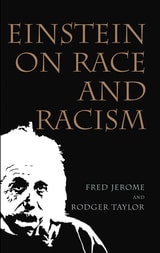
Einstein on Race and Racism
Einstein on Race and Racism, First Paperback EditionJerome, Fred
Rutgers University Press, 2005
Nearly fifty years after his death, Albert Einstein remains one of America's foremost cultural icons. A thicket of materials, ranging from scholarly to popular, have been written, compiled, produced, and published about his life and his teachings. Among the ocean of Einsteinia-scientific monographs, biographies, anthologies, bibliographies, calendars, postcards, posters, and Hollywood films-however, there is a peculiar void when it comes to the connection that the brilliant scientist had with the African American community. Nowhere is there any mention of his close relationship with Paul Robeson, despite Einstein's close friendship with him, or W.E.B. Du Bois, despite Einstein's support for him.
This unique volume is the first to bring together a wealth of writings by the scientist on the topic of race. Although his activism in this area is less well known than his efforts on behalf of international peace and scientific cooperation, Einstein spoke out vigorously against racism both in the United States and around the world. Fred Jerome and Rodger Taylor suggest that one explanation for this historical amnesia is that Einstein's biographers avoided "controversial" topics, such as his friendships with African Americans and his political activities, including his involvement as co-chair of an antilynching campaign, fearing that mention of these details may tarnish the feel-good impression his image lends topics of science, history, and America.
Combining the scientist's letters, speeches, and articles with engaging narrative and historical discussions that place his public statements in the context of his life and times, this important collection not only brings attention to Einstein's antiracist public activities, but also provides insight into the complexities of antiracist culture in America. The volume also features a selection of candid interviews with African Americans who knew Einstein as children.
For a man whose words and reflections have influenced so many, it is long overdue that Einstein's thoughts on this vital topic are made easily accessible to the general public.
Ekklesia
Three Inquiries in Church and StatePaul Christopher Johnson, Pamela E. Klassen, and Winnifred Fallers Sullivan
University of Chicago Press, 2018
The first of a closely linked trio of essays is by Paul Johnson, and offers a new interpretation of the Brazilian community gathered at Canudos and its massacre in 1896–97, carried out as a joint churchstate mission and spectacle. In the second essay, Pamela Klassen argues that the colonial churchstate relationship of Canada came into being through local and national practices that emerged as Indigenous nations responded to and resisted becoming “possessions” of colonial British America. Finally, Winnifred Sullivan’s essay begins with reflection on the increased effort within the United States to ban Bibles and scriptural references from death penalty courtrooms and jury rooms; she follows with a consideration of the political theological pressure thereby placed on the jury that decides between life and death. Through these three inquiries, Ekklesia takes up the familiar topos of “church and state” in order to render it strange.
El Golpe
US Labor, the CIA, and the Coup at Ford in MexicoRob McKenzie
Pluto Press, 2022
'Early in my research, a friend with excellent knowledge of the United Auto Workers internal operations told me, "Don't give up. They are hiding something"…'
It's 1990, and US labor is being outsourced to Mexico. Rumors of a violent confrontation at the Mexican Ford Assembly plant on January 8 reach the United Auto Workers (UAW) union in the US: nine employees had been shot by a group of drunken thugs and gangsters, in an act of political repression which changed the course of Mexican and US workers' rights forever.
Rob McKenzie was working at the Ford Twin Cities Assembly plant in Minnesota when he heard of the attack. He didn't believe the official story, and began a years-long investigation to uncover the truth. His findings took him further than he expected - all the way to the doors of the CIA.
Virtually unknown outside of Mexico, the full story of 'El Golpe', or 'The Coup', is a dark tale of political intrigue that still resonates today.
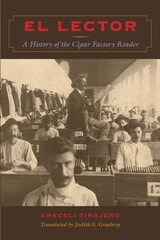
El Lector
A History of the Cigar Factory ReaderBy Araceli Tinajero
University of Texas Press, 2009
The practice of reading aloud has a long history, and the tradition still survives in Cuba as a hard-won right deeply embedded in cigar factory workers' culture. In El Lector, Araceli Tinajero deftly traces the evolution of the reader from nineteenth-century Cuba to the present and its eventual dissemination to Tampa, Key West, Puerto Rico, and Mexico. In interviews with present-day and retired readers, she records testimonies that otherwise would have been lost forever, creating a valuable archive for future historians.
Through a close examination of journals, newspapers, and personal interviews, Tinajero relates how the reading was organized, how the readers and readings were selected, and how the process affected the relationship between workers and factory owners. Because of the reader, cigar factory workers were far more cultured and in touch with the political currents of the day than other workers. But it was not only the reading material, which provided political and literary information that yielded self-education, that influenced the workers; the act of being read to increased the discipline and timing of the artisan's job.
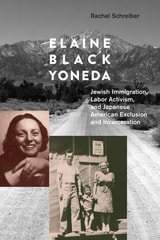
Elaine Black Yoneda
Jewish Immigration, Labor Activism, and Japanese American Exclusion and IncarcerationRachel Schreiber
Temple University Press, 2022
During World War II, Elaine Black Yoneda, the daughter of Russian Jewish immigrants, spent eight months in a concentration camp—not in Europe, but in California. She did this voluntarily and in solidarity, insisting on accompanying her husband, Karl, and their son, Tommy, when they were incarcerated at the Manzanar Relocation Center. Surprisingly, while in the camp, Elaine and Karl publicly supported the United States’ decision to exclude Japanese Americans from the coast.
Elaine Black Yoneda is the first critical biography of this pioneering feminist and activist. Rachel Schreiber deftly traces Yoneda’s life as she became invested in radical politics and interracial and interethnic activism. In her work for the International Labor Defense of the Communist Party, Yoneda rose to the rank of vice president. After their incarceration, Elaine and Karl became active in the campaigns to designate Manzanar a federally recognized memorial site, for redress and reparations to Japanese Americans, and in opposition to nuclear weapons.
Schreiber illuminates the ways Yoneda’s work challenged dominant discourses and how she reconciled the contradictory political and social forces that shaped both her life and her family’s. Highlighting the dangers of anti-immigrant and anti-Asian xenophobia, Elaine Black Yoneda recounts an extraordinary life.
Elaine May
Elizabeth Alsop
University of Illinois Press, 2025
A compelling reconsideration of an iconoclast and original, Elaine May reveals how a surprisingly radical auteur created her trademark cinema of discomfort.
Eleanor Baldwin and the Woman's Point of View
New Thought Radicalism in Portland’s Progressive EraLawrence M. Lipin
Oregon State University Press, 2017
A century before the Occupy movement and the Women’s March, Baldwin spoke truth to power. Imbued with a New Thought spirituality that presumed progressive thought could directly affect material reality, she wrote to move history forward. And yet, the trajectory of history proved as hard to forecast then as now. While her personal story seems to embody a modern progressivism, blending abolition with labor reform and anti-banker activism—positions from which she never wavered—her path grew more complicated as times changed in the aftermath of World War I, when she would advocate on behalf of both the Bolsheviks and the Ku Klux Klan.
In this deeply researched and nuanced account of Eleanor Baldwin’s intellectual journey, historian Larry Lipin reveals how even the most dedicated radical can be overcome by unforeseen events. Eleanor Baldwin and the Woman’s Point of View restores a missing chapter in Portland’s Progressive Era history and rescues this passionate, intriguing, and quixotic character from undeserved obscurity.
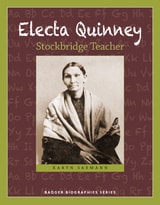
Electa Quinney
Stockbridge TeacherKaryn Saemann
Wisconsin Historical Society Press, 2014
Electa Quinney loved to learn. Growing up in the early 1800s in New York, she went to some of the best boarding schools. There she learned how to read, write, and solve tough math problems—she even learned how to do needlework. Electa decided early on that she wanted to become a teacher so she could pass her knowledge on to others.
But life wasn’t simple. Electa was a Stockbridge Indian, and her tribe was being pressured by the government and white settlers to move out of the state. So in 1828, Electa and others in her tribe moved to Wisconsin. Almost as soon as she arrived, Electa got to work again, teaching in a log building that also served as the local church. In that small school in the woods, Electa became Wisconsin’s very first public school teacher, educating the children of Stockbridge-Munsee Band of the Mohican Indians as well as the sons and daughters of nearby white settlers and missionaries.
Electa’s life provides a detailed window onto pioneer Wisconsin and discusses the challenges and issues faced by American Indians in the nineteenth century. Through it all, Electa’s love of learning stands out, and her legacy as Wisconsin’s first public school teacher makes her an inspiration to students of today.

Elected American
From Red China to Blue MarylandLily Qi
Temple University Press, 2026
“Only in America can you run for office and get elected by people who can’t even pronounce your name.”—Lily Qi
Thirty years after her solo journey to America, Chinese-born Lily Qi became a Maryland state delegate. It was a gratifying moment she did not take for granted. Qi had overcome a viral WeChat disinformation campaign from her Chinese community and was met with skepticism from the Democratic establishment before being elected.
Elected American tells the inspirational story of Qi’s dreams, setbacks, and achievements with candor and humility. Growing up in Mao’s Shanghai, when “politics meant danger,” she never imagined running for public office. However, living in America, Qi came to see political participation as a missed opportunity for immigrants. As she campaigned to energize her cultural base, Qi realized she had to teach first-time voters how to make their votes count in a system not designed for them.
As the only U.S. state legislator who lived through China’s Cultural Revolution, Qi brings a rare cross-system perspective to American politics and modern-day Asian American identity. Elected American is a political memoir and an immigrant story that emphasizes that democracy doesn’t wait on the sidelines—it favors those who participate.
Electing Judges
The Surprising Effects of Campaigning on Judicial LegitimacyJames L. Gibson
University of Chicago Press, 2012
Electing a President
The Markle Commission Research on Campaign '88By Bruce Buchanan, Lloyd N. Morrisett, and Robert M. O'Neil
University of Texas Press, 1991
The image of a prison with a revolving door helped George Bush win the presidency in 1988, but did negative advertising damage the electoral process itself? Why did campaign ’88 represent an all-time low in the minds of many voters? These are some of the questions that impel this thought-provoking analysis of the 1988 presidential election, sponsored by the John and Mary R. Markle Foundation.
Using extensive empirical studies of the candidates, the media, and the voters, Bruce Buchanan, executive director of the Markle Commission on the Media and the Electorate, traces the roots of popular dissatisfaction with the 1988 election. Buchanan argues that the campaign drifted too far from popular ideals of how democratic processes ought to work—that the substitution of negative advertising and quickie “sound bites” for reasoned debate on national problems and issues alienated much of the electorate, causing the lowest voter turnout in sixty-four years.
Negative campaigning, however, cannot bear the full blame for the 1988 election. While the Markle Commission offers specific recommendations for improvements in candidate and media performance, the great need, says Buchanan, is for voters to reclaim the electoral process, to insist that candidates and the media give enough information about positions and programs for voters to make informed choices. Voters need to be educated out of the idea that democratic elections and representative government can somehow occur without the participation of ordinary citizens.
At a time when the American democratic process is being used as a model by newly independent nations around the world, it is particularly appropriate to ask how well it works at home. Electing a President does just that.
Electoral Democracy
Michael B. MacKuen and George Rabinowitz, Editors
University of Michigan Press, 2003
Michael B. MacKuen is Burton Craige Professor of Political Science at the University of North Carolina. George Rabinowitz is Burton Craige Professor of Political Science at the University of North Carolina.
Electoral Incentives in Congress
Jamie L. Carson and Joel Sievert
University of Michigan Press, 2018
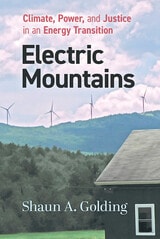
Electric Mountains
Climate, Power, and Justice in an Energy TransitionShaun A. Golding
Rutgers University Press, 2021
Committed environmentalists in one of North America’s most progressive regions desperately wanted energy policies that address the climate crisis. For many of them, wind turbines on Northern New England’s iconic ridgelines symbolize the energy transition that they have long hoped to see. For others, however, ridgeline wind takes on a very different meaning. When weighing its costs and benefits locally and globally, some wind opponents now see the graceful structures as symbols of corrupted energy politics.
This book derives from several years of research to make sense of how wind turbines have so starkly split a community of environmentalists, as well as several communities. In doing so, it casts a critical light on the roadmap for energy transition that Northern New England’s ridgeline wind projects demarcate. It outlines how ridgeline wind conforms to antiquated social structures propping up corporate energy interests, to the detriment of the swift de-carbonizing and equitable transformation that climate predictions warrant. It suggests, therefore, that the energy transition of which most of us are a part, is probably not the transition we would have designed ourselves, if we had been asked.
Electricity Deregulation
Choices and ChallengesEdited by James M. Griffin and Steven L. Puller
University of Chicago Press, 2005
This collection brings together leading experts from academia, government, and big business to discuss the lessons learned from experiences such as California's market meltdown as well as the ill-conceived policy choices that contributed to those failures. More importantly, the essays that comprise Electricity Deregulation offer a number of innovative prescriptions for the successful design of deregulated electricity markets. Written with economists and professionals associated with each of the network industries in mind, this comprehensive volume provides a timely and astute deliberation on the many risks and rewards of electricity deregulation.
Electronic Monuments
Gregory Ulmer
University of Minnesota Press, 2005
From a do-it-yourself Mount Rushmore to an automated tribute to the devastating annual toll of traffic deaths in the United States, Electronic Monuments describes commemoration as a fundamental experience, joining individual and collective identity, and adapting both to the emerging apparatus of “electracy,” or digital literacy. Concerns about the destruction of civic life caused by the society of the spectacle are refocused on the question of how a collectivity remembers who or what it is.
Ulmer proposes that the Internet makes it possible for monumentality to become a primary site of self-knowledge, one that supports a new politics, ethics, and dimension of education. The Internet thus holds the promise of bringing citizens back into the political equation as witnesses and monitors.
Gregory L. Ulmer is professor of English and media studies at the University of Florida, Gainesville.

Elegant Hungarian Tortes and Homestyle Desserts for American Bakers
Ella Kovacs Szabo
University of North Texas Press, 2023
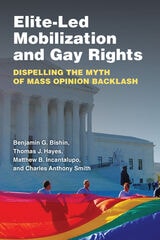
Elite-Led Mobilization and Gay Rights
Dispelling the Myth of Mass Opinion BacklashBenjamin George Bishin, Thomas J. Hayes, Matthew B. Incantalupo, and Charles Anthony Smith
University of Michigan Press, 2021
Media and scholastic accounts describe a strong public opinion backlash—a sharply negative and enduring opinion change—against attempts to advance gay rights. Academic research, however, increasingly questions backlash as an explanation for opposition to LGBT rights. Elite-Led Mobilization and Gay Rights argues that what appears to be public opinion backlash against gay rights is more consistent with elite-led mobilization—a strategy used by anti-gay elites, primarily white evangelicals, seeking to prevent the full incorporation of LGBT Americans in the polity in order to achieve political objectives and increase political power. This book defines and tests the theory of Mass Opinion Backlash and develops and tests the theory of Elite-Led Mobilization by employing a series of online and natural experiments, surrounding the U.S. Supreme Court rulings in Obergefell v. Hodges and United States v. Windsor, and President Obama’s position change on gay marriage. To evaluate these theories, the authors employ extensive survey, voting behavior, and campaign finance data, and examine the history of the LGBT movement and its opposition by religious conservatives, from the Lavender Scare to the campaign against Trans Rights in the defeat of Houston’s 2015 HERO ordinance. Their evidence shows that opposition to LGBT rights is a top-down process incited by anti-gay elites rather than a bottom-up reaction described by public opinion backlash.

Elizabeth Bishop
Kim Fortuny
University Press of Colorado, 2003
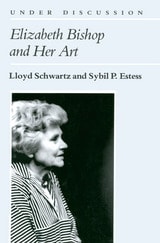
Elizabeth Bishop and Her Art
Lloyd Schwartz and Sybil P. Estess, Editors
University of Michigan Press, 1983
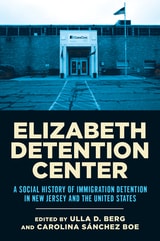
Elizabeth Detention Center
A Social History of Immigration Detention in New Jersey and the United StatesUlla D. Berg
Rutgers University Press, 2026
The United States detains and deports several hundred thousand migrants every year. Many spend significant amounts of time in immigration detention as they await adjudication of their immigration cases. The Elizabeth Detention Center in New Jersey is located in a converted warehouse, managed by a private, for-profit prison company. Over three decades, migrants and asylum seekers have been brought to EDC directly from Newark Airport or have been transferred to the site from elsewhere in the United States, including from the US-Mexico border region.
Through a longitudinal, site-specific study unique in its kind, this volume unites the voices and perspectives of formerly detained migrants, scholars, journalists, lawyers, and social and faith movement leaders, who share their experiences of Elizabeth Detention Center and reconstruct its social history and its location in New Jersey's political economy and in the changing legal landscapes of immigration detention in the United States.