Results by title
22279 books match the query 'Social Science' and 684 start with e

Entre Guadalupe y Malinche
Tejanas in Literature and ArtEdited by Inés Hernández-Ávila and Norma Elia Cantú
University of Texas Press, 2016
Mexican and Mexican American women have written about Texas and their lives in the state since colonial times. Edited by fellow Tejanas Inés Hernández-Ávila and Norma Elia Cantú, Entre Guadalupe y Malinche gathers, for the first time, a representative body of work about the lives and experiences of women who identify as Tejanas in both the literary and visual arts.
The writings of more than fifty authors and the artwork of eight artists manifest the nuanced complexity of what it means to be Tejana and how this identity offers alternative perspectives to contemporary notions of Chicana identity, community, and culture. Considering Texas-Mexican women and their identity formations, subjectivities, and location on the longest border between Mexico and any of the southwestern states acknowledges the profound influence that land and history have on a people and a community, and how Tejana creative traditions have been shaped by historical, geographical, cultural, linguistic, social, and political forces. This representation of Tejana arts and letters brings together the work of rising stars along with well-known figures such as writers Gloria Anzaldúa, Emma Pérez, Alicia Gaspar de Alba, Carmen Tafolla, and Pat Mora, and artists such as Carmen Lomas Garza, Kathy Vargas, Santa Barraza, and more. The collection attests to the rooted presence of the original indigenous peoples of the land now known as Tejas, as well as a strong Chicana/Mexicana feminism that has its precursors in Tejana history itself.
Entrepreneurial Selves
Neoliberal Respectability and the Making of a Caribbean Middle ClassCarla Freeman
Duke University Press, 2014
Entry Denied
Controlling Sexuality At The BorderEithne Luibheid
University of Minnesota Press, 2002
A revelatory examination of 150 years of sexuality-based discrimination against immigrants to the United States.
Lesbians, prostitutes, women likely to have sex across racial lines, "brought to the United States for immoral purposes," or "arriving in a state of pregnancy"—national threats, one and all. Since the late nineteenth century, immigrant women’s sexuality has been viewed as a threat to national security, to be contained through strict border-monitoring practices. By scrutinizing this policy, its origins, and its application, Eithne Luibhéid shows how the U.S. border became a site not just for controlling female sexuality but also for contesting, constructing, and renegotiating sexual identity.
Initially targeting Chinese women, immigration control based on sexuality rapidly expanded to encompass every woman who sought entry to the United States. The particular cases Luibhéid examines-efforts to differentiate Chinese prostitutes from wives, the 1920s exclusion of Japanese wives to reduce the Japanese-American birthrate, the deportation of a Mexican woman on charges of lesbianism, the role of rape in mediating women’s border crossings today—challenge conventional accounts that attribute exclusion solely to prejudice or lack of information. This innovative work clearly links sexuality-based immigration exclusion to a dominant nationalism premised on sexual, gender, racial, and class hierarchies.
Enveloping Worlds
Toward a Discourse of Immersive PerformanceE.B. Hunter and Scott Magelssen, Editors
University of Michigan Press, 2025
2026 Association for Theatre in Higher Education Edited Works Award Winner
Enveloping Worlds is a collection of essays that analyzes the phenomenon of immersive, participatory performance as it has developed in the US. As this collection demonstrates, immersive performance offers three-dimensional multisensory experiences, inviting audience members to be participants in the unfolding of the story, and challenging pre-existing ideas about the function of performance and entertainment. Enveloping Worlds questions audience agency and choice, the space and boundaries of performance, modes of immersion, empathy and engagement, and ethical considerations through fifteen essays.
Case studies in the volume include the Choctaw Cultural Center in Oklahoma and Choctaw sovereignty; a Black artist’s autoethnographic performance challenging White audiences’ entitlement to full inclusion; Immersive Van Gogh experiences and their scenographers; telephone performance during the COVID-19 lockdowns; Diane Paulus’s The Donkey Show; the Battle of Atlanta panorama; an antebellum-themed department store display from the 1920s; escape rooms; Disney Parks; remotely staged plays about aging and dementia; tiki bars; anachronistic costuming at Renaissance Festivals; the technologies that shape the boundaries of immersive worlds; and tabletop role-playing games. Taken together, these essays contribute a rich discussion of immersive performance across radically different contexts, offering analytical models and terminology with which to clarify and advance this emergent discourse.
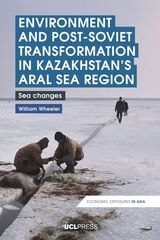
Environment and Post-Soviet Transformation in Kazakhstan’s Aral Sea Region
Sea ChangesWilliam Wheeler
University College London, 2021
Once the fourth largest lake in the world, Kazakhstan’s Aral Sea dried into an unrecognizable fraction of its size during a period of dramatic political change. Through the experiences of local fisheries across the rise and fall of the Soviet Union, Environment and Post-Soviet Transformation in Kazakhstan’s Aral Sea Region explores the diverse ways people in different socioeconomic contexts understand environmental change. In this book, William Wheeler offers a rigorous political ecology of life amid overlapping upheavals, attentive both to the legacies of Sovietism and the possibilities of transnationalism.
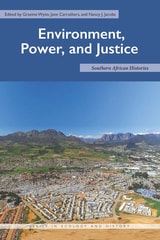
Environment, Power, and Justice
Southern African HistoriesGraeme Wynn
Ohio University Press, 2022
Environmental Activism and the Urban Crisis
Baltimore, St. Louis, ChicagoRobert Gioielli
Temple University Press, 2015
Environmental Activism and the Urban Crisis focuses on the wave of environmental activism and grassroots movements that swept through America's older, industrial cities during the late 1960s and early 1970s. Robert Gioielli offers incisive case studies of Baltimore, St. Louis, and Chicago to show how urban activism developed as an impassioned response to a host of racial, social, and political conflicts. As deindustrialization, urban renewal, and suburbanization caused the decline of the urban environment, residents--primarily African Americans and working-class whites--organized to protect their families and communities from health threats and environmental destruction.
Gioielli examines various groups' activism in response to specific environmental problems caused by the urban crisis in each city. In doing so, he forms concrete connections between environmentalism, the African American freedom struggle, and various urban social movements such as highway protests in Baltimore and air pollution activism in Chicago. Eventually, the efforts of these activists paved the way for the emergence of a new movement-environmental justice.
Environmental Change
Rosemary O'Leary
Temple University Press, 1995
Environmental Change examines the impact of hundreds of federal court decisions on the policies and administration of the EPA since its inception in 1970. Having surveyed over 2,000 federal court decisions, Rosemary O'Leary presents case studies of five important policy areas: water quality, pesticides, toxic substances, air quality, and hazardous wastes.
Compliance with court orders, O'Leary discovered, has become one of the EPA's top priorities, at times overshadowing congressional mandates and the authority of EPA administrators.
For an agency often caught between the White House and Congressional agendas, the competing interests of industry and environmental groups, and turf battles with other federal agencies, O'Leary argues, judicial decision making is crucial in the public policy process.
Environmental Change offers valuable information in the fields of public policy and environmental law.

Environmental Change and Human Adaptation in the Ancient American Southwest
Doyel and Dean
University of Utah Press, 2006

Environmental Inequality
Explaining Variation in Environmental Justice Efforts in the Mid-Atlantic StatesKimberly P. Fields
Temple University Press, 2027
The Mid-Atlantic region is often overlooked in environmental justice scholarship, but as Kimberly Fields argues, it provides insights into broadly applicable patterns of state policymaking. Focusing on Pennsylvania, Delaware, Maryland, and Virginia, Fields examines how state governments respond to claims of environmental racism—deliberate decisions about whose neighborhoods should host environmental burdens—and to sustained pressure from community activists.
Environmental Inequality examines how these states develop their environmental justice policies and approaches as a way to understand why they vary in form and focus despite similar issues and demands. Fields reviews the institutional and structural factors that shape environmental justice policymaking. She pays particular attention to how the relevant policy-formulating bodies are organized and how they engage—or fail to engage—with affected communities. She considers race-conscious and race-dismissive models, as well as open versus closed approaches to deliberations with engaged local activists. By analyzing these processes, Fields uncovers profound implications of policymaking and institutional design choices, showing how differing arrangements produce variation in states’ policy focus and enactment.
Drawing on extensive original research, Environmental Inequality offers a nuanced and detailed explanation for the variation in state-level environmental justice efforts

Environmentalism and Economic Justice
Two Chicano Struggles in the SouthwestLaura Pulido
University of Arizona Press, 1996
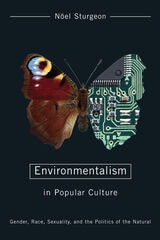
Environmentalism in Popular Culture
Gender, Race, Sexuality, and the Politics of the NaturalNoël Sturgeon
University of Arizona Press, 2009
Although there are other books that examine questions of culture and environment, this is the first book to employ a global feminist environmental justice analysis to focus on how racial inequality, gendered patterns of work, and heteronormative ideas about the family relate to environmental questions. Beginning in the late 1980s and moving to the present day, Sturgeon unpacks a variety of cultural tropes, including ideas about Mother Nature, the purity of the natural, and the allegedly close relationships of indigenous people with the natural world. She investigates the persistence of the “myth of the frontier” and its extension to the frontier of space exploration. She ponders the popularity (and occasional controversy) of penguins (and penguin family values) and questions assumptions about human warfare as “natural.”
The book is intended to provoke debates—among college students and graduate students, among their professors, among environmental activists, and among all citizens who are concerned with issues of environmental quality and social equality.

Envisioning African Intersex
Challenging Colonial and Racist Legacies in South African MedicineAmanda Lock Swarr
Duke University Press, 2023
All author royalties from Envisioning African Intersex will be donated to Intersex South Africa.
Envisioning Asia
On Location, Travel, and the Cinematic Geography of U.S. OrientalismJeanette Roan
University of Michigan Press, 2010
"Whereas some other scholars read selected films mainly to illustrate political arguments, Roan never loses sight of the particularities of film as a distinctive cultural form and practice. Her drive to see 'cinema as a mechanism of American orientalism' results in not just a textual analysis of these films, but also a history of their material production and distribution."
---Josephine Lee, University of Minnesota
"Envisioning Asia offers an exciting new contribution to our understandings of the historical developments of American Orientalism. Jeannette Roan deftly situates changing cinematic technologies within the context of U.S. imperial agendas in this richly nuanced analysis of 'shooting on location' in Asia in early 20th century American cinema."
---Wendy Kozol, Oberlin College
"Through her vivid illustration of the role of American cinema in the material, visual, and ideological production of Asia, Jeanette Roan takes the reader on a journey to Asia through a very different route from the virtual travel taken by the viewers of the films she discusses."
---Mari Yoshihara, University of Hawai'i at Manoa
The birth of cinema coincides with the beginnings of U.S. expansion overseas, and the classic Hollywood era coincides with the rise of the United States as a global superpower. In Envisioning Asia, Jeanette Roan argues that throughout this period, the cinema's function as a form of virtual travel, coupled with its purported "authenticity," served to advance America's shifting interests in Asia. Its ability to fulfill this imperial role depended, however, not only on the cinematic representations themselves but on the marketing of the films' production histories---and, in particular, their use of Asian locations. Roan demonstrates this point in relation to a wide range of productions, offering an engaging and useful survey of a largely neglected body of film. Not only that, by focusing on the material practices involved in shooting films on location---that is, the actual travels, negotiations, and labor of making a film---she moves beyond formal analysis to produce a richly detailed history of American interests, attitudes, and cultural practices during the first half of the twentieth century.
Jeanette Roan is Adjunct Professor of Visual Studies at California College of the Arts and author of "Exotic Explorations: Travels to Asia and the Pacific in Early Cinema" in Re/collecting Early Asian America: Essays in Cultural History (2002).
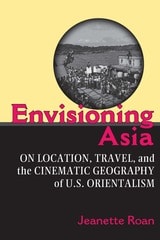
Cover art: Publicity still, Tokyo File 212 (Dorrell McGowan and Stuart McGowan, 1951). The accompanying text reads: "Hundreds of spectators gather on the sidelines as technicians prepare to photograph a parade scene in 'Tokyo File 212,' a Breakston-McGowan Production filmed in Japan for RKO Radio distribution." Courtesy of the Academy of Motion Picture Arts and Sciences.

Envisioning Brazil
A Guide to Brazilian Studies in the United StatesEdited by Marshall C. Eakin and Paulo Roberto de Almeida
University of Wisconsin Press, 2005
Envisioning Brazil is a comprehensive and sweeping assessment of Brazilian studies in the United States. Focusing on synthesis and interpretation and assessing trends and perspectives, this reference work provides an overview of the writings on Brazil by United States scholars since 1945.
"The Development of Brazilian Studies in the United States," provides an overview of Brazilian Studies in North American universities. "Perspectives from the Disciplines" surveys the various academic disciplines that cultivate Brazilian studies: Portuguese language studies, Brazilian literature, art, music, history, anthropology, Amazonian ethnology, economics, politics, and sociology. "Counterpoints: Brazilian Studies in Britain and France" places the contributions of U.S. scholars in an international perspective. "Bibliographic and Reference Sources" offers a chronology of key publications, an essay on the impact of the digital age on Brazilian sources, and a selective bibliography.
Envisioning Eastern Europe
Postcommunist Cultural StudiesMichael D. Kennedy, Editor
University of Michigan Press, 1994
Envisioning Socialism
Television and the Cold War in the German Democratic RepublicHeather L. Gumbert
University of Michigan Press, 2014
Envisioning Socialism examines television and the power it exercised to define the East Germans’ view of socialism during the first decades of the German Democratic Republic. In the first book in English to examine this topic, Heather L. Gumbert traces how television became a medium prized for its communicative and entertainment value. She explores the difficulties GDR authorities had defining and executing a clear vision of the society they hoped to establish, and she explains how television helped to stabilize GDR society in a way that ultimately worked against the utopian vision the authorities thought they were cultivating.
Gumbert challenges those who would dismiss East German television as a tool of repression that couldn’t compete with the West or capture the imagination of East Germans. Instead, she shows how, by the early 1960s, television was a model of the kind of socialist realist art that could appeal to authorities and audiences. Ultimately, this socialist vision was overcome by the challenges that the international market in media products and technologies posed to nation-building in the postwar period.
A history of ideas and perceptions examining both real and mediated historical conditions, Envisioning Socialism considers television as a technology, an institution, and a medium of social relations and cultural knowledge. The book will be welcomed in undergraduate and graduate courses in German and media history, the history of postwar Socialism, and the history of science and technologies.
Envisioning Taiwan
Fiction, Cinema, and the Nation in the Cultural ImaginaryJune Yip
Duke University Press, 2004
Yip traces a distinctly Taiwanese sense of self vis-à-vis China, Japan, and the West through two of the island’s most important cultural movements: the hsiang-t’u (or “nativist”) literature of the 1960s and 1970s, and the Taiwanese New Cinema of the 1980s and 1990s. At the heart of the book are close readings of the work of the hsiang-t’u writer Hwang Chun-ming and the New Cinema filmmaker Hou Hsiao-hsien. Key figures in Taiwan’s assertion of a national identity separate and distinct from China, both artists portray in vibrant detail daily life on the island. Through Hwang’s and Hou’s work and their respective artistic movements, Yip explores “the imagining of a nation” on the local, national, and global levels. In the process, she exposes a perceptible shift away from traditional models of cultural authenticity toward a more fluid, postmodern hybridity—an evolution that reflects both Taiwan’s peculiar multicultural reality and broader trends in global culture.
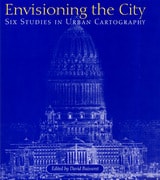
Envisioning the City
Six Studies in Urban CartographyEdited by David Buisseret
University of Chicago Press, 1998
Whether a Chinese vertical city plan from the first millennium B.C. or a bird's-eye view appended to a fifteenth-century edition of Ptolemy's Geography, the type of plan chosen and its focus reflected the aspects of a city that the map's creators wished to highlight. For instance, maps of seventeenth-century cities emphasized impregnable fortifications as a deterrent to potential attackers. And Daniel Burnham's famous 1909 Plan of Chicago used a distinct representational style to "sell" his version of the new Chicago.
Although city plans are among the oldest maps known, few books have been devoted to them. Historians of cartography and geography, architects, and urban planners will all enjoy this profusely illustrated volume.

Envy Up, Scorn Down
How Status Divides UsSusan T. Fiske
Russell Sage Foundation, 2011
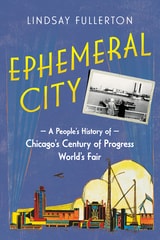
Ephemeral City
A People's History of Chicago's Century of Progress World's FairLindsay Fullerton
University of Illinois Press, 2025
Less celebrated than the 1893 Chicago World’s Fair, the 1933–1934 Century of Progress Exposition brought visitors face-to-face with gleaming American consumerism in the midst of the Great Depression. Lindsay Fullerton draws on a wealth of personal photographs, scrapbooks, oral histories, and writings to illuminate the wildly different experiences of fairgoers against the backdrop of a city steeped in poverty and segregation.
The Exposition took place amidst massive changes sparked by expansion of mass media, Franklin Roosevelt’s election, the repeal of Prohibition, and the Great Migration. A diverse cross-section of Chicagoans informs Fullerton’s history of the event in the context of the fast-changing America of the interwar era. These personal accounts tell stories of how attendees interpreted their own experiences while being surrounded by whiz-bang products and full-throated evangelism on the benefits of progress.
A colorful people’s history, Ephemeral City takes readers inside the other Chicago World’s Fair and how visitors interacted with a pivotal moment in American history.
Ephemeral Territories
Representing Nation, Home, and Identity in CanadaErin Manning
University of Minnesota Press, 2003
Explores questions of identity and belonging through the lens of Canadian cultural production
What does it mean to be at home? In a critical engagement with notions of territory, identity, racial difference, separatism, multiculturalism, and homelessness, this book delves into the question of what it means to belong—in particular, what it means to be at home in Canada. Ephemeral Territories weaves together many narratives and representations of Canadian identity—from political philosophy and cultural theory to art and films such as Srinivas Krishna’s Lulu, Clement Virgo’s Rude, and Charles Biname’s Eldorado—to develop and complicate familiar views of identity and selfhood.
Canadian identity has historically been linked to a dual notion of culture traceable to the French and English strains of Canada’s colonial past. Erin Manning subverts this binary through readings that shift our attention from nationalist constructions of identity and territory to a more radical and pluralizing understanding of the political. As she brings together issues specific to Canada (such as Quebec separatism and Canadian landscape painting) and concerns that are more transnational (such as globalization and immigration), Manning emphasizes the truly cross-cultural nature of the problems of racism, gender discrimination, and homelessness. Thus this impassioned reading of Canadian texts also makes an important contribution to philosophical, cultural, and political discourses across the globe.
Epicurus in Lycia
The Second-Century World of Diogenes of OenoandaPamela Gordon
University of Michigan Press, 1996
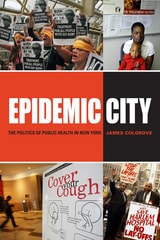
Epidemic City
The Politics of Public Health in New YorkJames Colgrove
Russell Sage Foundation, 2011

Epidemic of Rumors
How Stories Shape Our Perception of DiseaseJon D. Lee
Utah State University Press, 2014
Folklore studies brings important and useful perspectives to understanding cultural responses to the outbreak of disease. Through this etiological study Lee shows the similarities between the narratives of the SARS outbreak and the narratives of other contemporary disease outbreaks like AIDS and the H1N1 virus. His analysis suggests that these disease narratives do not spring up with new outbreaks or diseases but are in continuous circulation and are recycled opportunistically. Lee also explores whether this predictability of vernacular disease narratives presents the opportunity to create counter-narratives released systematically from the government or medical science to stymie the negative effects of the fearful rumors that so often inflame humanity.
With potential for practical application to public health and health policy, An Epidemic of Rumors will be of interest to students and scholars of health, medicine, and folklore.
Epidemiological Change and Chronic Disease in Sub-Saharan Africa
Social and Historical PerspectivesEdited by Megan Vaughan, Kafui Adjaye-Gbewonyo, and Marissa Mika
University College London, 2020
Epidemiological Change and Chronic Disease in Sub-Saharan Africa offers new and critical perspectives on the causes and consequences of recent epidemiological changes in sub-Saharan Africa, with a special focus on the increasing incidence of “non-communicable” and chronic conditions. In this book, historians, social anthropologists, public health experts, and social epidemiologists present important insights into epidemiological change in Africa beyond theories of “transition.” The volume covers a broad thematic range, including the trajectory of maternal mortality in East Africa, the smoking epidemic, the history of sugar consumption in South Africa, the causality between infectious and non-communicable diseases in Ghana and Belize, the complex relationships between adult hypertension and pediatric HIV in Botswana, and stories of cancer patients and their families in Kenya. In all, the volume provides insights drawn from historical perspectives and from the African social and clinical experience that are of value to students and researchers in global health, medical anthropology, public health, and African studies.

Epigenetic Landscapes
Drawings as MetaphorSusan Merrill Squier
Duke University Press, 2017

Equal Before the Law
How Iowa Led Americans to Marriage EqualityTom Witosky, Marc Hansen
University of Iowa Press, 2015
The court’s decision in Varnum v. Brien made Iowa only the third state in the nation to permit same-sex couples to wed—moderate, midwestern Iowa, years before such left-leaning coastal states as California and New York. And unlike the earlier decisions in Massachusetts and Connecticut, Varnum v. Brien was unanimous and unequivocal. It catalyzed the unprecedented and rapid shift in law and public opinion that continues today.
Equal Before the Law tells the stories behind this critical battle in the fight for marriage equality and traces the decision’s impact. The struggle began in 1998 with the easy passage of Iowa’s Defense of Marriage Act and took a turn, surprising to many, in 2005, when six ordinary Iowa couples signed on to Lambda Legal’s suit against the law. Their triumph in 2009 sparked a conservative backlash against the supreme court justices, three of whom faced tough retention elections that fall.
Longtime, award-winning reporters Tom Witosky and Marc Hansen talked with and researched dozens of key figures, including opponent Bob Vander Plaats, proponents Janelle Rettig and Sharon Malheiro, attorneys Roger Kuhle, Dennis Johnson, and Camilla Taylor, and politicians Matt McCoy, Mary Lundby, and Tom Vilsack, who had to weigh their careers against their convictions. Justice Mark Cady, who wrote the decision, explains why the court had to rule in favor of the plaintiffs. At the center of the story are the six couples who sacrificed their privacy to demand public respect for their families.
Through these voices, Witosky and Hansen show that no one should have been surprised by the 2009 decision. Iowans have a long history of leadership on civil rights. Just a year after Iowa became a state, its citizens adopted as their motto the phrase, “Our liberties we prize and our rights we will maintain.” And they still do today.
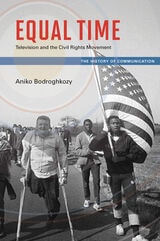
Equal Time
Television and the Civil Rights MovementAniko Bodroghkozy
University of Illinois Press, 2013
Equal in Monastic Profession
Religious Women in Medieval FrancePenelope D. Johnson
University of Chicago Press, 1991
Johnson researched more than two dozen nunneries in northern France from the eleventh century through the thirteenth century, balancing a qualitative reading of medieval monastic documents with a quantitative analysis of a lengthy thirteenth-century visitation record which allows an important comparison of nuns and monks. A fascinating look at the world of medieval spirituality, this work enriches our understanding of women's role in premodern Europe and in church history.
Equaliberty in the Dutch Caribbean
Ways of Being Non/SovereignYvon van der Pijl
Rutgers University Press, 2022
Equaliberty
Political EssaysÉtienne Balibar
Duke University Press, 2014
Equality for Same-Sex Couples
The Legal Recognition of Gay Partnerships in Europe and the United StatesYuval Merin
University of Chicago Press, 2002
Merin begins by providing a historical overview of the transformation of marriage from antiquity to the present. He then identifies and critically compares four principal models for the legal regulation and recognition of same-sex partnerships: civil marriage, registered partnership, domestic partnership, and cohabitation. Merin concludes that all of the models except civil marriage discriminate against gays and lesbians just as the "separate but equal" doctrine discriminated against African Americans; thus, so-called alternatives to marriage, even if they provide the same rights and benefits as marriage, are inherently unequal and therefore unconstitutional.

Equality in the City
Imaginaries of the Smart FutureEdited by Susan Flynn and Graham Cairns
Intellect Books, 2022
Equality in the City engenders a timely debate about what future cities might look like and what their concerns should be. Using a multi-disciplinary perspective, it features acclaimed scholars whose work investigates the proposed networked, digital technologies that ostensibly affect planning policies, control infrastructures, and deliver and manage city services and systems. The contributors offer insights into how future cities might be envisaged, planned, and executed in order to be more equal.
Equals in Learning and Piety
Muslim Women Scholars in Nigeria and North AmericaBeverly Mack
University of Wisconsin Press, 2023
Mack shows how women scholars instructed rural Hausa and Fulani women in Muslim ethics, doctrine, traditions, and behavior that followed and replaced the traumatic experience of warfare unleashed by the Jihad. She shows that these unique social engagements shaped people’s agency in the dynamic process of social change throughout the nineteenth century. Women imaginatively reconciled Muslim reformist doctrines and traditional practices in Nigeria, and these doctrines have continued to be influential in the diaspora, especially among Black American Muslims in the United States in the twenty-first century. With this major investigation of a little-studied phenomenon, Mack demonstrates the importance of women to the religious, political, and social transformation of Nigerian Muslim society.

Equestrian Cultures
Horses, Human Society, and the Discourse of ModernityEdited by Kristen Guest and Monica Mattfeld
University of Chicago Press, 2019
Kristen Guest and Monica Mattfeld place the modern period front and center in this collection, illuminating the largely untold story of how the horse has responded to the accelerated pace of modernity. The book’s contributors explore equine cultures across the globe, drawing from numerous interdisciplinary sources to show how horses have unexpectedly influenced such distinctively modern fields as photography, anthropology, and feminist theory. Equestrian Cultures boldly steps forward to redefine our view of the most recent developments in our long history of equine partnership and sets the course for future examinations of this still-strong bond.
Equipping Technical Communicators for Social Justice Work
Theories, Methodologies, and PedagogiesRebecca Walton
Utah State University Press, 2021
For the field of technical and professional communication to maintain its commitment to this work, how social justice intersects with inclusivity through UX, technological, civic, and legal literacies, as well as through community engagement, must be acknowledged. Equipping Technical Communicators for Social Justice Work will be of significance to established scholar-teachers and graduate students, as well as to newcomers to the field.
Contributors: Kehinde Alonge, Alison Cardinal, Erin Brock Carlson, Oriana Gilson, Laura Gonzales, Keith Grant-Davie, Angela Haas, Mark Hannah, Kimberly Harper, Sarah Beth Hopton, Natasha Jones, Isidore Kafui Dorpenyo, Liz Lane, Emily Legg, Nicole Lowman, Kristen Moore, Emma Rose, Fernando Sanchez, Jennifer Sano-Franchini, Adam Strantz, Cana Uluak Itchuaqiyaq, Josephine Walwema, Miriam Williams, Han Yu
Equipping The Saints
Barbara Elliott
Templeton Press, 2004
For any individual donor or foundation giving money to a faith-based organization, this guide is indispensable. Equipping the Saints offers sage advice on recognizing the qualities of good leaders, effective programs, and the methods of evaluating outcomes. Based on hundreds of interviews with donors and civic leaders, this guide provides a candid look at the unique strengths and weaknesses of these groups. Equipping the Saints is packed with useful tools like a donor's interest inventory, a checklist for making a site visit, tips on reading nonprofit financial statements, and hands-on recommendations for making grants that are both effective and prudent.
"An excellent guide for philanthropists seeking to unleash the power of faith in healing troubled souls and transforming troubled neighborhoods." —Adam Meyerson, president, Philanthropy Roundtable
"Most donors quickly learn how all that glitters is not gold. Some go on to learn how all that is gold does not glitter. In this book Barbara Elliott provides the lessons in discernment and the tools for evaluation that donors need. Take advantage of her understanding by making it your own." —Marvin Olasky, ditor of World magazine, author of Compassionate Conservatism and The Tragedy of American Compassion
"Any donor with even a hint of interest in exploring investments in the work of faith-based organizations (FBOs) needs this book. It is packed with practical information about how to understand and assess FBOs. Its numerous examples of real-life donors making real-life differences through partnerships with faith-inspired community healers ought to stimulate much creative brainstorming among philanthropists." —Dr. Amy L. Sherman, senior fellow and director, Faith in Communities Initiative of the Foundation for American Renewal
"From the perspective of a local foundation giving to faith-based ministries, we have found Barbara Elliott's work to be inspiring, practical and instructive to us as we think through our priorities and principles for funding decisions…I have extraordinary respect for Barbara's scope of understanding, ability to communicate with passion and reason, and her deep understanding of a very complex field. She gives all of us—ministries and funders—genuine hope and invaluable insight." —Fred Smith, president, The Gathering

Equity Engines
The Overlooked Colleges Delivering on Higher Education’s PromiseBecca Spindel Bassett
University of Chicago Press, 0
Shares novel insights into American colleges and universities that deliberately support the success of their first-generation, low-income students.
In American higher education, universities that prioritize inclusivity and equity over exclusivity and prestige are penalized rather than rewarded, both in terms of status and resources. Consequently, very few colleges and universities both enroll large shares of low-income students and graduate them at high rates. This is terrible news, both for the first-generation, low-income students with big aspirations and for a democratic society that relies on an educated citizenry and a representative government to function.
In Equity Engines, Becca Spindel Bassett shines a light on a small group of colleges that are quietly achieving the improbable. These “equity engines” open their doors widely to low-income students and graduate them at remarkably high rates. Immersing herself in two distinct institutions, a small private liberal arts university and a large regional public university, Bassett offers a window into the unseen mindsets and policies that drive universities toward equitable outcomes. By culturally and structurally centering first-generation, low-income students and challenging the superiority of exclusive, research-oriented cultures, the faculty, staff, and administrators of both institutions achieve extraordinary results.
Combining ethnography with sociological analysis, Equity Engines presents a detailed and nuanced depiction of the people and practices that power equity engines, the pressures that challenge their operation, and how we can transform American higher education to promote a more democratic and equitable society.
Equivocal Beings
Politics, Gender, and Sentimentality in the 1790s--Wollstonecraft, Radcliffe, Burney, AustenClaudia L. Johnson
University of Chicago Press, 1995
Demonstrating the interrelationships among politics, gender, and feeling in the fiction of this period, Johnson provides detailed readings of Wollstonecraft, Radcliffe, and Burney, and treats the qualities that were once thought to mar their work—grotesqueness, strain, and excess—as indices of ideological conflict and as strategies of representation during a period of profound political conflict. She maintains that the reactionary reassertion of male sentimentality as a political duty displaced customary gender roles, rendering women, in Wollstonecraft's words, "equivocal beings."

Eradicating Extreme Poverty
Democracy, Globalisation and Human RightsEdited by Xavier Godinot
Pluto Press, 2012
The failure of attempts to tackle global poverty have bred cynicism and 'compassion fatigue'. Eradicating Extreme Poverty provides an urgently needed fresh approach which will re-energise action on this issue.
Rejecting traditional 'top-down' approaches, Xavier Godinot and his colleagues start from the experiences, capabilities and strategies of the poor themselves. They argue that the first step is a close connection with poor communities followed by a commitment to take action alongside them. Life-stories from Burkina Faso, France, Peru and the Philippines are used to show that the poor must be involved in their own liberation.
After decades of failed development policies, this book outlines a radical new approach which will enliven debate amongst policy-makers, researchers, students and academics.

Erich Fromm and Critical Criminology
Beyond the Punitive SocietyEdited by Kevin Anderson and Richard Quinney
University of Illinois Press, 2000
Linking the writings of the great humanist psychologist Erich Fromm to criminology, this collection shows how viewing crime patterns and the criminal justice system from Fromm's humanist perspective opens a path to more effective and more humane ways of understanding and dealing with crime and criminals.
Contributors to Erich Fromm and Critical Criminology draw on Fromm's writings on alienation, sadomasochism, and patriarchal/matriarchal values to assess the kinds of crimes being committed and the kinds of people committing them. They explore the spiritual and intellectual sources of Fromm's thought--including Jewish theology, Freudian psychoanalysis, Marxism, and Buddhism--and demonstrate how his socialist humanism points toward a society free of crime and violence. This volume also includes translations of two of Fromm's early articles on criminal justice, never before available in English, in which he develops a psychoanalytic Marxist critique of the role of criminal justice in a class society.
At a time when American society seems bent, to an unprecedented degree, on imprisonment, executions, and other violent responses to the problem of crime, Fromm's humanist critique offers a unique vantage point from which to renew and develop a critical criminology.
Eros Ideologies
Writings on Art, Spirituality, and the DecolonialLaura E. Pérez
Duke University Press, 2018
Eros and Inwardness in Vienna
Weininger, Musil, DodererDavid S. Luft
University of Chicago Press, 2003
According to Luft, Otto Weininger viewed human beings as bisexual and applied this theme to issues of creativity and morality. Robert Musil developed a creative ethics that was closely related to his open, flexible view of sexuality and gender. And Heimito von Doderer portrayed his own sexual obsessions as a way of understanding the power of total ideologies, including his own attraction to National Socialism. For Luft, the significance of these three writers lies in their understandings of eros and inwardness and in the roles that both play in ethical experience and the formation of meaningful relations to the world-a process that continues to engage artists, writers, and thinkers today.
Eros and Inwardness in Vienna will profoundly reshape our understanding of Vienna's intellectual history. It will be important for anyone interested in Austrian or German history, literature, or philosophy.
Erosion
American Environments and the Anxiety of DisappearanceGina Caison
Duke University Press, 2024
Erotic Attunement
Parenthood and the Ethics of Sensuality between UnequalsCristina L. H. Traina
University of Chicago Press, 2011
Heightened awareness of the problem of sexual abuse has led to deep anxiety over adults touching children—in nearly any context. Though our society has moved toward increasingly strict enforcement of this taboo, studies have shown that young children need regular human contact, and the benefits of breastfeeding have been widely extolled. Exploring the complicated history of love, desire, gender, sexuality, parenthood, and inequality, Erotic Attunement probes the disquieting issue of how we can draw a clear line between natural affection toward children and perverse exploitation of them.
Cristina L. H. Traina demonstrates that we cannot determine what is wrong about sexual abuse without first understanding what is good about appropriate sensual affection. Pondering topics such as the importance of touch in nurturing children, the psychology of abuse and victimhood, and recent ideologies of motherhood, she argues that we must expand our philosophical and theological language of physical love and make a distinction between sexual love and erotic love. Taking on theological and ethical arguments over the question of sexuality between unequals, she arrives at the provocative conclusion that it can be destructive to completely bar eroticism from these relationships.
Erotic Cartographies
Decolonization and the Queer Caribbean ImaginationKrystal Nandini Ghisyawan
Rutgers University Press, 2022
Erotic Innocence
The Culture of Child MolestingJames R. Kincaid
Duke University Press, 1998
Drawing on a number of wide-ranging and well-publicized cases as well as scandals involving such celebrities as Michael Jackson and Woody Allen, Kincaid looks at issues surrounding children’s testimonies, accusations against priests and day-care centers, and the horrifying yet persistently intriguing rumors of satanic cults and “kiddie porn” rings. In analyzing the particular form of popularity shared by such child stars such Shirley Temple and Macaulay Culkin, he exposes the strategies we have devised to deny our own role in the sexualization of children. Finally, Kincaid reminds us how other forms of abuse inflicted on children—neglect, abandonment, inadequate nutrition, poor education—are often overlooked in favor of the sensationalized sexual abuse coverage in the news, on daytime TV talk shows, and in the elevators and cafeterias of America each day.
This bold and critically enlightened book will interest readers across a wide range of disciplines as well as a larger general audience interested in American culture.
Erotic Islands
Art and Activism in the Queer CaribbeanLyndon K. Gill
Duke University Press, 2018
Erotic Knowledge
Toward a Lesbian Feminist Political TheoryElena Gambino
Duke University Press, 2026