Results by title
28164 books match the query 'History' and 842 start with e
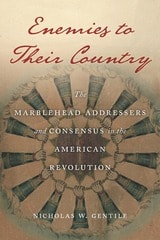
Enemies to Their Country
The Marblehead Addressers and Consensus in the American RevolutionNicholas W. Gentile
University of Massachusetts Press, 2025
Runner-up, 2025 Journal of the American Revolution Book of the Year Award
Complicating the American Revolution through a microhistory of one Massachusetts town
In 1774, a group of elite men in the town of Marblehead, Massachusetts, just outside Salem, wrote an address to the royal governor thanking him for his service to the colony, even as town residents began demanding independence from Great Britain. Town meeting records reveal how the town’s patriot majority pressured the signers to withdraw their support for the governor and demanded public recantations and issued damning reports, even forcing some of the signers into exile.
Enemies to Their Country tells the story of the year following the Address, chronicling the town’s struggle to achieve consensus even as the war for American independence started. This microhistory of one vitally important town, the second largest in Massachusetts at the time, with a thriving local economy based on fishing and a robust community of religious and civically engaged citizens, complicates simplistic ideas of the American Revolution. Through compelling stories of neighboring individuals and families, many of which have not been told, it also provides an example of a politically polarized constituency struggling to find consensus at a time of great conflict.
Enemy Within
Culture Wars and Political Identity in Novels of the French Third RepublicGilbert D. Chaitin
The Ohio State University Press, 2008
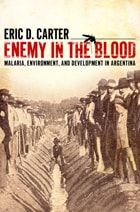
Enemy in the Blood
Malaria, Environment, and Development in ArgentinaEric D. Carter
University of Alabama Press, 2012
Tracing the Fight Against Malaria and the Making of Modern Argentina.
Enemy in the Blood: Malaria, Environment, and Development in Argentina examines the dramatic yet mostly forgotten history of malaria control in northwest Argentina. Carter traces the evolution of malaria science and policy in Argentina from the disease’s emergence as a social problem in the 1890s to its effective eradication by 1950. Malaria-control proponents saw the campaign as part of a larger project of constructing a modern identity for Argentina. Insofar as development meant building a more productive, rational, and hygienic society, the perceptions of a culturally backwards and disease-ridden interior prevented Argentina from joining the ranks of “modern” nations. The path to eradication, however, was not easy due to complicated public health politics, inappropriate application of foreign malaria control strategies, and a habitual misreading of the distinctive ecology of malaria in the northwest, especially the unique characteristics of the local mosquito vector. Homegrown scientific expertise, a populist public health agenda, and an infusion of new technologies eventually brought a rapid end to malaria’s scourge, if not the cure for regional underdevelopment.
Enemy in the Blood sheds light on the often neglected history of northwest Argentina’s interior, adds to critical perspectives on the history of development and public health in modern Latin America, and demonstrates the merits of integrative social-environmental research.
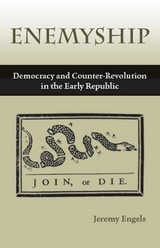
Enemyship
Democracy and Counter-Revolution in the Early RepublicJeremy Engels
Michigan State University Press, 2010
The Declaration of Independence is usually celebrated as a radical document that inspired revolution in the English colonies, in France, and elsewhere. In Enemyship, however, Jeremy Engels views the Declaration as a rhetorical strategy that outlined wildly effective arguments justifying revolution against a colonial authority—and then threatened political stability once independence was finally achieved.
Enemyship examines what happened during the latter years of the Revolutionary War and in the immediate post-Revolutionary period, when the rhetorics and energies of revolution began to seem problematic to many wealthy and powerful Americans.
To mitigate this threat, says Engles, the founders of the United States deployed the rhetorics of what he calls "enemyship," calling upon Americans to unite in opposition to their shared national enemies.
Energopolitics
Wind and Power in the AnthropoceneDominic Boyer
Duke University Press, 2019
In his volume, Energopolitics, Boyer examines the politics of wind power and how it is shaped by myriad factors, from the legacies of settler colonialism and indigenous resistance to state bureaucracy and corporate investment. Drawing on interviews with activists, campesinos, engineers, bureaucrats, politicians, and bankers, Boyer outlines the fundamental impact of energy and fuel on political power. Boyer also demonstrates how large conceptual frameworks cannot adequately explain the fraught and uniquely complicated conditions on the isthmus, illustrating the need to resist narratives of anthropocenic universalism and to attend to local particularities.

Energy without Conscience
Oil, Climate Change, and ComplicityDavid McDermott Hughes
Duke University Press, 2017
Engaged Anthropology
Research Essays on North American Archaeology, Ethnobotany, and MuseologyEdited by Michelle Hegmon and B. Sunday Eiselt
University of Michigan Press, 2005
Engaging Diverse Communities
A Guide to Museum Public RelationsMelissa A. Johnson
University of Massachusetts Press, 2020
Melissa A. Johnson interviews communicators at cultural heritage museums to understand the challenges of representing communities based on racial and ethnic, generational, immigrant, and language identities. Exploring how communications professionals function as cultural intermediaries by negotiating competing and intersecting identities and mastering linguistic and visual code-switching, she presents an analysis of the communication tactics of more than two hundred art, history, African American, American Indian, and other diverse museums. Engaging Diverse Communities illuminates best public relations practices, especially in media relations, digital press relations, website content production, social media, and event planning. This essential text for museum professionals also addresses visual aesthetics, cultural expression, and counter-stereotypes, and offers guidance on how to communicate cultural attractiveness.
Engaging Modernity
Asante in the Twenty-First CenturyKwasi Ampene. Nana Kwadwo Nyantakyi III
Michigan Publishing Services, 2016
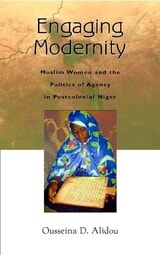
Engaging Modernity
Muslim Women and the Politics of Agency in Postcolonial NigerOusseina Alidou
University of Wisconsin Press, 2005
Engaging Modernity is Ousseina Alidou’s rich and compelling portrait of Muslim women in Niger as they confront the challenges and opportunities of the twentieth century. Contrary to Western stereotypes of passive subordination, these women are taking control of their own lives and resisting domination from indigenous traditions, westernization, and Islam alike.
Based on thorough scholarly research and extensive fieldwork—including a wealth of interviews—Alidou’s work offers insights into the meaning of modernity for Muslim women in Niger. Mixing biography with sociological data, social theory and linguistic analysis, this is a multilayered vision of political Islam, education, popular culture, and war and its aftermath. A gripping look at one of the Muslim world’s most powerful untold stories.
Runner-up for the Aidoo-Snyder Book Prize, Women’s Caucus of the African Studies Association
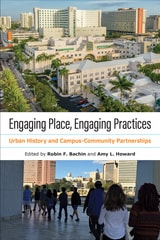
Engaging Place, Engaging Practices
Urban History and Campus-Community PartnershipsEdited by Robin F. Bachin and Amy L. Howard
Temple University Press, 2023
Colleges and universities in urban centers have often leveraged their locales to appeal to students while also taking a more active role in addressing local challenges. They embrace civic engagement, support service-learning, tailor courses to local needs, and even provide university-community collaborations such as lab schools and innovation hubs. Engaging Place, Engaging Practices highlights the significant role the academy, in general, and urban history, in particular, can play in fostering these critical connections.
The editors and contributors to this volume address topics ranging from historical injustices and affordable housing and land use to climate change planning and the emergence of digital humanities. These case studies reveal the intricate components of a city’s history and how they provide context and promote a sense of cultural belonging.
This timely book appreciates and emphasizes the critical role universities must play as intentional—and humble—partners in addressing the past, present, and future challenges facing cities through democratic community engagement.
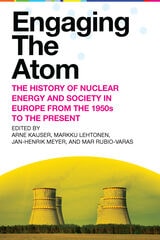
Engaging the Atom
The History of Nuclear Energy and Society in Europe from the 1950s to the PresentArne Kaijser
West Virginia University Press, 2021
With the aim of overcoming the disciplinary and national fragmentation that characterizes much research on nuclear energy, Engaging the Atom brings together specialists from a variety of fields to analyze comparative case studies across Europe and the United States. It explores evolving relationships between society and the nuclear sector from the origins of civilian nuclear power until the present, asking why nuclear energy has been more contentious in some countries than in others and why some countries have never gone nuclear, or have decided to phase out nuclear, while their neighbors have committed to the so-called nuclear renaissance. Contributors examine the challenges facing the nuclear sector in the context of aging reactor fleets, pressing climate urgency, and increasing competition from renewable energy sources.
Written by leading academics in their respective disciplines, the nine chapters of Engaging the Atom place the evolution of nuclear energy within a broader set of national and international configurations, including its role within policies and markets.
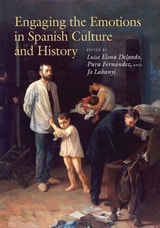
Engaging the Emotions in Spanish Culture and History
Luisa Elena Delgado
Vanderbilt University Press, 2016
The collection ranges across topics such as eighteenth-century sensibility, nineteenth-century concerns with the transmission of emotions, early twentieth-century cinematic affect, and the contemporary mobilization of political emotions including those regarding nonstate national identities. The complexities and effects of emotions are explored in a variety of forms—political rhetoric, literature, personal letters, medical writing, cinema, graphic art, soap opera, journalism, popular music, digital media—with attention paid to broader European and transatlantic implications.
Engendering Households in the Prehistoric Southwest
Edited by Barbara J. Roth
University of Arizona Press, 2010
Now Southwestern archaeologists have begun to delve into the task of “engendering” their sites. Using a “close to the ground” approach, the contributors to this book seek to engender the prehistoric Southwest by examining evidence at the household level.
Focusing on gendered activities in household contexts throughout the southwestern United States, this book represents groundbreaking work in this area. The contributors view households as a crucial link to past activities and behavior, and by engendering these households, we can gain a better understanding of their role in prehistoric society. Gender-structured household activities, in turn, can offer insight into broader-scale social and economic factors. The chapters offer a variety of theoretical and methodological approaches to engendering households and examine topics such as the division of labor, gender relations, household ritual, ceramic and ground stone production and exchange, and migration.
Engendering Households in the Prehistoric Southwest ultimately addresses broader issues of interest to many archaeologists today, including households and their various forms, identity and social boundary formation, technological style, and human agency. Focusing on gendered activities in household contexts throughout the southwestern United States, this book represents groundbreaking work in this area. The contributors view households as a crucial link to past activities and behavior, and by engendering these households, we can gain a better understanding of their role in prehistoric society. Gender-structured household activities, in turn, can offer insight into broader-scale social and economic factors.
Engendering Revolution
Women, Unpaid Labor, and Maternalism in Bolivarian VenezuelaBy Rachel Elfenbein
University of Texas Press, 2019
In 1999, Venezuela became the first country in the world to constitutionally recognize the socioeconomic value of housework and enshrine homemakers’ social security. This landmark provision was part of a larger project to transform the state and expand social inclusion during Hugo Chávez’s presidency. The Bolivarian revolution opened new opportunities for poor and working-class—or popular—women’s organizing. The state recognized their unpaid labor and maternal gender role as central to the revolution. Yet even as state recognition enabled some popular women to receive public assistance, it also made their unpaid labor and organizing vulnerable to state appropriation.
Offering the first comprehensive analysis of this phenomenon, Engendering Revolution demonstrates that the Bolivarian revolution cannot be understood without comprehending the gendered nature of its state-society relations. Showcasing field research that comprises archival analysis, observation, and extensive interviews, these thought-provoking findings underscore the ways in which popular women sustained a movement purported to exalt them, even while many could not access social security and remained socially, economically, and politically vulnerable.
Engineered Paradise
Cultural Power and the Making of the Caribbean Cruise IndustryShayan S. Lallani
University of Illinois Press, 2027
We celebrate cruise ships as gateways to new cultures. However, over the past half a century, the mass-market cruise industry has increasingly relied on global supply chains, exploited maritime labor, and corporate control over the consumer experience to turn cultural contact into profit.
Shayan S. Lallani uncovers the historical scaffolding behind the cruise industry’s strategic co-opting of global cultures. Tracing the evolution of the modern mega-ship from its roots in postwar ocean liners to the floating cities of the twenty-first century, Lallani demonstrates how cruise lines paired commodified cultural referents with immersive spatial design and international labor to maximize guest spending. This corporate grip extended to Caribbean destinations, where companies steadily gained control of port enclaves and vetted shore excursions to manage contact with local communities while retaining the profits.
A sobering look at a vacation mainstay, <i>Engineered Paradise</i> explores where leisure becomes entangled with culture, capitalism, and power.
Engineered to Sell
European Émigrés and the Making of Consumer CapitalismJan L. Logemann
University of Chicago Press, 2019
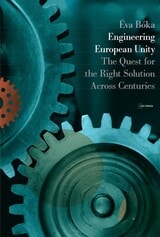
Engineering European Unity
The Quest for the Right Solution Across CenturiesÉva Bóka
Central European University Press, 2023
Which European and non-European ideas and practices facilitated the shaping of European unity? Or rather, which pursuits led to deadlocks in the cooperation between states?
The book seeks answers to these questions by surveying the historical attempts at realizing supranational patterns of governance in Europe since the Middle Ages. The main focus is on the nineteenth and twentieth century organizational models of European unification.
The analysis draws on an abundance of historical and legal source material. While the author encourages critical thinking about European integration, the exploration is admittedly based on specific values. Éva Bóka claims that the struggle for the humanization of power with its democratic creative force has been the major driver in the development of the system of liberties and the idea of European unity. The analysis of the historical process up to the Lisbon Treaty (2007) with the recognition of common, shared, and supported competences meets the author’s set of values to a great extent. The last part of the book examines whether the European Union can serve as a political and economic organizational model for other parts of the world.
Engineering Manhood
Race and the Antebellum Virginia Military InstituteJonson Miller
Lever Press, 2020
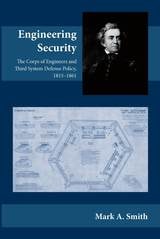
Engineering Security
The Corps of Engineers and Third System Defense Policy, 1815–1861Mark A. Smith
University of Alabama Press, 2009
Thorough examination of the antebellum fortifications that formed the backbone of U.S. military defense during the National Period
The system of coastal defenses built by the federal government after the War of 1812 was more than a series of forts standing guard over a watery frontier. It was an integrated and comprehensive plan of national defense developed by the US Army Corps of Engineers, and it represented the nation’s first peacetime defense policy.
Known as the Third System since it replaced two earlier attempts, it included coastal fortifications but also denoted the values of the society that created it. The governing defense policy was one that combined permanent fortifications to defend seaports, a national militia system, and a small regular army. The Third System remained the defense paradigm in the United States from 1816 to 1861, when the onset of the Civil War changed the standard. In addition to providing the country with military security, the system also provided the context for the ongoing discussion in Congress over national defense through annual congressional debates on military funding.
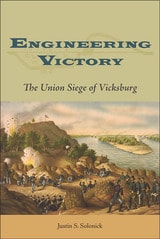
Engineering Victory
The Union Siege of VicksburgJustin S. Solonick
Southern Illinois University Press, 2015
On May 25, 1863, after driving the Confederate army into defensive lines surrounding Vicksburg, Mississippi, Union major general Ulysses S. Grant and his Army of the Tennessee laid siege to the fortress city. With no reinforcements and dwindling supplies, the Army of Vicksburg finally surrendered on July 4, yielding command of the Mississippi River to Union forces and effectively severing the Confederacy. In this illuminating volume, Justin S. Solonick offers the first detailed study of how Grant’s midwesterners serving in the Army of the Tennessee engineered the siege of Vicksburg, placing the event within the broader context of U.S. and European military history and nineteenth-century applied science in trench warfare and field fortifications. In doing so, he shatters the Lost Cause myth that Vicksburg’s Confederate garrison surrendered due to lack of provisions. Instead of being starved out, Solonick explains, the Confederates were dug out.
After opening with a sophisticated examination of nineteenth-century military engineering and the history of siege craft, Solonick discusses the stages of the Vicksburg siege and the implements and tactics Grant’s soldiers used to achieve victory. As Solonick shows, though Grant lacked sufficient professional engineers to organize a traditional siege—an offensive tactic characterized by cutting the enemy’s communication lines and digging forward-moving approach trenches—the few engineers available, when possible, gave Union troops a crash course in military engineering. Ingenious midwestern soldiers, in turn, creatively applied engineering maxims to the situation at Vicksburg, demonstrating a remarkable ability to adapt in the face of adversity. When instruction and oversight were not possible, the common soldiers improvised. Solonick concludes with a description of the surrender of Vicksburg, an analysis of the siege’s effect on the outcome of the Civil War, and a discussion of its significance in western military history.
Solonick’s study of the Vicksburg siege focuses on how the American Civil War was a transitional one with its own distinct nature, not the last Napoleonic war or the herald of modern warfare. At Vicksburg, he reveals, a melding of traditional siege craft with the soldiers’ own inventiveness resulted in Union victory during the largest, most successful siege in American history.
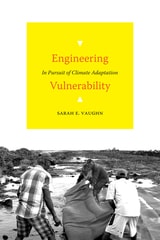
Engineering Vulnerability
In Pursuit of Climate AdaptationSarah E. Vaughn
Duke University Press, 2022
Duke University Press Scholars of Color First Book Award recipient
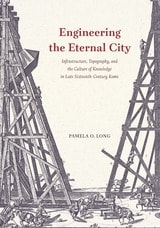
Engineering the Eternal City
Infrastructure, Topography, and the Culture of Knowledge in Late Sixteenth-Century RomePamela O. Long
University of Chicago Press, 2018
This portrait of an early modern Rome examines the many conflicts, failures, and successes that shaped the city, as decision-makers tried to control not only Rome’s structures and infrastructures but also the people who lived there. Taking up visual images of the city created during the same period—most importantly in maps and urban representations, this book shows how in a time before the development of modern professionalism and modern bureaucracies, there was far more wide-ranging conversation among people of various backgrounds on issues of engineering and infrastructure than there is in our own times. Physicians, civic leaders, jurists, cardinals, popes, and clerics engaged with painters, sculptors, architects, printers, and other practitioners as they discussed, argued, and completed the projects that remade Rome.
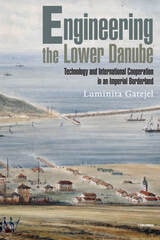
Engineering the Lower Danube
Technology and Territoriality in an Imperial Borderland, Late Eighteenth and Nineteenth CenturiesLuminita Gatejel
Central European University Press, 2023
The Lower Danube—the stretch of Europe’s second longest river between the Romanian-Serbian border and the confluence to the Black Sea—was effectively transformed during the late eighteenth and nineteenth centuries. In describing this lengthy undertaking, Luminita Gatejel proposes that remaking two key stretches—the Iron Gates and the delta—not only physically altered the river but also redefined it in a legal and political sense.
Since the late eighteenth century, military conflicts and peace treaties changed the nature of sovereignty over the area, as the expansionist tendencies of the Habsburg and British Empires encountered rival Ottoman and Russian imperial plans. The inconvenience that the river’s physical shape obstructed free navigation and the growth of commercial traffic, was an increasing concern to all parties. This book shows that alongside imperial aspirations, transnational actors like engineers, commissioners and entrepreneurs were the driving force behind the river regulation. In this highly original, deeply researched, and carefully crafted study, Gatejel explores the formation of international cooperation, the emergence of technical expertise and the emergence of engineering as a profession. This constellation turned the Lower Danube into a laboratory for experimenting with new forms of international cooperation, economic integration, and nature transformation.
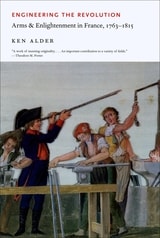
Engineering the Revolution
Arms and Enlightenment in France, 1763-1815Ken Alder
University of Chicago Press, 2010
Engineering the Revolution documents the forging of a new relationship between technology and politics in Revolutionary France, and the inauguration of a distinctively modern form of the “technological life.” Here, Ken Alder rewrites the history of the eighteenth century as the total history of one particular artifact—the gun—by offering a novel and historical account of how material artifacts emerge as the outcome of political struggle. By expanding the “political” to include conflict over material objects, this volume rethinks the nature of engineering rationality, the origins of mass production, the rise of meritocracy, and our interpretation of the Enlightenment and the French Revolution.
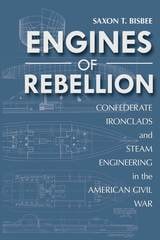
Engines of Rebellion
Confederate Ironclads and Steam Engineering in the American Civil WarSaxon T. Bisbee
University of Alabama Press, 2018
The development of steam propulsion machinery in warships during the nineteenth century, in conjunction with iron armor and shell guns, resulted in a technological revolution in the world’s navies. Warships utilizing all of these technologies were built in France and Great Britain in the 1850s, but it was during the American Civil War that large numbers of ironclads powered solely by steam proved themselves to be quite capable warships.
Historians have given little attention to the engineering of Confederate ironclads, although the Confederacy was often quite creative in building and obtaining marine power plants. Engines of Rebellion: Confederate Ironclads and Steam Engineering in the American Civil War focuses exclusively on ships with American built machinery, offering a detailed look at marine steam-engineering practices in both northern and southern industry prior to and during the Civil War.
Beginning with a contextual naval history of the Civil War, the creation of the ironclad program, and the advent of various technologies, Saxon T. Bisbee analyzes the armored warships built by the Confederate States of America that represented a style adapted to scarce industrial resources and facilities. This unique historical and archaeological investigation consolidates and expands on the scattered existing information about Confederate ironclad steam engines, boilers, and propulsion systems.
Through analysis of steam machinery development during the Civil War, Bisbee assesses steam plants of twenty-seven ironclads by source, type, and performance, among other factors. The wartime role of each vessel is discussed, as well as the stories of the people and establishments that contributed to its completion and operation. Rare engineering diagrams never before published or gathered in one place are included here as a complement to the text.
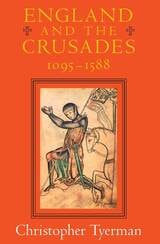
England and the Crusades, 1095-1588
Christopher Tyerman
University of Chicago Press, 1988
Drawing on a wide range of archival, chronicle, and literary evidence, Tyerman brings to life the royal personalities, foreign policy, political intrigue, taxation and fundraising, and the crusading ethos that gripped England for hundreds of years.
"An ambitious task to undertake. . . . Tyerman has done the job not only thoroughly but brilliantly. . . . A highly impressive study, deserving rich praise and wide readership."—Norman Housley, Times Literary Supplement
"Christopher Tyerman has written a wonderful book. . . . [He] manages to confront thorny issues in scholarship and to contribute new perspectives on them."—William Chester Jordan, American Historical Review
"Tyerman provides valuable insights into preaching, recruitment, and the funding and organisation of crusading expeditions. . . . Fascinating new perspectives on English history."—Edward Powell, Sunday Times
"Impressive. . . . Tyerman's research has yielded valuable evidence, and his admirably lucid argument sheds new light on a complex and bloody period in English history."—Virginia Quarterly Review

England in 1819
The Politics of Literary Culture and the Case of Romantic HistoricismJames Chandler
University of Chicago Press, 1998
"1819? At first sight, it might not seem a 'hot date'; but as James Chandler argues in his powerful book, it would be a mistake to overlook a year of such exceptional political conflagration and literary pyrotechnics in British history. Chandler's study is a wide-ranging, enormously ambitious, densely packed, closely argued work."—John Brewer, New Republic
"The book's largest argument, and the source of its considerable revelations, is that late twentieth-century practices of cultural history-writing have their roots in the peculiar Romantic historicism born in post-Waterloo Britain."—Jon Klancher, Times Literary Supplement
"A monumental work of scholarship."—Terry Eagleton, The Independent
England's Asian Renaissance
Su Fang Ng
University of Delaware Press, 2022
Published by the University of Delaware Press. Distributed worldwide by Rutgers University Press.

England's Discontents
Political Cultures and National IdentitiesMike Wayne
Pluto Press, 2018
Examining five political ideologies at play in England—conservatism, liberalism, economic liberalism, social democracy, and socialism—Mike Wayne unearths the historical rationale for their relationship to cultural identities, including rural England, gentlemanly capitalism, industrialism, and Empire. By revealing how national identity, class, and political economy intersect, Wayne is able to elucidate England’s enduring attachment to the neoliberal economic system.
Grounding his cultural and material perspective in Gramscian and Marxist theory, Wayne illuminates the cultural dimensions of English political life in the last century.
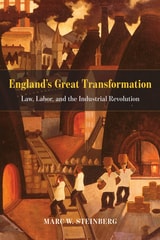
England's Great Transformation
Law, Labor, and the Industrial RevolutionMarc W. Steinberg
University of Chicago Press, 2016
Building his argument on three case studies—the Hanley pottery industry, Hull fisheries, and Redditch needlemakers—Steinberg employs both local and national analyses to emphasize the ways in which these master-servant laws allowed employers to use the criminal prosecutions of workers to maintain control of their labor force. Steinberg provides a fresh perspective on the dynamics of labor control and class power, integrating the complex pathways of Marxism, historical institutionalism, and feminism, and giving readers a subtle yet revelatory new understanding of workplace control and power during England’s Industrial Revolution.
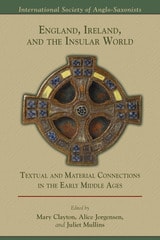
England, Ireland, and the Insular World
Textual and Material Connections in the Early Middle AgesMary Clayton
Arizona Center for Medieval and Renaissance Studies, 2017
ISAS Dublin 2013. England, Ireland and the Insular World: Textual and Material Connections in the Early Middle Ages is a collection of twelve essays related to the theme of the 2013 conference of the International Society of Anglo-Saxonists, ‘Insular Cultures’. Contributors cover a broad range of topics, from early medieval agriculture in Ireland and England, to sculpture, manuscript illumination and script, homilies, hagiography, aristocratic gift-giving, relics, calendars, Beowulf, and Anglo-Saxon perceptions of the Celtic peoples, considering connections, parallels and differences between Anglo-Saxon England and its insular neighbors. The volume will be of interest to all those working on Early Medieval history, literature, archaeology, liturgy, art, and manuscripts.
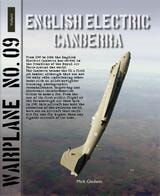
English Electric Canberra
Mick Gladwin
Amsterdam University Press, 2023
The story of the Canberra came to a close for the RAF on the 22nd June 2006 when the last remaining Canberra PR.9s retiring from service life after returning from operational duties. The author had the honour to serve with them in their twilight days of their careers.
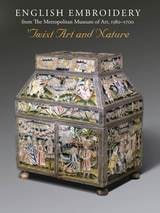
English Embroidery from the Metropolitan Museum of Art, 1580-1700
‘Twixt Art and NatureMelinda Watt
Bard Graduate Center, 2009
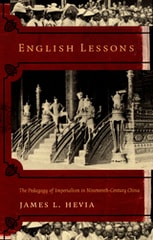
English Lessons
The Pedagogy of Imperialism in Nineteenth-Century ChinaJames L. Hevia
Duke University Press, 2003
Hevia analyzes British Foreign Office documents, diplomatic memoirs, auction house and museum records, nineteenth-century scholarly analyses of Chinese history and culture, campaign records, and photographs. He shows how Britain refigured its imperial project in
China as a cultural endeavor through examinations of the circulation of military loot in Europe, the creation of an art history of “things Chinese,” the construction of a field of knowledge about China, and the Great Game rivalry between Britain, Russia, and the Qing empire in Central Asia. In so doing, he illuminates the impact of these elements on the colonial project and the creation of a national consciousness in China.
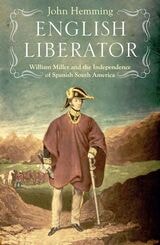
English Liberator
William Miller and the Independence of Spanish South AmericaJohn Hemming
Haus Publishing, 2025
During Admiral Thomas Cochrane’s demolition of imperial Spain’s naval presence in the Pacific amid the revolutionary wars for Spanish South America, all the raids were carried out by his marines under a young officer called William Miller. One of three sons of a baker in a small village in Kent, with no family influence, money, or even secondary education, he came from nowhere, but he went on to have a meteoric rise in the armies that liberated the nations of Chile and Peru. By the time of Ayacucho in 1824, the large battle that ended Spanish rule in South America, there were seven generals in the royalist Spanish army and five on the patriot side. Eleven of these generals were Hispanic; Miller was the only foreigner.
Set in the context of the great European powers’ weakening grip over their global empires and the ensuing wars of independence in Spanish South America, John Hemming’s gripping narrative spans Miller’s time as a teenage soldier in Wellington’s Peninsular War, his contribution to the liberation of the new nations Chile and Peru, and his years in diplomacy thereafter. Drawing on written accounts by many of Miller’s contemporaries in addition to a wealth of modern research, Hemming casts the anti-imperialist, anti-slavery soldier as highly regarded by all the leaders of independence and popular with ordinary people and peasant farmers due to his own humble origins—a legacy evidenced by his burial in the Pantheon of founding fathers of Peru decades after the battles in which he made his name.
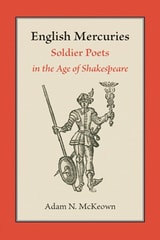
English Mercuries
Soldier Poets in the Age of ShakespeareAdam N. McKeown
Vanderbilt University Press, 2009
These misgivings are a powerful undercurrent in much of the literature of the period, even the most ostensibly patriotic works, but it is in the writings on war by soldier poets where they are most clearly pronounced. Fashioning themselves as servants of both Mars and Mercury (the god of war and the god of writing), Elizabethan soldier poets focused their war stories on the gritty realities of military campaigning, the price individuals paid for serving the state, and the difficulties of returning to civilian life. The book reconsiders some familiar writers like John Donne and Ben Jonson in the context of their military experiences and provides comprehensive studies of some important but underappreciated soldier poets like Thomas Churchyard, George Gascoigne, and John Harington.

English Pastoral Music
From Arcadia to Utopia, 1900-1955Eric Saylor
University of Illinois Press, 2017

English Society
1580-1680Wrightson, Keith
Rutgers University Press, 2003
English Theatrical Anecdotes, 1660-1800
Heather Ladd
University of Delaware Press, 2022
English Women Staging Islam, 1696-1707
Delarivier Manley and Mary Pix
Iter Press, 2012
English in Print from Caxton to Shakespeare to Milton
Valerie Hotchkiss and Fred C. Robinson
University of Illinois Press, 2007

Engraving the Savage
The New World and Techniques of CivilizationMichael Gaudio
University of Minnesota Press, 2008
In 1585, the British painter and explorer John White created images of Carolina Algonquian Indians. These images were collected and engraved in 1590 by the Flemish publisher and printmaker Theodor de Bry and were reproduced widely, establishing the visual prototype of North American Indians for European and Euro-American readers.
In this innovative analysis, Michael Gaudio explains how popular engravings of Native American Indians defined the nature of Western civilization by producing an image of its “savage other.” Going beyond the notion of the “savage” as an intellectual and ideological construct, Gaudio examines how the tools, materials, and techniques of copperplate engraving shaped Western responses to indigenous peoples. Engraving the Savage demonstrates that the early visual critics of the engravings attempted-without complete success-to open a comfortable space between their own “civil” image-making practices and the “savage” practices of Native Americans-such as tattooing, bodily ornamentation, picture-writing, and idol worship. The real significance of these ethnographic engravings, he contends, lies in the traces they leave of a struggle to create meaning from the image of the American Indian.
The visual culture of engraving and what it shows, Gaudio reasons, is critical to grasping how America was first understood in the European imagination. His interpretations of de Bry’s engravings describe a deeply ambivalent pictorial space in between civil and savage-a space in which these two organizing concepts of Western culture are revealed in their making.
Michael Gaudio is assistant professor of art history at the University of Minnesota.
Enigmas of Sacrifice
A Critique of Joseph M. Plunkett and the Dublin Insurrection of 1916W. J. Mc Cormack
Michigan State University Press, 2016
Enlightenment Biopolitics
A History of Race, Eugenics, and the Making of CitizensWilliam Max Nelson
University of Chicago Press, 2024
In Enlightenment Biopolitics, historian William Max Nelson pursues the ambitious task of tracing the context in which biopolitical thought emerged and circulated. He locates that context in the Enlightenment when emancipatory ideals sat alongside the horrors of colonialism, slavery, and race-based discrimination. In fact, these did not just coexist, Nelson argues; they were actually mutually constitutive of Enlightenment ideals.
In this book, Nelson focuses on Enlightenment-era visions of eugenics (including proposals to establish programs of selective breeding), forms of penal slavery, and spurious biological arguments about the supposed inferiority of particular groups. The Enlightenment, he shows, was rife with efforts to shape, harness, and “organize” the minds and especially the bodies of subjects and citizens. In his reading of the birth of biopolitics and its transformations, Nelson examines the shocking conceptual and practical connections between inclusion and exclusion, equality and inequality, rights and race, and the supposed “improvement of the human species” and practices of dehumanization.
Enlightenment Orientalism
Resisting the Rise of the NovelSrinivas Aravamudan
University of Chicago Press, 2011
Srinivas Aravamudan here reveals how Oriental tales, pseudo-ethnographies, sexual fantasies, and political satires took Europe by storm during the eighteenth century. Naming this body of fiction Enlightenment Orientalism, he poses a range of urgent questions that uncovers the interdependence of Oriental tales and domestic fiction, thereby challenging standard scholarly narratives about the rise of the novel.
Enlightenment Portraits
Edited by Michel Vovelle
University of Chicago Press, 1997
The Enlightenment's leading figures cast their light in an irregular and unequal way: areas and environments in which new ideas penetrated and took effect alternated with shadowy patches. The fundamental structures of society may have remained stable, but new ways of producing, of being, and of appearing made sometimes abrupt headway. Attitudes toward life, birth, love, marriage and sexuality, and death had begun to change.
The twilight of the Enlightenment came at the end of the eighteenth century, part of a sequence of events of which the French Revolutions was simply the paroxysm.
A subtle and complex study of the Enlightenment, this book allows contemporary readers to reflect on how nineteenth- and twentieth-century scholars have constructed their views on eighteenth-century man.
Enlightenment in Colonial Egypt
Ahmad Lutfi al-Sayyid in His GenerationIsrael Gershoni and Molly Bernstein
University of Texas Press, 2026
A study of Ahmad Lutfi al-Sayyid, widely recognized as the creator of Egyptian nationalism, and his impact on Egyptian culture and history.
Ahmad Lutfi al-Sayyid (1872–1963) stands among the most creative, impactful intellectuals of modern Egypt and the Middle East. While best known as the architect of Egyptian nationalism, his nationalist endeavor was in fact part of his broader project to bring enlightenment to Egypt under the yoke of British colonialism. Through his articles, editorials, and mentoring, his newspaper al-Jarida became a key forum for the lively debates of the time, ranging from the role of Islam in society to women's inclusion, all toward shaping a unique colonial modernity for his country.
The most comprehensive study of Lutfi, his writing, and his impact, Enlightenment in Colonial Egypt deconstructs the view that he was a covert apologist for empire out of admiration for the liberal aspects of European enlightenment. Lutfi faced this duality head on: He believed it essential to embrace parts of the West’s enlightenment values and to decolonize and Egyptianize them in order to establish an authentic, indigenous, Egyptian civilization, appropriate for modernity. Israel Gershoni and Molly Bernstein argue that Lutfi successfully engaged with these most difficult challenges, shaping a detailed plan to implement enlightenment in the Egyptian national context.
Enmity and Feuding in Classical Athens
By Andrew Alwine
University of Texas Press, 2015
Much has been written about the world’s first democracy, but no book so far has been dedicated solely to the study of enmity in ancient Athens. Enmity and Feuding in Classical Athens is a long-overdue analysis of the competitive power dynamics of Athenian honor and the potential problems these feuds created for democracies.
The citizens of Athens believed that harming one’s enemy was an acceptable practice and even the duty of every honorable citizen. They sought public wins over their rivals, making enmity a critical element in struggles for honor and standing, while simultaneously recognizing the threat that personal enmity posed to the community. Andrew Alwine works to understand how Athenians addressed this threat by looking at the extant work of Attic orators. Their speeches served as the intersection between private vengeance and public sanction of illegal behavior, allowing citizens to engage in feuds within established parameters. This mediation helped support Athenian democracy and provided the social underpinning to allow it to function in conjunction with Greek notions of personal honor.
Alwine provides a framework for understanding key issues in the history of democracy, such as the relationship between private and public realms, the development of equality and the rule of law, and the establishment of individual political rights. Serving also as a nuanced introduction to the works of the Attic orators, Enmity and Feuding in Classical Athens is an indispensable addition to scholarship on Athens.
Enquiries into Religion and Culture (The Works of Christopher Dawson)
Christopher Dawson
Catholic University of America Press, 2009