210 books match the query 'African Studies' and 6 start with f
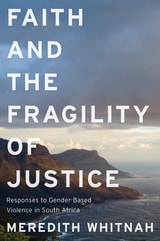
cover of Faith and the Fragility of Justice: Responses to Gender-Based Violence in South Africa

Faith and the Fragility of Justice

Responses to Gender-Based Violence in South Africa

Meredith Whitnah

Rutgers University Press, 2025

South Africa has repeatedly made international headlines because of its high rates of gender-based violence. In the midst of a wide range of responses to the problem, an important voice has been largely absent. Why are the religious groups that had famously protested the racial violence of apartheid faltering in their response to gendered violence in the democracy? Faith and the Fragility of Justice answers this question through a deep dive into the public discourse of three Protestant Christian organizations that had been adamant about a theological mandate to challenge apartheid, but have varied in their responses to gender-based violence in the democracy. The central argument of the book is that the organizations’ theological convictions intersect with their posture toward various social groups to shape their actions. In making this argument, Meredith Whitnah demonstrates that religious beliefs are a central dimension of institutional processes that sustain or challenge social inequality and violence.
[more]
cover of Floating Power: Energy, Infrastructure, and South-South Relations

Floating Power

Energy, Infrastructure, and South-South Relations

Gökçe Günel

Duke University Press, 2026
Floating Power considers the role of energy production on an international scale, challenging the idea that new infrastructures wholly replace older sources of energy. Shifting the discussion from energy transition to energy accumulation, Gökçe Günel engages with a range of electricity producers including hydroelectric, heavy fuel oil, natural gas, and solar power plants, noting their intersections as societies work to expand their supply at large rather than focus on one type of source. Günel uses the Ayşegül Sultan, a Turkish-built floating power plant in Ghana, as a prime example and vehicle to explore how state and corporate intervention impact energy technologies as every nation strives toward infrastructural expansion. Floating Power challenges the linear thinking and substitutive logic of mainstream energy discourse, instead showing how various power sources often expand and grow symbiotically.
[more]
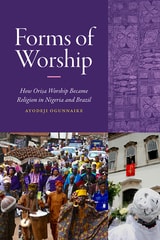
cover of Forms of Worship: How Orisa Worship Became Religion in Nigeria and Brazil

Forms of Worship

How Orisa Worship Became Religion in Nigeria and Brazil

Ayodeji Ogunnaike

Duke University Press, 2026

The worship of Yoruba deities known as oriṣa is commonly understood as an indigenous African religion, but Ayodeji Ogunnaike argues that these traditions initially differed from the modern Western concept of religion. In Forms of Worship, Ogunnaike analyzes how the configuration of oriṣa worship has changed across the Yoruba diaspora and homeland. As the meaning of the Yoruba word ẹsin, usually translated as “religion,” is closer to “form of worship,” he examines how reorienting understandings of oriṣa traditions as multiple forms of worship changes how religious identity, practice, and dynamics can be understood in contemporary and historical perspectives. By developing indigenous models for religious phenomena, Ogunnaike accounts for Yoruba cultural dynamics, including the high degree of religious harmony, syncretism, and interaction prevalent both in Nigeria and Brazil. Furthermore, he tracks the subtle and largely unperceived shift in oriṣa worship toward a more modern, closed, and rigid conception of religion and its resulting complications. Forms of Worship demonstrates how the advent of Western religious rigidity regarding practice and identity has led to rising religious tensions and fragmentation.
[more]
cover of Freedom as Form: Gavin Jantjes, Anti-Apartheid, and the Transnational Avant-Garde

Freedom as Form

Gavin Jantjes, Anti-Apartheid, and the Transnational Avant-Garde

Allison K. Young

Duke University Press, 2027
In Freedom as Form, Allison K. Young examines the artistic lineage and oeuvre of the South African artist Gavin Jantjes, a prolific printmaker, painter, writer, curator, and activist who fled apartheid to study in Germany and went on to take residence in England and Norway. Known for his portrayals of the global Black struggle for freedom that defy expectations of Black creativity within Eurocentric traditions, Jantjes’s art reflects experiences of apartheid, movement, and transformation. Spanning multiple localities, mediums, and styles, his practice is connected to numerous international milieus and artistic networks, from Cold War-era German art to British Pop, and from South African resistance art to the millennial global turn. Young situates Jantjes’s art across international curatorial and artistic debates, interdisciplinary platforms, and collective actions. In so doing, she models a methodology for a nomadic art history suited to the transnational, exilic experiences of twentieth-century artists whose lives were affected by migration—a methodology inspired by Jantjes’s own dialogic, interdisciplinary, and border-crossing practice that troubles boundaries of genre, style, and nation states.
[more]
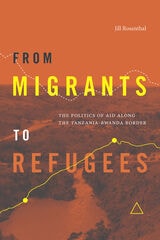
cover of From Migrants to Refugees: The Politics of Aid along the Tanzania-Rwanda Border

From Migrants to Refugees

The Politics of Aid along the Tanzania-Rwanda Border

Jill Rosenthal

Duke University Press, 2023
In From Migrants to Refugees Jill Rosenthal tells the history of how Rwandan migrants in a Tanzanian border district became considered either citizens or refugees as nation-state boundaries solidified in the wake of decolonization. Outlining the process by which people who have long lived and circulated across the Rwanda-Tanzania border came to have a national identity, Rosenthal reveals humanitarian aid’s central role in the ideological processes of decolonization and nation building. From precolonial histories to the first Rwandan refugee camps during decolonization in the 1960s to the massive refugee camps in the 1990s, Rosenthal highlights the way that this area became a testing ground for novel forms of transnational aid to refugees that had global implications. As local and national actors, refugees, and international officials all attempted to control the lives and futures of refugee groups, they contested the authority of the nation-state and the international refugee regime. This history, Rosenthal demonstrates, illuminates how tensions between state and international actors divided people who share a common history, culture, and language across national borders.
[more]
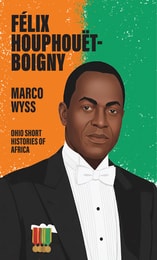
cover of Félix Houphouët-Boigny

Félix Houphouët-Boigny

Marco Wyss

Ohio University Press, 0

Félix Houphouët-Boigny, who ruled Côte d’Ivoire from independence in 1960 until his death in 1993, remains one of the most influential and controversial figures in modern African history. Revered by some as the “old sage” who transformed his country into an economic powerhouse and a haven of stability during the Cold War and reviled by others as a neocolonial collaborator whose policies sowed the seeds of later crisis, Houphouët-Boigny left a legacy that continues to shape debates about postcolonial governance and African international relations. This first English-language biography offers a comprehensive and nuanced portrait of Houphouët-Boigny’s life and career. It traces his journey from Baoulé nobility and early prominence in colonial politics to his emergence as a leading African statesman after World War II. The book examines his shifting ideological positions—championing France’s imperial project, then embracing African nationalism during the collapse of the French Community—and his pivotal role in negotiating Côte d’Ivoire’s postcolonial relationship with France. Houphouët-Boigny consolidated domestic power into a de facto one-party state, furthering his increasingly authoritarian tendencies and his efforts to modernize Côte d’Ivoire through economic development and grand architectural projects. Beyond domestic issues, the biography explores Houphouët-Boigny’s ambitions on the continental stage. It details his Cold War maneuvers, often in partnership with France, as he pursued regional dominance against figures like Kwame Nkrumah, supported Moïse Tshombe in the Congo, aided Biafra during the Nigerian Civil War, and even engaged with apartheid South Africa. By situating Houphouët-Boigny within the broader dynamics of Françafrique—the enduring neocolonial entanglement between France and its former African colonies—this biography sheds light on the complexities of postcolonial rule. It offers essential insights into the political, economic, and diplomatic forces that shaped Africa in the second half of the twentieth century and that continue to resonate today.

[more]