Results by title
702 books match the query 'America' and 29 start with f

FANNY WRIGHT
REBEL IN AMERICACelia Morris
University of Illinois Press, 1992
-- New York Times Book Review
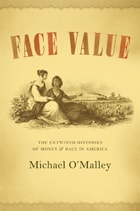
Face Value
The Entwined Histories of Money and Race in AmericaMichael O'Malley
University of Chicago Press, 2012
From colonial history to the present, Americans have passionately, even violently, debated the nature and the character of money. They have painted it and sung songs about it, organized political parties around it, and imprinted it with the name of God—all the while wondering: is money a symbol of the value of human work and creativity, or a symbol of some natural, intrinsic value?
In Face Value, Michael O’Malley provides a deep history and a penetrating analysis of American thinking about money and the ways that this ambivalence unexpectedly intertwines with race. Like race, money is bound up in questions of identity and worth, each a kind of shorthand for the different values of two similar things. O’Malley illuminates how these two socially constructed hierarchies are deeply rooted in American anxieties about authenticity and difference.
In this compelling work of cultural history, O’Malley interprets a stunning array of historical sources to evaluate the comingling of ideas about monetary value and social distinctions. More than just a history, Face Value offers us a new way of thinking about the present culture of coded racism, gold fetishism, and economic uncertainty.
Faint Praise
The Plight of Book Reviewing in AmericaGail Pool
University of Missouri Press, 2007
For more than two hundred years, book reviewers have influenced American readers, setting our literary agenda by helping us determine not only what we read but also what we think about what we read. And for nearly as long, critics of these critics have lambasted book reviews for their overpraise, hostility, banality, and bias.
Faint Praise takes a hard and long-overdue look at the institution of book reviewing. Gail Pool, herself an accomplished reviewer and review editor, analyzes the inner workings of this troubled trade to show how it works—and why it so often fails to work well. She reveals why bad reviewing happens despite good intentions and how it is that so many intelligent people who love books can say so many unintelligent things on their behalf.
Reviewers have the power to award prestige to authors, give prominence to topics, and shape opinion and taste; yet most readers have little knowledge of why certain books are selected for review, why certain reviewers are selected to review them, and why they so often praise books that aren’t all that good. Pool takes readers behind the scenes to describe how editors choose books for review and assign them to reviewers, and she examines the additional roles played by publishers, authors, and readers. In describing the context of reviewing, she reveals a culture with little interest in literature, much antipathy to criticism, and a decided weakness for praise. In dissecting the language of reviews, Pool demonstrates how it often boils down to unbelievable hype.
Pool explores the multifaceted world of book reviewing today, contrasting traditional methods of reviewing with alternative book coverage, from Amazon.com to Oprah, and suggesting how the more established practices could be revised. She also explores the divide between service journalism practiced by reviewers versus the alleged high art served up by literary critics—and what this fuzzy boundary between reviewing and criticism really means.
This is the first book to analyze the field in depth, weighing the inherent difficulties of reviewing against the unacceptable practices that undermine the very reasons we read—and need—reviews. Faint Praise is a book not just for those who create and review books but also for everyone who loves books. By demystifying this hidden process, Pool helps everyone understand how to read reviews—and better decide what to read.

Faith, Family, and Flag
Branson Entertainment and the Idea of AmericaJoanna Dee Das
University of Chicago Press, 2025
Branson, Missouri, the Ozark Mountain mecca of wholesome entertainment, has been home to countless stage shows espousing patriotism and Christianity, welcoming over ten million visitors a year. Some consider it “God’s Country” and others “as close to Hell as anything on Earth.” For Joanna Dee Das, Branson is a political, religious, and cultural harbinger of a certain enduring dream of what America is. She takes Branson more seriously than the light-hearted fun it advertises—and maybe we should too.
For Das, Branson’s performers offer visions of the American Dream that embody a set of values known as the three Fs: faith, family, and flag. Branson boosters insist that these are universal values that welcome all people; the city aims to capture as many tourists as possible. But over the past several decades, faith, family, and flag have become markers of contemporary conservatism. The shows and culture of Branson, for all their fun and laughter, have been a galvanizing political force for white, working-and-middle class, Christian Americans. For social and economic conservatives alike, Branson is practically proof-of-concept for America as they want it to be.
Faith, Family, and Flag is a comprehensive history of the Branson entertainment industry, within the context of America’s long culture wars. Das reveals how and why a town known for popular entertainment, a domain associated most often with the political left (“Hollywood liberals”), came to be so important to the political right and its vision for America.
Faith, Family, and Flag
Branson Entertainment and the Idea of AmericaJoanna Dee Das
University of Chicago Press, 2025
Sons of Britches. The Great American Chuckwagon Dinner Show. The Haygoods. The Grand Jubilee. These are just a couple of the many shows performed in Branson, MO, a popular tourist destination that has played a role in the nation’s culture wars for over one hundred years.
Branson, Missouri, the Ozark Mountain mecca of wholesome entertainment, has been home to countless stage shows espousing patriotism and Christianity, welcoming over ten million visitors a year. Some consider it “God’s Country” and others “as close to Hell as anything on Earth.” For Joanna Dee Das, Branson is a political, religious, and cultural harbinger of a certain enduring dream of what America is. She takes Branson more seriously than the light-hearted fun it advertises—and maybe we should too.
For Das, Branson’s performers offer visions of the American Dream that embody a set of values known as the three Fs: faith, family, and flag. Branson boosters insist that these are universal values that welcome all people; the city aims to capture as many tourists as possible. But over the past several decades, faith, family, and flag have become markers of contemporary conservatism. The shows and culture of Branson, for all their fun and laughter, have been a galvanizing political force for white, working-and-middle class, Christian Americans. For social and economic conservatives alike, Branson is practically proof-of-concept for America as they want it to be.
Faith, Family, and Flag is a comprehensive history of the Branson entertainment industry, within the context of America’s long culture wars. Das reveals how and why a town known for popular entertainment, a domain associated most often with the political left (“Hollywood liberals”), came to be so important to the political right and its vision for America.
Fascism Comes to America
A Century of Obsession in Politics and CultureBruce Kuklick
University of Chicago Press, 2022
From the time Mussolini took power in Italy in 1922, Americans have been obsessed with and brooded over the meaning of fascism and how it might migrate to the United States. Fascism Comes to America examines how we have viewed fascism overseas and its implications for our own country. Bruce Kuklick explores the rhetoric of politicians, who have used the language of fascism to smear opponents, and he looks at the discussions of pundits, the analyses of academics, and the displays of fascism in popular culture, including fiction, radio, TV, theater, and film. Kuklick argues that fascism has little informational meaning in the United States, but instead, it is used to denigrate or insult. For example, every political position has been besmirched as fascist. As a result, the term does not describe a phenomenon so much as it denounces what one does not like. Finally, in displaying fascism for most Americans, entertainment—and most importantly film—has been crucial in conveying to citizens what fascism is about. Fascism Comes to America has been enhanced by many illustrations that exhibit how fascism was absorbed into the US public consciousness.
Fascism Comes to America
A Century of Obsession in Politics and CultureBruce Kuklick
University of Chicago Press, 2022
A deeply relevant look at what fascism means to Americans.
From the time Mussolini took power in Italy in 1922, Americans have been obsessed with and brooded over the meaning of fascism and how it might migrate to the United States. Fascism Comes to America examines how we have viewed fascism overseas and its implications for our own country. Bruce Kuklick explores the rhetoric of politicians, who have used the language of fascism to smear opponents, and he looks at the discussions of pundits, the analyses of academics, and the displays of fascism in popular culture, including fiction, radio, TV, theater, and film. Kuklick argues that fascism has little informational meaning in the United States, but instead, it is used to denigrate or insult. For example, every political position has been besmirched as fascist. As a result, the term does not describe a phenomenon so much as it denounces what one does not like. Finally, in displaying fascism for most Americans, entertainment—and most importantly film—has been crucial in conveying to citizens what fascism is about. Fascism Comes to America has been enhanced by many illustrations that exhibit how fascism was absorbed into the US public consciousness.

Female Gladiators
Gender, Law, and Contact Sport in AmericaSarah K. Fields
University of Illinois Press, 2004
Female Gladiators is the first book to examine legal and social battles over the right of women to participate with men in contact sports. The impetus to begin legal proceedings was the 1972 enactment of Title IX, which prohibited discrimination in educational settings, but it was the Equal Protection Clause of the U.S. Constitution and the equal rights amendments of state constitutions that ultimately opened doors. Despite court rulings, however, many in American society resisted—and continue to resist—allowing girls in dugouts and other spaces traditionally defined as male territories.
Inspired, women and girls began to demand access to the contact sports which society had previously deemed too strenuous or violent for them to play. When the leagues continued to bar girls simply because they were not boys, the girls went to court. Sarah K. Fields's Female Gladiators is the only book to examine the legal and social battles over gender and contact sport that continue to rage today.
Fernández de Oviedo's Chronicle of America
A New History for a New WorldBy Kathleen Ann Myers
University of Texas Press, 2007
Gonzalo Fernández de Oviedo (1478-1557) wrote the first comprehensive history of Spanish America, the Historia general y natural de las Indias, a sprawling, constantly revised work in which Oviedo attempted nothing less than a complete account of the Spanish discovery, conquest, and colonization of the Americas from 1492 to 1547, along with descriptions of the land's flora, fauna, and indigenous peoples. His Historia, which grew to an astounding fifty volumes, includes numerous interviews with the Spanish and indigenous leaders who were literally making history, the first extensive field drawings of America rendered by a European, reports of exotic creatures, ethnographic descriptions of indigenous groups, and detailed reports about the conquest and colonization process.
Fernández de Oviedo's Chronicle of America explores how, in writing his Historia, Oviedo created a new historiographical model that reflected the vastness of the Americas and Spain's enterprise there. Kathleen Myers uses a series of case studies—focusing on Oviedo's self-portraits, drawings of American phenomena, approaches to myth, process of revision, and depictions of Native Americans—to analyze Oviedo's narrative and rhetorical strategies and show how they relate to the politics, history, and discursive practices of his time. Accompanying the case studies are all of Oviedo's extant field drawings and a wide selection of his text in English translation.
The first study to examine the entire Historia and its evolving rhetorical and historical context, this book confirms Oviedo's assertion that "the New World required a different kind of history" as it helps modern readers understand how the discovery of the Americas became a catalyst for European historiographical change.
Festive Devils of the Americas
Edited by Milla Cozart Riggio, Angela Marino, and Paolo Vignolo
Seagull Books, 2015
Each section of this volume opens with regional maps ranging from the Andes, Afro-Atlantic, and Caribbean, to Central and North America. However, festive devils defy geographical as well as moral boundaries. From Brazil’s Candomblé to New Mexico’s dance halls, festive devils and their stories sustain and transform ancestral memory, recast historical narratives, and present political, social, and cultural alternatives in many guises. Within economic, political, and religious cross-currents, these paradoxical figures affirm the spirit of community within the framework of subversion and inversion found at the heart of the festival world.
Fetch the Devil
The Sierra Diablo Murders and Nazi Espionage in AmericaClint Richmond
University Press of New England, 2014

Finance in America
An Unfinished StoryKevin R. Brine and Mary Poovey
University of Chicago Press, 2017
To understand finance, however, we have to learn its history, and this book fills that need. Kevin R. Brine, an industry veteran, and Mary Poovey, an acclaimed historian, show that finance as we know it today emerged gradually in the late nineteenth century and only coalesced after World War II, becoming ever more complicated—and ever more central to the American economy. The authors explain the models, regulations, and institutions at the heart of modern finance and uncover the complex and sometimes surprising origins of its critical features, such as corporate accounting standards, the Federal Reserve System, risk management practices, and American Keynesian and New Classic monetary economics. This book sees finance through its highs and lows, from pre-Depression to post-Recession, exploring the myriad ways in which the practices of finance and the realities of the economy influenced one another through the years.
A masterwork of collaboration, Finance in America lays bare the theories and practices that constitute finance, opening up the discussion of its role and risks to a broad range of scholars and citizens.
Finding Mecca in America
How Islam Is Becoming an American ReligionMucahit Bilici
University of Chicago Press, 2012

Fire under the Ashes
An Atlantic History of the English RevolutionJohn Donoghue
University of Chicago Press, 2013
Prominent merchant revolutionaries from Coleman Street led England’s imperial expansion by investing deeply in the slave trade and projects of colonial conquest. Opposing them were other Coleman Street puritans, who having crossed and re-crossed the ocean as colonists and revolutionaries, circulated new ideas about the liberty of body and soul that they defined against England’s emergent, political economy of empire. These transatlantic radicals promoted social justice as the cornerstone of a republican liberty opposed to both political tyranny and economic slavery—and their efforts, Donoghue argues, provided the ideological foundations for the abolitionist movement that swept the Atlantic more than a century later.

First Contact
Speculative Visions of the Conquest of the AmericasZac Zimmer
Northwestern University Press, 2025
Examining the power of speculative fiction to reimagine historical accounts of the conquest of the Americas
The historical conquest of the Americas resides at the core of all first-contact narratives, which stage colonization and resistance in the generic guise of speculative fiction. Starting from this axiom, First Contact: Speculative Visions of the Conquest of the Americas moves through a corpus of Mexican novels, Andean visual arts practices, and other cultural artifacts that have dramatized counterfactual narratives. Reimagining the early colonial period’s historiography from a south-to-north directionality while inventing parallel realities, these texts, which are concerned with limit cases, alterities, and alternative temporalities, refuse any reliance on the imperial ontologies of European expansion. Zac Zimmer examines these works to explore the slippage that exists between science fiction as the exemplary genre of the modern, colonial reality and literary speculation as an aesthetic tool that can be used to imagine other possible worlds. First Contact thus poses a foundational question: Can we understand the conquest as an originary world-historical event without eclipsing the other cosmologies that existed, and continue to exist, within the contact zone? Can we decolonize the speculative imagination itself?
Fit to Be Tied
Sterilization and Reproductive Rights in America, 1950-1980Kluchin, Rebecca M
Rutgers University Press, 2011
During the first half of the twentieth century, sterilization (tubal ligation and vasectomy) was a tool of eugenics. Individuals who endorsed crude notions of biological determinism sought to control the reproductive decisions of women they considered "unfit" by nature of race or class, and used surgery to do so. Incorporating first-person narratives, court cases, and official records, Rebecca M. Kluchin examines the evolution of forced sterilization of poor women, especially women of color, in the second half of the century and contrasts it with demands for contraceptive sterilization made by white women and men. She chronicles public acceptance during an era of reproductive and sexual freedom, and the subsequent replacement of the eugenics movement with "neo-eugenic" standards that continued to influence American medical practice, family planning, public policy, and popular sentiment.
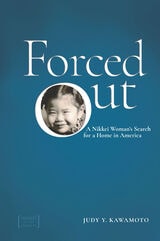
Forced Out
A Nikkei Woman's Search for a Home in AmericaJudy Y. Kawamoto
University Press of Colorado, 2020
Forced Out: A Nikkei Woman’s Search for a Home in America offers insight into “voluntary evacuation,” a little-known Japanese American experience during World War II, and the lasting effects of cultural trauma. Of the roughly 120,000 people forced from their homes by Executive Order 9066, around 5,000 were able to escape incarceration beforehand by fleeing inland. In a series of beautifully written essays, Judy Kawamoto recounts her family’s flight from their home in Washington to Wyoming, their later moves to Montana and Colorado, and the influence of those experiences on the rest of her life. Hers is a story shared by the many families who lost everything and had to start over in often suspicious and hostile environments.
Kawamoto vividly illustrates the details of her family’s daily life, the discrimination and financial hardship they experienced, and the isolation that came from experiencing the horrors of the 1940s very differently than many other Japanese Americans. Chapters address her personal and often unconscious reactions to her parents’ trauma, as well as her own subsequent travels around much of the world, exploring, learning, enjoying, but also unconsciously acting out a continual search for a home.
Showing how the impacts of traumatic events are collective and generational, Kawamoto draws
interconnections between her family’s displacement and later aspects of her life and juxtaposes the impact of her early experiences and questions of identity, culture, and assimilation. Forced Out will be of great interest to the general reader as well as students and scholars of ethnic studies, Asian American studies, history, education, and mental health.
2022 Asian/Pacific American Award for Literature, Honor Title, Adult Non-Fiction Literature
2022 Evans Handcart Award Winner

Fourth City
Essays from the Prison in AmericaEdited by Doran Larson
Michigan State University Press, 2014

Franchising Dreams
The Lure of Entrepreneurship in AmericaPeter M. Birkeland
University of Chicago Press, 2002
Peter M. Birkeland worked for three years in the front-line operations of franchise units for three companies, met with CEOs and executives, and attended countless trade shows, seminars, and expositions. All this firsthand experience gave him unprecedented access to the hopes and aspirations of franchisees. His book closely traces different franchisees and follows them as their dreams of wealth and independence buckle beneath the weight of frustrating logistics and contractual technicalities. Through extensive interviews and research, Birkeland not only discovers what makes franchisees succeed or fail, he uncovers the difficulties in running a business according to someone else's system and values. Bearing witness to a market flooded with fierce competitors and dependent on the inscrutable whims of consumers, he uncovers the numerous challenges that franchisees face in making their businesses succeed.
Francisco López de Gómara's General History of the Indies
Ángela Helmer
University Press of Colorado, 2023
General History of the Indies was the first universal history of the recent discoveries and conquests of the New World made available to the Old World audience. At publication it consisted of two parts: the first a general history of the European discovery, conquest, and settlement of the Americas, and the second a detailed description of Cortés’s conquest of Mexico. Part one—in the multiple Spanish editions and translations into Italian and French published at the time—was the most comprehensive, popular, and accessible account of the natural history and geography of the Americas, the ethnology of the peoples of the New World, and the history of the Spanish conquest, including the most recent developments in Peru. Despite its original and continued importance, however, it had never been translated into English.
Gómara’s history communicates Europeans’ general understanding of the New World throughout the middle and later sixteenth century. A lively, comparatively brief description of Europe’s expansion into the Americas with significant importance to today’s understanding of the early modern worldview, Francisco López de Gómara’s General History of the Indies will be of great interest to students of and specialists in Latin American history, Latin American literature, anthropology, and cultural studies, as well as specialists in Spanish American intellectual history and colonial Latin America.
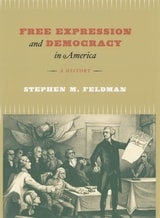
Free Expression and Democracy in America
A HistoryStephen M. Feldman
University of Chicago Press, 2008
Charting the course of free expression alongside the nation’s political evolution, from the birth of the Constitution to the quagmire of the Vietnam War, Stephen M. Feldman argues that our level of freedom is determined not only by the Supreme Court, but also by cultural, social, and economic forces. Along the way, he pinpoints the struggles of excluded groups—women, African Americans, and laborers—to participate in democratic government as pivotal to the development of free expression. In an age when our freedom of speech is once again at risk, this momentous book will be essential reading for legal historians, political scientists, and history buffs alike.
Free Spaces
The Sources of Democratic Change in AmericaSara M. Evans and Harry C. Boyte
University of Chicago Press, 1992
In Free Spaces, Sara M. Evans and Harry C. Boyte argue for a new understanding of the foundations for democratic politics by analyzing the settings in which people learn to participate in democracy. In their new Introduction, the authors link the concept of free spaces to recent theoretical discussions about community, public life, civil society, and social movements.
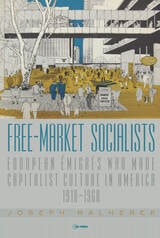
Free-Market Socialists
European Émigrés Who Made Capitalist Culture in America, 1918–1968Joseph Malherek
Central European University Press, 2022
The Hungarian artist-designer László Moholy-Nagy, the Austrian sociologist Paul Lazarsfeld, and his fellow Viennese Victor Gruen—an architect and urban planner—made careers in different fields. Yet they shared common socialist politics, Jewish backgrounds, and experience as refugees from the Nazis. This book tells the story of their intellectual migration from Central Europe to the United States, beginning with the collapse of the Habsburg Empire, and moving through the heady years of newly independent social-democratic republics before the descent into fascism. It follows their experience of exile and adaptation in a new country, and culminates with a surprising outcome of socialist thinking: the opening of the first fully enclosed, air-conditioned suburban shopping center in the United States. Although the American culture they encountered ostensibly celebrated entrepreneurial individualism and capitalistic “free enterprise,” Moholy-Nagy, Lazarsfeld, and Gruen arrived at a time of the progressive economic reforms of the New Deal and an extraordinary open-mindedness about social democracy. This period of unprecedented economic experimentation nurtured a business climate that, for the most part, did not stifle the émigrés’ socialist idealism but rather channeled it as the source of creative solutions to the practical problems of industrial design, urban planning, and consumer behavior.
Based on a vast array of original sources, Malherek interweaves the biographies of these three remarkable personalities and those of their wives, colleagues, and friends with whom they collaborated on innovative projects that would shape the material environment and consumer culture of their adopted home. The result is a narrative of immigration and adaptation that challenges the crude binary of capitalism and socialism with a story of creative economic hybridization.
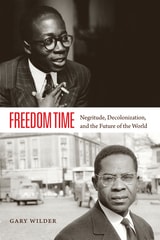
Freedom Time
Negritude, Decolonization, and the Future of the WorldGary Wilder
Duke University Press, 2015
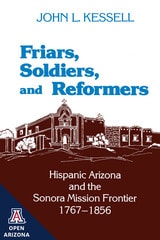
Friars, Soldiers, and Reformers
Hispanic Arizona and the Sonora Mission Frontier, 1767–1856John L. Kessell
University of Arizona Press, 1976
Kessell provides exciting accounts of the explorations of Francisco Garcés, de Anza's expeditions, and the Yuma massacre. Drawing from widely scattered archival materials, he vividly describes the epic struggle between Bishop Reyes and Father President Barbastro, the missionary scandals of 1815–18, and the bloody victory of Mexican civilian volunteers over Apaches in Arivaipa Canyon in 1832. Numerous missionaries, presidials, and bureaucrats—nameless in histories until now—emerge as living, swearing, praying, individuals.
This authoritative chronicle offers an engrossing picture of the continually threatened mission frontier. Reformers championing civil rights for mission Indians time and again challenged the friars' "tight-fisted paternalistic control" over their wards. Expansionists repeatedly saw their plans dashed by Indian raids, uncooperative military officials, or lack of financial support.
Frairs, Soldiers, and Reformers brings into sharp focus the long, blurry period between Jesuit Sonora and Territorial Arizona.
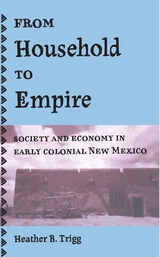
From Household to Empire
Society and Economy in Early Colonial New MexicoHeather B. Trigg
University of Arizona Press, 2005
William P. Clements Center for Southwest Studies, Southern Methodist University
Settlers at Santa Fe and outlying homesteads during the seventeenth century established a thriving economy that saw the exchange of commodities produced by indigenous peoples, settlers, and Franciscan friars for goods manufactured as far away as China, France, and Turkey. This early Spanish colonial period in New Mexico provides an opportunity to explore both economic activity within a colony and the relations between colony and homeland. By examining the material remains of this era from 1598 to 1680, Heather Trigg reveals a more complete picture of colonial life. Drawing on both archaeological and historical sources, Trigg analyzes the various levels of economic activity that developed: production of items in colonial households, exchanges between households, and trade between the colony and Mexico. Rather than focusing only on the flow of products and services, she also explores the social mechanisms that likely had a significant impact on the economic life of the colony. Because economic activity was important to so many aspects of daily life, she is able to show how and why colonial society worked the way it did. While focusing on the colonists, she also explores their relations with Pueblo peoples. Through her analysis of these two pools of data, Trigg generates insights not usually gleaned from the limited texts of the period, providing information about average colonists in addition to the governors and clergy usually covered in historical accounts. By using specific examples from historical documents and archaeological materials, she shows that colonists from all levels of society modified both formal and informal rules of economic behavior to better fit the reality of the colonial frontier. With its valuable comparative data on colonization, From Household to Empire provides a novel way of examining colonial economies by focusing on the maintenance and modification of social values. For all readers fascinated by the history of the Southwest, this book provides a fuller picture of life in early New Mexico than has previously been seen.
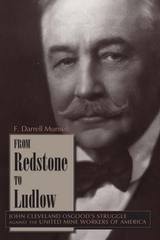
From Redstone to Ludlow
John Cleveland Osgood's Struggle against the United Mine Workers of AmericaF. Darrell Munsell
University Press of Colorado, 2009
From Redstone to Ludlow depicts the bipolarity of his approach to the threat of unionism. The "Redstone experiment," a model industrial village designed to improve the lives of workers through social programs, showed Osgood's efforts to attain his anti-union goals through compassion. Conversely, the Ludlow tent colony and the events that transpired there, marked by armed gunmen and machine guns paid for by Osgood, illustrate his willingness to resort to violence and intimidation for the same purpose. A leading participant in the transformation of the West, Osgood helped to shape the character of the Gilded Age. Today, the beautiful village of Redstone and a granite memorial at Ludlow are reminders of Osgood's complex role in the clash between labor and management during the most violent industrial struggle in American history.

From the Center of America
Steamboats and Shipyards Along the Lower Ohio RiverRobert H. Swenson
Southern Illinois University Press, 2026
Charting the legacy of mid-America's shipyards and iconic steamboats
Before the railroad stitched together the American landscape, the dominant mode of transportation in the United States was by steamboat. These grand vessels, their iconic paddlewheels churning the country’s rivers, have long captured the national imagination as symbols of innovation and adventure.
In the heart of America, four major rivers converge—the Cumberland and Tennessee with the Ohio; then the Ohio with the Mississippi. These three confluences, which author Robert Swenson christens the Four Rivers Reach, played a unique role in the development of the steamboats that dominated American continental transport for almost 100 years. Between 1825 and 1936, the river towns of Smithland, Paducah, Metropolis, Mound City, and Cairo launched 295 wood-hulled, steam-powered vessels. Drawing from a wealth of archival sources, Swenson presents detailed histories of these steamboats over a span of 110 years, accompanied by nearly one hundred illustrations and photographs.
The book focuses on distinct events in steamboat history, tracing the impact of these shipyards on the economies and communities of the river towns where they were built. It reveals how the availability of steamboats along this sixty-mile Reach affected migration, politics, and the US economy of the nineteenth century. Steamboats built at the Four Rivers Reach played pivotal roles in the forced relocation of Native Americans from southern Appalachia to Oklahoma, the outcome of the Civil War, and the Montana gold rush. From the Center of America demonstrates how steamboat building shaped the culture, people, and economy of this region—and how, in turn, the area and its steamships influenced the growth of the young United States.
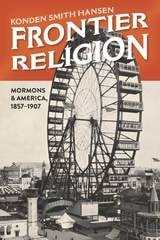
Frontier Religion
Mormons and America, 1857–1907Konden Smith Hansen
University of Utah Press, 2019
In Frontier Religion Konden Smith Hansen examines the dramatic influence these perceptions of the frontier had on Mormonism and other religions in America. Endeavoring to better understand the sway of the frontier on religion in the United States, this book follows several Mormon-American conflicts, from the Utah War and the antipolygamy crusades to the Reed Smoot hearings. The story of Mormonism’s move toward American acceptability represents a larger story of the nation’s transition to modernity and the meaning of religious pluralism. This book challenges old assumptions and provokes further study of the ever changing dialectic between society and faith.