Results by title
399 books match the query 'American fiction' and 23 start with f
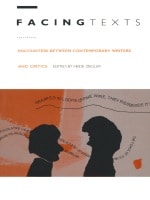
Facing Texts
Encounters Between Contemporary Writers and CriticsHeide Ziegler, ed.
Duke University Press, 1988
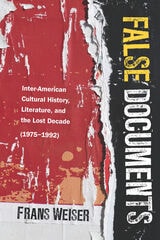
False Documents
Inter-American Cultural History, Literature, and the Lost Decade (1975–1992)Frans Weiser
The Ohio State University Press, 2020
After deconstructing economic accounts of the “two Americas" model of the hemisphere, including the lost decade (1981–1992) and the “end of history” (1975–1992), Weiser considers six case studies during the same period that reach very different conclusions by drawing on cultural history, including works by Tomás Eloy Martínez, Laura Antillano, Ana Maria Machado, Silviano Santiago, John Updike, and Jay Cantor. In order to expose how governments controlled and misrepresented recent events, these writers created false documents, or fake historical texts, that presented themselves as legitimate eyewitness accounts or archival documents. Weiser establishes how this alternative to postmodern irony more effectively galvanized citizen responses. As the first book to contextualize the parallel, hemispheric evolutions of postwar literary criticism and cultural historiography, False Documents responds to the methodological impasse between Latin American and American studies as well as the antagonism between history and literature, arguing that collaboration and synthesis are particularly vital at a moment when the humanities is increasingly under attack.
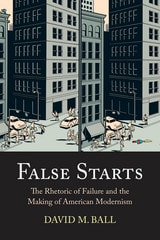
False Starts
The Rhetoric of Failure and the Making of American ModernismDavid M. Ball
Northwestern University Press, 2014

Fang-tastic Fiction
Patricia American Library Association
American Library Association, 2011
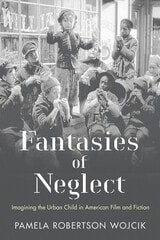
Fantasies of Neglect
Imagining the Urban Child in American Film and FictionPamela Robertson Wojcik
Rutgers University Press, 2016
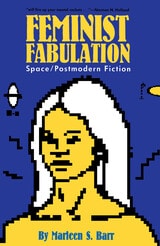
Feminist Fabulation
Space/Postmodern FictionMarleen S. Barr
University of Iowa Press, 1992
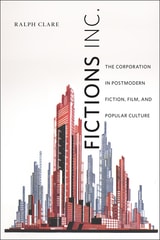
Fictions Inc.
The Corporation in Postmodern Fiction, Film, and Popular CultureClare, Ralph
Rutgers University Press, 2014
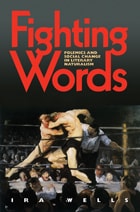
Fighting Words
Polemics and Social Change in Literary NaturalismIra Wells
University of Alabama Press, 2013
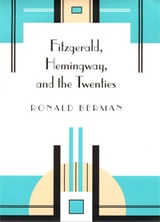
Fitzgerald, Hemingway, and the Twenties
Ronald Berman
University of Alabama Press, 2002
A noted scholar offers fresh ways of looking at two legendary American authors.
Both F. Scott Fitzgerald and Ernest Hemingway came into their own in the 1920s and did some of their best writing during that decade. In a series of interrelated essays, Ronald Berman considers an array of novels and short stories by both authors within the context of the decade's popular culture, philosophy, and intellectual history. As Berman shows, the thought of Fitzgerald and Hemingway went considerably past the limits of such labels as the Jazz Age or the Lost Generation.
Both Fitzgerald and Hemingway were avid readers, alive to the intellectual currents of their day, especially the contradictions and clashes of ideas and ideologies. Both writers, for example, were very much concerned with the problem of untenable belief—and also with the need to believe. In this light, Berman offers fresh readings of such works as Fitzgerald's The Great Gatsby, "Bernice Bobs Her Hair," and "The Diamond as Big as the Ritz" and Hemingway's "The Killers," A Farewell to Arms, and The Sun Also Rises. Berman invokes the thinking of a wide range of writers in his considerations of these texts, including William James, Alfred North Whitehead, Walter Lippman, and Edmund Wilson.
Berman's essays are driven and connected by a focused line of inquiry into Fitzgerald's and Hemingway's concerns with dogma both religious and secular, with new and old ideas of selfhood,and, particularly in the case of Hemingway, with the way we understand, explain, and transmit experience.
Fitzgerald-Wilson-Hemingway
Language and ExperienceRonald Berman
University of Alabama Press, 2003
In this study, Ronald Berman examines the work of the critic/novelist Edmund Wilson and the art of F. Scott Fitzgerald and Ernest Hemingway as they wrestled with the problems of language, experience, perception and reality in the "age of jazz." By focusing specifically on aesthetics—the ways these writers translated everyday reality into language—Berman challenges and redefines many routinely accepted ideas concerning the legacy of these authors.
Fitzgerald is generally thought of as a romantic, but Berman shows that we need to expand the idea of Romanticism to include its philosophy. Hemingway, widely viewed as a stylist who captured experience by simplifying language, is revealed as consciously demonstrating reality's resistance to language. Between these two renowned writers stands Wilson, who is critically influenced by Alfred North Whitehead, as well as Dewey, James, Santayana, and Freud.
By patiently mapping the correctness of these philosophers, historians, literary critics and writers, Berman aims to open a gateway into the era. This work should be of interest to scholars of American literature, philosophy and aesthetics; to academic libraries; to students of intellectual history; and to general readers interested in Fitzgerald, Hemingway and Wilson.
Five Strands of Fictionality
The Institutional Construction of Contemporary American FictionDaniel Punday
The Ohio State University Press, 2010
Flawed Texts and Verbal Icons
Literary Authority and American FictionHershel Parker
Northwestern University Press, 1984
Folklore in New World Black Fiction
Writing and the Oral Traditional AestheticsChiji Akoma
The Ohio State University Press, 2007
Follow My Footprints
Changing Images of Women in American Jewish FictionEdited by Sylvia Barack Fishman
Brandeis University Press, 1992
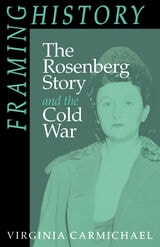
Framing History
The Rosenberg Story and the Cold WarVirginia Carmichael
University of Minnesota Press, 1993
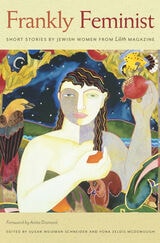
Frankly Feminist
Short Stories by Jewish Women from Lilith MagazineEdited by Susan Weidman Schneider and Yona Zeldis McDonough
Brandeis University Press, 2022
Short story collections focusing on Jewish writers have—no surprise—typically given women authors short shrift. This new volume represents the best Jewish feminist fiction published in Lilith magazine, and does what no other collection has done before in its geographic scope, its inclusion of twenty-first-century stories, and its Jewish feminist focus.
This collection showcases a wide range of stories offering variegated cultures and contexts and points of view: Persian Jews; a Biblical matriarch; an Ethiopian mother in modern Israel; suburban American teens; Eastern European academics; a sexual questioner; a Jew by choice; a new immigrant escaping her Lower East Side sweatshop; a Black Jewish marcher for justice; in Vichy France, a toddler’s mother hiding out; and more.
Organized by theme, the stories in this book emphasize a breadth of content, and our hope is that in reading you’ll appreciate the liveliness of the burgeoning self-awareness brought to life in each tale, and the occasional funny, call-your-friend-and-tell-her-about-it moment. Skip around, encounter an author whose other work you may know, be enticed by a title, or an opening line. We hope you’ll find both pleasure and enlightenment—and sometimes revelation—within these pages.
Free Women
Ethics and Aesthetics in Twentieth-Century Women's FictionKate Fullbrook
Temple University Press, 1990
Freedom's Empire
Race and the Rise of the Novel in Atlantic Modernity, 1640-1940Laura Doyle
Duke University Press, 2007
Doyle brings together authors often separated by nation, race, and period, including Aphra Behn, Eliza Haywood, Olaudah Equiano, Nathaniel Hawthorne, Harriet Wilson, Pauline Hopkins, George Eliot, and Nella Larsen. In so doing, she reassesses the strategies of early women novelists, reinterprets the significance of rape and incest in the novel, and measures the power of race in the modern English-language imagination.

From Gift to Commodity
Capitalism and Sacrifice in Nineteenth-Century American FictionHildegard Hoeller
University of New Hampshire Press, 2012
From Slave Ship to Supermax
Mass Incarceration, Prisoner Abuse, and the New Neo-Slave NovelPatrick Elliot Alexander
Temple University Press, 2017
In his cogent and groundbreaking book, From Slave Ship to Supermax, Patrick Elliot Alexander argues that the disciplinary logic and violence of slavery haunt depictions of the contemporary U.S. prison in late twentieth-century Black fiction. Alexander links representations of prison life in James Baldwin’s novel If Beale Street Could Talk to his engagements with imprisoned intellectuals like George Jackson, who exposed historical continuities between slavery and mass incarceration. Likewise, Alexander reveals how Toni Morrison’s Beloved was informed by Angela Y. Davis’s jail writings on slavery-reminiscent practices in contemporary women’s facilities. Alexander also examines recurring associations between slave ships and prisons in Charles Johnson’s Middle Passage, and connects slavery’s logic of racialized premature death to scenes of death row imprisonment in Ernest Gaines’ A Lesson Before Dying.
Alexander ultimately makes the case that contemporary Black novelists depict racial terror as a centuries-spanning social control practice that structured carceral life on slave ships and slave plantations—and that mass-produces prisoners and prisoner abuse in post–Civil Rights America. These authors expand free society’s view of torment confronted and combated in the prison industrial complex, where discriminatory laws and the institutionalization of secrecy have reinstated slavery’s system of dehumanization.
From the Civil War to the Apocalypse
Postmodern History and American FictionTimothy Parrish
University of Massachusetts Press, 2008
In addressing the postmodernist claim that history works no differently than fiction, Timothy Parrish rejects the implication that history is dead or hopelessly relativistic. Rather, he shows how the best postmodern novelists compel their readers to accept their narratives as true in the same way that historians expect their readers to accept their narratives as true. These novelists write history as a form of fiction.
If the great pre-modernist American historians are Francis Parkman, George Bancroft, and Henry Adams, who are the great modernist or postmodernist historians? In the twentieth century, Parrish argues, the most powerful works of American history were written by William Faulkner, Toni Morrison, Thomas Pynchon, Don DeLillo, Joan Didion, and Cormac McCarthy. What survives a reading of these novels is the sense that writers otherwise identified as multicultural or postmodern share the view that nothing matters more than history and what one believes its possibilities to be. In other words, Parrish concludes, history, not identity, is the ground of postmodern American fiction.
Full Metal Apache
Transactions Between Cyberpunk Japan and Avant-Pop AmericaTakayuki Tatsumi
Duke University Press, 2006
Full Metal Apache introduces English-language readers to a vast array of Japanese writers and performers and considers their work in relation to the output of William Gibson, Thomas Pynchon, H. G. Wells, Jack London, J. G. Ballard, and other Westerners. Tatsumi moves from the poetics of metafiction to the complex career of Madame Butterfly stories and from the role of the Anglo-American Lafcadio Hearn in promoting Japanese folklore within Japan during the nineteenth century to the Japanese monster Godzilla as an embodiment of both Japanese and Western ideas about the Other. Along the way, Tatsumi develops original arguments about the self-fashioning of “Japanoids” in the globalist age, the philosophy of “creative masochism” inherent within postwar Japanese culture, and the psychology of “Mikadophilia” indispensable for the construction of a cyborg identity. Tatsumi’s exploration of the interplay between Japanese and American cultural productions is as electric, ebullient, and provocative as the texts and performances he analyzes.
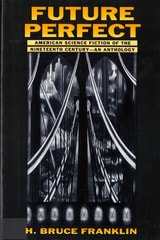
Future Perfect
American Science Fiction of the Nineteenth Century: An AnthologyFranklin, H. Bruce
Rutgers University Press, 1995
This selection of unusual storeis by important American writers-Hawthorne, Melville, Poe, Bellamy and Twain-and by less well-known tellers such as Ambrose Bierce, S. Weir Mitchell and Fitz-James O'Brien, challenges the commonly held belief that science fiction is a twenthiethcentury phenomenon, or that it began with Jule Verne and H,. G. Wells. Here are tales of marvelous inventions, automanta, biolgocial and psychological experiments, utopias, extra-sensory perception and time and space travel. Many of them have been out of print since before World War I, but they remain high in intrinsic interest of the general reader and for the specialist.
The accompanying critical essays explore the relationships between science fiction and other financial modes, and illuminate the nataure of the bonds betwen science and society and fantasies and social aspirations. Professor Franklin also offers an original, theoretical definition of science ficiton. This book comes as a revelatin. One of the best-edited anthologies I have ever encountered...Mr. Franklin's critical introductions, containing much valuable information about many works not included in this book, are as interesting as the stories he prints.