Results by title
653 books match the query 'Animals' and 34 start with f
FISHES OF OHIO
Milton B. Trautman
The Ohio State University Press, 1982
“The objectives of [this] edition are to demonstrate and explain distributional changes from 1750 to 1980, and to provide keys to the 166 species of Ohio fishes. These aims are admirably achieved. The natural factors influencing distribution of fishes are discussed in Part I, which relates the geology, physiography, topography, hydrology, and climatic history of the regions. . . . Part II reviews changes that have occurred from 1750 until 1980, and is an excellent chronicle of modern man's alternation and manipulation of essentially every aquatic ecosystem in Ohio. . . . Part III is a listing of species, synonomy and nomenclatorial history of Ohio’s fishes. . . . Part IV is an informative section of the systematics and nomenclature of fishes that is very useful to beginning students of ichthylogy. The glossary and family and species keys contained in Part V are excellent. Part VI contains the major content of the book, the 166 species accounts. . . .
“The updated range maps, a central focus of Trautman's approach, are excellent and obviously the result of endless efforts. Ohio is one of the most thoroughly surveyed of all states and to translate these data to visual understanding is an unenviable task for which the reader should be deeply appreciative. . . . Also of exceptional quality are the species illustrations originally rendered by Mrs. E. R. Weeks and Trautman himself for the 1957 edition. They are among the best of their kind in a fish reference work, and serve well to facilitate identification of specimens in hand. . . .
“Anyone concerned with or otherwise interested in the fishes, aquatic environments, or general natural history of Ohio or eastern North America should consider this book a valued addition to their library.”
—Ohio Journal of Science
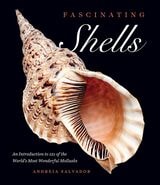
Fascinating Shells
An Introduction to 121 of the World’s Most Wonderful MollusksAndreia Salvador
University of Chicago Press, 2022
Beautiful photographs of stunning shells from London's Natural History Museum, home to one of the most significant and comprehensive collections in the world.
Collected and treasured for their beauty, used in religious rituals, or even traded as currency, shells have fascinated humans for millennia. Ancient and enchanting, dazzling in form and variety, these beautiful objects come from mollusks, one of the most diverse groups in the animal kingdom, including snails, oysters, cuttlefish, and chitons. Soft-bodied, these creatures rely on shells for protection from enemies and their environments, from snowy mountains to arid deserts, in deep-sea hydrothermal vents and the jungles of the tropics, on rocky shores, and in coral reefs.
In this book, mollusk expert Andreia Salvador profiles some of the world’s most beautiful and quirky shells, each selected from the more than eight million specimens held in the collection at London’s Natural History Museum. We lock eyes with the hundred-eyed cowry, named after "the all-seeing one," the giant Argus Panoptes of Greek mythology. We see how shells' appearances translate into defense strategies, as with the zigzag nerite, which varies its patterning to deceive and confuse predators. And we meet shell inhabitants, such as the amber snail, which eats earthworms by sucking them up like spaghetti. Reproduced in full color and striking detail, these shells have much to reveal about the history of collecting, the science of taxonomy, and the human desire to understand the natural world.
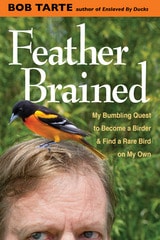
Feather Brained
My Bumbling Quest to Become a Birder and Find a Rare Bird on My OwnBob Tarte
University of Michigan Press, 2016

Feeding Strategy
Jennifer Owen
University of Chicago Press, 1982
Among both plants and animals elaborate strategies have evolved for exploring the surrounding life as food. The feeding behavior of predators is based on a search and strike strategy. In contrast, grazers live surrounded by their food and are relatively immobile. Such animals as impalas and grasshoppers, whose persistent feeding make them ready prey, have evolved means of avoiding the notice of predators or methods of speedy escape. Plants that digest animal tissue have evolved complex and devious means to attract prey.
The variations in style of these feeding encounters and the precision involved in some of the feeding mechanisms are the themes of Feeding Strategy.
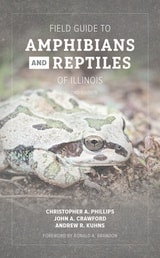
Field Guide to Amphibians and Reptiles of Illinois
Christopher A. Phillips, John A. Crawford, and Andrew R. Kuhns. Foreword by Ronald A. Brandon
University of Illinois Press, 2022
A one-of-a-kind resource, the Field Guide to Amphibians and Reptiles of Illinois is a definitive guide aimed at biologists, teachers, students, wildlife specialists, natural resource managers, conservationists, law enforcement officials, landowners, hobbyists, and everyone else eager to explore herpetology and nature in the Prairie State.
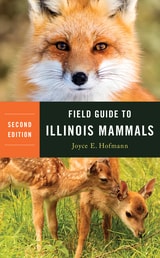
Field Guide to Illinois Mammals
Joyce E. Hofmann
University of Illinois Press, 2026
Designed to use in the field or the backyard, Field Guide to Illinois Mammals updates a singular reference for wildlife biologists, ecologists, hikers, armchair adventurers, and anyone else fascinated by the state’s wildlife.
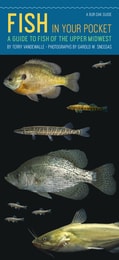
Fish in Your Pocket
A Guide to Fish of the Upper MidwestTerry VanDeWalle
University of Iowa Press, 2017
Terry VanDeWalle includes a thorough description of each species, and covers the Upper Midwest states of Kansas, Illinois, South Dakota, North Dakota, Iowa, Missouri, Indiana, Michigan, Minnesota, Ohio, Nebraska, and Wisconsin.
The careful descriptions and habitat and diet information in Fish inYour Pocket—enhanced with superb photographs by underwater photographer Garold Sneegas—make it extremely useful for anglers and naturalists alike.
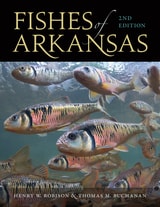
Fishes of Arkansas
Henry W. Robison
University of Arkansas Press, 2019
An invaluable reference for anyone interested in the state’s fish population—from professional ichthyologists, fisheries biologists, and managers of aquatic resources, to amateur naturalists and anglers—this new edition provides updated taxonomic keys as well as detailed descriptions, photographs, and line drawings to aid identification of the state’s 243 fish species. There is also much information on the distribution and biology of each species, including descriptions of habitat, foods eaten, reproductive biology, and conservation status.
This project and the preparation of this publication was funded in part by a grant from the Arkansas Game and Fish Commission.
Fishes of South Dakota
By Reeve M. Bailey and Marvin O. Allum
University of Michigan Press, 1962
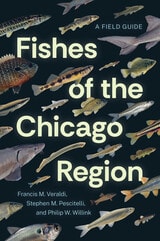
Fishes of the Chicago Region
A Field GuideFrancis M. Veraldi, Stephen M. Pescitelli, and Philip W. Willink
University of Chicago Press, 2025
“A must-have field guide for fans of Second City area fish.”—Robert Ito, The New York Times Book Review • “A treasure of hardcore fish intelligence and delightful tidbits of fish history.”—Dale Bowman, Chicago Sun-Times
Fish don’t heed state boundaries, and neither does this comprehensive, photo-filled guide to the diverse species of Chicago and beyond.
Encompassing southern Lake Michigan, northeastern Illinois, and adjacent areas of Indiana, Michigan, and Wisconsin, the Chicago Region is home to rare habitats supporting diverse fish populations. From small creeks to large rivers and from small ponds to one of the world’s largest freshwater ecosystems, Lake Michigan, these systems are home to some 164 fish species representing 31 families. In this essential field guide, the most complete and up-to-date reference for fishes in the Chicago Region, we meet them all—lampreys, sturgeon, paddlefish, gars, drum, darters, perches, sticklebacks, sculpins, and more. Written by leading local ecologists and featuring a pictorial family key, color photographs, detailed species distribution maps, and natural history observations unique to the region, this go-to guide belongs on the shelf—and in the boat—of every angler, naturalist, fisheries manager, and biologist.
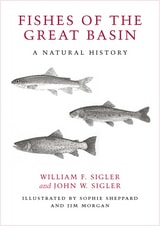
Fishes of the Great Basin
A Natural HistoryJohn W. Sigler
University of Nevada Press, 2014
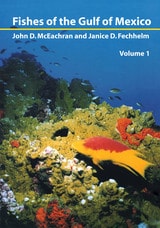
Fishes of the Gulf of Mexico, Vol. 1
Myxiniformes to GasterosteiformesBy John McEachran and Janice D. Fechhelm
University of Texas Press, 1998
The Gulf of Mexico is the ninth largest body of water in the world and contains over 15 percent of all known species of marine fishes. This diverse fish fauna has been the subject of many publications, but, until now, no work has ever surveyed all known species, including the deep sea fishes and those of the southern Gulf.
This book is the first of two volumes that will cover the entire fish fauna of the Gulf of Mexico. An introductory section that outlines the Gulf's geographical setting, geological origin, current patterns, tides, sediments, meteorology, ecology, and biological exploration is followed by a key for the forty-four orders of fishes known from the Gulf. Keys and descriptions are provided for families, which are arranged phylogenetically, and for the species, which are arranged alphabetically, described, and distinguished from similar species. All but a few species are illustrated.
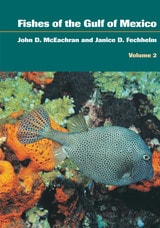
Fishes of the Gulf of Mexico, Volume 2
Scorpaeniformes to TetraodontiformesBy John D. McEachran and Janice D. Fechhelm
University of Texas Press, 2006
This book is the second of two volumes that cover the entire fish fauna of the Gulf of Mexico. It includes the orders Scorpaeniformes, Perciformes, Pleuronectiformes, and Tetraodontiformes. Keys and descriptions are provided for the families, which are arranged phylogenetically, and for the species, which are arranged alphabetically, described (including distribution and life history), and distinguished from similar species. All but a few species are illustrated. The volume also includes a biogeographical synopsis of the fishes of the Gulf of Mexico.

Fishes of the Minnesota Region
Gary L. Phillips, William D. Schmid, and James C. Underhill
University of Minnesota Press, 1982
Fishes of the Minnesota Region was first published in 1982. Minnesota Archive Editions uses digital technology to make long-unavailable books once again accessible, and are published unaltered from the original University of Minnesota Press editions.
From Northern Pike to the Walleye, this is the definitive guide to all of Minnesota's 149 kinds of fishes. Illustrated with over 80 color photographs, this book will appeal to enthusiastic anglers as well as curious naturalists.
Along with a guide to identification, the authors cover habitat, distribution, conservation, and even some recipes. If you catch a fish from one of Minnesota's 10,000 lakes you'll find a description of it in this book.
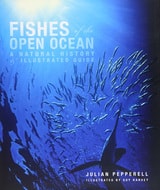
Fishes of the Open Ocean
A Natural History and Illustrated GuideJulian Pepperell
University of Chicago Press, 2010
Between the surface of the sea and depths of two hundred meters lies a remarkable range of fish, generally known as pelagics, or open-ocean dwellers. These creatures are among the largest, fastest, highest-leaping, and most migratory fish on the entire planet. Beautifully adapted to their world, they range from tiny drift fish and plankton-straining whale sharks to more streamlined predators such as tuna, marlin, sailfish, and wahoo.
Fishes of the Open Ocean, from leading marine biologist and world authority on the subject Julian Pepperell, is the first book to comprehensively describe these fishes and explore the complex and often fragile world in which they live. In what will be the definitive book on the subject for years to come—and, with over three hundred color images, the most lavishly produced as well—Pepperell details the environment and biology of every major species of fish that inhabits the open ocean, an expanse that covers 330 million cubic miles and is the largest aquatic habitat on the Earth. The first section of the book introduces the various evolutionary forms these fish have taken, as well as the ways in which specific species interact and coevolve with others in the food web. A chapter on commercial and sport fisheries explores the human element in this realm and considers such issues as sustainability, catch-and-release initiatives, and the risks of extinction.
The second section of the book provides species accounts of open ocean dwellers organized by group, with overviews and general descriptions that are inclusive of range and distribution, unique physiological and morphological attributes, and the role of each species within its ecosystem. Global distribution maps, original illustrations from renowned artist and scientist Guy Harvey, and truly stunning images from some of the world’s leading underwater photographers round out this copiously illustrated volume.
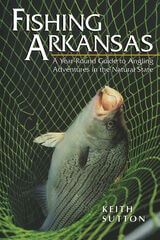
Fishing Arkansas
A Year-Round Guide to Angling Adventures in the Natural StateKeith Sutton
University of Arkansas Press, 2000
Enhanced by Sutton's excellent photographs, the guide includes twelve sections on popular game fish, such as largemouth and smallmouth bass, crappie, catfish, bluegill, and trout. It also provides an introduction to often-overlooked species like bowfin, gar, carp, paddlefish, and pickerel. Hundreds of valuable fishing tips gleaned from decades of on-the-water experience and interviews with dozens of guides, biologists, and expert anglers enhance the engaging narraive. From the glistening trout in the cold tailwaters of the White River, to feisty catfish on the muddy bayou bottoms of the Delta region, Keith Sutton has served up a tempting array of the fish that can be sought and caught on hook and line in the teeming waters of Arkansas.
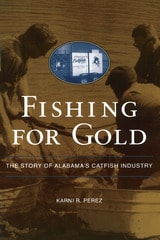
Fishing for Gold
The Story of Alabama's Catfish IndustryKarni R. Perez
University of Alabama Press, 2006
A captivating story of the industry's rise in Alabama.
With a wonderful ear for dialogue and in flowing narrative style, Karni Perez weaves together oral histories collected from early hatchery owners, catfish farmers, processors, and researchers to recount the important contributions made by Alabamians to the channel catfish industry. Perez describes the struggles and glories of fish culture from its early days as an experimental venture to the thriving present-day commercial enterprise that supplies warmwater fish for the American food industry.
As Perez states, "The catfish industry started out in Alabama as a do-it-yourself and figure-it out-yourself kind of enterprise." We hear how men who were mostly cattle farmers learned to nudge male and female fish into spawning in crudely constructed aquaria, how growers discovered the dissolved oxygen needs of their "herd" when big die-offs occurred, how Lenson Montz and Otis Breland designed the first paddle aerator to remedy the problem, how farmers eventually trained a bottomfeeding species to rise to the water surface to eat so their numbers could be better estimated. In one dramatic story, we learn how a man experimenting with the first skinning machine lost a piece of his hand in front of a crowd of horrified locals. (After it was retrieved from the skin basket, it was reattached by a town doctor and healed perfectly.) Ironically, the man was a representative of the engineering firm tasked with designing the machine; he had never before seen a catfish in his life. The machine was modified and became an essential component of modern fish processing.
In addition to telling the remarkable stories of individual contributions by farmers and researchers, Perez explains the positive effects played by improved public infrastructure, continued biological research, state legislation, and federal recognition of aquaculture as agriculture.
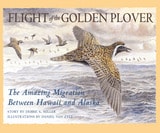
Flight of the Golden Plover
The Amazing Migration Between Hawaii and AlaskaDebbie S. Miller
University of Alaska Press, 2011
The remarkable story of the golden plover’s annual migration, this beautifully illustrated nature title for young readers sees the small but mighty plover embark on a six-thousand-mile flight between the frozen Alaska tundra and gentle grassy slopes of the Hawaiian Islands. Equally at home in his two very different habitats, the once-endangered golden plover has evolved many behaviors and adaptations that make it perfectly well-suited to each of its homes, and this book contains many fascinating facts about them. Readers are also introduced to the plover’s neighbors and friends—from the giant Hawaiian goose, or nene, to the musk ox, grizzly bear, arctic fox, and sandhill crane.
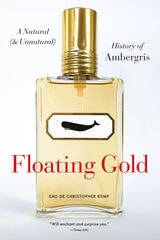
Floating Gold
A Natural (and Unnatural) History of AmbergrisChristopher Kemp
University of Chicago Press, 2012
A fascinating natural history of an incredibly curious substance.
“Preternaturally hardened whale dung” is not the first image that comes to mind when we think of perfume, otherwise a symbol of glamour and allure. But the key ingredient that makes the sophisticated scent linger on the skin is precisely this bizarre digestive by-product—ambergris. Despite being one of the world’s most expensive substances (its value is nearly that of gold and has at times in history been triple it), ambergris is also one of the world’s least known. But with this unusual and highly alluring book, Christopher Kemp promises to change that by uncovering the unique history of ambergris.
A rare secretion produced only by sperm whales, which have a fondness for squid but an inability to digest their beaks, ambergris is expelled at sea and floats on ocean currents for years, slowly transforming, before it sometimes washes ashore looking like a nondescript waxy pebble. It can appear almost anywhere but is found so rarely, it might as well appear nowhere. Kemp’s journey begins with an encounter on a New Zealand beach with a giant lump of faux ambergris—determined after much excitement to nothing more exotic than lard—that inspires a comprehensive quest to seek out ambergris and its story. He takes us from the wild, rocky New Zealand coastline to Stewart Island, a remote, windswept island in the southern seas, to Boston and Cape Cod, and back again. Along the way, he tracks down the secretive collectors and traders who populate the clandestine modern-day ambergris trade.
Floating Gold is an entertaining and lively history that covers not only these precious gray lumps and those who covet them, but presents a highly informative account of the natural history of whales, squid, ocean ecology, and even a history of the perfume industry. Kemp’s obsessive curiosity is infectious, and eager readers will feel as though they have stumbled upon a precious bounty of this intriguing substance.

Food Hoarding in Animals
Stephen B. Vander Wall
University of Chicago Press, 1990
Drawings, photographs, and appendixes document complex and intrinsically interesting food-hoarding behaviors, and the bibliography of nearly 1,500 sources is itself an invaluable and unique reference.
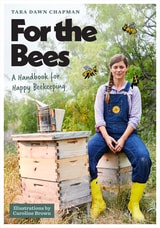
For the Bees
A Handbook for Happy BeekeepingTara Dawn ChapmanIllustrations by Caroline Brown
University of Texas Press, 2024
A handbook for what to expect the first year of beekeeping and beyond.
The path to becoming a successful beekeeper begins with a deep understanding of the bees themselves. Taking an approach that is both holistic and practical, Tara Chapman, founder and operator of Austin’s beloved Two Hives Honey, begins with a primer on honey bee biology and nutrition as well as beehive architecture. (Did you ever wonder why honey combs are composed of tiny hexagons?) A little scientific knowledge goes a long way: a beekeeper who understands how these fascinating creatures work will be better equipped to recognize a particular colony’s needs, make sound decisions when the unexpected happens, and adapt their care regimen to changing conditions. Moving beyond the basics, Chapman shows potential beekeepers how to spot pests and diseases; manage swarms (those bees aren’t angry; they’re just looking for a good home); and, of course, harvest delicious homegrown honey.
Imbued with the joy of the beekeeping journey, For the Bees provides practical visual explanations through appealing illustrations, that, alongside Chapman’s own stories from the bee yard, share the charms of these essential insects.
For the Birds
Protecting Wildlife through the Naturalist GazeElizabeth Cherry
Rutgers University Press, 2019
One in five people in the United States is a birdwatcher, yet the popular understanding of birders reduces them to comical stereotypes, obsessives who only have eyes for their favorite rare species. In real life, however, birders are paying equally close attention to the world around them, observing the devastating effects of climate change and mass extinction, while discovering small pockets of biodiversity in unexpected places.
For the Birds offers readers a glimpse behind the binoculars and reveals birders to be important allies in the larger environmental conservation movement. With a wealth of data from in-depth interviews and over three years of observing birders in the field, environmental sociologist Elizabeth Cherry argues that birders learn to watch wildlife in ways that make an invaluable contribution to contemporary conservation efforts. She investigates how birders develop a “naturalist gaze” that enables them to understand the shared ecosystem that intertwines humans and wild animals, an appreciation that motivates them to participate in citizen science projects and wildlife conservation.
Foraging for Survival
Yearling Baboons in AfricaStuart A. Altmann
University of Chicago Press, 1998
Foraging
Behavior and EcologyEdited by David W. Stephens, Joel S. Brown, and Ronald C. Ydenberg
University of Chicago Press, 2007
Foraging is the first comprehensive review of the topic in more than twenty years. A monumental undertaking, this volume brings together twenty-two experts from throughout the field to offer the latest on the mechanics of foraging, modern foraging theory, and foraging ecology. The fourteen essays cover all the relevant issues, including cognition, individual behavior, caching behavior, parental behavior, antipredator behavior, social behavior, population and community ecology, herbivory, and conservation. Considering a wide range of taxa, from birds to mammals to amphibians, Foraging will be the definitive guide to the field.

Forevering
Carol Mavor
Duke University Press, 2027
Fossil Lake and the Rise of Modern Birds
Snapshots from Early Avian EvolutionLance Grande, Daniel T Ksepka, and Gerald Mayr
University of Chicago Press, 2027
Lavishly produced with color fossil photographs throughout, the first comprehensive summary of findings at one of the world’s best fossil bird localities, offering profound insight into early avian evolution after the end-of-Cretaceous extinction event.
What is today a high mountain desert in southwestern Wyoming was, 52 million years ago, a magnificent subtropical lake system. Part of the famed Green River Formation, the limestone layers of this region’s Fossil Lake provide an unparalleled record of life in the Early Eocene of North America. Evolutionary biologist Lance Grande has spent much of his career collecting and studying the beautiful and diverse assemblage of fossils from this locality. Since his 2013 book, The Lost World of Fossil Lake, researchers have uncovered many new fossil bird specimens—often stunningly preserved skeletons, sometimes even including feathers—and benefited from significant advances in our understanding of avian evolution. Their findings help to illuminate the early days of bird life on Earth.
In this volume, Grande and his collaborators—paleornithologists Daniel T. Ksepka and Gerald Mayr—explore these birds of Fossil Lake, where various researchers have formally named and described thirty avian species. The authors also present an additional twenty possible new species awaiting further study and formal review, birds that may soon be added to that list. Fossil Lake and the Rise of Modern Birds then places these avian ancestors within the global context of other fossil birds. Like Grande’s previous publications, this comprehensive work features stunning imagery, including nearly two hundred detailed fossil photographs—fifty that have never appeared elsewhere.
Whether you are an ornithologist, paleontologist, evolutionary biologist, or amateur fossil enthusiast interested in the early evolutionary diversification of modern birds, this book is a treasure.
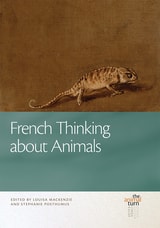
French Thinking about Animals
Louisa Mackenzie
Michigan State University Press, 2015
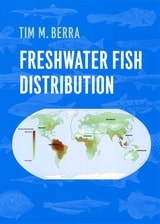
Freshwater Fish Distribution
Tim M. Berra
University of Chicago Press, 2007
Tim Berra’s seminal resource, Freshwater Fish Distribution,maps the 169 fish families that swim in fresh water around the world. Each family account includes the class, subclass, and order; a pronunciation guide to the family name; life cycle information; and interesting natural history facts. Each account is illustrated, many with historical nineteenth-century woodcuts.
Now available in paperback, this heavily cited work in ichthyology and biogeography will serve as a reference for students, a research support for professors, and a helpful guide to tropical fish hobbyists and anglers.
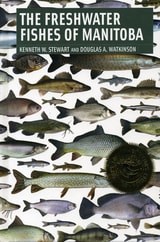
Freshwater Fishes of Manitoba
Kenneth Stewart
University of Manitoba Press, 2004
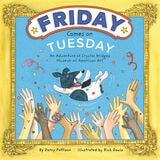
Friday Comes on Tuesday
An Adventure at Crystal Bridges Museum of American ArtDarcy Pattison
University of Arkansas Press, 2021
Winner, 2022 Susannah DeBlack Award, Arkansas Historical Association
The delightful story of Friday, a dog who discovers that the world of art is filled with many wonderful friends.
A dog in an art museum? Maybe not most dogs, but Friday goes to the museum every Tuesday to visit his friends. One day Friday must say goodbye for the winter. Join the fun as Friday trots through the galleries, taking photos and saying goodbye to Maman the spider, Rosie the Riveter, George Washington, and many others.
Looking back on his day, Friday realizes that the works of art in a museum are more than just bronze and steel, paint and canvas, ink and paper. Instead, the art connects him—and us—to a diversity of cultures, stories, and dreams.
Through the art collection at Crystal Bridges, all of us—even a dog—become part of the American experience.
Lexile Level: 570L
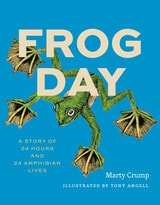
Frog Day
A Story of 24 Hours and 24 Amphibian LivesMarty Crump
University of Chicago Press, 2024
In this short book, celebrated biologist Marty Crump leads readers on a worldwide field trip in search of frogs. Each chapter of Frog Day covers a single frog during a single hour, highlighting how twenty-four different species spend their time. Our day begins at midnight in Indonesia, with the rustle of leaves above. It’s not a bird, but Wallace’s flying frog, using its webbed feet and emerald-green skin flaps to glide through the forest canopy. In the early hours of the morning, we hear a horned marsupial frog “bopping” and a wood frog “quacking” to attract mates. At six o’clock in the morning, beneath a streetlight in Honolulu, we meet a corpulent, invasive cane toad slurping insects—and sometimes snakes, lizards, turtles, birds, and mice. At noon, we watch parenting in action as an African bullfrog bulldozes a path through the mud to free his tadpoles from a drying pond. At dusk, in a Peruvian rain forest, we observe “the ultimate odd couple”—a hairy tarantula and what looks like a tiny amphibian pet taking shelter in the spider’s burrow. Other frogs make a tasty meal for this tarantula, but the dotted humming frog is a friend, eating the ants that might otherwise make a meal of the tarantula’s eggs.
For each hour in our Frog Day, award-winning artist Tony Angell has depicted these scenes with his signature pen and ink illustrations. Working closely together to narrate and illustrate these unique moments in time, Crump and Angell have created an engaging read that is a perfect way to spend an hour or two—and a true gift for readers, amateur scientists, and all frog fans.
Frogs and Toads in Your Pocket
A Guide to Amphibians of the Upper MidwestTerry VanDeWalle
University of Iowa Press, 2011
Frogs and Toads of Alabama
Craig Guyer and Mark A. Bailey
University of Alabama Press, 2023
From forest floor to backyard pond, discover Alabama’s frogs and toads in vivid detail.
Frogs and Toads of Alabama is the most comprehensive taxonomy of the anuran fauna gathered since Robert H. Mount’s 1975 volume on the reptiles and amphibians of Alabama. This richly illustrated guide provides an up-to-date summary of the taxonomy and life history of both native frogs and toads and those introduced to the state.
Alabama possesses one of the most species-rich biotas of North America, and this richness is reflected in its frogs and toads. The authors examine all known species within the state and describe important regional variations in each species, including changes within species across the state’s many habitats. Significant field studies, pertaining especially to species conservation, inform each account.
The life history entry for each species consists of scientific and common names, full-color photographs, a morphological description, discussion of habits and life cycle, and a distribution map depicting areas in which the species is located throughout the state, as well as notes on conservation and management practices. The illustrated taxonomic keys provided for families, genera, species, and subspecies will be an invaluable resource to herpetologists.
This extensive guide will serve as a single resource for understanding the rich natural history of Alabama by shedding light on this important aspect of its biodiversity, especially in light of ongoing changes in the habitats of many of Alabama’s herpetofauna. Accessible to all, this volume is valuable for both the professional herpetologist and the general reader interested in frogs and toads.
From the Seashore to the Seafloor
An Illustrated Tour of Sandy Beaches, Kelp Forests, Coral Reefs, and Life in the Ocean's DepthsJanet Voight and Peggy Macnamara
University of Chicago Press, 2022
Have you ever walked along the beach and wondered what kind of creatures can be found beneath the waves? Have you pictured what it would be like to see the ocean not from the shore but from its depths? These questions drive Janet Voight, an expert on mollusks who has explored the seas in the submersible Alvin that can dive some 14,000 feet below the water’s surface. In this book, she partners with artist Peggy Macnamara to invite readers to share her undersea journeys of discovery.
With accessible scientific descriptions, Voight introduces the animals that inhabit rocky and sandy shores, explains the fragility of coral reefs, and honors the extraordinary creatures that must search for food in the ocean’s depths, where light and heat are rare. These fascinating insights are accompanied by Macnamara’s stunning watercolors, which illuminate these ecosystems and other scenes from Voight’s research. Together, they show connections between life at every depth—and warn of the threats these beguiling places and their eccentric denizens face.