Results by title
244 books match the query 'Arkansas' and 10 start with f
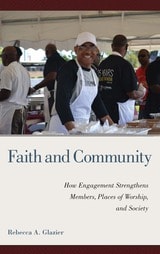
Faith and Community
How Engagement Strengthens Members, Places of Worship, and SocietyRebecca A. Glazier
Temple University Press, 2024
Faith and Community shows the benefits of religious people taking action in their communities. Through more than a decade of multi-method data collection, Rebecca Glazier surveyed over 4,000 congregants and nearly 500 clergy in Little Rock, Arkansas to gather opinions from members and leaders on community issues and engagement. Together with interviews and case studies, her findings indicate that active congregants are happier and more civically involved.
Faith and Community provides valuable insights into the relationship between religion and community engagement. The data illustrates how community engagement benefits individuals, congregations, and democracy and offers one solution to what ails religion in America today.

Faithful to Our Tasks
Arkansas's Women and the Great WarElizabeth Griffin Hill
Butler Center for Arkansas Studies, 2017
The United States was a vital, if brief, participant in World War I—spending only eighteen months fighting in “the Great War.” But that short span marked an era of tremendous change for women as they moved out of the Victorian nineteenth century and came into their own as social activists during the early years of the twentieth century.
Faithful to Our Tasks provides the context for women’s actions and reactions during the war. It incorporates the mitigating factors and experiences of American women in general and compares Arkansas women’s Progressive Era actions with those of other southern women. The contextual underpinnings provide a rich tapestry as we attempt to understand our grandmothers and great-grandmothers’ responses to wartime needs.
Primary records of the World War I era, accessed in archives in central Arkansas, reveal that the state’s organized women were suddenly faced with a devastating world war for which they were expected to make a significant contribution of time and effort. “Club women” were already tackling myriad problems to be found in abundance within a poor, rural state as they worked for better schools, a centralized education system, children’s well-being, and improved medical care.
Under wartime conditions, their contributions were magnified as the women followed a barrage of directions from Washington, DC, within a disconcerting display of micromanagement by the federal government. The important takeaway, however, is that the Great War created a scenario in which Arkansas’s organized women—as well as women throughout the nation—would step forward and excel as men and governments stood up and took notice. After the war, these same organized women won the right to vote.
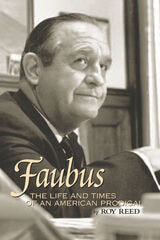
Faubus
The Life and Times of an American ProdigalRoy Reed
University of Arkansas Press, 1999
New York Times Book Review Notable Book for 1997
1998 Certificate of Commendation, American Association for State and Local History

Fiat Flux
The Writings of Wilson R. Bachelor, Nineteenth-Century Country Doctor and PhilosopherWilliam D. Lindsey
University of Arkansas Press, 2013

Fight Like a Tiger
Conway Barbour and the Challenges of the Black Middle Class in Nineteenth-Century AmericaVictoria L. Harrison
Southern Illinois University Press, 2018
Born a slave in western Virginia about 1815, Barbour was a free man by the late 1840s. His adventurous life took him through Lexington and Louisville, Kentucky; Cleveland, Ohio; Alton, Illinois; and Little Rock and Lake Village, Arkansas. In search of upward mobility, he worked as a steamboat steward, tried his hand at several commercial ventures, and entered politics. He sought, but was denied, a Civil War military appointment that would have provided financial stability. Blessed with intelligence, competence, and energy, Barbour was quick to identify opportunities as they appeared in personal relationships—he was simultaneously married to two women—business, and politics.
Despite an unconventional life, Barbour found in each place he lived that he was one of many free black people who fought to better themselves alongside their white countrymen. Harrison’s argument about black class formation reframes the customary narrative of downtrodden free African Americans in the mid-nineteenth century and engages current discussions of black inclusion, the concept of “otherness,” and the breaking down of societal barriers. Demonstrating that careful research can reveal the stories of people who have been invisible to history, Fight Like a Tiger complicates our understanding of the intersection of race and class in the Civil War era.

Finding the Lost Year
What Happened When Little Rock Closed Its Public SchoolsSondra Gordy
University of Arkansas Press, 2009
Much has been written about the Little Rock School Crisis of 1957, but very little has been devoted to the following year—the Lost Year, 1958–59—when Little Rock schools were closed to all students, both black and white. Finding the Lost Year is the first book to look at the unresolved elements of the school desegregation crisis and how it turned into a community crisis, when policymakers thwarted desegregation and challenged the creation of a racially integrated community and when competing groups staked out agendas that set Arkansas’s capital on a path that has played out for the past fifty years.
In Little Rock in 1958, 3,665 students were locked out of a free public education. Teachers’ lives were disrupted, but students’ lives were even more confused. Some were able to attend schools outside the city, some left the state, some joined the military, some took correspondence courses, but fully 50 percent of the black students went without any schooling. Drawing on personal interviews with over sixty former teachers and students, black and white, Gordy details the long-term consequences for students affected by events and circumstances over which they had little control.
“Fifty years ago segregationists trying to keep black students out of Little Rock Central High inadvertently broke up one of the country’s greatest football dynasties. . . . Wait a minute. . . . Who said you can’t have a high school football team just because you don’t have a high school? Canceling football, Faubus decreed, would be ‘a cruel and unnecessary blow to the children.’ O.K. then, everyone agreed. Play ball!”
—“Blinded by History,” Sports Illustrated

First Amendment Studies in Arkansas
The Richard S. Arnold Prize EssaysStephen Smith
University of Arkansas Press, 2016
This collection of fourteen essays written by young communication scholars at the University of Arkansas presents unique insights into how First Amendment issues have played out in the state. Rather than exploring the particular legal issues and the constitutional principles enunciated by the courts, First Amendment Studies tells the stories of actual people expressing challenged or unpopular points of view and reveals the ways that constitutional controversies arise from the actions of local officials and individual citizens.
Drawing on public documents as well as extensive interviews with participants, these essays demonstrate the dynamics of democratic dissent—on college campuses, in public schools, in churches, on the streets, in the forests and on the farms, and in legislative chambers and courtrooms.
Each essay was selected for the Richard S. Arnold Prize in First Amendment Studies, an endowed fund established in 1999 to encourage University of Arkansas graduate students in communication and the liberal arts to explore and examine questions about freedom of speech and freedom of religion.
Fishes of Arkansas
Henry W. Robison
University of Arkansas Press, 2019
An invaluable reference for anyone interested in the state’s fish population—from professional ichthyologists, fisheries biologists, and managers of aquatic resources, to amateur naturalists and anglers—this new edition provides updated taxonomic keys as well as detailed descriptions, photographs, and line drawings to aid identification of the state’s 243 fish species. There is also much information on the distribution and biology of each species, including descriptions of habitat, foods eaten, reproductive biology, and conservation status.
This project and the preparation of this publication was funded in part by a grant from the Arkansas Game and Fish Commission.
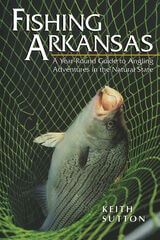
Fishing Arkansas
A Year-Round Guide to Angling Adventures in the Natural StateKeith Sutton
University of Arkansas Press, 2000
Enhanced by Sutton's excellent photographs, the guide includes twelve sections on popular game fish, such as largemouth and smallmouth bass, crappie, catfish, bluegill, and trout. It also provides an introduction to often-overlooked species like bowfin, gar, carp, paddlefish, and pickerel. Hundreds of valuable fishing tips gleaned from decades of on-the-water experience and interviews with dozens of guides, biologists, and expert anglers enhance the engaging narraive. From the glistening trout in the cold tailwaters of the White River, to feisty catfish on the muddy bayou bottoms of the Delta region, Keith Sutton has served up a tempting array of the fish that can be sought and caught on hook and line in the teeming waters of Arkansas.
From Blue to Red
The Rise of the GOP in ArkansasJohn C. Davis
University of Arkansas Press, 2024
John C. Davis’s From Blue to Red: The Rise of the GOP in Arkansas provides a rigorous yet accessible study of this partisan shift, tracking changes in voter preference at the top of the ticket in the 1960s, generational replacement in Arkansas’ political power structure in the 1990s, and the emergence of a more nationalized and polarized electorate in the 2000s, among other developments. From Blue to Red is a fascinating look at how Arkansas went from being one of the country’s most solidly Democratic states to one of its most ardently Republican in just a few years.