Results by title
490 books match the query 'Asian' and 20 start with f
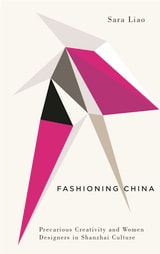
Fashioning China
Precarious Creativity and Women Designers in Shanzhai CultureSara Liao
Pluto Press, 2020
Broadening the digital labor debate beyond typical masculine and techno-utopic readings, Sara Liao studies the precarious practices of women trying to create sustainable and creative lives, vividly illustrating a fashion culture that exists online as a significant part of the digital economy.
Drawing on material from interviews, participant observation, archives, policy documents, films and advertisements, Liao takes a multi-disciplinary approach to the topic, charting out the politics of intellectual property rights, globalization, technocracy, patriarchy and nationalism in a non-Western context.
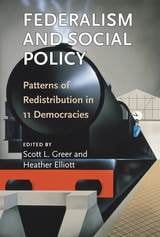
Federalism and Social Policy
Patterns of Redistribution in 11 DemocraciesEdited by Scott L. Greer and Heather Elliott
University of Michigan Press, 2019

Ferryman of Memories
The Films of Rithy PanhDeirdre Boyle
Rutgers University Press, 2023
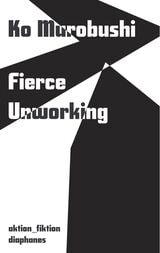
Fierce Unworking
Ko Murobushi
Diaphanes, 2025
Ko Murobushi was one of the most important performers and choreographers in the Japanese performance scene of the twenty-first century and a key figure in the mediation between the experimental Butoh tradition of Hijikata Tatsumi and anti-logocentric French avant-gardes such as Antonin Artaud and Gilles Deleuze. Radically positioned at the intersection of the two movements, Murobushi reveals himself as an extraordinary and poetic author in his “thinking of the body.”
Fierce Unworking highlights his role as an unparalleled pioneer of contemporary paradigms such as body language, the third space, and embodied knowledge. Published ten years after his death, this volume brings together writings, poems, and diary fragments—many of which are available in English for the first time—in collaboration with the Ko Murobushi Archive in Tokyo.
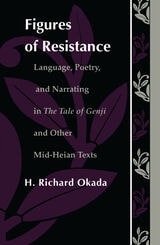
Figures of Resistance
Language, Poetry, and Narrating in The Tale of the Genji and Other Mid-Heian TextsH. Richard Okada
Duke University Press, 1991
Okada develops a highly original and sophisticated reading strategy that demonstrates how readers might understand texts belonging to a different time and place without being complicit in their assimilation to categories derived from Western literary traditions. The author’s reading stratgey is based on the texts’ own resistance to modes of analysis that employ such Western canonical terms as novel, lyric, and third-person narrative. Emphasis is also given to the distinctive cultural circles, as well as socio-political and genealogical circumstances that surrounded the emergence of the texts.
Indispensable readings for specialists in literature, cultural studies, and Japanese literature and history, Figures of Resistance will also appeal to general readers interested in the problems and complexities of studying another culture.
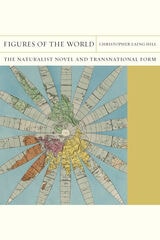
Figures of the World
The Naturalist Novel and Transnational FormChristopher Laing Hill
Northwestern University Press, 2020
The book begins by tracing the history of naturalist fiction from the 1860s into the twentieth century and the reasons it spread around the world. Hill explores the development of three naturalist figures—the degenerate body, the self-liberated woman, and the social milieu—through close readings of fiction from France, Japan, and the United States. Rather than genealogies of European influence or the domination of cultural “peripheries” by the center, novels by Émile Zola, Tayama Katai, Frank Norris, and other writers reveal conspicuous departures from metropolitan models as writers revised naturalist methods to address new social conditions. Hill offers a new approach to studying culture on a large scale for readers interested in literature, the arts, and the history of ideas.

Film Studies in China, Volume 2
Selected Writings from Contemporary CinemaEdited by Contemporary Cinema (China Film Archive)
Intellect Books, 2020
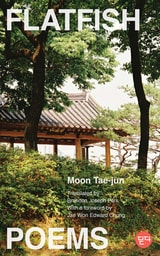
Flatfish
Poems, A Bilingual EditionMoon Tae-jun
Rutgers University Press, 2026
While Korea is certainly the setting of these poems, the works remain largely free of cultural-specific imagery and are, instead, naturalistic or universal. This first bilingual edition is a critical resource for students, poets, translators, and general readers alike.
English-Korean Bilingual Edition
영-한 이중언어판
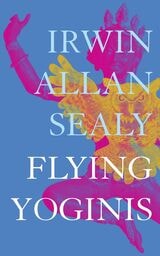
Flying Yoginis
Irwin Allan Sealy
Seagull Books, 2026
Irwin Allan Sealy—master chronicler of the Indian imagination—sets off on a singular quest: to follow in the wake of the yoginis, those fierce, flying, shape-shifting female adepts of yoga whose images were carved in stone a thousand years ago across India and who now sit, displaced, in American museums.
Part travelogue, part philosophical musing, part cultural excavation, Flying Yoginis is a meditation on art, power, devotion, and the subversive energy of women who step out of line. With wit and wonder, Sealy traces their transcontinental journey from lost temples near Kanchipuram to glass-walled galleries in Kansas City and Minneapolis—finding along the way unexpected kinship with rebels and visionaries, from Rosa Parks to Carson McCullers. Blending the spiritual with the personal, the mythic with the mundane, Sealy offers a dazzling, genre-defying reflection on how the sacred persists, how memory travels, and how history is always being rewritten by those bold enough to reclaim it.
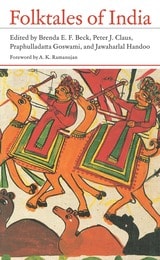
Folktales of India
Edited by Brenda E. F. Beck, Peter J. Claus, Praphulladatta Goswami, and Jawahar
University of Chicago Press, 1986

Folktales of India
Edited by Brenda E. F. Beck, Peter J. Claus, Praphulladatta Goswami, and Jawahar
University of Chicago Press, 1987
"This collection does an excellent job of representing India. . . . It is the type of book that can be enjoyed by all readers who love a well-told tale as well as by scholars of traditional narrative and scholars of India in general."—Hugh M. Flick, Jr., Asian Folklore Studies
"The stories collected here are representative, rich in structural subtlety, and endowed with fresh earthy humor."—Kunal Chakraborti, Contributions to Indian Sociology
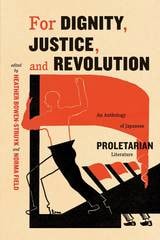
For Dignity, Justice, and Revolution
An Anthology of Japanese Proletarian LiteratureEdited by Heather Bowen-Struyk and Norma Field
University of Chicago Press, 2015
Contextualized by introductory essays, forty expertly translated stories touch on topics like perilous factories, predatory bosses, ethnic discrimination, and the myriad indignities of poverty. Together, they show how even intensely personal issues form a pattern of oppression. Fostering labor consciousness as part of an international leftist arts movement, these writers, lovers of literature, were also challenging the institution of modern literature itself. This anthology demonstrates the vitality of the “red decade” long buried in modern Japanese literary history.
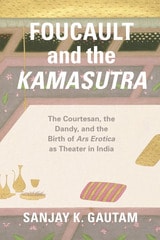
Foucault and the Kamasutra
The Courtesan, the Dandy, and the Birth of Ars Erotica as Theater in IndiaSanjay K. Gautam
University of Chicago Press, 2016
Gautam shows how closely intertwined the history of erotics in Indian culture is with the history of theater-aesthetics grounded in the discourse of love, and Foucault provides the framework for opening up an intellectual horizon of Indian thought. To do this, Gautam looks to the history of three inglorious characters in classical India: the courtesan and her two closest male companions—her patron, the dandy consort; and her teacher and advisor, the dandy guru. Foucault’s distinction between erotic arts and the science of sexuality drives Gautam’s exploration of the courtesan as a symbol of both sexual-erotic and aesthetic pleasure. In the end, by entwining together Foucault’s works on the history of sexuality in the West and the classical Indian texts on eros, Gautam transforms our understanding of both, even as he opens up new ways of investigating erotics, aesthetics, gender relations, and subjectivity.
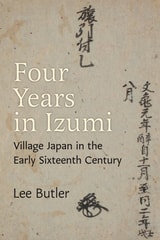
Four Years in Izumi
Village Japan in the Early Sixteenth CenturyLee Butler
University of Michigan Press, 2026
Four Years in Izumi takes an in-depth and critical approach to understanding Japanese village life through analysis of the diary of Kujō Masamoto, the former chancellor of the imperial court who resided briefly in one of his provincial estates from 1501 to 1504. For a high ranking courtier to travel to the countryside and manage a family estate was unheard of during the era of Sengoku, the “country at war.” The diary Masamoto kept offers a remarkably rich and vivid portrait of village Japan, which has seen no significant study in English-language scholarship.
Through extensive examination of the diary and close and critical reading of it and complementary sources, Lee Butler provides a window into the inner workings of late-medieval village life that challenges typical portrayals of the period. In Four Years in Izumi, we see the complexity of relations between commoners and elites in action. We also see the ways in which an estate functioned in practice at the heart of the medieval economy and local social structure.
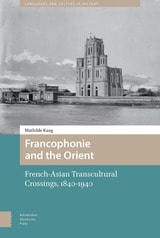
Francophonie and the Orient
French-Asian Transcultural Crossings (1840-1940)Mathilde Kang
Amsterdam University Press, 2018
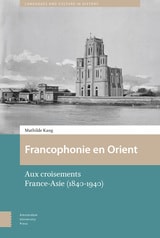
Francophonie en Orient
Aux croisements France-Asie (1840-1940)Mathilde Kang
Amsterdam University Press, 2017
From Jail to Jail
Tan Malaka
Ohio University Press, 2020
From Jail to Jail is the political autobiography of Sutan Ibrahim gelar Tan Malaka, an enigmatic and colorful political thinker of twentieth-century Asia, who was one of the most influential figures of the Indonesian Revolution. Variously labeled a communist, Trotskyite, and nationalist, Tan Malaka managed to run afoul of nearly every political group and faction involved in the Indonesian struggle for independence. During his decades of political activity, he spent periods of exile and hiding in nearly every country in Southeast Asia. As a Marxist who was expelled from and became a bitter enemy of his country’s Communist Party and as a nationalist who was imprisoned and murdered by his own government’s forces as a danger to its anticolonial struggle, Tan Malaka was and continues to be soaked in contradiction and controversy.
Translated by Helen Javis and with a new introduction from Harry A. Poeze, this edition of From Jail to Jail contextualizes the life and political accomplishments of Tan Malaka in one of the few known autobiographies by a Marxist of this political era and region.
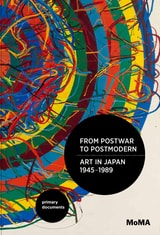
From Postwar to Postmodern, Art in Japan, 1945-1989
Primary DocumentsDoryun Chong, Michio Hayashi, Kenji Kajiya, and Fumihiko Sumitomo, eds.
Duke University Press, 0
The collection is organized chronologically and thematically to highlight significant movements, works, and artistic phenomena, such as the pioneering artist collectives Gutai and Hi Red Center, the influential photography periodical Provoke, and the emergence of video art in the 1980s. Interspersed throughout the volume are more than twenty newly commissioned texts by contemporary scholars. Including Bert Winther-Tamaki on art and the Occupation and Reiko Tomii on the Yomiuri Independent Exhibition, these pieces supplement and provide a historical framework for the primary source materials. From Postwar to Postmodern, Art in Japan 1945–1989 offers an unprecedented look at over four decades of Japanese art—both as it unfolded and as it is seen from the perspective of the present day.
Publication of The Museum of Modern Art
Fruit of Life
Poems, A Bilingual EditionKim Myeong-sun
Rutgers University Press, 2026
Kim Myeong-sun is Korea's first published woman writer. Fruit of Life: Poems (생명의 과실: 김명순 시선) is the first book-length, Korean-to-English translation of her poetry. Kim’s poems offer a raw portrait of 1920s–30s Korea, driven by her personal experiences of sexual assault, misogynistic journalism and criticism, displacement, and poverty during the Japanese colonial occupation (1910–1945). Alongside feminist critique, Kim also writes about sapphic desire, familial affection, and nature, in styles that range from the traditional to the experimental. While Kim’s work was erased from the canon by Korea’s misogynistic literary establishment, Fruit of Life celebrates the legacy of Kim’s radical, versatile poetry, which paved the way for contemporary Korean women writers.
English-Korean Bilingual Edition
영-한 이중언어판
This book is published with the support of the Literature Translation Institute of Korea (LTI Korea).
‘한국 여성 최초 등단 작가’ 김명순의 시가 영문 완역본 『생명의 과실: 김명순 시선』으로 영어권 독자들을 만난다. 1920–30년대 조선 사회의 민낯을 강렬하고 가감 없는 언어로 담아낸 김명순의 시는, 일제강점기 아래 성폭력과 여성혐오적 언론 및 비평, 이주와 빈곤을 직접 겪어낸 작가의 여성주의적·반식민주의적 저항 정신을 생생히 드러낸다. 또한 전통과 실험을 넘나드는 다채로운 형식과 기법으로 여성 간 연대와 사랑, 가족애, 자연에 대하여 노래한다. 『생명의 과실: 김명순 시선』은 여성혐오적 문단으로부터 소외당한 김명순의 작품을 재조명하며, 한국 여성문학의 새로운 지평을 연 그의 업적을 기념한다.
Full Metal Apache
Transactions Between Cyberpunk Japan and Avant-Pop AmericaTakayuki Tatsumi
Duke University Press, 2006
Full Metal Apache introduces English-language readers to a vast array of Japanese writers and performers and considers their work in relation to the output of William Gibson, Thomas Pynchon, H. G. Wells, Jack London, J. G. Ballard, and other Westerners. Tatsumi moves from the poetics of metafiction to the complex career of Madame Butterfly stories and from the role of the Anglo-American Lafcadio Hearn in promoting Japanese folklore within Japan during the nineteenth century to the Japanese monster Godzilla as an embodiment of both Japanese and Western ideas about the Other. Along the way, Tatsumi develops original arguments about the self-fashioning of “Japanoids” in the globalist age, the philosophy of “creative masochism” inherent within postwar Japanese culture, and the psychology of “Mikadophilia” indispensable for the construction of a cyborg identity. Tatsumi’s exploration of the interplay between Japanese and American cultural productions is as electric, ebullient, and provocative as the texts and performances he analyzes.