Results by title
277 books match the query 'Biology' and 8 start with f
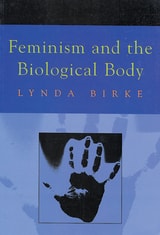
Feminism and the Biological Body
Birke, Lynda
Rutgers University Press, 2000
What is a body? What are our perceptions of our inner bodies? How are these perceptions influenced?
In recent years, thinking about the body has become highly fashionable. However, the renewed focus, while certainly welcome, seems to always end at the corporeal surface. While recent sociological and feminist theory has made important claims about the process of cultural inscription on the body, and about the cultural representation of the body, what actually appears in this new theory seems to be, ironically, disembodied. If this newly theorized form has interiority, it is one that is explained predominantly through psychoanalysis. The physiological processes remain a mystery to be explained, if at all, only in the esoteric language of biomedicine.
As a trained biologist, Lynda Birke was frustrated by the gap between feminist cultural analysis and her own scientific background. In this book, she seeks to bridge this gap using ideas in anatomy and physiology to develop the feminist view that the biological body is socially and culturally constructed. Birke rejects the assumption that bodily function is somehow fixed and unchanging, claiming that biology offers more than just a deterministic narrative of how nature works. Feminism and the Biological Body brings natural science and feminist theory together and suggests that we need a new politics that includes, rather than denies, our flesh.
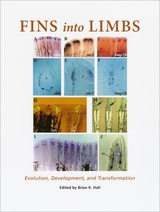
Fins into Limbs
Evolution, Development, and TransformationEdited by Brian K. Hall
University of Chicago Press, 2006
A comprehensive look at the current state of research on fin and limb evolution and development, this volume addresses a wide range of subjects—including growth, structure, maintenance, function, and regeneration. Divided into sections on evolution, development, and transformations, the book begins with a historical introduction to the study of fins and limbs and goes on to consider the evolution of limbs into wings as well as adaptations associated with specialized modes of life, such as digging and burrowing. Fins into Limbs also discusses occasions when evolution appears to have been reversed—in whales, for example, whose front limbs became flippers when they reverted to the water—as well as situations in which limbs are lost, such as in snakes.
With contributions from world-renowned researchers, Fins into Limbs will be a font for further investigations in the changing field of evolutionary developmental biology.
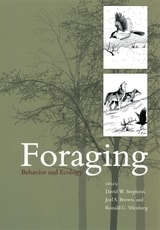
Foraging
Behavior and EcologyEdited by David W. Stephens, Joel S. Brown, and Ronald C. Ydenberg
University of Chicago Press, 2007
Foraging is the first comprehensive review of the topic in more than twenty years. A monumental undertaking, this volume brings together twenty-two experts from throughout the field to offer the latest on the mechanics of foraging, modern foraging theory, and foraging ecology. The fourteen essays cover all the relevant issues, including cognition, individual behavior, caching behavior, parental behavior, antipredator behavior, social behavior, population and community ecology, herbivory, and conservation. Considering a wide range of taxa, from birds to mammals to amphibians, Foraging will be the definitive guide to the field.
Foundations of Conservation Biology
A Guide to the Classic LiteratureEdited by Jeffrey D. Brawn, Erica Fleishman, Curt Meine
University of Chicago Press, 2026
This book summarizes over a century of multidisciplinary scientific literature that contributed to the development of conservation biology. It explores how different scientific, social, and cultural traditions have informed that literature, enabling a deeper comprehension of the natural world and conservation practices. The volume traces conservation biology’s scientific and cultural foundations and its emergence in the mid-1980s in response to the accelerating effects of human activity on biological diversity. As conservation moved beyond its early emphasis on sustaining yields of selected natural resources and responding to environmental degradation, it both reflected and required changes in its scope and foundations. Today, conservation biologists aim to understand the complex ecological and social causes of biodiversity loss and apply that integrated understanding to sustain life and ecological integrity at all levels.
Examining this evolving field’s foundations in philosophy and culture, population genetics, landscape ecology, management techniques, law, the social sciences, and climate change science, the contributors to this volume identify and provide historical and contextual interpretations of the key literature. Foundations of Conservation Biology shows how insights from the past have influenced contemporary studies, and how they may continue to shape future research and actions.
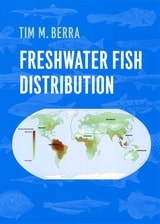
Freshwater Fish Distribution
Tim M. Berra
University of Chicago Press, 2007
Tim Berra’s seminal resource, Freshwater Fish Distribution,maps the 169 fish families that swim in fresh water around the world. Each family account includes the class, subclass, and order; a pronunciation guide to the family name; life cycle information; and interesting natural history facts. Each account is illustrated, many with historical nineteenth-century woodcuts.
Now available in paperback, this heavily cited work in ichthyology and biogeography will serve as a reference for students, a research support for professors, and a helpful guide to tropical fish hobbyists and anglers.
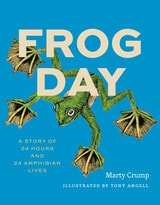
Frog Day
A Story of 24 Hours and 24 Amphibian LivesMarty Crump
University of Chicago Press, 2024
In this short book, celebrated biologist Marty Crump leads readers on a worldwide field trip in search of frogs. Each chapter of Frog Day covers a single frog during a single hour, highlighting how twenty-four different species spend their time. Our day begins at midnight in Indonesia, with the rustle of leaves above. It’s not a bird, but Wallace’s flying frog, using its webbed feet and emerald-green skin flaps to glide through the forest canopy. In the early hours of the morning, we hear a horned marsupial frog “bopping” and a wood frog “quacking” to attract mates. At six o’clock in the morning, beneath a streetlight in Honolulu, we meet a corpulent, invasive cane toad slurping insects—and sometimes snakes, lizards, turtles, birds, and mice. At noon, we watch parenting in action as an African bullfrog bulldozes a path through the mud to free his tadpoles from a drying pond. At dusk, in a Peruvian rain forest, we observe “the ultimate odd couple”—a hairy tarantula and what looks like a tiny amphibian pet taking shelter in the spider’s burrow. Other frogs make a tasty meal for this tarantula, but the dotted humming frog is a friend, eating the ants that might otherwise make a meal of the tarantula’s eggs.
For each hour in our Frog Day, award-winning artist Tony Angell has depicted these scenes with his signature pen and ink illustrations. Working closely together to narrate and illustrate these unique moments in time, Crump and Angell have created an engaging read that is a perfect way to spend an hour or two—and a true gift for readers, amateur scientists, and all frog fans.
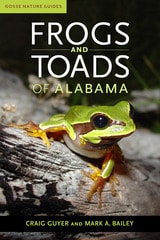
Frogs and Toads of Alabama
Craig Guyer and Mark A. Bailey
University of Alabama Press, 2023
From forest floor to backyard pond, discover Alabama’s frogs and toads in vivid detail.
Frogs and Toads of Alabama is the most comprehensive taxonomy of the anuran fauna gathered since Robert H. Mount’s 1975 volume on the reptiles and amphibians of Alabama. This richly illustrated guide provides an up-to-date summary of the taxonomy and life history of both native frogs and toads and those introduced to the state.
Alabama possesses one of the most species-rich biotas of North America, and this richness is reflected in its frogs and toads. The authors examine all known species within the state and describe important regional variations in each species, including changes within species across the state’s many habitats. Significant field studies, pertaining especially to species conservation, inform each account.
The life history entry for each species consists of scientific and common names, full-color photographs, a morphological description, discussion of habits and life cycle, and a distribution map depicting areas in which the species is located throughout the state, as well as notes on conservation and management practices. The illustrated taxonomic keys provided for families, genera, species, and subspecies will be an invaluable resource to herpetologists.
This extensive guide will serve as a single resource for understanding the rich natural history of Alabama by shedding light on this important aspect of its biodiversity, especially in light of ongoing changes in the habitats of many of Alabama’s herpetofauna. Accessible to all, this volume is valuable for both the professional herpetologist and the general reader interested in frogs and toads.
From Biological Practice to Scientific Metaphysics
William C. Bausman
University of Minnesota Press, 2024
How analyzing scientific practices can alter debates on the relationship between science and reality
Numerous scholarly works focus solely on scientific metaphysics or biological practice, but few attempt to bridge the two subjects. This volume, the latest in the Minnesota Studies in the Philosophy of Science series, explores what a scientific metaphysics grounded in biological practices could look like and how it might impact the way we investigate the world around us.
From Biological Practice to Scientific Metaphysics examines how to reconcile the methods of biological practice with the methods of metaphysical cosmology, notably regarding the origins of life. The contributors take up a wide range of traditional metaphysics and philosophy of science topics, including natural kinds, medicine, ecology, genetics, scientific pluralism, reductionism, operationalism, mechanisms, the nature of information, and more. Many of the chapters represent the first philosophical treatments of significant biological practices.
From causality and complexity to niche constructions and inference, the contributors review and discuss long-held objections to metaphysics by natural scientists. They illuminate how, in order to learn about the world as it truly is, we must look not only at what scientists say but also what they do: for ontology cannot be read directly from scientific claims.
Contributors: Richard Creath, Arizona State U; Marc Ereshefsky, U of Calgary; Marie I. Kaiser, Bielefeld U; Thomas A. C. Reydon, Leibniz U Hannover and Michigan State U; Lauren N. Ross, U of California, Irvine; Rose Trappes, U of Exeter; Marcel Weber, U of Geneva; William C. Wimsatt, U of Chicago.
Retail e-book files for this title are screen-reader friendly with images accompanied by short alt text and/or extended descriptions.