Results by title
171 books match the query 'Books & Reading' and 10 start with f
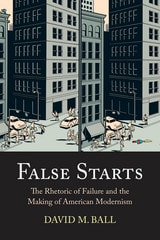
False Starts
The Rhetoric of Failure and the Making of American ModernismDavid M. Ball
Northwestern University Press, 2014
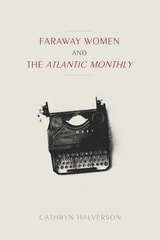
Faraway Women and the "Atlantic Monthly"
Cathryn Halverson
University of Massachusetts Press, 2019
Winner of the 2020 Thomas J. Lyon Award from the Western Literature Association
In the first decades of the twentieth century, famed Atlantic Monthly editor Ellery Sedgwick chose to publish a group of nontraditional writers he later referred to as “Faraway Women,” working-class authors living in the western United States far from his base in Boston. Cathryn Halverson surveys these enormously popular Atlantic contributors, among them a young woman raised in Oregon lumber camps, homesteaders in Wyoming, Idaho, and Alberta, and a world traveler who called Los Angeles and Honolulu home.
Faraway Women and the “Atlantic Monthly” examines gender and power as it charts an archival journey connecting the least remembered writers and readers of the time with one of its most renowned literary figures, Gertrude Stein. It shows how distant friends, patrons, publishers, and readers inspired, fostered, and consumed the innovative life narratives of these unlikely authors, and it also tracks their own strategies for seizing creative outlets and forging new protocols of public expression. Troubling binary categories of east and west, national and regional, and cosmopolitan and local, the book recasts the coordinates of early twentieth-century American literature.
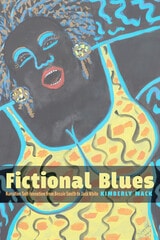
Fictional Blues
Narrative Self-Invention from Bessie Smith to Jack WhiteKimberly Mack
University of Massachusetts Press, 2020
The familiar story of Delta blues musician Robert Johnson, who sold his soul to the devil at a Mississippi crossroads in exchange for guitar virtuosity, and the violent stereotypes evoked by legendary blues “bad men” like Stagger Lee undergird the persistent racial myths surrounding “authentic” blues expression. Fictional Blues unpacks the figure of the American blues performer, moving from early singers such as Ma Rainey and Big Mama Thornton to contemporary musicians such as Amy Winehouse, Rhiannon Giddens, and Jack White to reveal that blues makers have long used their songs, performances, interviews, and writings to invent personas that resist racial, social, economic, and gendered oppression.
Using examples of fictional and real-life blues artists culled from popular music and literary works from writers such as Walter Mosley, Alice Walker, and Sherman Alexie, Kimberly Mack demonstrates that the stories blues musicians construct about their lives (however factually slippery) are inextricably linked to the “primary story” of the narrative blues tradition, in which autobiography fuels musicians' reclamation of power and agency.
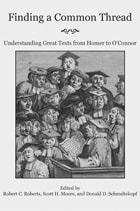
Finding a Common Thread
Reading Great Texts from Homer to O'ConnorRobert C. Roberts
St. Augustine's Press, 2013
In this book, a group of prominent scholar-teachers meditate on how to read, in the context of a specifically Christian university or college education, some of the greatest texts of the Western tradition. Each author devotes himself or herself to a single text. In many cases, the authors have been reading, rereading, marking, ruminating, inwardly digesting, teaching, and discussing their text for several decades, so that they offer here a distillation of years of familiarity and reflection.
The texts span nearly 3,000 years. They are pre-Christian, Christian, and post-Christian. Each kind of text – indeed, each individual text – offers its own special opportunities and challenges for Christian interpretation. From these diverse readings emerges a sense that these texts all belong to a single great tradition, one to which Christianity made and continues to make enormous contributions. Medieval Christian writers exploit and transform pagan texts, and post-Christian writers like Nietzsche and Joyce are often preoccupied with Christian themes. In one way or another all the texts are about what it is to be a human being and what a good human life might look like. Thus “common threads” bind one text to the next, creating countless resonances among them.
The authors of the essays in this book all address the question, “How shall we read these texts from the vantage point of faith in God and Jesus Christ? Moreover, how shall we read them as members of a community with a common vision of the human good, aiming to nurture our students in that vision by reading with them some of the profoundest and most delightful things the human hand has penned?” As the Introduction suggests, the volume hopes to contribute to a renewal of the original intention of university education: to cultivate minds and hearts formed and informed by wisdom, the highest of intellectual goods.
First Impressions
Sefer Hasidim and Early Modern Hebrew PrintingJoseph A. Skloot
Brandeis University Press, 2023
In 1538, a partnership of Jewish silk makers in the city of Bologna published a book entitled Sefer Hasidim, a compendium of rituals, stories, and religious instruction that primarily originated in medieval Franco-Germany. How these men, of Italian and Spanish descent, came to produce a book that would come to shape Ashkenazic culture, and Jewish culture more broadly, over the next four centuries is the basis of this kaleidoscopic study of the history of Hebrew printing in the sixteenth century.
During these early years of printing, the classic works of ancient and medieval Hebrew and Jewish literature became widely available to Jewish (and non-Jewish) readers for the first time. Printing, though, was not merely the duplication and distribution of pre-existing manuscripts, it was the creative adaptation and transformation of those manuscripts by printers. Ranging from Catholic Bologna to Protestant Basel to the Jewish heartland of the Polish-Lithuanian Commonwealth, Joseph A. Skloot uncovers the history of that creativity by examining the first two print editions of Sefer Hasidim. Along the way, he demonstrates how volumes that were long thought to be eternal and unchanging were in fact artifacts of historical agency and contingency, created by and for human beings.
Forget Me Not
The Rise of the British Literary Annual, 1823–1835Katherine D. Harris
Ohio University Press, 2015
By November 1822, the British reading public had already voraciously consumed both Walter Scott’s expensive novels and Rudolf Ackermann’s exquisite lithographs. The next decade, referred to by some scholars as dormant and unproductive, is in fact bursting with Forget Me Nots, Friendship’s Offerings, Keepsakes, and Literary Souvenirs. By wrapping literature, poetry, and art into an alluring package, editors and publishers saturated the market with a new, popular, and best-selling genre, the literary annual. In Forget Me Not, Katherine D. Harris assesses the phenomenal rise of the annual and its origins in other English, German, and French literary forms as well as its social influence on women, its redefinition of the feminine, and its effects on late nineteenth- and early twentieth-century print culture. Harris adopts an interdisciplinary approach that uses textual and social contexts to explore a forum of subversive femininity, where warfare and the masculine hero were not celebrated.
Initially published in diminutive, decoratively bound volumes filled with engravings of popularly recognized artwork and “sentimental” poetry and prose, the annuals attracted a primarily middle-class female readership. The annuals were released each November, making them an ideal Christmas gift, lover’s present, or token of friendship. Selling more than 100,000 copies during each holiday season, the annuals were accused of causing an epidemic and inspiring an “unmasculine and unbawdy age” that lasted through 1860 and lingered in derivative forms until the early twentieth century in both the United States and Europe. The annual thrived in the 1820s and after despite—or perhaps because of—its “feminine” writing and beautiful form.
Forgotten Readers
Recovering the Lost History of African American Literary SocietiesElizabeth McHenry
Duke University Press, 2002
Forgotten Readers expands our definition of literacy and urges us to think of literature as broadly as it was conceived of in the nineteenth century. Elizabeth McHenry delves into archival sources, including the records of past literary societies and the unpublished writings of their members. She examines particular literary associations, including the Saturday Nighters of Washington, D.C., whose members included Jean Toomer and Georgia Douglas Johnson. She shows how black literary societies developed, their relationship to the black press, and the ways that African American women’s clubs—which flourished during the 1890s—encouraged literary activity. In an epilogue, McHenry connects this rich tradition of African American interest in books, reading, and literary conversation to contemporary literary phenomena such as Oprah Winfrey’s book club.
From Codex to Hypertext
Reading at the Turn of the Twenty-first CenturyAnouk Lang
University of Massachusetts Press, 2012
In From Codex to Hypertext, scholars from multiple disciplines engage with both of these strands. This volume includes essays that consider how changes such as the mounting ubiquity of digital technology and the globalization of structures of publication and book distribution are shaping the way readers participate in the encoding and decoding of textual meaning. Contributors also examine how and why reading communities cohere in a range of contexts, including prisons, book clubs, networks of zinesters, state-funded programs designed to promote active citizenship, and online spaces devoted to sharing one's tastes in books.
As concerns circulate in the media about the ways that reading—for so long anchored in print culture and the codex—is at risk of being irrevocably altered by technological shifts, this book insists on the importance of tracing the historical continuities that emerge between these reading practices and those of previous eras.
In addition to the volume editor, contributors include Daniel Allington, Bethan Benwell, Jin Feng, Ed Finn, Danielle Fuller, David S. Miall, Julian Pinder, Janice Radway, Julie Rak, DeNel Rehberg Sedo, Megan Sweeney, Joan Bessman Taylor, Molly Abel Travis, and David Wright.
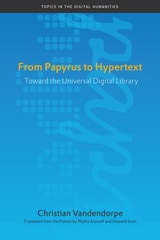
From Papyrus to Hypertext
Toward the Universal Digital LibraryChristian Vandendorpe. Translated by Phyllis Aronoff & Howard Scott.
University of Illinois Press, 2008
Surveying the conventions of reading and writing that have appeared and disappeared in the Internet's wake, Vandendorpe considers various forms of organization, textual design, the use (and distrust) of illustrations, and styles of reference and annotation. He also examines the novel components of digital texts, including hyperlinks and emoticons, and looks at emergent, collaborative genres such as blogs and wikis, which blur the distinction between author and reader. Looking to the future, reading and writing will continue to evolve based on the current, contested trends of universal digitization and accessibility.

From the Civil War to the Apocalypse
Postmodern History and American FictionTimothy Parrish
University of Massachusetts Press, 2008
In addressing the postmodernist claim that history works no differently than fiction, Timothy Parrish rejects the implication that history is dead or hopelessly relativistic. Rather, he shows how the best postmodern novelists compel their readers to accept their narratives as true in the same way that historians expect their readers to accept their narratives as true. These novelists write history as a form of fiction.
If the great pre-modernist American historians are Francis Parkman, George Bancroft, and Henry Adams, who are the great modernist or postmodernist historians? In the twentieth century, Parrish argues, the most powerful works of American history were written by William Faulkner, Toni Morrison, Thomas Pynchon, Don DeLillo, Joan Didion, and Cormac McCarthy. What survives a reading of these novels is the sense that writers otherwise identified as multicultural or postmodern share the view that nothing matters more than history and what one believes its possibilities to be. In other words, Parrish concludes, history, not identity, is the ground of postmodern American fiction.