Results by title
547 books match the query 'California' and 19 start with f
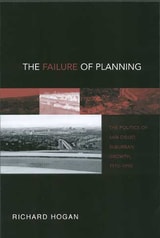
FAILURE OF PLANNING
PERMITTING SPRAWL IN SAN DIEGO SUBURBS 1RICHARD HOGAN
The Ohio State University Press, 2003

Fadeout
A Dave Brandstetter MysteryJoseph Hansen
University of Wisconsin Press, 2004
Failure by Design
The California Energy Crisis and the Limits of Market PlanningGeorg Rilinger
University of Chicago Press, 2024
The Western energy crisis was one of the great financial disasters of the past century. The crisis began in April 2000, when price spikes started to rattle California’s electricity markets. Decades later, some blame economic fundamentals and ignorant politicians, while others accuse the energy sellers who raided the markets. In Failure by Design, sociologist Georg Rilinger offers a different explanation, one that focuses on the practical challenges of market design. The unique physical attributes of electricity made it exceedingly difficult to introduce markets into the coordination of the electricity system, so market designers were brought in to construct the infrastructures that coordinate how market participants interact. An exercise in social engineering, these infrastructures were intended to guide market actors toward behavior that would produce optimal market results and facilitate grid management. Yet, though these experts spent their days worrying about incentive misalignment and market manipulation, they unintentionally created a system riddled with opportunities for destructive behavior. Rilinger’s analysis not only illuminates the California energy crisis but also develops a broader theoretical framework for thinking about markets as the products of organizational planning and the limits of social engineering, contributing broadly to sociological and economic thinking about the nature of markets.

Family Fantasies and Community Space
Aitken, Stuart C
Rutgers University Press, 1998
Family forms are changing rapidly in Western society, and with them, the microenvironments within which men, women, and children live together. Stuart Aitken argues that, whether environment is taken as physical space or as a metaphor for the social, economic, and psychological basis of families, there remains a tendency to keep defining the meaning of families and communities in terms of older, traditional, "imagined," and idealized structures of politics, gender, and geography.
Using the stories of several families in San Diego, Aitken describes geographies of everyday life that contest definitions of cities and communities as mosaics reflecting patterns of social relations. He begins inside the family circle, looking at patriarchal power and the subordination of women, men, and children. Moving beyond the household, he then stresses the importance of place in defining the social and political character of communities and families' interplay within them--whether "communities" are viewed as neighborhoods, towns, or organizations that provide space for fellowship and common purpose. In turn, he shows that as the individual child reaches beyond family life to find a place in these communities, political cultures are reproduced through the child.
Aitken suggests ways in which individual and family identities are complexly intertwined with the cultural politics of communities, cities, and regions. He concludes that family and community spaces reproduce and reconstruct themselves daily according to divisions of race, class, gender, and differential access to housing, work, and child-care.
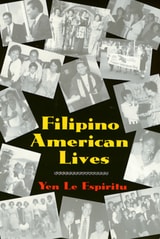
Filipino American Lives
Yen Le Espiritu
Temple University Press, 1995
Filipino Americans are now the second largest group of Asian Americans as well as the second largest immigrant group in the United States. As reflected in this collection, their lives represent the diversity of the immigrant experience and their narratives are a way to understand ethnic identity and Filipino American history.
Men and women, old and young, middle and working class, first and second generation, all openly discuss their changing sense of identity, the effects of generational and cultural differences on their families, and the role of community involvement in their lives. Pre- and post-1965 immigrants share their experiences, from the working students who came before WWII, to the manongs in the field, to the stewards and officers in the U.S. Navy, to the "brain drain" professionals, to the Filipinos born and raised in the United States.
As Yen Le Espiritu writes in the Introduction, "each of the narratives reveals ways in which Filipino American identity has been and continues to be shaped by a colonial history and a white-dominated culture. It is through recognizing how profoundly race has affected their lives that Filipino Americans forge their ethnic identities—identities that challenge stereotypes and undermine practices of cultural domination."
In the series Asian American History and Culture, edited by Sucheng Chan, David Palumbo-Liu, Michael Omi, K. Scott Wong, and Linda Trinh Võ.

Finding Mars
Ned Rozell
University of Alaska Press, 2011
First Strike
Educational Enclosures in Black Los AngelesDamien M. Sojoyner
University of Minnesota Press, 2016
California is a state of immense contradictions. Home to colossal wealth and long portrayed as a bastion of opportunity, it also has one of the largest prison populations in the United States and consistently ranks on the bottom of education indexes. Taking a unique, multifaceted insider’s perspective, First Strike delves into the root causes of its ever-expansive prison system and disastrous educational policy.
Recentering analysis of Black masculinity beyond public rhetoric, First Strike critiques the trope of the “school-to-prison pipeline” and instead explores the realm of public school as a form of “enclosure” that has influenced the schooling (and denial of schooling) and imprisonment of Black people in California. Through a fascinating ethnography of a public school in Los Angeles County, and a “day in the life tour” of the effect of prisons on the education of Black youth, Damien M. Sojoyner looks at the contestation over education in the Black community from Reconstruction to the civil rights and Black liberation movements of the past three decades.
Policy makers, school districts, and local governments have long known that there is a relationship between high incarceration rates and school failure. First Strike is the first book that demonstrates why that connection exists and shows how school districts, cities and states have been complicit and can reverse a disturbing and needless trend. Rather than rely upon state-sponsored ideological or policy-driven models that do nothing more than to maintain structures of hierarchal domination, it allows us to resituate our framework of understanding and begin looking for solutions in spaces that are readily available and are immersed in radically democratic social visions of the future.

Five Steps of Outcome-Based Planning and Evaluation for Public Libraries
Melissa Gross, Cindy Mediavilla, Virginia A. Walter
American Library Association, 2016
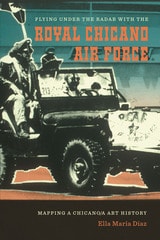
Flying Under the Radar with the Royal Chicano Air Force
Mapping a Chicano/a Art HistoryBy Ella Maria Diaz
University of Texas Press, 2017
Winner, National Association for Chicana and Chicano Studies Book Award, 2019
The Royal Chicano Air Force produced major works of visual art, poetry, prose, music, and performance during the second half of the twentieth century and first decades of the twenty-first. Materializing in Sacramento, California, in 1969 and established between 1970 and 1972, the RCAF helped redefine the meaning of artistic production and artwork to include community engagement projects such as breakfast programs, community art classes, and political and labor activism. The collective’s work has contributed significantly both to Chicano/a civil rights activism and to Chicano/a art history, literature, and culture.
Blending RCAF members’ biographies and accounts of their artistic production with art historical, cultural, and literary scholarship, Flying under the Radar with the Royal Chicano Air Force is the first in-depth study of this vanguard Chicano/a arts collective and activist group. Ella Maria Diaz investigates how the RCAF questioned and countered conventions of Western art, from the canon taught in US institutions to Mexican national art history, while advancing a Chicano/a historical consciousness in the cultural borderlands. In particular, she demonstrates how women significantly contributed to the collective’s output, navigating and challenging the overarching patriarchal cultural norms of the Chicano Movement and their manifestations in the RCAF. Diaz also shows how the RCAF’s verbal and visual architecture—a literal and figurative construction of Chicano/a signs, symbols, and texts—established the groundwork for numerous theoretical interventions made by key scholars in the 1990s and the twenty-first century.
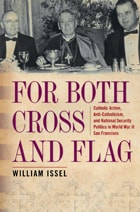
For Both Cross and Flag
Catholic Action, Anti-Catholicism, and National Security Politics in World War II San FranciscoAuthored by William Issel
Temple University Press, 2010
In this fascinating, detailed history, William Issel recounts the civil rights abuses suffered by Sylvester Andriano, an Italian American Catholic civil leader whose religious and political activism in San Francisco provoked an Anti-Catholic campaign against him. A leading figure in the Catholic Action movement, Andriano was falsely accused in state and federal Un-American Activities Committee hearings of having Fascist sympathies prior to and during World War II. As his ordeal began, Andriano was subjected to a hostile investigation by the FBI, whose confidential informants were his political rivals. Furthermore, the U.S. Army ordered him to be relocated on the grounds that he was a security risk.
For Both Cross and Flag provides a dramatic illustration of what can happen when parties to urban political rivalries, rooted in religious and ideological differences, seize the opportunity provided by a wartime national security emergency to demonize their enemy as “a potentially dangerous person.”
Issel presents a cast of characters that includes archbishops, radicals, the Kremlin, and J. Edgar Hoover, to examine the significant role faith-based political activism played in the political culture that violated Andriano’s constitutional rights. Exploring the ramifications of this story, For Both Cross and Flag presents interesting implications for contemporary events and issues relating to urban politics, ethnic groups, and religion in a time of war.

Foragers on America's Western Edge
The Archaeology of California's Pecho CoastTerry L. Jones and Brian F. Codding
University of Utah Press, 2018
The first people of the Pecho Coast were part-time residents who exploited shellfish, fish, and marine birds, including the flightless duck, Chendytes lawi, which sustained hunting drove to extinction ca. 2800 cal BP. This marked the only unequivocal case of prehistoric, human-caused extinction in western North America. Cold, productive seas allowed inhabitants to weather droughts of the Medieval Climatic Anomaly (950–600 cal BP), after which shell beads became increasingly abundant, representing either the initial appearance of Chumash-speaking peoples or attempts by Chumash leaders to consolidate power through gifting, reciprocal exchange, or forced conquest. During the mission era, fishing sustained the Native community as, for the first time, individuals became fully sedentary, foraging within a limited radius to avoid contact with the Spanish.
This record reveals a unique story of local adaptation, anthropogenic habitat change, social differentiation, and, ultimately, resistance to colonial invasion.

Forever Foreigners or Honorary Whites?
The Asian Ethnic Experience TodayMia Tuan
Rutgers University Press, 1999
What does it mean to be an Asian-American in the United States today? Are Asian-Americans considered "honorary whites" or forever thought of as "foreigners?"
Mia Tuan examines the salience and meaning of ethnicity for later generation Chinese- and Japanese-Americans, and asks how their concepts of ethnicity differ from that of white ethnic Americans. She interviewed 95 middle-class Chinese and Japanese Californians and analyzes the importance of ethnic identities and the concept of becoming a "real" American for both Asian and white ethnics. She asks her subjects about their early memories and experiences with Chinese/Japanese culture; current lifestyle and emerging cultural practices; experiences with racism and discrimination; and attitudes toward current Asian immigration.
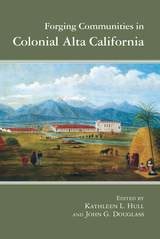
Forging Communities in Colonial Alta California
Edited by Kathleen L. Hull and John G. Douglass
University of Arizona Press, 2018
Forging Communities in Colonial Alta California reorients understandings of this dynamic period, which challenged both Native and non-Native people to reimagine communities not only in different places and spaces but also in novel forms and practices. The contributors draw on archaeological and historical archival sources to analyze the generative processes and nature of communities of belonging in the face of rapid demographic change and perceived or enforced difference.
Contributors provide important historical background on the effects that colonialism, missions, and lives lived beyond mission walls had on Indigenous settlement, marriage patterns, trade, and interactions. They also show the agency with which Indigenous peoples make their own decisions as they construct and reconstruct their communities. With nine different case studies and an insightful epilogue, this book offers analyses that can be applied broadly across the Americas, deepening our understanding of colonialism and community.
Contributors:
Julienne Bernard
James F. Brooks
John Dietler
Stella D’Oro
John G. Douglass
John Ellison
Glenn Farris
Heather Gibson
Kathleen L. Hull
Linda Hylkema
John R. Johnson
Kent G. Lightfoot
Lee M. Panich
Sarah Peelo
Seetha N. Reddy
David W. Robinson
Tsim D. Schneider
Christina Spellman
Benjamin Vargas
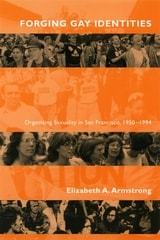
Forging Gay Identities
Organizing Sexuality in San Francisco, 1950-1994Elizabeth A. Armstrong
University of Chicago Press, 2002
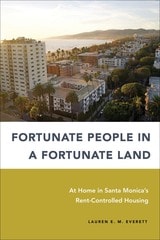
Fortunate People in a Fortunate Land
At Home in Santa Monica's Rent-Controlled HousingLauren E. M. Everett
Temple University Press, 2025
Everett seeks to understand the extent to which individuals feel at home or not at home and what factors contribute to those experiences. She also explores the nexus of Santa Monica’s tenant protection policies, infrastructure, and resources and the extent to which they inform stability—both perceived and actual—and life decisions.
The first scholarly book to take a tenant-centered approach to examining the benefits and problems of rent control, Fortunate People in a Fortunate Land examines the residential experience in this specific local context and explains how it relates to policy and other externalities in cities where homeownership is not financially viable for most renters.
In the series Urban Life, Landscape, and Policy

Franklin D. Israel
A Life in ArchitectureTodd Gannon
J. Paul Getty Trust, The, 2024
Acclaimed Los Angeles architect Franklin D. Israel (1945–1996) created innovative residential projects and office interiors that made him one of the most talked-about designers of his generation. In this vivid account, architectural historian Todd Gannon draws on archival resources, analyses of Israel’s buildings, and recent interviews with the architect’s colleagues, clients, and contemporaries, including Frank Gehry, Thom Mayne, and Robert A. M. Stern. Gannon traces Israel’s development from his early years and career on the East Coast to his formative world travels and residence at the American Academy in Rome. The author guides readers through the Los Angeles architectural context, Israel’s influential teaching at UCLA, his dalliance with Hollywood, and the personal motivations behind his architecture and design work—all aspects of an influential career that was cut short by his death from AIDS-related complications at the age of fifty.
Franklin D. Israel is a compelling work of architectural history and biography, chronicling one gay man’s engagement with the largely heteronormative world of American architectural culture. It explores the achievement of this central figure in the still largely unstudied history of late twentieth-century avant-garde Los Angeles architecture.

French Rococo Ébénisterie in the J. Paul Getty Museum
Gillian Wilson
J. Paul Getty Trust, The, 2021
The first comprehensive catalogue of the Getty Museum’s significant collection of French Rococo ébénisterie furniture.
This catalogue focuses on French ébénisterie furniture in the Rococo style dating from 1735 to 1760. These splendid objects directly reflect the tastes of the Museum’s founder, J. Paul Getty, who started collecting in this area in 1938 and continued until his death in 1976.
The Museum’s collection is particularly rich in examples created by the most talented cabinet masters then active in Paris, including Bernard van Risenburgh II (after 1696–ca. 1766), Jacques Dubois (1694–1763), and Jean-François Oeben (1721–1763). Working for members of the French royal family and aristocracy, these craftsmen excelled at producing veneered and marquetried pieces of furniture (tables, cabinets, and chests of drawers) fashionable for their lavish surfaces, refined gilt-bronze mounts, and elaborate design. These objects were renowned throughout Europe at a time when Paris was considered the capital of good taste.
The entry on each work comprises both a curatorial section, with description and commentary, and a conservation report, with construction diagrams. An introduction by Anne-Lise Desmas traces the collection’s acquisition history, and two technical essays by Arlen Heginbotham present methodologies and findings on the analysis of gilt-bronze mounts and lacquer.
The free online edition of this open-access publication is available at www.getty.edu/publications/rococo/ and includes zoomable, high-resolution photography. Also available are free PDF, EPUB, and Kindle/MOBI downloads of the book, and JPG downloads of the main catalogue images.

French Silver in the J. Paul Getty Museum
Charissa Bremer-David
J. Paul Getty Trust, The, 2023
The collection of seventeenth- and eighteenth-century French silver at the J. Paul Getty Museum is of exceptional quality and state of preservation. Each piece is remarkable for its beauty, inventive form, skillful execution, illustrious provenance, and the renown of its maker. This volume is the first complete study of these exquisite objects, with more than 250 color photographs bringing into focus extraordinary details such as minuscule makers’ marks, inscriptions, and heraldic armorials.
The publication details the formation of the Museum’s collection of French silver, several pieces of which were selected by J. Paul Getty himself, and discusses the regulations of the historic Parisian guild of gold- and silversmiths that set quality controls and consumer protections. Comprehensive entries catalogue a total of thirty-three pieces with descriptions, provenance, exhibition history, and technical information. The related commentaries shed light on the function of these objects and the roles they played in the daily lives of their prosperous owners. The book also includes maker biographies and a full bibliography.
The free online edition of this open-access publication is available at getty.edu/publications/french-silver/ and includes 360-degree views and zoomable high-resolution photography. Also available are free PDF and EPUB downloads of the book, and JPG downloads of the main catalogue images.
From Counterculture to Cyberculture
Stewart Brand, the Whole Earth Network, and the Rise of Digital UtopianismFred Turner
University of Chicago Press, 2006
In the early 1960s, computers haunted the American popular imagination. Bleak tools of the cold war, they embodied the rigid organization and mechanical conformity that made the military-industrial complex possible. But by the 1990s—and the dawn of the Internet—computers started to represent a very different kind of world: a collaborative and digital utopia modeled on the communal ideals of the hippies who so vehemently rebelled against the cold war establishment in the first place.
From Counterculture to Cyberculture is the first book to explore this extraordinary and ironic transformation. Fred Turner here traces the previously untold story of a highly influential group of San Francisco Bay–area entrepreneurs: Stewart Brand and the Whole Earth network. Between 1968 and 1998, via such familiar venues as the National Book Award–winning Whole Earth Catalog, the computer conferencing system known as WELL, and, ultimately, the launch of the wildly successful Wired magazine, Brand and his colleagues brokered a long-running collaboration between San Francisco flower power and the emerging technological hub of Silicon Valley. Thanks to their vision, counterculturalists and technologists alike joined together to reimagine computers as tools for personal liberation, the building of virtual and decidedly alternative communities, and the exploration of bold new social frontiers.
Shedding new light on how our networked culture came to be, this fascinating book reminds us that the distance between the Grateful Dead and Google, between Ken Kesey and the computer itself, is not as great as we might think.