50 books match the query 'Catholics' and 4 start with f
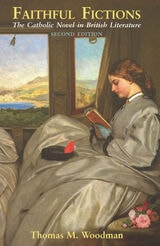
cover of Faithful Fictions: The Catholic Novel in British Literature

Faithful Fictions

The Catholic Novel in British Literature

Thomas M. Woodman

Catholic University of America Press, 2022
Catholic writers have made a rich contribution to British fiction, despite their minority status. Evelyn Waugh, Graham Greene, and Muriel Spark are well-known examples, but there are many other significant novelists whose work has a Catholic aspect. This is the first book to survey the whole range of this material and examine whether valid generalizations can be made about it. In charting such fiction from its development in the Victorian period through to the work of contemporaries such as David Lodge, the author analyses its complex relationships with changes in British society and the international Church. There is more than one way of being a Catholic, as Woodman shows, but he also demosntrates that many of these writers share common themes and a distinctive perspective. They often wish in particular to use their religion as a weapon against what they portray as a complacent Protestant or secular society. Their consciousness of writing in the midst of such a society gives a special edge to their treatments of the perennial Catholic themes of suffering, sin and sex. It also has implications for literary form and relates to what has been seen as the extremist mode of Catholic fiction. The final question that Woodman puts is whether the changes in the Church since the Second Vatican Council must inevitably lead to the loss of this distinctive Catholic contribution to the novel.
[more]
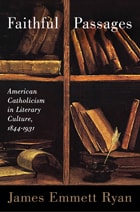
cover of Faithful Passages: American Catholicism in Literary Culture, 1844–1931

Faithful Passages

American Catholicism in Literary Culture, 1844–1931

James Emmett Ryan

University of Wisconsin Press, 2013

Roman Catholic writers in colonial America played only a minority role in debates about religion, politics, morality, national identity, and literary culture. However, the commercial print revolution of the nineteenth century, combined with the arrival of many European Catholic immigrants, provided a vibrant evangelical nexus in which Roman Catholic print discourse would thrive among a tightly knit circle of American writers and readers. James Emmett Ryan’s pathbreaking study follows the careers of important nineteenth-century religionists including Orestes Brownson, Isaac Hecker, Anna Hanson Dorsey, and Cardinal James Gibbons, tracing the distinctive literature that they created during the years that non-Catholic writers like Herman Melville and Emily Dickinson were producing iconic works of American literature.
    Faithful Passages also reveals new dimensions in American religious literary culture by moving beyond the antebellum period to consider how the first important cohort of Catholic writers shaped their message for subsequent generations of readers in the late nineteenth and early twentieth centuries. Perhaps most strikingly, Ryan shows that by the early twentieth century, Roman Catholic themes and traditions in American literature would be advanced in complex ways by mainstream, non-Catholic modernist writers like Kate Chopin and Willa Cather.
    Catholic literary culture in the United States took shape in a myriad of ways and at the hands of diverse participants. The process by which Roman Catholic ideas, themes, and moralities were shared and adapted by writers with highly differentiated beliefs, Ryan contends, illuminates a surprising fluidity of religious commitment and expression in early U.S. literary culture.
[more]
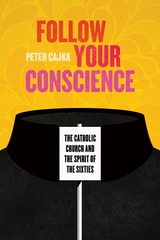
cover of Follow Your Conscience: The Catholic Church and the Spirit of the Sixties

Follow Your Conscience

The Catholic Church and the Spirit of the Sixties

Peter Cajka

University of Chicago Press, 2021

Peter Cajka’s erudite book shows how even staunch Catholics were transformed by the maelstrom of the American Sixties, turning away from powerful and corrupt institutions and toward the inner moral compass provided by their own consciences.

What is your conscience? Is it, as Peter Cajka asks in this provocative book, “A small, still voice? A cricket perched on your shoulder? An angel and devil who compete for your attention?” Going back at least to the thirteenth century, Catholics viewed their personal conscience as a powerful and meaningful guide to align their conduct with worldly laws. But, as Cajka shows in Follow Your Conscience, during the national cultural tumult of the 1960s, the divide between the demands of conscience and the demands of the law, society, and even the church itself grew increasingly perilous. As growing numbers of Catholics started to consider formerly stout institutions to be morally hollow—especially in light of the Vietnam War and the church’s refusal to sanction birth control—they increasingly turned to their own consciences as guides for action and belief. This abandonment of higher authority had radical effects on American society, influencing not only the broader world of Christianity, but also such disparate arenas as government, law, health care, and the very vocabulary of American culture. As this book astutely reveals, today’s debates over political power, religious freedom, gay rights, and more are all deeply infused by the language and concepts outlined by these pioneers of personal conscience.
[more]
cover of From Popular to Insurgent Intellectuals: Peasant Catechists in the Salvadoran Revolution

From Popular to Insurgent Intellectuals

Peasant Catechists in the Salvadoran Revolution

Leigh Binford

Rutgers University Press, 2023

From Popular to Insurgent Intellectuals explains how a group of Catholic lay catechists educated in liberation theology came to take up arms and participate on the side of the rebel FMLN during El Salvador’s revolutionary war (1980-92). In the process they became transformed from popular intellectuals to insurgent intellectuals who put their organizational and cognitive skills at the service of a collective effort to create a more egalitarian and democratic society. The book highlights the key roles that peasant catechists in northern Morazán played in disseminating liberation theology before the war and supporting the FMLN during it—as quartermasters, political activists, and musicians, among other roles. Throughout, From Popular to Insurgent Intellectuals highlights the dialectical nature of relations between Catholic priests and urban revolutionaries, among others, in which the latter learned from the former and vice-versa. Peasant catechists proved capable at making independent decisions based on assessment of their needs and did not simply follow the dictates of those with superior authority, and played an important role for the duration of the twelve-year military conflict. 
[more]