Results by title
50 books match the query 'Child' and 2 start with f
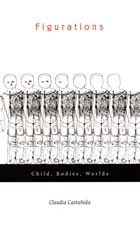
Figurations
Child, Bodies, WorldsClaudia Castañeda
Duke University Press, 2002
Always in the process of becoming, inherently incomplete, the child is a remarkably malleable figure. In Figurations, Claudia Castañeda shows how this malleability is itself generated—how the child is "made" by different constituencies and how the resulting historically, geographically, and culturally specific figures are put to widely divergent uses, often to very powerful effect. Situated at the intersection of feminist, postcolonial, cultural, and science and technology studies, this book provides a remarkable map of the child's meaning and movement across transnational circuits of exchange.
Castañeda investigates the construction of the child as both a natural and cultural body, the character of its embodiment, and its imaginative appeal in various settings. The sites through which she tracks the bodily production and deployment of the child include nineteenth-century developmental science; cognitive neuroscience in the late twentieth century; international adoption; rumors and media coverage of child-organ stealing; and poststructuralist theory. Her work reveals the extent to which the child's cultural significance and value lie in its status as a body whose incompleteness makes it "available" for such varied uses. Figurations establishes the child as a key figure for understanding and rethinking the politics of nature, culture, bodies, and subjects in changing "global" worlds.
Castañeda investigates the construction of the child as both a natural and cultural body, the character of its embodiment, and its imaginative appeal in various settings. The sites through which she tracks the bodily production and deployment of the child include nineteenth-century developmental science; cognitive neuroscience in the late twentieth century; international adoption; rumors and media coverage of child-organ stealing; and poststructuralist theory. Her work reveals the extent to which the child's cultural significance and value lie in its status as a body whose incompleteness makes it "available" for such varied uses. Figurations establishes the child as a key figure for understanding and rethinking the politics of nature, culture, bodies, and subjects in changing "global" worlds.
[more]
From Parent to Child
Intrahousehold Allocations and Intergenerational Relations in the United StatesJere R. Behrman, Robert A. Pollak, and Paul Taubman
University of Chicago Press, 1995
How do parents allocate human capital among their children? To what extent do parental decisions about resource allocation determine children's eventual economic success?
The analyses in From Parent to Child explore these questions by developing and testing a model in which the earnings of children with different genetic endowments respond differently to investments in human capital. Behrman, Pollak, and Taubman use this model to investigate issues such as parental bias in resource allocations based on gender or birth order; the extent of intergenerational mobility in income, earnings, and schooling in the United States; the relative importance of environmental and genetic factors in determining variations in schooling; and whether parents' distributions offset the intended effects of government programs designed to subsidize children. In allocating scarce resources, parents face a trade-off between equity and efficiency, between the competing desires to equalize the wealth of their children and to maximize the sum of their earnings.
Building on the seminal work of Gary Becker, From Parent to Child integrates careful modeling of household behavior with systematic empirical testing, and will appeal to anyone interested in the economics of the family.
[more]