Results by title
95 books match the query 'Christian Living' and 6 start with f
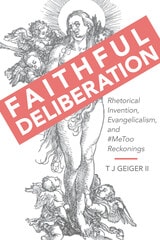
Faithful Deliberation
Rhetorical Invention, Evangelicalism, and #MeToo ReckoningsT J Geiger II
University of Alabama Press, 2022
Investigates the rhetorical practices used by contemporary evangelical Christian women to confront theological and cultural issues that stymie deliberation within their communities
While often perceived as an insular enclave with a high level of in-group agreement about political and social issues, predominantly white evangelicalism includes prominent voices urging deliberation about appropriate responses to sexual abuse, domestic violence, and the discourses surrounding these traumas. In Faithful Deliberation: Rhetorical Invention, Evangelicalism, and #MeToo Reckonings, T J Geiger II examines theologically reflective rhetorical invention that reconfigures trauma-minimizing commonplaces in order to facilitate community-internal deliberation.
Resting at the intersection of feminist rhetorical studies and religious rhetorics, this book contains four related theological-rhetorical case studies that consider how figures such as Beth Moore, Jen Hatmaker, Rachael Denhollander, Karen Swallow Prior, and others engaged in rhetorical invention. Each juxtaposes differing approaches to contending with rape, domestic violence, sexual abuse, and other traumas. Each case contrasts an approach based on appeals to highly circumscribed understandings of grace, purity, and other denomination-specific traditions and values with approaches rooted in those same traditions and values, but with an eye toward community transformation, healing through justice, and reinvigorated forms of forgiveness. Geiger skillfully argues that this faithful deliberation involves practices of thinking, reflecting, storytelling, and acting within a tightly bounded community that can foster change through a recommitment to core values.
These rhetorical practices exemplify the kind of inventive listening deliberative discourse requires, point to the sort of healing they may promote in response to trauma and trauma discourses, and occur within a range of genres including social media posts, blog entries, published interviews, victim impact statements, and petitions. This study of invention for evangelical-to-other-evangelical deliberative discourse contributes to rhetorical studies by demonstrating the civic and social possibilities of rhetoric within religious enclaves. By locating the case studies as recent moments in longer US public and evangelical histories of activism, deliberative practice, and politics, Faithful Deliberation brings into focus how enclaves and the dominant public sphere interact.
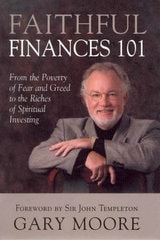
Faithful Finances 101
From the Poverty of Fear and Greed to the Riches of Spiritual InvestingGary Moore
Templeton Press, 2005
Faithful Finances 101 is a first-person narrative by an outspoken advocate of faith-based investing. A senior vice president of investments at Paine Webber before founding his own investment firm as "counsel to ethical and spiritual investors," Gary Moore warns that much of the economic advice emanating from some popular and influential evangelical authors and speakers is based on scare tactics and distortions of what the Bible has to say about finances. He draws on fifty years of studying the Bible, politics, and economics and presents insights for those who want to be faithful in their finances—to use 100 percent of the time, talent, and treasure with which they have been entrusted for the glory of God as well as for the benefit of others and themselves, and not just give 10 percent of their incomes to the church.

Fasti Ecclesiae Anglicanae 1541-1857
Hereford Diocese XIIIWilliam H. Campbell
University of London Press, 2014
Fasti Ecclesiae Anglicanae 1541–1857
The Welsh Dioceses XIVCompiled by William H. Campbell
University of London Press, 2026
A detailed history of the Church of England’s Welsh dioceses, including the building of cathedrals and churches.
The volumes in this series trace the process of reorganization and reform that took place in the Church of England after the Norman conquest, with the building of new cathedrals, the establishment of new constitutions for their chapters, and the appointment of foreign clergy. In this period, when many documents are undated, the chronological framework is provided by the careers of bishops, dignitaries, canons, and cathedral priors.
This volume covers the years 1541 to 1857, with a focus on the Welsh dioceses. During this period, six new dioceses were created out of larger dioceses, with former abbey churches named as their cathedrals. These fourteen cathedrals were known as the New Foundation, as compared with the thirteen medieval secular cathedrals of the Old Foundation. Further substantial reorganization took place in the 1830s, and additional dioceses were created to meet the needs of the period. This volume offers a detailed and comprehensive account of the period, making it an essential research tool for historians.
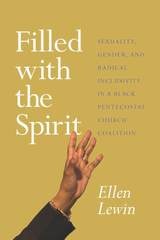
Filled with the Spirit
Sexuality, Gender, and Radical Inclusivity in a Black Pentecostal Church CoalitionEllen Lewin
University of Chicago Press, 2018
In Filled with the Spirit, Ellen Lewin gives us a deeply empathetic ethnography of the worship and community central to TFAM, telling the story of how the doctrine of radical inclusivity has expanded beyond those it originally sought to serve to encompass people of all races, genders, sexualities, and religious backgrounds. Lewin examines the seemingly paradoxical relationship between TFAM and traditional black churches, focusing on how congregations and individual members reclaim the worship practices of these churches and simultaneously challenge their authority. The book looks closely at how TFAM worship is legitimated and enhanced by its use of gospel music and considers the images of food and African American culture that are central to liturgical imagery, as well as how understandings of personal authenticity tie into the desire to be filled with the Holy Spirit. Throughout, Lewin takes up what has been mostly missing from our discussions of race, gender, and sexuality—close attention to spirituality and faith.
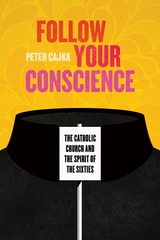
Follow Your Conscience
The Catholic Church and the Spirit of the SixtiesPeter Cajka
University of Chicago Press, 2021
Peter Cajka’s erudite book shows how even staunch Catholics were transformed by the maelstrom of the American Sixties, turning away from powerful and corrupt institutions and toward the inner moral compass provided by their own consciences.
What is your conscience? Is it, as Peter Cajka asks in this provocative book, “A small, still voice? A cricket perched on your shoulder? An angel and devil who compete for your attention?” Going back at least to the thirteenth century, Catholics viewed their personal conscience as a powerful and meaningful guide to align their conduct with worldly laws. But, as Cajka shows in Follow Your Conscience, during the national cultural tumult of the 1960s, the divide between the demands of conscience and the demands of the law, society, and even the church itself grew increasingly perilous. As growing numbers of Catholics started to consider formerly stout institutions to be morally hollow—especially in light of the Vietnam War and the church’s refusal to sanction birth control—they increasingly turned to their own consciences as guides for action and belief. This abandonment of higher authority had radical effects on American society, influencing not only the broader world of Christianity, but also such disparate arenas as government, law, health care, and the very vocabulary of American culture. As this book astutely reveals, today’s debates over political power, religious freedom, gay rights, and more are all deeply infused by the language and concepts outlined by these pioneers of personal conscience.