Results by title
67 books match the query 'Civil rights workers' and 5 start with f
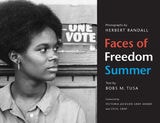
Faces of Freedom Summer
Herbert Randall and Bobs M. Tusa
University of Alabama Press, 2001
Witness the faces that defined a movement for freedom and equality
The old adage “One picture is worth ten thousand words” is definitely true for Faces of Freedom Summer. There are simply not enough words to describe the period in our history that is recorded by the pictures in this book.
As this book afirms, the resurgence of overt activities by hate groups—both the old traditional ones (e.g., the Ku Klux Klan) and the new ones (e.g., the Skin Heads)—however much the hard work and sacrifices of the modern civil rights movement humanized American society, much still remains to be done. The modern civil rights movement associated with the 1960s was not in vain, yet it did not eradicate from our society the evils of racism and sexism. While we activists made the United States more of an open society than it has ever been in its history, our vision and desire for the beloved community did not reach into all sectors of American society. “Freedom,” it has been said, “is a constant struggle, a work of eternal vigilance.”
Faces of Freedom Summer brings to life that there was such a time and there were such people and, if such a people were once, then they are still among us. Yet, they may only become aware of themselves when they are confronted with visible evidence, such as the evidence contained in the pictures of Herbert Randall.
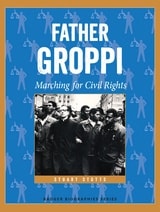
Father Groppi
Marching for Civil RightsStuart Stotts
Wisconsin Historical Society Press, 2013
Father Groppi Marched to Change Milwaukee
"Father Groppi: Marching for Civil Rights" tells the story of Father James Groppi, a Catholic priest from Milwaukee, Wis., who stood up for civil rights in the 1960s and 1970s.
This important new addition to the Badger Biographies series for young readers also tells about a turbulent time in Wisconsin history and sheds light on the civil rights movement and its place in the North.
Growing up on the south side of Milwaukee as the son of Italian immigrants, young James Groppi learned early on what it felt like to be made fun of just because of who you are, and he learned to respect people from other races and ethnic groups. Later, while studying to become a priest, he saw the discrimination African Americans faced. It made him angry, and he vowed to do whatever he could to fight racism.
Father Groppi marched with Dr. Martin Luther King Jr. and other leaders of the civil rights movement. But he knew there was work to be done in his own city. In Milwaukee, he teamed up with the NAACP and other organizations, protesting discrimination and segregation wherever they saw it. It wasn't always easy, and Father Groppi and the other civil rights workers faced great challenges.

Feed My Sheep
The Life of Alberta HenryColleen Whitley
University of Utah Press, 2019
Henry endured intolerance by leaning on her faith and her commitment to a cause that she believed God had called her to follow. When she came to Utah in 1949 she thought it would be a brief stay, but she ended up making it her home for more than fifty years. In Utah, Henry committed herself to helping all races, religions, and ethnic groups coexist in appreciation of each other. While Martin Luther King Jr., Medgar Evers, and Malcolm X led the struggle for civil rights at a national level, Alberta Henry campaigned tirelessly for equality at a local level, talking at school board meetings, before city councils, and in the homes of her neighbors.
Henry was a member or officer of more than forty civic organizations and served for twelve years as president of the Salt Lake City branch of the NAACP, where she lobbied for civil rights, education, and justice. The dozens of awards and commendations she received speak to her accomplishments. While much of Henry’s story is told in her own words, Colleen Whitley provides expert and personal context to her speeches, writing, and interviews. The result is an exceptional first-person account of an African American woman leader and her role in the Civil Rights Movement in Utah.

For Freedom's Sake
The Life of Fannie Lou HamerChana Kai Lee
University of Illinois Press, 1999
The youngest of twenty children of sharecroppers in rural Mississippi, Fannie Lou Hamer witnessed throughout her childhood the white cruelty, political exclusion, and relentless economic exploitation that defined African American existence in the Delta.
In this intimate biography, Chana Kai Lee documents Hamer's lifelong crusade to empower the poor through collective action, her rise to national prominence as a civil rights activist, and the personal costs of her ongoing struggle to win a political voice and economic self-sufficiency for blacks in the segregated South. Lee looks at Hamer's early work as a field secretary for the Student Nonviolent Coordinating Committee in Mississippi, her dramatic appearance at the 1964 Democratic National Convention, and her ongoing work as a militant grassroots leader in her own community.

From Southern Wrongs to Civil Rights
The Memoir of a White Civil Rights ActivistSara Mitchell Parsons
University of Alabama Press, 2009
This first-hand account tells the story of turbulent civil rights era Atlanta through the eyes of a white upper-class woman who became an outspoken advocate for integration and racial equality
As a privileged white woman who grew up in segregated Atlanta, Sara Mitchell Parsons was an unlikely candidate to become a civil rights agitator. After all, her only contacts with blacks were with those who helped raise her and those who later helped raise her children. As a young woman, she followed the conventional path expected of her, becoming the dutiful wife of a conservative husband, going to the country club, and playing bridge. But unlike many of her peers, Parsons harbored an increasing uneasiness about racial segregation.In a memoir that includes candid diary excerpts, Parsons chronicles her moral awakening. With little support from her husband, she runs for the Atlanta Board of Education on a quietly integrationist platform and, once elected, becomes increasingly outspoken about inequitable school conditions and the slow pace of integration. Her activities bring her into contact with such civil rights leaders as Martin Luther King, Jr., and his wife, Coretta Scott King. For a time, she leads a dual existence, sometimes traveling the great psychic distance from an NAACP meeting on Auburn Avenue to an all-white party in upscale Buckhead. She eventually drops her ladies' clubs, and her deepening involvement in the civil rights movement costs Parsons many friends as well as her first marriage.