Results by title
106 books match the query 'Customs & Traditions' and 7 start with f
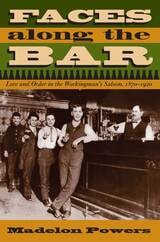
Faces along the Bar
Lore and Order in the Workingman's Saloon, 1870-1920Madelon Powers
University of Chicago Press, 1998
"A free-pouring blend of astonishing facts, folklore and firsthand period observations. . . . It's the rich details that'll inspire the casual reader to drink deep from this tap of knowledge."—Don Waller, USA Today recommended reading
"A surprise on every page."—Publishers Weekly
"Here we get social history that appreciates the bar talk even while dissecting its marvelous rituals."—Library Journal, starred review
"Careful scholarship with an anecdotal flair to please even the most sober of readers."—Nina C. Ayoub, Chronicle of Higher Education
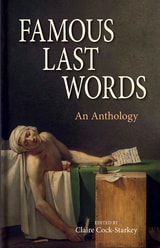
Famous Last Words
An AnthologyEdited by Claire Cock-Starkey
Bodleian Library Publishing, 2016
Over the years, family and loved ones have recorded an extraordinary number of famous last words, from kings and queens to politicians, philosophers, scientists, writers, and actors. These exit lines can impart keen insights from an extraordinary life, reveal a sense of humor indomitable in even the darkest hours, or tell us something about a celebrated person’s last moments of life. Perhaps unavoidably given their provenance, many last words have proven irresistible to embellishment or remain in question. King Charles II, for example, was said to have instructed his brothers to “let not Poor Nelly starve,” asking that his favorite mistress be provided a pension of 1,500 pounds a year. Although she did indeed receive said pension, some contend that Charles’s actual last words, following a long period of illness, were, “You must pardon me, gentlemen, for being a most unconscionable time a-dying.”
For Famous Last Words, Claire Cock-Starkey has collected the most interesting, insightful, and controversial last words, from deathbed desperation to the fondest of farewells.
Fashioning Inland Communities
Trade and Popular Culture in Central East AfricaYaari Felber-Seligman
University of Wisconsin Press, 2025
Ruvuma used fashion to build varied communities, from local to pan-regional, reflecting the dynamic relationships among inland groups. Examples of Ruvuma popular fashions reveal processes of meaning making and community building that call for us to expand our attention to the ways in which East African peoples interacted alongside, as well as beyond, trade networks that sourced prestige and commercial goods. Popular culture here emerges as a heterarchical force that shaped lasting multidirectional connections across and between Ruvuma and their neighbors. As both a subject and a strategy for analysis, the history of popular fashion shifts how we view histories of small, decentralized societies as they encounter larger economies. Felber-Seligman demonstrates that this has implications for our understanding not only of trade but of material culture, community, gender, and family.
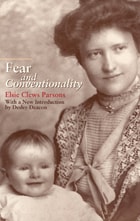
Fear and Conventionality
Elsie Clews Parsons
University of Chicago Press, 1997
A modern mind at the turn of the century, Parsons challenged social conventions at a time when it was less than popular to do so. Witty, graceful, and impassioned, this book will be of interest to social and cultural historians and anyone interested in early twentieth-century America.
Elsie Clews Parsons (1874-1941) is the author of many books, including The Family, The Old-Fashioned Woman, Pueblo Indian Religion, and Mitla. Available from the University of Chicago Press is Elsie Clews Parsons: Constructing Sex and Culture in Modernist America, a biography by Desley Deacon.
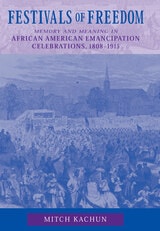
Festivals of Freedom
Memory and Meaning in African American Emancipation Celebrations, 1808-1915Mitch Kachun
University of Massachusetts Press, 2003
With the abolition of the transatlantic slave trade in 1808, many African Americans began calling for “a day of publick thanksgiving” to commemorate this important step toward freedom. During the ensuing century, black leaders built on this foundation and constructed a distinctive and vibrant tradition through their celebrations of the end of slavery in New York State, the British West Indies, and eventually the United States as a whole. In this revealing study, Mitch Kachun explores the multiple functions and contested meanings surrounding African American emancipation celebrations from the abolition of the slave trade to the fiftieth anniversary of U.S. emancipation.
Excluded from July Fourth and other American nationalist rituals for most of this period, black activists used these festivals of freedom to encourage community building and race uplift. Kachun demonstrates that, even as these annual rituals helped define African Americans as a people by fostering a sense of shared history, heritage, and identity, they were also sites of ambiguity and conflict. Freedom celebrations served as occasions for debate over black representations in the public sphere, struggles for group leadership, and contests over collective memory and its meaning.
Based on extensive research in African American newspapers and oration texts, this book retraces a vital if often overlooked tradition in African American political culture and addresses important issues about black participation in the public sphere. By illuminating the origins of black Americans' public commemorations, it also helps explain why there have been increasing calls in recent years to make the "Juneteenth" observance of emancipation an American—not just an African American—day of commemoration.
Following Tradition
Folklore in the Discourse of American CultureSimon J. Bronner
Utah State University Press, 1998
Following Tradition is an expansive examination of the history of tradition—"one of the most common as well as most contested terms in English language usage"—in Americans' thinking and discourse about culture. Tradition in use becomes problematic because of "its multiple meanings and its conceptual softness." As a term and a concept, it has been important in the development of all scholarly fields that study American culture. Folklore, history, American studies, anthropology, cultural studies, and others assign different value and meaning to tradition. It is a frequent point of reference in popular discourse concerning everything from politics to lifestyles to sports and entertainment. Politicians and social advocates appeal to it as prima facie evidence of the worth of their causes. Entertainment and other media mass produce it, or at least a facsimile of it. In a society that frequently seeks to reinvent itself, tradition as a cultural anchor to be reverenced or rejected is an essential, if elusive, concept. Simon Bronner's wide net captures the historical, rhetorical, philosophical, and psychological dimensions of tradition. As he notes, he has written a book "about an American tradition—arguing about it." His elucidation of those arguments makes fascinating and thoughtful reading. An essential text for folklorists, Following Tradition will be a valuable reference as well for historians and anthropologists; students of American studies, popular culture, and cultural studies; and anyone interested in the continuing place of tradition in American culture.
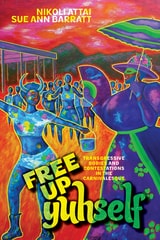
Free Up Yuhself
Transgressive Bodies and Contestations in the CarnivalesqueNikoli A. Attai
Rutgers University Press, 2025
Free Up Yuhself explores and theorizes what it means to embody and be empowered by the chaos of transgression, evaluating the implications for people who destabilize the Caribbean region’s dominant gender and sexuality politics within the Caribbean and the Caribbean diaspora. This book examines how people actively utilize the carnivalesque—spaces of festivity and places of excitement, the extraordinary, the ritualistic—to confront, negotiate, disrupt, and transgress normative trends, boundaries, and perspectives in the Caribbean and Caribbean diaspora communities. This book is particularly concerned with the ways that Caribbean people contest sexual and gendered expectations through their bodily performances across regional and diasporic festival spaces. Through illustrative, analytical, evaluative, and reflective chapters, the collection contemplates the themes of freedom, belonging, acceptance, and recognition as these affect the experience of people’s sense of being. The authors reflect on “freeing up” as a contentious politics, understanding that people have the capacity to enact their freedom through transgressive movements and performances that persistently grapple with notions of respectability, agency, empowerment, disruption, and the meanings and consequences of their varied social and political locations.