Results by title
170 books match the query 'Death, Grief, Loss' and 4 start with f
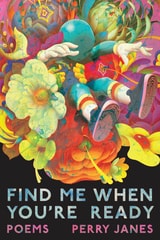
Find Me When You're Ready
PoemsPerry Janes
Northwestern University Press, 2024
A powerful debut and a lyric coming-of-age narrative that interrogates the myths we carry
In Find Me When You’re Ready, Perry Janes traces a sweeping journey from Detroit to Los Angeles. As he leaves home and forges toward California, the speaker in these poems considers how we learn and mislearn ideas about manhood, confronts the aftershocks of childhood sexual abuse, and questions the human need for belonging. By embracing the touchstones of youth—movies, lore, graphic novels—these poems assert the speaker’s defiant right to childhood even amid damage.
As the collection arcs toward adulthood, the speaker embodies a vision of healing that refuses easy binaries and embraces the joys of intimacy. Across each of its five acts, Perry Janes’s debut collection is driven by an interest troubling our creation myths, asking who built them, why we carry them, and how we might set them aside.
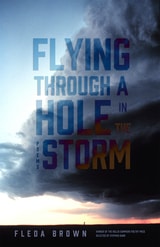
Flying through a Hole in the Storm
PoemsFleda Brown
Ohio University Press, 2021

Folk Physics
New and Selected PoemsMolly Brodak
University of Iowa Press, 2027
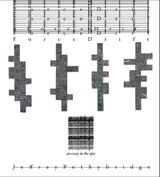
Force Drift
An Essay in the EpicJeffrey Pethybridge
Tupelo Press, 2025
The poems in Force Drift recall Gilles Deleuze’s insight that art “is not a matter of reproducing or inventing forms, but of capturing forces.” Through the formal range of this dynamic sequence, Pethybridge achieves something like a synthesis of Deleuze’s opposition whereby the invention of poetic form becomes the very means of capturing, registering forces: “a reckoning lyric.”
The task of reckoning renders visible the violence of the state that lies at the heart of the matter precisely because the state intends to conceal or justify its brutality through the invocation of emergency powers, as well as the state of exception, or how the state disappears persons in its network of black site prisons. As the political scientist Darius Rejali has demonstrated, it is in fact democracies that have refined “invisible tortures” such as sensory deprivation, stress-positions, and the waterboard.
Working at the intersection of documentary poetics and theories of the epic, Pethybridge recommits poetry to a responsibility for a description of history. As a poet-researcher, he asks: “what would be possible…if listening / were the leading-form of being.” Driven by argument, abstraction, and assemblage, the poems in Force Drift address themselves to the irreparable, the “traumaeffect,” within the war on terror’s record of atrocity. Force Drift is a cri de coeur, political critique, and essay in the epic.
Against the world-destroying violence of the US torture program, Force Drifts juxtaposes a catalog of energies, forms, and genres. It is abolitionist, citational, architectural, chromatic, and replete with visual poetries ranging from the arabasques of tzahibs to erasures to extreme measures of leading and kerning. Even when its language is reduced to the pure transcription of pain––”aiai aiai aiai”––Force Drift is committed to aliveness and embodiment as “final treaty of the person,” as conscience and counterworld to the history as catastrophe of US imperialism, “irrefutable as the sun to the eye.”