Results by title
56 books match the query 'Diversity' and 2 start with f
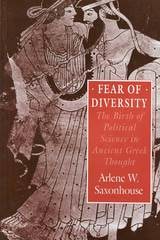
Fear of Diversity
The Birth of Political Science in Ancient Greek ThoughtArlene W. Saxonhouse
University of Chicago Press, 1992
Saxonhouse opens up fresh understandings of such issues as the Greeks' fear of the feminine and their attempts to ignore the demands that gender, reproduction, and the family inevitably make on the individual.
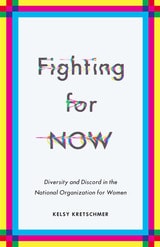
Fighting for NOW
Diversity and Discord in the National Organization for WomenKelsy Kretschmer
University of Minnesota Press, 2019
An unparalleled exploration of NOW’s trajectory, from its founding to the present—and its future
A new wave of feminist energy has swept the globe since 2016—from women’s marches and the #MeToo movement to transwomen’s inclusion and exclusion in feminism and participation in institutional politics. Amid all this, an organization declared dead or dying for thirty years—the National Organization for Women—has seen a membership boom. NOW presents an intriguing puzzle for scholars and activists alike. Considered one of the most stable organizations in the feminist movement, it has experienced much conflict and schism. Scholars have long argued that factionalism is the death knell of organizations, yet NOW continues to thrive despite internal conflicts.
Fighting for NOW seeks to better understand how bureaucratic structures like NOW’s simultaneously provide stability and longevity, while creating space for productive and healthy conflict among members. Kelsy Kretschmer explores these ideas through an examination of conflict in NOW’s local chapters, its task forces and committees, and its satellite groups. NOW’s history provides evidence for three basic arguments: bureaucratic groups are not insulated from factionalism; they are important sites of creativity and innovation for their movements; and schisms are not inherently bad for movement organizations. Hence, Fighting for NOW is in stark contrast to conventional scholarship, which has conceptualized factionalism as organizational failure. It also provides one of the few book-length explorations of NOW’s trajectory, from its founding to the modern context.
Scholars will welcome the book’s insights that draw on open systems and resource dependency theories, as well as its rethinking of how conflict shapes activist communities. Students will welcome its clear and compelling history of the feminist movement and of how feminist ideas have changed over the past five decades.