Results by title
542 books match the query 'Emigration and immigration' and 25 start with f
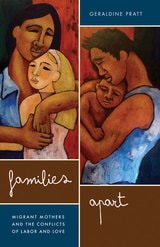
Families Apart
Migrant Mothers and the Conflicts of Labor and LoveGeraldine Pratt
University of Minnesota Press, 2012
In a developing nation like the Philippines, many mothers provide for their families by traveling to a foreign country to care for someone else’s. Families Apart focuses on Filipino overseas workers in Canada to reveal what such arrangements mean for families on both sides of the global divide.
The outcome of Geraldine Pratt’s collaboration with the Philippine Women Centre of British Columbia, this study documents the difficulties of family separation and the problems that children have when they reunite with their mothers in Vancouver. Aimed at those who have lived this experience, those who directly benefit from it, and those who simply stand by and watch, Families Apart shows how Filipino migrant domestic workers—often mothers themselves—are caught between competing neoliberal policies of sending and receiving countries and how, rather than paying rich returns, their ambitions as migrants often result in social and economic exclusion for themselves and for their children. This argument takes shape as an open-ended series of encounters, moving between a singular academic voice and the “we” of various research collaborations, between Vancouver and the Philippines, and between genres of “evidence-based” social scientific research, personal testimony, theatrical performance, and nonfictional narrative writing.
Through these experiments with different modes of storytelling, Pratt seeks to transform frameworks of perception, to create and collect sympathetic witnesses—in short, to promote a wide-ranging public discussion and debate about a massive worldwide shift in family (and nonfamily) relations of intimacy and care.
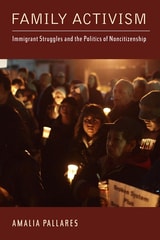
Family Activism
Immigrant Struggles and the Politics of NoncitizenshipPallares, Amalia
Rutgers University Press, 2014
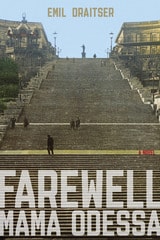
Farewell, Mama Odessa
A NovelEmil Draitser
Northwestern University Press, 2020
Set in the summer of 1979 at the height of the movement to free Soviet Jewry, Farewell, Mama Odessa is an autobiographical novel whose intertwined storylines follow a variety of people—dissidents, victims of ethnic discrimination, and black marketeers among them—as they bid farewell to their beloved hometown of Odessa, Ukraine, and make their way to the West. At the book’s center is Boris, a young writer thwarted by state censorship and antisemitism. With an Angora kitten for his companion and together with other émigrés, he puts the old country in his rear-view mirror and sets out on a journey that will take him to Bratislava, Vienna, Rome, and New York on his way to Los Angeles. Will Boris be able to rekindle his creative passion and inspiration in the West? Will other Jewish émigrés fit into the new society, so much different than the one they left behind? With humor and compassion, Farewell, Mama
Odessa describes the émigrés’ attempts at adjustment to the free world.
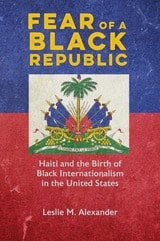
Fear of a Black Republic
Haiti and the Birth of Black Internationalism in the United StatesLeslie M. Alexander
University of Illinois Press, 2023
A bold exploration of Black internationalism’s origins, Fear of a Black Republic links the Haitian revolution to the global Black pursuit of liberation, justice, and social equality.
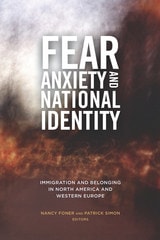
Fear, Anxiety, and National Identity
Immigration and Belonging in North America and Western Europesimon
Russell Sage Foundation, 2015
Fifty years of large-scale immigration has brought significant ethnic, racial, and religious diversity to North America and Western Europe, but has also prompted hostile backlashes. In Fear, Anxiety, and National Identity, a distinguished multidisciplinary group of scholars examine whether and how immigrants and their offspring have been included in the prevailing national identity in the societies where they now live and to what extent they remain perpetual foreigners in the eyes of the long-established native-born. What specific social forces in each country account for the barriers immigrants and their children face, and how do anxieties about immigrant integration and national identity differ on the two sides of the Atlantic?
Western European countries such as Germany, the Netherlands, and the United Kingdom have witnessed a significant increase in Muslim immigrants, which has given rise to nativist groups that question their belonging. Contributors Thomas Faist and Christian Ulbricht discuss how German politicians have implicitly compared the purported “backward” values of Muslim immigrants with the German idea of Leitkultur, or a society that values civil liberties and human rights, reinforcing the symbolic exclusion of Muslim immigrants. Similarly, Marieke Slootman and Jan Willem Duyvendak find that in the Netherlands, the conception of citizenship has shifted to focus less on political rights and duties and more on cultural norms and values. In this context, Turkish and Moroccan Muslim immigrants face increasing pressure to adopt “Dutch” culture, yet are simultaneously portrayed as having regressive views on gender and sexuality that make them unable to assimilate.
Religion is less of a barrier to immigrants’ inclusion in the United States, where instead undocumented status drives much of the political and social marginalization of immigrants. As Mary C. Waters and Philip Kasinitz note, undocumented immigrants in the United States. are ineligible for the services and freedoms that citizens take for granted and often live in fear of detention and deportation. Yet, as Irene Bloemraad points out, Americans’ conception of national identity expanded to be more inclusive of immigrants and their children with political mobilization and changes in law, institutions, and culture in the wake of the Civil Rights Movement. Canadians’ views also dramatically expanded in recent decades, with multiculturalism now an important part of their national identity, in contrast to Europeans’ fear that diversity undermines national solidarity.
With immigration to North America and Western Europe a continuing reality, each region will have to confront anti-immigrant sentiments that create barriers for and threaten the inclusion of newcomers. Fear, Anxiety, and National Identity investigates the multifaceted connections among immigration, belonging, and citizenship, and provides new ways of thinking about national identity.
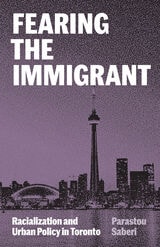
Fearing the Immigrant
Racialization and Urban Policy in TorontoParastou Saberi
University of Minnesota Press, 2022
A fascinating deep dive into one city’s urban policy—and the anxiety over immigrants that informs it
The city of Toronto is often held up as a leader in diversity and inclusion. In Fearing the Immigrant, however, Parastou Saberi argues that Toronto’s urban policies are influenced by a territorialized and racialized security agenda—one that parallels the “War on Terror.” Focusing on the figure of the immigrant and so-called immigrant neighborhoods as the targets of urban policy, Saberi offers an innovative, multidisciplinary approach to the politics of racialization and the governing of alterity through space in contemporary cities.
A comprehensive study of urban policymaking in Canada’s largest city from the 1990s to the late 2010s, Fearing the Immigrant uses Toronto as a jumping-off point to understand how the nexus of development, racialization, and security works at the urban and international levels. Saberi situates urban policymaking in Toronto in relation to the dominant policies of international development and public health, counterinsurgency, and humanitarian intervention. Engaging with the genealogies and contemporary developments of major policy techniques involving mapping and policy concepts such as poverty, security, policing, development, empowerment, as well as social determinants of health, equity, and prevention, she scrutinizes the parallel ways these techniques and concepts operate in urban policy and international relations.
Fearing the Immigrant ultimately asserts that the geopolitical fear of the immigrant is central to the formation of urban policy in Toronto. Rather than addressing the root causes of poverty, urban policy as it has been practiced aims to pacify the specter of urban unrest and to secure the production of a neocolonial urban order. As such, this book is an urgent call to reimagine urban policy in the name of equality and social justice.
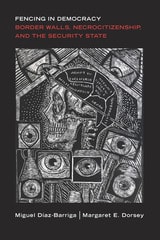
Fencing in Democracy
Border Walls, Necrocitizenship, and the Security StateMiguel Díaz-Barriga and Margaret Dorsey
Duke University Press, 2019
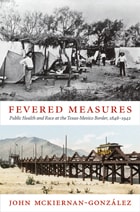
Fevered Measures
Public Health and Race at the Texas-Mexico Border, 1848–1942John Mckiernan-González
Duke University Press, 2012
Fictions of Migration
Narratives of Displacement in Peru and BoliviaLorena Cuya Gavilano
The Ohio State University Press, 2021
Fictive Kinship
Family Reunification and the Meaning of Race and Nation in American ImmigrationCatherine Lee
Russell Sage Foundation, 2013
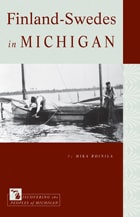
Finland-Swedes in Michigan
Mika Roinila
Michigan State University Press, 2012
Who are the Finland-Swedes? Defined as citizens of Finland with a Swedish mother tongue, many know these people as “Swede- Finns” or simply “Swedes.” This book, the first ever to focus on this ethnolinguistic minority living in Michigan, examines the origins of the Finland-Swedes and traces their immigration patterns, beginning with the arrival of hundreds in the United States in the 1860s. A growing population until the 1920s, when immigration restrictions were put in place, the Finland-Swedes brought with them unique economic, social, cultural, religious, and political institutions, explored here in groundbreaking detail. Drawing on archival, church, and congregational records, interviews, and correspondence, this book paints a vivid portrait of Finland-Swedish life in photographs and text, and also includes detailed maps that show the movement of this group over time. The latest title in the Discovering the Peoples of Michigan series even includes a sampling of traditional Finland-Swedish recipes.
Flexible Families
Nicaraguan Transnational Families in Costa RicaCaitlin Fouratt
Vanderbilt University Press, 2022
The book situates transnational families in an analysis of the history of unstable family life in Nicaragua due to decades of war and economic crisis, rather than in the migration process itself, which is often blamed for family breakdown in public discourse. Fouratt argues that the kinds of family configurations often seen as problematic consequences of migration—specifically single mothers, absent fathers, and grandmother caregivers—represent flexible family configurations that have enabled Nicaraguan families to survive the chronic crises of the past decades. By examining the work that goes into forging and sustaining transnational kinship, the book argues for a rethinking of national belonging and discourses of solidarity.
In parallel, the book critically examines conditions in Costa Rica, especially the ways the instabilities and inequalities that have haunted the rest of the region have begun to take shape there, resulting in perceptions of increased crime rates and a declining quality of life. By linking this crisis of Costa Rican exceptionalism to recent immigration reform, the book also builds on scholarship about the production and experiences of immigrant exclusion. Flexible Families offers insight into the impacts of increasingly restrictive immigration policies in the everyday lives of transnational families within the developing world.
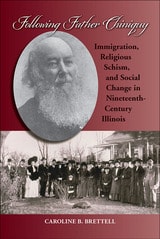
Following Father Chiniquy
Immigration, Religious Schism, and Social Change in Nineteenth-Century IllinoisCaroline B. Brettell
Southern Illinois University Press, 2015
Winner, ISHS Certificate of Excellence, 2016
In the late 1850s and early 1860s, the attention of the Catholic and Protestant religious communities around the world focused on a few small settlements of French Canadian immigrants in northeastern Illinois. Soon after arriving in their new home, a large number of these immigrants, led by Father Charles Chiniquy, the charismatic Catholic priest who had brought them there, converted to Protestantism. In this anthropological history, Caroline B. Brettell explores how Father Chiniquy took on both the sacred and the secular authority of the Catholic Church to engineer the religious schism and how the legacy of this rift affected the lives of the immigrants and their descendants for generations. This intriguing study of a nineteenth-century migration of French Canadians to the American Midwest offers an innovative perspective on the immigrant experience in America.
Brettell chronicles how Chiniquy came to lead approximately one thousand French Canadian families to St. Anne, Illinois, in the early 1850s and how his conflict with the Catholic hierarchy over the ownership and administration of church property, delivery of the mass in French instead of Latin, and access to the Bible by laymen led to his excommunication. Drawing on the concept of social drama—a situation of intensely lived conflict that emerges within social groups—Brettell explains the religious schism in terms of larger ethnic and religious disagreements that were happening elsewhere in the United States and in Canada. Brettell also explores legal disputes, analyzes the reemergence of Catholicism in St. Anne in the first decade of the twentieth century, addresses the legacy of Chiniquy in both the United States and Quebec, and closely examines the French Canadian immigrant communities, focusing on the differences between the people who converted to Protestantism and those who remained Catholic.
Occurring when nativism was pervasive and the anti-immigrant Know-Nothing Party was at its height, Chiniquy’s religious schism offers an opportunity to examine a range of important historical and anthropological issues, including immigration, ethnicity, and religion; changes in household and family structure; the ways social identities are constructed and reconstructed through time; and the significance of charismatic leadership in processes of social and religious change. Through its multidisciplinary approach, Brettell’s enlightening study provides a pioneering assessment of larger national tensions and social processes, some of which are still evident in modern immigration to the United States.
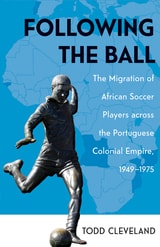
Following the Ball
The Migration of African Soccer Players across the Portuguese Colonial Empire, 1949–1975Todd Cleveland
Ohio University Press, 2017
With Following the Ball, Todd Cleveland incorporates labor, sport, diasporic, and imperial history to examine the extraordinary experiences of African football players from Portugal’s African colonies as they relocated to the metropole from 1949 until the conclusion of the colonial era in 1975. The backdrop was Portugal’s increasingly embattled Estado Novo regime, and its attendant use of the players as propaganda to communicate the supposed unity of the metropole and the colonies.
Cleveland zeroes in on the ways that players, such as the great Eusébio, creatively exploited opportunities generated by shifts in the political and occupational landscapes in the waning decades of Portugal’s empire. Drawing on interviews with the players themselves, he shows how they often assumed roles as social and cultural intermediaries and counters reductive histories that have depicted footballers as mere colonial pawns.
To reconstruct these players’ transnational histories, the narrative traces their lives from the informal soccer spaces in colonial Africa to the manicured pitches of Europe, while simultaneously focusing on their off-the-field challenges and successes. By examining this multi-continental space in a single analytical field, the book unearths structural and experiential consistencies and contrasts, and illuminates the components and processes of empire.
Food Across Borders
Garcia, Matt
Rutgers University Press, 2017
The stories told in Food Across Borders highlight the contiguity between the intimate decisions we make as individuals concerning what we eat and the social and geopolitical processes we enact to secure nourishment, territory, and belonging.
Published in cooperation with the William P. Clements Center for Southwest Studies, Southern Methodist University.
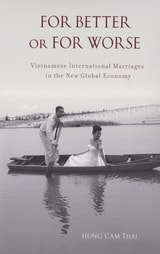
For Better or For Worse
Vietnamese International Marriages in the New Global EconomyThai, Hung Cam
Rutgers University Press, 2008
In For Better or For Worse, Hung Cam Thai takes a closer look at marriage and migration, with a specific focus on the unions between Vietnamese men living in the United States and the women who marry them. Weaving together a series of personal stories, he underscores the ironies and challenges that these unions face. He includes the voices of working-class immigrant men dealing with marginalization in their adopted country. These men speak about wanting "traditional" wives who they hope will recognize their gendered authority. Meanwhile, young Vietnamese college-educated women, undesirable to bachelors in their own country who are seeking subservient wives, express a preference for men of the same ethnicity but with a more liberal outlook on gender-men they imagine they will find in the United States.
A sense of foreboding pervades the book as Thai captures the incompatible viewpoints of the couples who appear to be separated not only geographically but ideologically.
For Emplacement
Political Ontology in Two ActsMario Blaser
Duke University Press, 2025

Forever 17
Coming of Age in the German Asylum SystemUlrike Bialas
University of Chicago Press, 2023
Heartbreaking images of children in distress have propelled some of the most urgent calls for action on immigration crises, and that compassion often affects how state asylum policies are structured. In Germany, for example, the immigration system is engineered to protect minors, which leads to unintended consequences for migrants.
In Forever 17, Ulrike Bialas follows young African and Central Asian migrants in Germany as they navigate that system. Without official paperwork or even, in many cases, knowledge of their exact age, migrants must decide how to present their complicated life stories to government officials. They quickly realize that their age can have an outsized effect on the outcome of their cases. A migrant under 18, for example, can’t be deported, but might instead be placed in a youth home, where they will be subject to strict curfew laws. An 18-year-old adult, on the other hand, can get permission to work, but not opportunities to go to school.
Regardless of their age—actual or assumed—migrants face great difficulties. Those classified as minors must live with the psychological burden of being treated like children, while those classified as adults must live without the practical support and legal protections reserved for minors. The significance of age stands in stark contrast to the ambiguities inherent in its determination. Though Germany’s infamous bureaucracy is designed to issue clear statements about refugees and migrants, the truth is often more complicated, and officials are forced to grapple with the difficult implications of their decisions. Ultimately, Bialas shows, policies surrounding asylum seekers fall dramatically short of their humanitarian ideals. Even those policies designed to help the most vulnerable can lead to outcomes that drastically limit the possibilities for migrants in real need of protection and keep them from leading fulfilling lives.
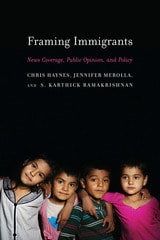
Framing Immigrants
News Coverage, Public Opinion, and PolicyChris Haynes
Russell Sage Foundation, 2016
The authors analyze media coverage of several key immigration policy issues—including mass deportations, comprehensive immigration reform, and measures focused on immigrant children, such as the DREAM Act—to chart how news sources across the ideological spectrum produce specific “frames” for the immigration debate. In the past few years, liberal and mainstream outlets have tended to frame immigrants lacking legal status as “undocumented” (rather than “illegal”) and to approach the topic of legalization through human-interest stories, often mentioning children. Conservative outlets, on the other hand, tend to discuss legalization using impersonal statistics and invoking the rule of law. Yet, regardless of the media’s ideological positions, the authors’ surveys show that “negative” frames more strongly influence public support for different immigration policies than do positive frames. For instance, survey participants who were exposed to language portraying immigrants as law-breakers seeking “amnesty” tended to oppose legalization measures. At the same time, support for legalization was higher when participants were exposed to language referring to immigrants living in the United States for a decade or more.
Framing Immigrants shows that despite heated debates on immigration across the political aisle, the general public has yet to form a consistent position on undocumented immigrants. By analyzing how the media influences public opinion, this book provides a valuable resource for immigration advocates, policymakers, and researchers.
French Canadians in Michigan
John P. DuLong
Michigan State University Press, 2001
As the first European settlers in Michigan, the French Canadians left an indelible mark on the place names and early settlement patterns of the Great Lakes State. Because of its importance in the fur trade, many French Canadians migrated to Michigan, settling primarily along the Detroit- Illinois trade route, and throughout the fur trade avenues of the Straits of Mackinac. When the British conquered New France in 1763, most Europeans in Michigan were Francophones. John DuLong explores the history and influence of these early French Canadians, and traces, as well, the successive 19th- and 20th-century waves of industrial migration from Quebec, creating new communities outside the old fur trade routes of their ancestors.

Fresh Blood
THE NEW AMERICAN IMMIGRANTSSanford J. Ungar
University of Illinois Press, 1998
end of the country to the other, veteran journalist Sanford J. Ungar documents
the real-life struggles and triumphs of America's newest immigrants. He
finds that the self-chosen who arrive every day, most of them legally,
still enrich our national character and experience and make invaluable
political, economic, social, cultural, and even gastronomic contributions.
"First-class journalism, a book scholars will use decades from now
to find out what it 'felt like' to be an immigrant in the 90s. I do not
know of a better description and analysis of contemporary immigration."
-- Roger Daniels, author of Coming to America: A History of Immigration
and Ethnicity in American Life
"An excellent overview of contemporary immigration issues set within
the context of developments in the past fifty years. Ungar makes a strong
case for the contributions of recent immigrants and for maintaining a
relatively open door in the face of sometimes shrill opposition."
-- Thomas Dublin, editor of Immigrant Voices: New Lives in America
"Exactly the right book at the right time. [Ungar] looks at the
national controversy over immigration policy with a clear eye, producing
a history and a convincing argument why this is no time to reverse a liberal
welcome to newcomers that has always—in good times and bad—made
this a better and more prosperous democracy." -- Ben H. Bagdikian,
author of Double Vision
From Cuenca to Queens
An Anthropological Story of Transnational MigrationBy Ann Miles
University of Texas Press, 2004
Transnational migration is a controversial and much-discussed issue in both the popular media and the social sciences, but at its heart migration is about individual people making the difficult choice to leave their families and communities in hopes of achieving greater economic prosperity. Vicente Quitasaca is one of these people. In 1995 he left his home in the Ecuadorian city of Cuenca to live and work in New York City. This anthropological story of Vicente's migration and its effects on his life and the lives of his parents and siblings adds a crucial human dimension to statistics about immigration and the macro impact of transnational migration on the global economy.
Anthropologist Ann Miles has known the Quitasacas since 1989. Her long acquaintance with the family allows her to delve deeply into the factors that eventually impelled the oldest son to make the difficult and dangerous journey to the United States as an undocumented migrant. Focusing on each family member in turn, Miles explores their varying perceptions of social inequality and racism in Ecuador and their reactions to Vicente's migration. As family members speak about Vicente's new, hard-to-imagine life in America, they reveal how transnational migration becomes a symbol of failure, hope, resignation, and promise for poor people in struggling economies. Miles frames this fascinating family biography with an analysis of the historical and structural conditions that encourage transnational migration, so that the Quitasacas' story becomes a vivid firsthand illustration of this growing global phenomenon.
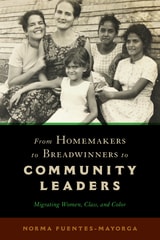
From Homemakers to Breadwinners to Community Leaders
Migrating Women, Class, and ColorNorma Fuentes-Mayorga
Rutgers University Press, 2022
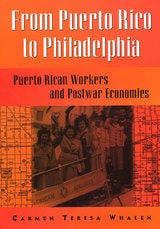
From Puerto Rico To Philadelphia
Puerto Rican Workers and Postwar EconomiesCarmen Whalen
Temple University Press, 2001
Puerto Rican migration to the mainland following World War II took place for a range of reasons -- globalization of the economy, the colonial relationship between the United States and Puerto Rico, state policies, changes in regional and local economies, social networks, and, not least, the decisions made by individual immigrants. In this wide-ranging book, Carmen Whalen weaves them all into a tapestry of Puerto Rican immigration to Philadelphia.
Like African Americans and Mexicans, Puerto Ricans were recruited for low-wage jobs, only to confront racial discrimination as well as economic restructuring. As Whalen shows, they were part of that wave of newcomers who came from areas in the Caribbean, Latin America, and Asia characterized by a heavy U.S. military and economic presence, especially export processing zones looking for a new life in depressed urban environments already populated by earlier labor migrants. But Puerto Rican in-migration was also unique, especially in its regional and gender dimensions. Many migrants came as part of contract labor programs shaped by competing agendas.
By the 1990s, economic conditions, government policies, and racial ideologies had transformed Puerto Rican labor migrants into what has been called "the other underclass." The author analyzes this continuation of "culture and poverty" interpretations and contrasts it with the efforts of Philadelphia's Puerto Ricans to recreate their communities and deal with the impact of economic restructuring and residential segregation in the City of Brotherly Love.
From Russia with Code
Programming Migrations in Post-Soviet TimesMario Biagioli and Vincent Antonin Lepinay, editors
Duke University Press, 2019
Contributors. Irina Antoschyuk, Mario Biagioli, Ksenia Ermoshina, Marina Fedorova, Andrey Indukaev, Alina Kontareva, Diana Kurkovsky, Vincent Lépinay, Alexandra Masalskaya, Daria Savchenko, Liubava Shatokhina, Alexandra Simonova, Ksenia Tatarchenko, Zinaida Vasilyeva, Dimitrii Zhikharevich