Results by title
1832 books match the query 'Essays' and 74 start with f
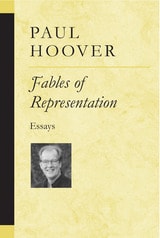
Fables of Representation
EssaysPaul Hoover
University of Michigan Press, 2004
With its title essay, "Fables of Representation," one of the most cogent studies ever written of the New York School of poets (a group that includes the influential poet John Ashbery), this book is required reading for anyone who seeks to understand the poetry and culture of the postmodern period.
Author Paul Hoover's wide-ranging subjects include African-American interdisciplinary studies; the position of poetry in the electronic age; the notion of doubleness in the work of Harryette Mullen and others; the lyricism of the New York School poets; and the role of reality in American poetry. Hoover also introduces two provocative essays sure to generate attention and discussion: "The Postmodern Era: A Final Exam" and "The New Millennium: Fifty Statements on Literature and Culture."
Paul Hoover is the editor of the anthology Postmodern American Poetry and author of nine poetry collections, including Totem and Shadow: New and Selected Poems and Viridian. His poetry has appeared in American Poetry Review, The New Republic, and The Paris Review, among others. He is Poet-in-Residence at Columbia College, Chicago.
Facing the Death Penalty
Essays on a Cruel and Unusual Punishmentedited by Michael L. Radelet, foreword by Henry Schwarzschild
Temple University Press, 1990
Faith and the Historian
CATHOLIC PERSPECTIVESEdited by Nick Salvatore
University of Illinois Press, 2006
Faith and the Historian collects essays from eight experienced historians discussing the impact of being "touched" by Catholicism on their vision of history. That first graduate seminar, these essays suggest, did not mark the inception of one's historical sensibilities; rather, that process had deeper, and earlier, roots. The authors--ranging from "cradle to the grave" Catholics to those who haven’t practiced for forty years, and everywhere in between--explicitly investigate the interplay between their personal lives and beliefs and the sources of their professional work. A variety of heartfelt, illuminating, and sometimes humorous experiences emerge from these stories of intelligent people coming to terms with their Catholic backgrounds as they mature and enter the academy. Contributors include: Philip Gleason, David Emmons, Maureen Fitzgerald, Joseph A. McCartin, Mario T. Garcia, Nick Salvatore, James R. Barrett, and Anne M. Butler.
Faithful History
Essays on Writing Mormon HistoryGeorge D. Smith
Signature Books, 1992
In this compilation, editor George D. Smith has assembled sixteen thought-provoking essays which represent this ongoing discussion. They include “On Being a Mormon Historian” by D. Michael Quinn, “Two Integrities: An Address to the Crisis in Mormon Historiography” by Martin E. Marty, “Objectivity and History” by Kent E. Robson, “The Acids of Modernity and the Crisis in Mormon Historiography” by Louis Midgley, and “Historicity of the Canon” by Edward H. Ashment.
“History, myth, and legend are not always distinguishable,” cautions Smith,” “but there are some things we can know. The authors of these essays attempt to define the boundaries between objectivity and the biases of belief and unbelief which may color what is written about the past.”
Over the past decade Mormons have debated how their history should be written. New Mormon Historians believe that balanced, unprejudiced approaches produce the most reliable history. Traditionalists contend that no historian can be completely objective, that Mormon history should therefore be written with the “pre-understanding” that Joseph Smith restored the ancient Christian church.
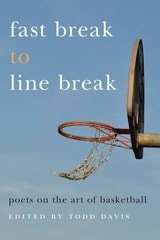
Fast Break to Line Break
Poets on the Art of BasketballTodd Davis
Michigan State University Press, 2012
If baseball is the sport of nostalgic prose, basketball’s movement, myths, and culture are truly at home in verse. In this extraordinary collection of essays, poets meditate on what basketball means to them: how it has changed their perspective on the craft of poetry; how it informs their sense of language, the body, and human connectedness; how their love of the sport made a difference in the creation of their poems and in the lives they live beyond the margins. Walt Whitman saw the origins of poetry as communal, oral myth making. The same could be said of basketball, which is the beating heart of so many neighborhoods and communities in this country and around the world. On the court and on the page, this “poetry in motion” can be a force of change and inspiration, leaving devoted fans wonderstruck.
Fatefully, Faithfully Feminist
A Critical History of Women, Patriarchy, and Mexican National DiscourseCarlos Monsiváis, edited by Norma Kahn and Ilana Luna
Vanderbilt University Press, 2024

Father Nature
Fathers as Guides to the Natural WorldPaul S. & Stan Piper & Tag
University of Iowa Press, 2003
Fauna and Flora, Earth and Sky
Brushes with Nature's WisdomTrudy Dittmar
University of Iowa Press, 2003
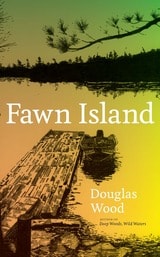
Fawn Island
Douglas Wood
University of Minnesota Press, 2018
Fawn Island is a place where crows serve as alarm clocks, white-throated sparrows leave the tracks of their songs upon the evening hush, and chickadees help a woodsman learn to whistle. The island is also a jumping-off place for journeys large and small, earthly and spiritual-to nearby Mallard Island, Gull Island, or Bald Rock, by sea kayak into the wild recesses of sprawling Voyageurs National Park, or on a midnight paddle in which the paddler can reach the silent wilderness of the stars themselves. In his latest book, best-selling author Douglas Wood guides the reader on a deep journey into the heart of the North Woods.
For Wood, Fawn Island is not merely a charming wilderness hideaway; it is the entry to realms of thought and meaning as well. From its pine-clad shores he probes for insights into the nature of neighborliness and independence, of community and solitude. Out of an ancient Ojibwe legend comes an exploration of personal loss and life after death. Wood questions the notion of being a “force of nature” and the concept of the passage of time in the context of seemingly eternal trees, lakes, rock ledges, and stars. From beneath the ascending trunks of pines comes an inquiry into the principles of optimism and, finally, a personal response to the eternal question: Is the universe a friendly place?
Embedded in the text like roots of the island’s pines is Wood’s gentle, self-effacing humor and the author’s own original pen-and-ink drawings that superbly evoke the poetry and mystery of this “small bit of rock and tree,” this “lucky place” in the wilderness.
Fear Falls Away
and Other Essays from Hard and Rocky PlacesJanice Emily Bowers
University of Arizona Press, 1997
Faced with the prospect of moving to another place, Bowers finds herself thinking about the familiar world in new and unfamiliar ways. Through her eyes, too, we see how an interest in nature and the outdoors developed from early childhood and how simple curiosity has led her to the most surprising discoveries. At odd and unexpected moments, her work also seems to bring new insights into herself and her life as a writer, a wife, and a mother. These pages promise a new adventure at every turn in the trail. For sheer terror, there's a climb up the face of Baboquivari, for laughs, there's the great bagworm caper, and for some quiet truths, there are themes of gain and loss, of connection and reconcilliation. Crunching through winter snow or sweating under summer sun, we know we're in the hands of an experienced guide. And we know we couldn't ask for a better companion.
Fear Icons
EssaysKisha Lewellyn Schlegel
The Ohio State University Press, 2018

Feminism and American Literary History
EssaysBaym, Nina
Rutgers University Press, 1992
Fiat Flux
The Writings of Wilson R. Bachelor, Nineteenth-Century Country Doctor and PhilosopherWilliam D. Lindsey
University of Arkansas Press, 2013
Fiction and the Ways of Knowing
Essays on British NovelsBy Avrom Fleishman
University of Texas Press, 1978
In this highly individual study, Avrom Fleishman explores a wide range of literary references to human culture—the culture of ideas, facts, and images. Each critical essay in Fiction and the Ways of Knowing takes up for sustained analysis a major British novel of the nineteenth or the twentieth century. The novels are analyzed in the light of social, historical, philosophical, and other perspectives that can be grouped under the human sciences.
The diversity of critical contexts in these thirteen essays is organized by Avrom Fleishman's governing belief in the interrelations of literature and other ways of interpreting the world. The underlying assumptions of this approach—as explained in his introductory essay—are that fiction is capable of encompassing even the most recondite facts and recalcitrant ideas; that fiction, though never a mirror of reality, is linked to realities and takes part in the real; and that a critical reading may be informed by scientific knowledge without reducing the literary work to a schematic formula.
Fleishman investigates the matters of fact and belief that make up the designated meanings, the intellectual contexts, and the speculative parallels in three types of novel. Some of the novels discussed make it clear that their authors are informed on matters beyond the nonspecialist's range; these essays help bridge this information gap. Other fictional works are only to be grasped in an awareness of the cultural lore tacitly distributed in their own time; a modern reader must make the effort to fathom their anachronisms. And other novels can be found to open passageways that their authors can only have glimpsed intuitively; these must be pursued with great caution but equal diligence.
The novels discussed include Little Dorrit, The Way We Live Now, Daniel Deronda, he Return of the Native, and The Magus. Also examined are Wuthering Heights, Vanity Fair, Northanger Abbey, To the Lighthouse, Under Western Eyes, Ulysses, and A Passage to India.
Field Of Vision
Lisa Knopp
University of Iowa Press, 1996
In this contemplative collection of essays, Lisa Knopp moves out from the prairies of Nebraska and Iowa to encompass a fully developed vision of light, memory, change, separateness, time, symbols, responsibility, and unity. Knopp charts a stimulating course among the individual, community, and culture that removes the boundaries between self and other, allowing one to become fully present in the world. Her keen vision sees beyond the ordinary to illuminate the mysteries and meanings of our personal and natural worlds.
Fields of Vision
Essays on the Travels of William BartramEdited by Kathryn E. Holland Braund and Charlotte M. Porter
University of Alabama Press, 2010
A classic work of history, ethnography, and botany, and an examination of the life and environs of the 18th-century south
William Bartram was a naturalist, artist, and author of Travels through North and South Carolina, Georgia, East and West Florida, the Cherokee Country, the ExtensiveTerritories of the Muscogulees, or Creek Confederacy, and the Country of the Choctaws. The book, based on his journey across the South, reflects a remarkable coming of age. In 1773, Bartram departed his family home near Philadelphia, Pennsylvania, as a British colonist; in 1777, he returned as a citizen of an emerging nation of the United States. The account of his journey, published in 1791, established a national benchmark for nature writing and remains a classic of American literature, scientific writing, and history. Brought up as a Quaker, Bartram portrayed nature through a poetic lens of experience as well as scientific observation, and his work provides a window on 18th-century southern landscapes. Particularly enlightening and appealing are Bartram’s detailed accounts of Seminole, Creek, and Cherokee peoples.The Bartram Trail Conference fosters Bartram scholarship through biennial conferences held along the route of his travels. This richly illustrated volume of essays, a selection from recent conferences, brings together scholarly contributions from history, archaeology, and botany. The authors discuss the political and personal context of his travels; species of interest to Bartram; Creek architecture; foodways in the 18th-century south, particularly those of Indian groups that Bartram encountered; rediscovery of a lost Bartram manuscript; new techniques for charting Bartram’s trail and imaging his collections; and a fine analysis of Bartram’s place in contemporary environmental issues.
Fierce and Delicate
Essays on Dance and IllnessRenée K. Nicholson
West Virginia University Press, 2021
Renée Nicholson’s professional training in ballet had both moments of magnificence and moments of torment, from fittings of elaborate platter tutus to strange language barriers and unrealistic expectations of the body. In Fierce and Delicate, she looks back on the often confused and driven self she had been shaped into—always away from home, with friends who were also rivals, influenced by teachers in ways sometimes productive and at other times bordering on sadistic—and finds beauty in the small roles she performed. When, inevitably, Nicholson moved on from dancing, severed from her first love by illness, she discovered that she retained the lyricism and narrative of ballet itself as she negotiated life with rheumatoid arthritis.
An intentionally fractured memoir-in-essays, Fierce and Delicate navigates the traditional geographies of South Florida, northern Michigan, New York City, Milwaukee, West Virginia, and also geographies of the body—long, supple limbs; knee replacements; remembered bodies and actual. It is a book about the world of professional dance and also about living with chronic disease, about being shattered yet realizing the power to assemble oneself again, in a new way.
Figures of Resistance
Essays in Feminist TheoryTeresa de Lauretis. Edited and with an Introduction by Patricia White
University of Illinois Press, 2006
Final Acts
Death, Dying, and the Choices We MakeBauer-Maglin, Nan
Rutgers University Press, 2010
Contributors include patients, caretakers, physicians, journalists, lawyers, social workers, educators, hospital administrators, academics, psychologists, and a poet, and among them are ethicists, religious believers, and nonbelievers. Some write moving, personal accounts of "good" or 'bad" deaths; others examine the ethical, social, and political implications of slow dying. Essays consider death from natural causes, suicide, and aid-in-dying (assisted suicide).
Writing in a style free of technical jargon, the contributors discuss documents that should be prepared (health proxy, do-not-resuscitate order, living will, power of attorney); decision-making (over medical interventions, life support, hospice and palliative care, aid-in-dying, treatment location, speaking for those who can no longer express their will); and the roles played by religion, custom, family, friends, caretakers, money, the medical establishment, and the government.
For those who yearn for some measure of control over death, the essayists in Final Acts, from very different backgrounds and with different personal and professional experiences around death and dying, offer insight and hope.
Final Light
The Life and Art of V. Douglas SnowFrank McEntire
University of Utah Press, 2013
A nationally recognized artist, Snow chose to stay in Utah where, when not teaching at the University of Utah, he roamed the southern Utah desert gaining inspiration from the red rock formations, especially the Cockscomb outside his studio near Capitol Reef National Park. Snow said, “Every artist probably wonders if he or she made the right decision to dig in to a certain place.” He dug into the landscape in and around Southern Utah and never regretted it. Just as “Tennessee Williams’s South, William Faulkner’s Mississippi, [or] John Steinbeck’s West Coast, formed their work,” the desert lands of the Colorado Plateau formed Snow’s. Their sense of place, “without provincialism,” said Snow “is what gives their art its enduring power.” Final Light will appeal to art historians and art lovers, especially those interested in abstract expressionism and the art of Utah, the West, and the Southwest.
Chosen by 15 Bytes, Utah's art magazine, as the most exceptional art book for 2014.
Finding Querencia
Essays from In-BetweenHarrison Candelaria Fletcher
The Ohio State University Press, 2022
With its roots in the Spanish verb querer—“to want, to love”—the term querencia has been called untranslatable but has come to mean a place of safety and belonging, that which we yearn for when we yearn for home. In this striking essay collection, Harrison Candelaria Fletcher shows that querencia is also a state of being: the peace that arises when we reconcile who we are. A New Mexican of mixed Latinx and white ethnicity, Candelaria Fletcher ventures into the fault lines of culture, landscape, and spirit to discover the source of his lifelong hauntings. Writing in the persona of coyote, New Mexican slang for “mixed,” he explores the hyphenated elements within himself, including his whiteness. Blending memory, imagination, form, and language, each essay spirals outward to investigate, accept, and embrace hybridity. Ultimately, Finding Querencia offers a new vocabulary of mixed-ness, a way to reconcile the crosscurrents of self and soul.
Finding a Clear Path
JIM MINICK
West Virginia University Press, 2006
Finding a Clear Path intertwines literature, agriculture, and ecology as author Jim Minick takes the reader on many journeys, allowing you to float on a pond, fly with a titmouse, gather ginseng, and grow the lowly potato. The reader visits monarch butterflies and morel mushrooms, encountering beavers, black snakes, and bloodroot along the way. Using his background as a blueberry farmer, gardener and naturalist, Minick explores the Appalachian region and also introduces information that can be appreciated from a scientific point of view, explaining, for example, the ears of an owl, or the problems with the typical Christmas tree. Reading this collection of essays invites you to search for ways to better understand and appreciate this marvelous world, opening paths for journeys of your own.
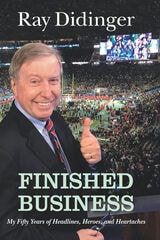
Finished Business
My Fifty Years of Headlines, Heroes, and HeartachesRay Didinger
Temple University Press, 2021
Ray Didinger opens his lively memoir Finished Business with the Philadelphia Eagles’ upset win in Super Bowl LII. When the Eagles finally hoist the Lombardi Trophy, Didinger does his best to straddle the emotions of a working reporter and a long-suffering Philly fan. His ability to do that is why he has built up such a loyal following.
Didinger began following the Eagles as a kid, hanging out in his grandfather’s bar in Southwest Philadelphia. He spent his summers at the team's training camp in Hershey. It was there he met his idol, flanker Tommy McDonald. He would later write a play, Tommy and Me, about their friendship and his efforts to see McDonald enshrined in the Pro Football Hall of Fame.
Didinger has been covering the Eagles as a newspaper columnist or TV analyst since 1970. Over the years, he wrote sports for the Philadelphia Bulletin and the Philadelphia Daily News. He later produced Emmy Award–winning documentaries for NFL Films before transitioning to sports talk radio and TV analysis.
In five decades, across multiple media platforms, he has interviewed everyone from Hank Aaron, Wayne Gretzky, Muhammad Ali, Julius Erving, Jack Nicklaus, to Mike Schmidt, as well as writing film scripts for Hollywood stars such as Bruce Willis and Alec Baldwin. He went to the White House with the U.S. Olympic team and even explored the bizarre world of professional wrestling.
His stories, told in his familiar, breezy style, capture his enthusiasm for sports and his affection for the fans who still mourn the pennant that eluded the Phillies in 1964. Didinger has become synonymous with Philadelphia sports, and his memoir is as passionate as an autumn Sunday at Lincoln Financial Field.
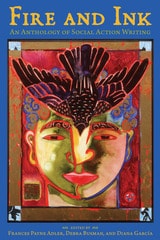
Fire and Ink
An Anthology of Social Action WritingEdited by Frances Payne Adler, Debra Busman, and Diana García
University of Arizona Press, 2009
Fire and Ink brings together, for the first time in one volume, politically engaged writing by poets, fiction writers, and essayists. Including many of our finest writers—Martín Espada, Adrienne Rich, June Jordan, Patricia Smith, Gloria Anzaldúa, Sharon Olds, Arundhati Roy, Sonia Sanchez, Carolyn Forche, Chitra Banerjee Divakaruni, Alice Walker, Linda Hogan, Gary Soto, Kim Blaeser, Minnie Bruce Pratt, Li-Young Lee, and Jimmy Santiago Baca, among others—this is an indispensable collection.
This groundbreaking anthology marks the emergence of social action writing as a distinct field within creative writing and literature. Featuring never-before-published pieces, as well as reprinted material, Fire and Ink is divided into ten sections focused on significant social issues, including identity, sexuality and gender, the environment, social justice, work, war, and peace. The pieces can often be gripping, such as “Frame,” in which Adrienne Rich confronts government and police brutality, or Chris Abani’s “Ode to Joy,” which documents great courage in the face of mortal danger.
Fire and Ink serves as a wonderful reader for a wide range of courses, from composition and rhetoric classes to courses in ethnic studies, gender studies, American studies, and even political science, by facing a past that was often accompanied by injustice and suffering. But beyond that, this collection teaches us that we all have the power to create a more equitable and just future.
First Amendment Studies in Arkansas
The Richard S. Arnold Prize EssaysStephen Smith
University of Arkansas Press, 2016
This collection of fourteen essays written by young communication scholars at the University of Arkansas presents unique insights into how First Amendment issues have played out in the state. Rather than exploring the particular legal issues and the constitutional principles enunciated by the courts, First Amendment Studies tells the stories of actual people expressing challenged or unpopular points of view and reveals the ways that constitutional controversies arise from the actions of local officials and individual citizens.
Drawing on public documents as well as extensive interviews with participants, these essays demonstrate the dynamics of democratic dissent—on college campuses, in public schools, in churches, on the streets, in the forests and on the farms, and in legislative chambers and courtrooms.
Each essay was selected for the Richard S. Arnold Prize in First Amendment Studies, an endowed fund established in 1999 to encourage University of Arkansas graduate students in communication and the liberal arts to explore and examine questions about freedom of speech and freedom of religion.
First Days Of The Year
Helene Cixous
University of Minnesota Press, 1998
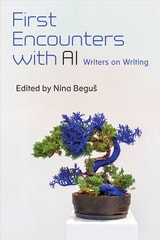
First Encounters with AI
Writers on WritingEdited by Nina Beguš
University of Michigan Press, 2026
First Encounters with AI gathers some of today’s most original literary minds to explore one of the central artistic and cultural questions of our era: What happens to writing when language is no longer used only by humans? As large language models enter the public imagination and everyday creative practice, writers across genres—novelists, poets, screenwriters, essayists, translators, scholars, technologists, language artists—are grappling with profound shifts in how stories are conceived, crafted, and shared.
Allison Parrish, Ted Chiang, Annelyse Gelman, Sasha Stiles, James Yu, Hannes Bajohr, Ken Liu, Qiufan Chen, Joseph Dumit, Gerardo Con Diaz, Iain S. Thomas, Sheila Heti, Nicholas Nardini, Jasmin B. Frelih, Katy Ilonka Gero, and Alex Saum-Pascual reflect on their early, intimate encounters with generative text at a moment when artificial intelligence feels at once thrilling, unsettling, and unavoidable. Their essays portray AI not as a monolith, but as a dynamic field of possibility and tension between creativity and computation, where longstanding human questions about intention, desire, authorship, labor, and value gain new urgency. Ranging from deeply personal meditations to critical provocations, from philosophical investigations to playful experiments, these writers reveal how writing tools shape writing itself—and what is at stake when those tools begin to imitate us. Curated and introduced by editor Nina Beguš, First Encounters with AI offers readers an essential guide to navigating this new literary landscape. Together, these essays map the terrain of our first contact zone with AI, offering clarity, insight, and imaginative depth at a moment of radical change.
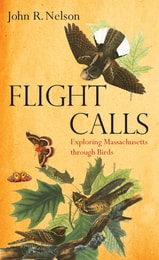
Flight Calls
Exploring Massachusetts through BirdsJohn R. Nelson
University of Massachusetts Press, 2019
With style, humor, and a sense of wonder, Nelson blends his field adventures with a history of the birding community; natural and cultural history; bird stories from authors such as Henry David Thoreau, Emily Dickinson, and Mary Oliver; current scientific research; and observations about the fascinating habits of birds and their admirers. These essays are capped off with a plea for bird conservation, in Massachusetts and beyond.
Folk Law
Essays in the Theory and Practice of Lex Non ScriptaAlison Dundes Renteln
University of Wisconsin Press, 1995
In every culture there exists unwritten law—obligations and prohibitions that are understood and passed on, and transgressions that are punished. Folk Law, a comprehensive two-volume collection of essays, examines this meeting place of folklore and jurisprudence. The contributors explore the historical significance and implications of folk law, its continuing influence around the globe, and the conflicts that arise when folk law diverges from official law.
The collection begins by defining various forms of “folk law,” drawing on examples from many cultures. The second section provides historical profiles of pioneering figures in the study of folk law. Following sections examine field research techniques used to identify folk laws; aspects of folk law within the realm of rituals, songs, and other forms of expressive culture; instances where folk law comes into conflict with national law, and the role of folk law in the international arena. The volumes also include description and analysis of two approaches to folk law—the rule approach, in which scholars dissect the codes that underlie folk law, and the case approach, in which researchers examine specific cases involving folk law.
Valuable for students and scholars of law, folklore, or anthropology, this extensive casebook marks a rare interdisciplinary approach to two important areas of research.

For Dear Life
Women's Decriminalization and Human Rights in FocusCarol Jacobsen
University of Michigan Press, 2019
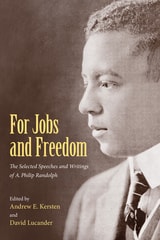
For Jobs and Freedom
Selected Speeches and Writings of A. Philip RandolphAndrew E. Kersten
University of Massachusetts Press, 2014
This volume documents Randolph's life and work through his own writings. The editors have combed through the files of libraries, manuscript collections, and newspapers, selecting more than seventy published and unpublished pieces that shed light on Randolph's most significant activities. The book is organized thematically around his major interests—dismantling workplace inequality, expanding civil rights, confronting racial segregation, and building international coalitions. The editors provide a detailed biographical essay that helps to situate the speeches and writings collected in the book. In the absence of an autobiography, this volume offers the best available presentation of Randolph's ideas and arguments in his own words.
For Love of the World
Essays on Nature WritersSherman Paul
University of Iowa Press, 1992
For René Girard
Essays in Friendship and in TruthSandor Goodhart
Michigan State University Press, 2009
In his explorations of the relations between the sacred and violence, René Girard has hit upon the origin of culture—the way culture began, the way it continues to organize itself. The way communities of human beings structure themselves in a manner that is different from that of other species on the planet.
Like Albert Einstein, Sigmund Freud, Émile Durkheim, Martin Buber, or others who have changed the way we think in the humanities or in the human sciences, Girard has put forth a set of ideas that have altered our perceptions of the world in which we function. We will never be able to think the same way again about mimetic desire, about the scapegoat mechanism, and about the role of Jewish and Christian scripture in explaining sacrifice, violence, and the crises from which our culture has been born.
The contributions fall into roughly four areas of interpretive work: religion and religious study; literary study; the philosophy of social science; and psychological studies.
The essays presented here are offered as "essays" in the older French sense of attempts (essayer) or trials of ideas, as indeed Girard has tried out ideas with us. With a conscious echo of Montaigne, then, this hommage volume is titled Essays in Friendship and in Truth.
For Those Who Sleep in the Dust
Essays on Archaeology and the BibleWilliam G. Dever
SBL Press, 2026
For a New Novel
Essays on FictionAlain Robbe-Grillet
Northwestern University Press, 1989
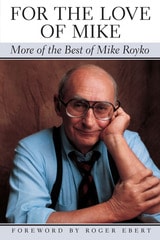
For the Love of Mike
More of the Best of Mike RoykoMike Royko
University of Chicago Press, 2001
Royko, a nationally syndicated Pulitzer Prize winner, wrote for three major Chicago newspapers in the course of his 34 years as a daily columnist. Chosen from more than 7,000 columns, For the Love of Mike brings back more than a hundred vintage Royko pieces-most of which have not appeared since their initial publication-for readers across the country to enjoy. This second collection includes Royko's riffs on the consequences of accepting a White House dinner invitation (not surprisingly, he turned it down); his explanation of the notorious Ex-Cub Factor in World Series play; and his befuddlement at a private screening of Beyond the Valley of the Dolls, to which he was invited by his pal Ebert, the screenplay's author. The new collection also illuminates Royko's favorite themes, topics he returned to again and again: his skewering of cultural trends, his love of Chicago, and his rage against injustice. By turns acerbic, hilarious, and deeply moving, Royko remains a writer of wit and passion who represents the best of urban journalism.
"To read these columns again is to have Mike back again, nudging, chuckling, wincing, deflating pomposity, sticking up for the little guy, defending good ideas against small-minded people," writes Roger Ebert in his foreword to the book. For the Love of Mike does indeed bring Mike back again, and until a Chicago newspaper takes up Ebert's suggestion that it begin reprinting each of Royko's columns, one a day, this collection will more than satisfy Royko's loyal readers.

For the Sake of the Song
Essays on Townes Van ZandtAnn Norton Holbrook
University of North Texas Press, 2022
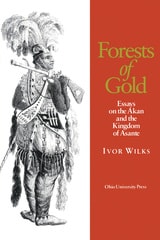
Forests of Gold
Essays on the Akan and the Kingdom of AsanteIvor Wilks
Ohio University Press, 1995
Forests of Gold is a collection of essays on the peoples of Ghana with particular reference to the most powerful of all their kingdoms: Asante. Beginning with the global and local conditions under which Akan society assumed its historic form between the fifteenth and seventeenth centuries, these essays go on to explore various aspects of Asante culture: conceptions of wealth, of time and motion, and the relationship between the unborn, the living, and the dead. The final section is focused upon individuals and includes studies of generals, of civil administrators, and of one remarkable woman who, in 1831, successfully negotiated peace treaties with the British and the Danes on the Gold Coast. The author argues that contemporary developments can only be fully understood against the background of long-term trajectories of change in Ghana.
Forgiveness & Reconciliation
Public Policy & Conflict TransformationRaymond G. Helmick
Templeton Press, 2001
This book brings together a unique combination of experts in conflict resolution and focuses on the role forgiveness can play in the process. It deals with theology, public policy, psychological and social theory, and social policy implementation of forgiveness. This book is essential for libraries, scholars, conflict negotiators, and all people who hope to understand the role of forgiveness in the peace process.
The book's first section explores how ideas like "forgiveness" and "reconciliation" are moving out from the seminary and academy into the world of public policy and how these terms have been used and defined in the past. The second section looks at forgiveness and public policy. One of the chapters, by Donald W. Shriver Jr., addresses forgiveness in a secular political forum.
The third section of the book draws us to a more thorough analysis of the relationship between forgiveness and reconciliation from voices in the academic and theological community, and the final section highlights the work of practitioners currently working with religion, public policy, and conflict transformation, particularly in areas such as Ireland and Africa.
Contributors include Desmond M. Tutu, Rodney L. Petersen, Miroslav Volf, Stanley S. Harakas, Raymond G. Helmick, SJ, Joseph V. Montville, Douglas M. Johnston, Donna Hicks, Donald W. Shriver, Jr., Everett L. Worthington, Jr., John Paul Lederach, Ervin Staub, Laurie Anne Pearlman, John Dawson, Audrey R. Chapman, Olga Botcharova, Anthony da Silva, SJ, Geraldine Smythe, OP, Andrea Bartoli, Ofelia Ortega, and George F. R. Ellis.
Forms of Association
Making Publics in Early Modern EuropePaul Yachnin
University of Massachusetts Press, 2015
In today's connected and interactive world, it is hard to imagine a time when cultural and intellectual interests did not lead people to associate with others who shared similar views and preoccupations. In this volume of essays, fifteen scholars explore how these kinds of relationships began to transform early modern European culture.
Forms of Association grows out of the “Making Publics: Media, Markets, and Association in Early Modern Europe” (MaPs) project, funded by the Social Sciences and Humanities Research Council of Canada. This scholarly initiative convened an interdisciplinary research team to consider how “publics”—new forms of association built on the shared interests of individuals—developed in Europe from 1500 to 1700. Drawing on a wide array of texts and histories, including the plays of Shakespeare, the legend of Robin Hood, paintings, and music as well as English gossip about France, the contributors develop a historical account of what publics were in early modern Europe. This collaborative study provides a dynamic way of understanding the political dimensions of artistic and intellectual works and opens the way toward a new history of early modernity.
Until his death in 2008, the great Renaissance scholar Richard Helgerson was a key participant in the MaPs project. The scholars featured in this volume originally met in Montreal to engage in a critical, commemorative conversation about Helgerson's work, the issues and questions coming out of the MaPs project, and how Helgerson's thinking advanced and could in turn be advanced by MaPs. This collection represents the fruits of that conversation.
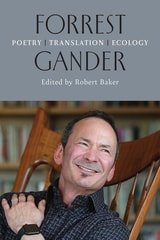
Forrest Gander
Poetry, Translation, EcologyEdited by Robert Baker
University of Michigan Press, 2026
Pulitzer Prize winner Forrest Gander is widely celebrated as a love poet, a meditative poet, and a poet of ecological awareness. He has always been a writer drawn to cross-cultural encounter, as active in translation as any poet of his generation. This collection of essays on his work brings together an international range of poets, novelists, critics, and translators, including Charles Altieri, Stephanie Burt, Julia Fiedorczuk, Jorie Graham, and Jeanette Winterson.
The collection features interviews as well as essays of different kinds—reviews, appreciations, and interpretations—and they address Gander’s poetry, fiction, and translations. They illuminate major concerns at the heart of all his work: eros, companionship, loss, renewal, an openness to the life all around us, and a rapt attention to the natural world.
Fourth City
Essays from the Prison in AmericaEdited by Doran Larson
Michigan State University Press, 2014
Fourth Genre
Twenty-Five Essays from Our First Twenty-Five YearsJoey Franklin
Michigan State University Press, 2025
Foxes for Everybody
Twenty-Four Hours of Early MotherhoodCatherine Pierce
Northwestern University Press, 2026
Like a newborn’s patterns of sleeping and waking, the revelations of motherhood don’t follow a reasonable schedule, and there’s no clocking out. Organized around the hours of the day, Foxes for Everybody gives voice to the marvels, fears, absurdities, and astonishments of parenthood. These essays offer twenty-four glimpses into how we experience time, our families, our planet, and all of those small moments that aren’t small at all. In memories and reflections that weave through tornadoes and jellyfish, cemeteries and carousels, mortality, mental health, and the exquisite gift of a perfect sentence, acclaimed writer Catherine Pierce reminds us that fear and joy can and do live side by side, and urges us to stay awake—even when, especially when, we’re at the brink of exhaustion—to the possibility of wonder.
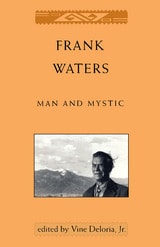
Frank Waters
Man and MysticVine Deloria Jr.
Ohio University Press, 1993
“In addition to his accomplishments as a talented novelist, a thorough historian, and an excellent essayist, Frank Waters is that rare breed of man who has merged heart and mind early in his life and moved forward to confront ultimate questions. This dilemma of faith and heritage, religion and identity, and commitment and comfort has never been resolved intellectually. Even with profound faith and rigorous discipline of self, mystics have found it difficult to resolve through action and prayer…I look at the life and writing of Frank Waters…and find…a remarkable journey of inquiry spanning nearly a century and illuminating questions which I did not think possible to formulate.”
—Vine Deloria, Jr., editor
Contributors to this volume are Alvin M. Josephy, Jr., Bobby Bridger, Steven Wall, Will Wright, William Eastlake, Larry Evers, David Jongeward, Max Evans, Win Blevins, Barbara Waters, Rudolfo Anaya, Thomas J. Lyon, Joe Gordon, Robert Kostka, Charles Adams, Father Peter J. Powell, Quay Grigg, Alexander Blackburn, and T. N. Luther.
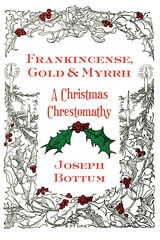
Frankincense, Gold, and Myrrh
A Christmas ChrestomathyJoseph Bottum
St. Augustine's Press, 2024
There’s the comic: “Tinsel. No one needs tinsel. Even the word is a tinselly kind of word.” There’s the sentimental: “Her hair was the same thin shade of gray as the weather-beaten pickets of the fence around her frozen garden.” There’s the reminiscent: “Christmas was books, and books Christmas, in those days now mostly washed down to the cold sea.” Along the way, there’s the theological, the learned, the mystical, and the musical.
“Tastefulness is just small-mindedness pretending to be art,” he writes in praise of mad and cluttered holidays. “Christmas will not be defined by our failures to apply its lessons and carols,” he explains about Yuletide poetry. To see these essays and short stories gathered in one place—in a beautiful illustrated edition from St. Augustine’s Press—is to see the whole of the vision that Joseph Bottum has been painting for decades: a picture of Christmas as a thin place in the wall between the natural and the numinous, where a burning grace slips into a cold winter world.

Franklin Furnace and the Spirit of the Avant-Garde
A History of the FutureToni Sant
Intellect Books, 2011
Franklin Furnace is a renowned New York–based artsorganization whose mission is to preserve, document, and present works of avant-garde art by emerging artists—particularly those whose works may be vulnerable due to institutional neglect or politically unpopular content. Over more than thirty years, Franklin Furnace has exhibited works by hundreds of avant-garde artists, some of whom—Laurie Anderson, Vito Acconci, Karen Finley, Guillermo Gómez-Peña, Jenny Holzer, and the Blue Man Group, to name a few—are now established names in contemporary art.
Here, for the first time, is a comprehensive history of this remarkable organization from its conception to the present. Organized around the major art genres that emerged in the second half of the twentieth century, this book intersperses first-person narratives with readings by artists and scholars on issues critical to the organization's success as well as Franklin Furnace's many contributions to avant-garde art.
Free Verse
An Essay on ProsodyCharles O. Hartman
Northwestern University Press, 1996
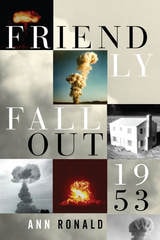
Friendly Fallout 1953
Ann Ronald
University of Nevada Press, 2011
Friendly Fallout 1953 is a hybrid work of literature that combines the actual history of aboveground atomic testing in the Nevada desert in 1953 with fictional vignettes that explore the impact of the tests on the people who participated in them and on civilian "downwinders." The book brings to life a turbulent era when Cold War fears, patriotic enthusiasm, scientific progress, and unacknowledged political agendas often collided with the welfare of ordinary citizens and the environment.
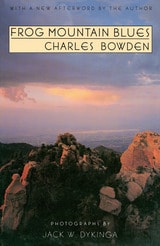
Frog Mountain Blues
Charles Bowden; Photographs by Jack W. Dykinga
University of Arizona Press, 1994