Results by title
50 books match the query 'Field' and 4 start with f
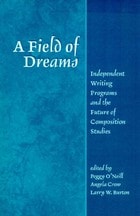
Field Of Dreams
edited by Peggy O'Neill, Angela Crow, and Larry Burton
Utah State University Press, 2002
One of the first collections to focus on independent writing programs, A Field of Dreams offers a complex picture of the experience of the stand-alone. Included here are narratives of individual programs from a wide range of institutions, exploring such issues as what institutional issues led to their independence, how independence solved or created administrative problems, how it changed the culture of the writing program and faculty sense of purpose, success, or failure.
Further chapters build larger ideas about the advantages and disadvantages of stand-alone status, covering labor issues, promotion/tenure issues, institutional politics, and others. A retrospective on the famous controversy at Minnesota is included, along with a look at the long-established independent programs at Harvard and Syracuse.
Finally, the book considers disciplinary questions raised by the growth of stand-alone programs. Authors here respond with critique and reflection to ideas raised by other chapters—do current independent models inadvertently diminish the influence of rhetoric and composition scholarship? Do they tend to ignore the outward movement of literacy toward technology? Can they be structured to enhance interdisciplinary or writing-across-the-curriculum efforts? Can independent programs play a more influential role in the university than they do from the English department?
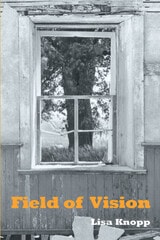
Field Of Vision
Lisa Knopp
University of Iowa Press, 1996
In this contemplative collection of essays, Lisa Knopp moves out from the prairies of Nebraska and Iowa to encompass a fully developed vision of light, memory, change, separateness, time, symbols, responsibility, and unity. Knopp charts a stimulating course among the individual, community, and culture that removes the boundaries between self and other, allowing one to become fully present in the world. Her keen vision sees beyond the ordinary to illuminate the mysteries and meanings of our personal and natural worlds.
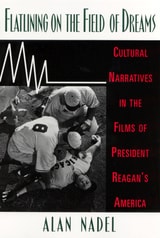
Flatlining on the Field of Dreams
Cultural Narratives in the Films of President Reagan's AmericaNadel, Alan
Rutgers University Press, 1997
-Film Quarterly
"From Back to the Future to Forrest Gump, Nadel shows not only how notions of cinematic time re-script political change but how our very conceptualizations of change are thematized by our experiences of watching movies. This is not simply film history, or film as history, but film affirming "history" in the same way that Ronald Reagan affirmed film narratives."
-Susan Jeffords, University of Washington
"Flatlining on the Field of Dreams brilliantly restages the cultural narratives associated with Reaganism within a neo-imperialist cinematic space and reveals the heretofore unexamined role class played in the reproduction of those narratives."
-Donald E. Pease, Dartmouth College
Flatlining on the Field of Dreams demonstrates, with witty prose and careful analysis, how the overindulgent, image-conscious years of the Reagan administration are reflected in sundry aspects of American films produced during that era. Discussing dozens of films, including Home Alone, Beetlejuice, Ghost, The Little Mermaid, Working Girl, Who Framed Roger Rabbit?, and Trading Places, Alan Nadel identifies narratives about credit, deregulation, gender, race, and masculinity that defined "President Reagan's America." Linking the way Hollywood films work to the stories they tell, he explains how the ideas and values of Reaganism became the symbolic food of a hyper-consumptive society. The book provides hard-to-ignore demonstrations of the extensive synergy between politics, history, and popular culture.
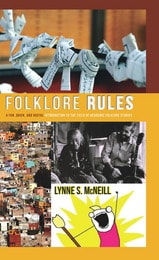
Folklore Rules
A Fun, Quick, and Useful Introduction to the Field of Academic Folklore StudiesS.
Utah State University Press, 2013
- What Is Folklore?
- What Do Folklorists Do
- Types of Folklore
- Types of Folk Groups;
- What Do I Do Now?
These chapters guide students toward a working understanding of the field, learn basic terms and techniques, and learn to perceive the knowledge base and discourse frame for materials used in folklore courses. Folklore Rules has become a classic text, serving instructors and students for a variety of courses, including introductory folklore and comparative studies as well as literature, anthropology, and composition classes that include a folklore component.