Results by title
77 books match the query 'Fieldwork' and 7 start with f

Family and Work in Everyday Ethnography
Tamara M. Brown
Temple University Press, 2013

Field Man
Life as a Desert ArchaeologistJulian D. Hayden; Edited by Bill Broyles and Diane E. Boyer
University of Arizona Press, 2012
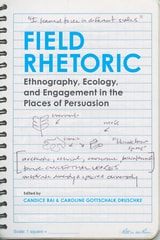
Field Rhetoric
Ethnography, Ecology, and Engagement in the Places of PersuasionEdited by Candice Rai and Caroline Gottschalk Druschke
University of Alabama Press, 2018
A survey of the innovative scholarship emerging at the intersections of rhetoric, and fieldwork
A variety of research areas within rhetorical studies—including everyday and public rhetorics, space and place-based work, material and ecological approaches, environmental communication, technical communication, and critical and participatory action research, among others—have increasingly called for ethnographic fieldwork that grounds the study of rhetoric within the contexts of its use and circulation. Employing field methods more commonly used by ethnographers allows researchers to capture rhetoric in action and to observe the dynamic circumstances that shape persuasion in ordinary life.
Field Rhetoric: Ethnography, Ecology, and Engagement in the Places of Persuasion gathers new essays that describe and theorize this burgeoning transdisciplinary mode of field-based scholarship. Contributors document and support this ethnographic turn in rhetorical studies through sustained examination of the diverse trends, methods, tools, theories, practices, and possibilities for engaging in rhetorical field research.
This fascinating volume offers an introduction to these inquiries and serves as both a practical resource and theoretical foundation for scholars, teachers, and students interested in the intersection of rhetoric and field studies. Editors Candice Rai and Caroline Gottschalk Druschke have assembled scholars working in diverse field sites to map and initiate key debates on the practices, limitations, and value of rhetorical field methods and research. Working synthetically at the junction of rhetorical theory and field practices, the contributors to this collection build from myriad field-based cases to examine diverse theoretical and methodological considerations. The volume also serves as a useful reference for interdisciplinary qualitative researchers interested in doing research from a rhetorical or discursive perspective in various disciplines and fields, such as English, composition, communication, natural resources, geography, sociology, urban planning, anthropology, and more.
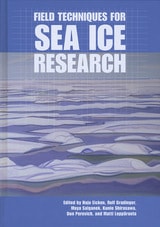
Field Techniques for Sea-Ice Research
Edited by Hajo Eicken and Maya Salganek
University of Alaska Press, 2009
As much as one-tenth of the world’s oceans are covered with sea ice, or frozen ocean water, at some point during the annual cycle. Sea ice thus plays an important, often defining, role in the natural environment and the global climate system. This book is a global look at the changes in sea ice and the tools and techniques used to measure and record those changes. The first comprehensive research done on sea-ice field techniques, this volume will be indispensable for the study of northern sea ice and a must-have for scientists in the field of climate change research.
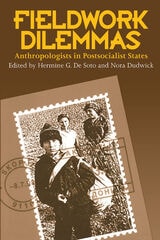
Fieldwork Dilemmas
Anthropologists In Postsocialist StatesHermine G. De Soto
University of Wisconsin Press, 2000
In Fieldwork Dilemmas ten anthropologists disclose the political and physical dangers inherent in field research. Focusing on former socialist states, they vividly depict the upheavals of everyday life in eastern Euorpe, revealing how their informants and the communities in which they live undergo political and economic dislocations, plummeting living standards, emerging gender inequalities, and ethnic and nationalist violence.
Reports from Armenia, Bulgaria, eastern Germany, Kyrgyzstan, Macedonia, Russia, Serbia, and Uzbekistan show how fieldworkers struggle to reconcile previous experiences with postsocialist stereotypes about Soviet culture, the West, and the effects of the penetration of capitalism into noncapitalist societies. These fieldwork dilemmas are analyzed by anthropologists who are learning to position themselves professionally and personally in the field under often unstable, unpredictable situations. This volume will interest not only anthropologists but fieldworkers of all kinds, and not only scholars of eastern Europe but all those who study rapid societal changes.
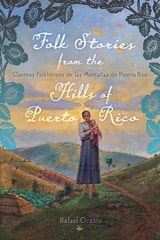
Folk Stories from the Hills of Puerto Rico / Cuentos folklóricos de las montañas de Puerto Rico
Rafael Ocasio
Rutgers University Press, 2021
Some stories provide a distinctive Caribbean twist on classic tales including “Snow White” and “Cinderella.” Others fictionalize the lives of local historical figures, such as infamous pirate Roberto Cofresí, rendered here as a Robin Hood figure who subverts the colonial social order. The collection also introduces such beloved local characters as Cucarachita Martina, the kind cockroach who falls in love with Ratoncito Pérez, her devoted mouse husband who brings her delicious food.
Including a fresh English translation of each folktale as well as the original Spanish version, the collection also contains an introduction from literary historian Rafael Ocasio that highlights the historical importance of these tales and the Jíbaro cultural values they impart. These vibrant, funny, and poignant stories will give readers unique insights into Puerto Rico’s rich cultural heritage.
Esta nueva y emocionante antología reúne cuentos populares puertorriqueños que fueron transmitidos oralmente durante generaciones antes de ser finalmente transcritos comenzando en 1914 por el equipo del famoso antropólogo Franz Boas. Estos encantadores cuentos ofrecen a los lectores un vistazo a la imaginación y las aspiraciones de los jíbaros, los campesinos de Puerto Rico.
Algunas historias brindan un distintivo toque caribeño a cuentos clásicos como "Blanca Nieves" y "Cenicienta". Otros ficcionalizan la vida de personajes históricos locales, como el famoso pirata Roberto Cofresí, representado como una figura al estilo de Robin Hood, quien subvierte el orden social colonial. La colección también presenta personajes locales tan queridos como Cucarachita Martina, la amable cucaracha que se enamora de Ratoncito Pérez, su devoto esposo ratón que le trae deliciosa comida.
Incluyendo una nueva traducción al inglés de estos cuentos populares, así como las versiones originales en español, la colección también contiene una introducción del historiador literario Rafael Ocasio, quien destaca la importancia histórica de estos cuentos y los valores culturales del jíbaro que éstos imparten en los relatos. Estas historias vibrantes, divertidas y conmovedoras brindarán a los lectores una visión única de la rica herencia cultural de Puerto Rico.
Introducción en español (https://d3tto5i5w9ogdd.cloudfront.net/wp-content/uploads/2021/02/03154419/Ocasio_Cuentos_Intro_Espan%CC%83ol.pdf)
Rafael Ocasio will discussing his book, 'Folk Stories from the Hills of Puerto Rico / Cuentos folklóricos de las montañas de Puerto Rico' at Biblioteca Juvenil de Mayagüez in Puerto Rico (https://youtu.be/o6Tub094EoI)
Freedom in Fulani Social Life
An Introspective EthnographyPaul Riesman
University of Chicago Press, 1977
"Freedom in Fulani Social Life richly documents how the ethnographer's own personal and cultural background is implicated in the research process. . . . For this reason, [Riesman's] book will be of paramount interest to all ethnographers."—Philip L. Kilbride, Reviews in Anthropology
"A remarkably well-written and insightful account of Fulani life. . . . In addition to using the conventional approaches of participating in and observing the daily activities of the Jelgobe . . . Riesman enriches his account by examining his personal feelings about particular incidents."—Library Journal
"An interesting and provocative study."—Choice
At the time of his death in 1988, Paul Riesman was an anthropologist who taught at Carleton College.