Results by title
208 books match the query 'Finance' and 23 start with f
Failing Law Schools
Brian Z. Tamanaha
University of Chicago Press, 2012
On the surface, law schools today are thriving. Enrollments are on the rise, and their resources are often the envy of every other university department. Law professors are among the highest paid and play key roles as public intellectuals, advisers, and government officials. Yet behind the flourishing facade, law schools are failing abjectly. Recent front-page stories have detailed widespread dubious practices, including false reporting of LSAT and GPA scores, misleading placement reports, and the fundamental failure to prepare graduates to enter the profession.
Addressing all these problems and more in a ringing critique is renowned legal scholar Brian Z. Tamanaha. Piece by piece, Tamanaha lays out the how and why of the crisis and the likely consequences if the current trend continues. The out-of-pocket cost of obtaining a law degree at many schools now approaches $200,000. The average law school graduate’s debt is around $100,000—the highest it has ever been—while the legal job market is the worst in decades, with the scarce jobs offering starting salaries well below what is needed to handle such a debt load. At the heart of the problem, Tamanaha argues, are the economic demands and competitive pressures on law schools—driven by competition over U.S. News and World Report ranking. When paired with a lack of regulatory oversight, the work environment of professors, the limited information available to prospective students, and loan-based tuition financing, the result is a system that is fundamentally unsustainable.
Growing concern with the crisis in legal education has led to high-profile coverage in the Wall Street Journal and the New York Times, and many observers expect it soon will be the focus of congressional scrutiny. Bringing to the table his years of experience from within the legal academy, Tamanaha has provided the perfect resource for assessing what’s wrong with law schools and figuring out how to fix them.
Failure by Design
The California Energy Crisis and the Limits of Market PlanningGeorg Rilinger
University of Chicago Press, 2024
The Western energy crisis was one of the great financial disasters of the past century. The crisis began in April 2000, when price spikes started to rattle California’s electricity markets. Decades later, some blame economic fundamentals and ignorant politicians, while others accuse the energy sellers who raided the markets. In Failure by Design, sociologist Georg Rilinger offers a different explanation, one that focuses on the practical challenges of market design. The unique physical attributes of electricity made it exceedingly difficult to introduce markets into the coordination of the electricity system, so market designers were brought in to construct the infrastructures that coordinate how market participants interact. An exercise in social engineering, these infrastructures were intended to guide market actors toward behavior that would produce optimal market results and facilitate grid management. Yet, though these experts spent their days worrying about incentive misalignment and market manipulation, they unintentionally created a system riddled with opportunities for destructive behavior. Rilinger’s analysis not only illuminates the California energy crisis but also develops a broader theoretical framework for thinking about markets as the products of organizational planning and the limits of social engineering, contributing broadly to sociological and economic thinking about the nature of markets.

Fiery Dragons
Banks, Moneylenders and Microfinance in BurmaSean Turnell
National University of Singapore Press, 2009
Fighting for Andean Resources
Extractive Industries, Cultural Politics, and Environmental Struggles in PeruVladimir R. Gil Ramón, Foreword by Enrique Mayer
University of Arizona Press, 2020
2021 American Anthropological Association´s, finalist of the Association for Political and Legal Anthropology Book Prize in Critical Anthropology
Mining investment in Peru has been presented as necessary for national progress; however, it also has brought socioenvironmental costs, left unfulfilled hopes for development, and has become a principal source of confrontation and conflict.
Fighting for Andean Resources focuses on the competing agendas for mining benefits and the battles over their impact on proximate communities in the recent expansion of the Peruvian mining frontier. The book complements renewed scrutiny of how globalization nurtures not solely antagonism but also negotiation and participation.
Having mastered an intimate knowledge of Peru, Vladimir R. Gil Ramón insightfully documents how social technologies of power are applied through social technical protocols of accountability invoked in defense of nature and vulnerable livelihoods. Although analyses point to improvements in human well-being, a political and technical debate has yet to occur in practice that would define what such improvements would be, the best way to achieve and measure them, and how to integrate dimensions such as sustainability and equity.
Many confrontations stem from frustrated expectations, environmental impacts, and the virtual absence of state apparatus in the locations where new projects emerged. This book presents a multifaceted perspective on the processes of representation, the strategies in conflicts and negotiations of development and nature management, and the underlying political actions in sites affected by mining.
Finance Capitalism Unveiled
Banks and the German Political EconomyRichard Deeg
University of Michigan Press, 1999
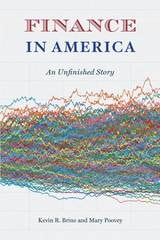
Finance in America
An Unfinished StoryKevin R. Brine and Mary Poovey
University of Chicago Press, 2017
To understand finance, however, we have to learn its history, and this book fills that need. Kevin R. Brine, an industry veteran, and Mary Poovey, an acclaimed historian, show that finance as we know it today emerged gradually in the late nineteenth century and only coalesced after World War II, becoming ever more complicated—and ever more central to the American economy. The authors explain the models, regulations, and institutions at the heart of modern finance and uncover the complex and sometimes surprising origins of its critical features, such as corporate accounting standards, the Federal Reserve System, risk management practices, and American Keynesian and New Classic monetary economics. This book sees finance through its highs and lows, from pre-Depression to post-Recession, exploring the myriad ways in which the practices of finance and the realities of the economy influenced one another through the years.
A masterwork of collaboration, Finance in America lays bare the theories and practices that constitute finance, opening up the discussion of its role and risks to a broad range of scholars and citizens.

Financial Aspects of the United States Pension System
Edited by Zvi Bodie and John B. Shoven
University of Chicago Press, 1984
-What is the current financial status of the elderly, and how vulnerable are they to inflation?
-What is the impact of inflation on the private pension system, and what are the effects of alternative indexing schemes?
-What roles can the social security system play in the provision of retirement income?
-What is the effect of the tax code and the Employee Retirement Income Security Act of 1974 (ERISA) on corporate pension policy?
-How well funded are corporate pension plans, and is a firm's unfunded pension liability fully reflected in the market value of its common stock?
Many of the conclusions these experts reach contradict and challenge popular views, thus providing fertile ground for innovation in pension planning.

Financial Management In Academic Libraries
Data-DrivenRobert E. Dugan
Assoc of College & Research Libraries, 2018
Financial Markets Volatility and Performance in Emerging Markets
Edited by Sebastian Edwards and Márcio G. P. Garcia
University of Chicago Press, 2008
A group of experts here examine rapidly globalizing financial markets with regard to capital flows and crises, domestic credit, international financial integration, and economic policy. Featuring detailed analyses and cross-national comparisons of countries such as Brazil, Argentina, Uruguay, and Korea, this book will shape economists’ and policymakers’ understanding of the effectiveness of restrictions on capital mobility in the world’s most fragile economies.
Financial Markets and Financial Crises
Edited by R. Glenn Hubbard
University of Chicago Press, 1991
Using both historical and contemporary episodes of breakdowns in financial trade, contributors to this volume draw insights from theory and empirical data, from the experience of closed and open economies worldwide, and from detailed case studies. They explore the susceptibility of American corporations to economic downturns; the origins of banking panics; and the behavior of financial markets during periods of crisis. Sever papers specifically address the current thrift crisis—including a detailed analysis of the over 500 FSLIC-insured thrifts in the southeast—and seriously challenge the value of recent measures aimed at preventing future collapse in that industry. Government economists and policy makers, scholars of industry and banking, and many in the business community will find these timely papers an invaluable reference.
Financial Policies and the World Capital Market
The Problem of Latin American CountriesEdited by Pedro Aspe Armella, Rudiger Dornbusch, and Maurice Obstfeld
University of Chicago Press, 1983
The essays brought together in this volume share a common objective: To bring a unifying methodological approach to the analysis of financial problems in developing, open economies. While the primary focus is on contemporary Latin America, the methods employed and the lessons learned are of wider applicability. The papers address the financial integration issue from three different perspectives. In some cases, a country study is the vehicle for an econometric investigation of a particular external linkage. In other cases, an individual country's experience suggests an economic model in which the stylized facts may be analyzed and developed. A third direction is unabashedly theoretical and formulates more general principles which are broadly applicable rather than country-specific.
Financialization Of Daily Life
Randy Martin
Temple University Press, 2002
Financing Corporate Capital Formation
Edited by Benjamin M. Friedman
University of Chicago Press, 1986
Addressing these questions, the contributors focus chiefly on three themes: the actual use of debt and equity financing by corporations in recent years; the factors that drive the financial markets' pricing of debt and equity securities; and the relationship between corporations' real investment decisions and their financial decisions. While some of the papers are primarily expository, others break new ground. Extending his previous work, Robert Taggart finds a closer relationship between corporate and government debt than has been supposed. Zvi Bodie, Alex Kane, and Robert McDonald conclude in their study that the volatility of interest rates under the Volcker regime has led to a rise in real interest rates because of investors' demand for a greater risk premium. All of the papers present empirical findings in a useful analytical framework.
For its new findings and for its expert overview of issues central to an understanding of the U.S. economy, Financing Corporate Capital Formation should be of both historical and practical interest to students of economics and practitioners in the corporate and financial community.
Financing Institutions of Higher Education
Edited by John Y. Campbell and Kaye Husbands Fealing
University of Chicago Press, 2026
An insightful, wide-ranging analysis of the economic hurdles facing America’s higher education system.
The US higher education sector faces numerous economic challenges, including the stagnating number of college-age domestic students, geographic mismatch between population growth and the location of colleges and universities, financial pressures, including cutbacks in government support, growing student debt burdens, sticker prices that deter prospective applicants, and the risk of low capital market returns on endowment portfolios. This volume analyzes the responses of students, families, and the financial managers of higher education institutions to these challenges. It presents new insights into the substantial disparities in the financial structure of, and the financial challenges facing, different types of institutions. The volume draws together contributions from financial economics, public finance, and industrial organization, as well as the economics of education.
Financing Medicaid
Federalism and the Growth of America's Health Care Safety NetShanna Rose
University of Michigan Press, 2013
Conventional wisdom holds that programs for the poor are vulnerable to instability and retrenchment. Medicaid, however, has grown into the nation’s largest intergovernmental grant program, accounting for nearly half of all federal funding to state and local governments. Medicaid’s generous open-ended federal matching grants have given governors a powerful incentive to mobilize on behalf of its maintenance and expansion, using methods ranging from lobbying and negotiation to creative financing mechanisms and waivers to maximize federal financial assistance. Perceiving federal retrenchment efforts as a threat to states’ finances, governors, through the powerful National Governors’ Association, have repeatedly worked together in bipartisan fashion to defend the program against cutbacks.
Financing Medicaidengagingly intertwines theory, historical narrative, and case studies, drawing on sources including archival materials from the National Governors’ Association and gubernatorial and presidential libraries, Centers for Medicare and Medicaid Services data, the Congressional Record, and interviews.
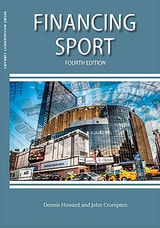
Financing Sport
Fourth EditionDennis R. Howard
FiT Publishing, 2018
The most authoritative and comprehensive textbook on sport finance has been updated and revised to include in its examination the distinct changes in the economic climate of the sport industry in recent decades, as well as the impacts and challenges the contemporary economic climate presents for the sport industry.
Divided into five sections – finance trends and challenges, economic rationale for public investment, primary sources of funding, revenue from enterprise sources, and fundraising – Financing Sport, 4th Edition also contains a thorough updated examination of venue and sport property revenues, including ticket and merchandise sales, the rise of luxurious and extravagant fan experiences, as well as commercial media rights that stretch across traditional broadcast, satellite, and innovative new web-based outlets for consuming sport content. Also newly updated and expanded are fundraising areas that discuss traditional and emerging trends in sport sponsorship and donation.
Thorough in both its depth and scope, Financing Sport, 4th Edition is an engaging, edifying textbook for sport-related graduate and undergraduate students, teachers, and industry professionals.
Financing State and Local Economic Development
Michael Barker, ed.
Duke University Press, 1983
Fiscal Aspects of Aviation Management
Robert W. Kaps
Southern Illinois University Press, 2000
Although introductions to courses in finance exist for a variety of fields, Robert W. Kaps provides the first text to address the subject from an aviation viewpoint. Relying on his vast experience—twenty-plus years in the airline industry and more than thirty years in aviation—Kaps seeks not only to prepare students for careers in the aviation field but also to evoke in these students an excitement about the business. Specifically, he shows students how airlines, airports, and aviation are financed. Each chapter contains examples and illustrations and ends with suggested readings and references.
Following his discussion of financial management and accounting procedures, Kaps turns to financial management and sources of financial information. Here he discusses types of business organizations, corporate goals, business ethics, maximizing share price, and sources of financial information.
Kaps also covers debt markets, financial statements, air transport sector revenue generation, and air transport operating cost management, including cost administration and labor costs, fuel, and landing fees and rentals. He describes in depth air transport yield management systems and airport financing, including revenues, ownership, operations, revenue generation, funding, allocation of Air Improvement Program funds, bonds, and passenger facility charges.
Kaps concludes with a discussion of the preparation of a business plan, which includes advice about starting and running a business. He also provides two typical business plan outlines. While the elements of fiscal management in aviation follow generally accepted accounting principles, many nuances are germane only to the airline industry. Kaps provides a basic understanding of the principles that are applicable throughout the airline industry.
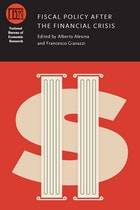
Fiscal Policy after the Financial Crisis
Edited by Alberto Alesina and Francesco Giavazzi
University of Chicago Press, 2013
Fiscal Policy after the Financial Crisis focuses on the effects of fiscal stimuli and increased government spending, with contributions that consider the measurement of the multiplier effect and its size. In the face of uncertainty over the sustainability of recent economic policies, further contributions to this volume discuss the merits of alternate means of debt reduction through decreased government spending or increased taxes. A final section examines how the short-term political forces driving fiscal policy might be balanced with aspects of the long-term planning governing monetary policy.

Forgive Us Our Debts
How Black Churches Use Bankruptcy to SurvivePamela Foohey
University of Chicago Press, 2026
A revelatory study of how Black churches turn the financial system back against predatory lenders.
When American churches face financial difficulties, a disproportionately high number of Black churches reorganize under chapter 11 bankruptcy. There are no easy explanations for this distinction: not location, denomination, leadership structure, or the reasons for the loans. In Forgive Us Our Debts, legal scholar Pamela Foohey asks why, then, Black churches account for two-thirds of all congregations that file for chapter 11 bankruptcy every year.
Drawing on case studies of six Black churches and one white church, and 150 interviews with church leaders, members, and attorneys, Foohey finds answers in a long history of predatory lending. Unable to negotiate with recalcitrant loan officers, Black churches turn to the legal system to force reasonable concessions from lenders to prevent the stripping of their wealth and the destruction of their communities. While the structural discrimination remains, these churches have found in the bankruptcy system a refuge and some power to fight back.
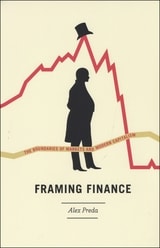
Framing Finance
The Boundaries of Markets and Modern CapitalismAlex Preda
University of Chicago Press, 2009
As Preda discovers through extensive research, the public was once much more skeptical. For investing to become accepted, a deep-seated prejudice against speculation had to be overcome, and Preda reveals that over the course of the eighteenth and nineteenth centuries groups associated with stock exchanges in New York, London, and Paris managed to redefine finance as a scientific pursuit grounded in observational technology. But Preda also notes that as the financial data in which they trafficked became ever more difficult to understand, charismatic speculators emerged whose manipulations of the market undermined the benefits of widespread investment. And so, Framing Finance ends with an eye on the future, proposing a system of public financial education to counter the irrational elements that still animate the appeal of finance.
Free Speech and Koch Money
Manufacturing a Campus Culture WarRalph Wilson
Pluto Press, 2021
In recent years hundreds of high-profile ‘free speech’ incidents have rocked US college campuses. Milo Yiannopoulos, Ben Shapiro, Ann Coulter and other right-wing speakers have faced considerable protest, with many being disinvited from speaking. These incidents are widely circulated as examples of the academy’s intolerance towards conservative views.
But this response is not the spontaneous outrage of the liberal colleges. There is a darker element manufacturing the crisis, funded by political operatives, and designed to achieve specific political outcomes. If you follow the money, at the heart of the issue lies the infamous and ultra-libertarian Koch donor network.
Grooming extremist celebrities, funding media platforms that promote these controversies, developing legal organzations to sue universities and corrupting legislators, the influence of the Koch network runs deep. We need to abandon the ‘campus free speech’ narrative and instead follow the money if we ever want to root out this dangerous network from our universities.
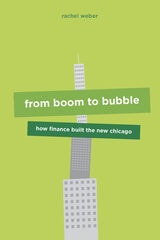
From Boom to Bubble
How Finance Built the New ChicagoRachel Weber
University of Chicago Press, 2015
In From Boom to Bubble, Rachel Weber debunks the idea that booms occur only when cities are growing and innovating. Instead, she argues, even in cities experiencing employment and population decline, developers rush to erect new office towers and apartment buildings when they have financial incentives to do so. Focusing on the main causes of overbuilding during the early 2000s, Weber documents the case of Chicago’s “Millennial Boom,” showing that the Loop’s expansion was a response to global and local pressures to produce new assets. An influx of cheap cash, made available through the use of complex financial instruments, helped transform what started as a boom grounded in modest occupant demand into a speculative bubble, where pricing and supply had only tenuous connections to the market. From Boom to Bubble is an innovative look at how property markets change and fail—and how that affects cities.