Results by title
52 books match the query 'Fish' and 16 start with f

FISHES OF OHIO
Milton B. Trautman
The Ohio State University Press, 1982
“The objectives of [this] edition are to demonstrate and explain distributional changes from 1750 to 1980, and to provide keys to the 166 species of Ohio fishes. These aims are admirably achieved. The natural factors influencing distribution of fishes are discussed in Part I, which relates the geology, physiography, topography, hydrology, and climatic history of the regions. . . . Part II reviews changes that have occurred from 1750 until 1980, and is an excellent chronicle of modern man's alternation and manipulation of essentially every aquatic ecosystem in Ohio. . . . Part III is a listing of species, synonomy and nomenclatorial history of Ohio’s fishes. . . . Part IV is an informative section of the systematics and nomenclature of fishes that is very useful to beginning students of ichthylogy. The glossary and family and species keys contained in Part V are excellent. Part VI contains the major content of the book, the 166 species accounts. . . .
“The updated range maps, a central focus of Trautman's approach, are excellent and obviously the result of endless efforts. Ohio is one of the most thoroughly surveyed of all states and to translate these data to visual understanding is an unenviable task for which the reader should be deeply appreciative. . . . Also of exceptional quality are the species illustrations originally rendered by Mrs. E. R. Weeks and Trautman himself for the 1957 edition. They are among the best of their kind in a fish reference work, and serve well to facilitate identification of specimens in hand. . . .
“Anyone concerned with or otherwise interested in the fishes, aquatic environments, or general natural history of Ohio or eastern North America should consider this book a valued addition to their library.”
—Ohio Journal of Science
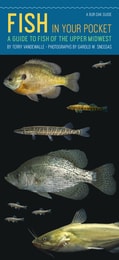
Fish in Your Pocket
A Guide to Fish of the Upper MidwestTerry VanDeWalle
University of Iowa Press, 2017
Terry VanDeWalle includes a thorough description of each species, and covers the Upper Midwest states of Kansas, Illinois, South Dakota, North Dakota, Iowa, Missouri, Indiana, Michigan, Minnesota, Ohio, Nebraska, and Wisconsin.
The careful descriptions and habitat and diet information in Fish inYour Pocket—enhanced with superb photographs by underwater photographer Garold Sneegas—make it extremely useful for anglers and naturalists alike.

Fish in the Lakes, Wild Rice, and Game in Abundance
Testimony on Behalf of Mille Lacs Ojibwe Hunting and Fishing RightsEdited by James M. McClurken
Michigan State University Press, 2000
On 13 August 1990 members of the Mille Lacs Band of Ojibwe filed a lawsuit against the State of Minnesota for interfering with the hunting, fishing, and gathering rights that had been guaranteed to them in an 1837 treaty with the United States. In order to interpret the treaty the courts had to consider historical circumstances, the intentions of the parties, and the treaty's implementation. The Mille Lacs Band faced a mammoth challenge. How does one argue the Native side of the case when all historical documentation was written by non- Natives? The Mille Lacs selected six scholars to testify for them. Published here for the first time, Charles Cleland, James McClurken, Helen Tanner, John Nichols, Thomas Lund, and Bruce White discuss the circumstances under which the treaty was written, the personalities involved in the negotiations and the legal rhetoric of the times, as well as analyze related legal conflicts between Natives and non- Natives. Justice Sandra Day O'Connor delivered the 1999 Opinion of the [United States Supreme] Court.
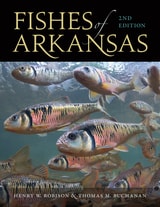
Fishes of Arkansas
Henry W. Robison
University of Arkansas Press, 2019
An invaluable reference for anyone interested in the state’s fish population—from professional ichthyologists, fisheries biologists, and managers of aquatic resources, to amateur naturalists and anglers—this new edition provides updated taxonomic keys as well as detailed descriptions, photographs, and line drawings to aid identification of the state’s 243 fish species. There is also much information on the distribution and biology of each species, including descriptions of habitat, foods eaten, reproductive biology, and conservation status.
This project and the preparation of this publication was funded in part by a grant from the Arkansas Game and Fish Commission.

Fishes of South Dakota
By Reeve M. Bailey and Marvin O. Allum
University of Michigan Press, 1962
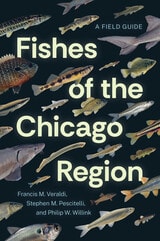
Fishes of the Chicago Region
A Field GuideFrancis M. Veraldi, Stephen M. Pescitelli, and Philip W. Willink
University of Chicago Press, 2025
“A must-have field guide for fans of Second City area fish.”—Robert Ito, The New York Times Book Review • “A treasure of hardcore fish intelligence and delightful tidbits of fish history.”—Dale Bowman, Chicago Sun-Times
Fish don’t heed state boundaries, and neither does this comprehensive, photo-filled guide to the diverse species of Chicago and beyond.
Encompassing southern Lake Michigan, northeastern Illinois, and adjacent areas of Indiana, Michigan, and Wisconsin, the Chicago Region is home to rare habitats supporting diverse fish populations. From small creeks to large rivers and from small ponds to one of the world’s largest freshwater ecosystems, Lake Michigan, these systems are home to some 164 fish species representing 31 families. In this essential field guide, the most complete and up-to-date reference for fishes in the Chicago Region, we meet them all—lampreys, sturgeon, paddlefish, gars, drum, darters, perches, sticklebacks, sculpins, and more. Written by leading local ecologists and featuring a pictorial family key, color photographs, detailed species distribution maps, and natural history observations unique to the region, this go-to guide belongs on the shelf—and in the boat—of every angler, naturalist, fisheries manager, and biologist.
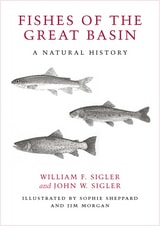
Fishes of the Great Basin
A Natural HistoryJohn W. Sigler
University of Nevada Press, 2014
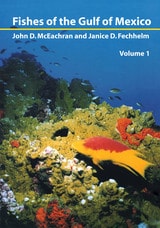
Fishes of the Gulf of Mexico, Vol. 1
Myxiniformes to GasterosteiformesBy John McEachran and Janice D. Fechhelm
University of Texas Press, 1998
The Gulf of Mexico is the ninth largest body of water in the world and contains over 15 percent of all known species of marine fishes. This diverse fish fauna has been the subject of many publications, but, until now, no work has ever surveyed all known species, including the deep sea fishes and those of the southern Gulf.
This book is the first of two volumes that will cover the entire fish fauna of the Gulf of Mexico. An introductory section that outlines the Gulf's geographical setting, geological origin, current patterns, tides, sediments, meteorology, ecology, and biological exploration is followed by a key for the forty-four orders of fishes known from the Gulf. Keys and descriptions are provided for families, which are arranged phylogenetically, and for the species, which are arranged alphabetically, described, and distinguished from similar species. All but a few species are illustrated.
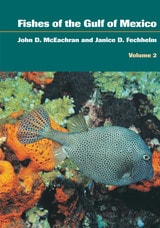
Fishes of the Gulf of Mexico, Volume 2
Scorpaeniformes to TetraodontiformesBy John D. McEachran and Janice D. Fechhelm
University of Texas Press, 2006
This book is the second of two volumes that cover the entire fish fauna of the Gulf of Mexico. It includes the orders Scorpaeniformes, Perciformes, Pleuronectiformes, and Tetraodontiformes. Keys and descriptions are provided for the families, which are arranged phylogenetically, and for the species, which are arranged alphabetically, described (including distribution and life history), and distinguished from similar species. All but a few species are illustrated. The volume also includes a biogeographical synopsis of the fishes of the Gulf of Mexico.

Fishes of the Minnesota Region
Gary L. Phillips, William D. Schmid, and James C. Underhill
University of Minnesota Press, 1982
Fishes of the Minnesota Region was first published in 1982. Minnesota Archive Editions uses digital technology to make long-unavailable books once again accessible, and are published unaltered from the original University of Minnesota Press editions.
From Northern Pike to the Walleye, this is the definitive guide to all of Minnesota's 149 kinds of fishes. Illustrated with over 80 color photographs, this book will appeal to enthusiastic anglers as well as curious naturalists.
Along with a guide to identification, the authors cover habitat, distribution, conservation, and even some recipes. If you catch a fish from one of Minnesota's 10,000 lakes you'll find a description of it in this book.
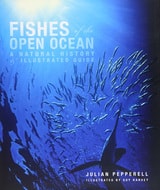
Fishes of the Open Ocean
A Natural History and Illustrated GuideJulian Pepperell
University of Chicago Press, 2010
Between the surface of the sea and depths of two hundred meters lies a remarkable range of fish, generally known as pelagics, or open-ocean dwellers. These creatures are among the largest, fastest, highest-leaping, and most migratory fish on the entire planet. Beautifully adapted to their world, they range from tiny drift fish and plankton-straining whale sharks to more streamlined predators such as tuna, marlin, sailfish, and wahoo.
Fishes of the Open Ocean, from leading marine biologist and world authority on the subject Julian Pepperell, is the first book to comprehensively describe these fishes and explore the complex and often fragile world in which they live. In what will be the definitive book on the subject for years to come—and, with over three hundred color images, the most lavishly produced as well—Pepperell details the environment and biology of every major species of fish that inhabits the open ocean, an expanse that covers 330 million cubic miles and is the largest aquatic habitat on the Earth. The first section of the book introduces the various evolutionary forms these fish have taken, as well as the ways in which specific species interact and coevolve with others in the food web. A chapter on commercial and sport fisheries explores the human element in this realm and considers such issues as sustainability, catch-and-release initiatives, and the risks of extinction.
The second section of the book provides species accounts of open ocean dwellers organized by group, with overviews and general descriptions that are inclusive of range and distribution, unique physiological and morphological attributes, and the role of each species within its ecosystem. Global distribution maps, original illustrations from renowned artist and scientist Guy Harvey, and truly stunning images from some of the world’s leading underwater photographers round out this copiously illustrated volume.
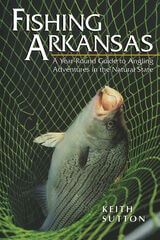
Fishing Arkansas
A Year-Round Guide to Angling Adventures in the Natural StateKeith Sutton
University of Arkansas Press, 2000
Enhanced by Sutton's excellent photographs, the guide includes twelve sections on popular game fish, such as largemouth and smallmouth bass, crappie, catfish, bluegill, and trout. It also provides an introduction to often-overlooked species like bowfin, gar, carp, paddlefish, and pickerel. Hundreds of valuable fishing tips gleaned from decades of on-the-water experience and interviews with dozens of guides, biologists, and expert anglers enhance the engaging narraive. From the glistening trout in the cold tailwaters of the White River, to feisty catfish on the muddy bayou bottoms of the Delta region, Keith Sutton has served up a tempting array of the fish that can be sought and caught on hook and line in the teeming waters of Arkansas.
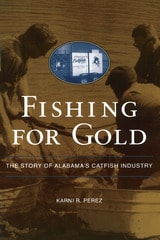
Fishing for Gold
The Story of Alabama's Catfish IndustryKarni R. Perez
University of Alabama Press, 2006
A captivating story of the industry's rise in Alabama.
With a wonderful ear for dialogue and in flowing narrative style, Karni Perez weaves together oral histories collected from early hatchery owners, catfish farmers, processors, and researchers to recount the important contributions made by Alabamians to the channel catfish industry. Perez describes the struggles and glories of fish culture from its early days as an experimental venture to the thriving present-day commercial enterprise that supplies warmwater fish for the American food industry.
As Perez states, "The catfish industry started out in Alabama as a do-it-yourself and figure-it out-yourself kind of enterprise." We hear how men who were mostly cattle farmers learned to nudge male and female fish into spawning in crudely constructed aquaria, how growers discovered the dissolved oxygen needs of their "herd" when big die-offs occurred, how Lenson Montz and Otis Breland designed the first paddle aerator to remedy the problem, how farmers eventually trained a bottomfeeding species to rise to the water surface to eat so their numbers could be better estimated. In one dramatic story, we learn how a man experimenting with the first skinning machine lost a piece of his hand in front of a crowd of horrified locals. (After it was retrieved from the skin basket, it was reattached by a town doctor and healed perfectly.) Ironically, the man was a representative of the engineering firm tasked with designing the machine; he had never before seen a catfish in his life. The machine was modified and became an essential component of modern fish processing.
In addition to telling the remarkable stories of individual contributions by farmers and researchers, Perez explains the positive effects played by improved public infrastructure, continued biological research, state legislation, and federal recognition of aquaculture as agriculture.

Fishtastic!
A Tale of Magic and FriendshipTess Weaver, illustrated by Jennifer Black Reinhardt
University of Iowa Press, 2021
Inspired by the fish sculptures installed along the walkways welcoming visitors to Hancher, Fishtastic! is a delightful blend of lovable characters and whimsical watercolor illustrations that celebrate the joy of discovering your own path to enchantment.
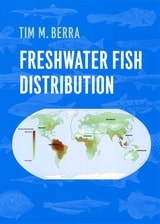
Freshwater Fish Distribution
Tim M. Berra
University of Chicago Press, 2007
Tim Berra’s seminal resource, Freshwater Fish Distribution,maps the 169 fish families that swim in fresh water around the world. Each family account includes the class, subclass, and order; a pronunciation guide to the family name; life cycle information; and interesting natural history facts. Each account is illustrated, many with historical nineteenth-century woodcuts.
Now available in paperback, this heavily cited work in ichthyology and biogeography will serve as a reference for students, a research support for professors, and a helpful guide to tropical fish hobbyists and anglers.
Freshwater Fishes of Manitoba
Kenneth Stewart
University of Manitoba Press, 2004