Results by title
1104 books match the query 'Gender Studies' and 48 start with f

Facing It
AIDS Diaries and the Death of the AuthorRoss Chambers
University of Michigan Press, 2001
"Groundbreaking in its approach and potentially wide in its appeal. . . . The rigor of the ideas, their dramatic nature, and the political drive of the rhetoric all should win Facing It a large readership that could extend far beyond students of narrative or queer theory." --David Bergman, Towson University, editor of Camp Grounds: Style and Homosexuality
Ross Chambers is Distinguished University Professor of French and Comparative Literature, University of Michigan, and author of Room for Maneuver: Reading (the) Oppositional (in) Narrative and Story and Situation: Narrative Seduction and the Power of Fiction.

Facing It
AIDS Diaries and the Death of the AuthorRoss Chambers
University of Michigan Press, 1999
"Groundbreaking in its approach and potentially wide in its appeal. . . . The rigor of the ideas, their dramatic nature, and the political drive of the rhetoric all should win Facing It a large readership that could extend far beyond students of narrative or queer theory." --David Bergman, Towson University, editor of Camp Grounds: Style and Homosexuality
Ross Chambers is Distinguished University Professor of French and Comparative Literature, University of Michigan, and author of Room for Maneuver: Reading (the) Oppositional (in) Narrative and Story and Situation: Narrative Seduction and the Power of Fiction.

Fair Sex, Savage Dreams
Race, Psychoanalysis, Sexual DifferenceJean Walton
Duke University Press, 2001
Charting the fantasies of racial difference in these women’s writings, Walton establishes that race—particularly during this period—was inseparable from accounts of gender and sexuality. While arguing that these women remained notably oblivious to the racial meanings embedded in their own attempts to rearticulate feminine sexuality, Walton uses these very blindspots to understand how race and sex are deeply imbricated in the constitution of subjectivity. Challenging the notion that subjects acquire gender identities in isolation from racial ones, she thus demonstrates how white-centered psychoanalytic theories have formed the basis for more contemporary feminist and queer explorations of fantasy, desire, power, and subjectivity.
Fair Sex, Savage Dreams will appeal to scholars of psychoanalysis, literary and cinematic modernism, race studies, queer theory, feminist theory, and anthropology.

Faith and the Fragility of Justice
Responses to Gender-Based Violence in South AfricaMeredith Whitnah
Rutgers University Press, 2025

Families That Work
Policies for Reconciling Parenthood and EmploymentJanet C. Gornick
Russell Sage Foundation, 2003

Fascist Virilities
Rhetoric, Ideology, and Social Fantasy in ItalyBarbara Spackman
University of Minnesota Press, 1996

Fashion, Desire and Anxiety
Image and Morality in the Twentieth CenturyArnold, Rebecca
Rutgers University Press, 2001
These dreams and freedoms, Rebecca Arnold proposes, are contradictory. Fashion and its surrounding imagery elicit fear and anxiety in their consumers as well as pleasure. Fashion has come to incorporate the underside of modern life, with violence and decay becoming a dominant theme in clothing design and photography.
Arnold draws on diverse written sources to explore the complex nature of modern fashion. She discusses a range of key themes: how fashion uses and abuses the power of wealth; the alienating promotion of "good" taste; the power plays of sex and display; and how identities can be blurred to disguise and confuse. In order to unravel the contradictory emotions of desire and anxiety they provoke, she never loses sight of the historical and cultural contexts in which fashion designers and photographers perform.
Generously illustrated, Fashion, Desire and Anxiety focuses on the last thirty years, from photographic works of the 1970s to the beginning of the twenty-first century.

Fashion, Desire and Anxiety
Image and Morality in the Twentieth CenturyArnold, Rebecca
Rutgers University Press, 2001
These dreams and freedoms, Rebecca Arnold proposes, are contradictory. Fashion and its surrounding imagery elicit fear and anxiety in their consumers as well as pleasure. Fashion has come to incorporate the underside of modern life, with violence and decay becoming a dominant theme in clothing design and photography.
Arnold draws on diverse written sources to explore the complex nature of modern fashion. She discusses a range of key themes: how fashion uses and abuses the power of wealth; the alienating promotion of "good" taste; the power plays of sex and display; and how identities can be blurred to disguise and confuse. In order to unravel the contradictory emotions of desire and anxiety they provoke, she never loses sight of the historical and cultural contexts in which fashion designers and photographers perform.
Generously illustrated, Fashion, Desire and Anxiety focuses on the last thirty years, from photographic works of the 1970s to the beginning of the twenty-first century.
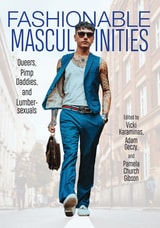
Fashionable Masculinities
Queers, Pimp Daddies, and LumbersexualsVicki Karaminas
Rutgers University Press, 2022
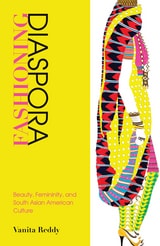
Fashioning Diaspora
Beauty, Femininity, and South Asian American CultureVanita Reddy
Temple University Press, 2015
One of the first books to consider beauty and fashion as a point of entry into an examination of South Asian diasporic public cultures, Fashioning Diaspora examines a range of literature, visual art, and live performance. Through careful analyses of novels by Bharati Mukherjee and Jhumpa Lahiri, young adult literature, performance art by Shailja Patel, as well as objects of popular culture including an Indian American fashion doll, and beauty and adornment practices, Reddy challenges fashion and beauty as a set of dematerialized, overly commodified cultural practices. She argues instead that beauty and fashion structure South Asian Americans’ uneven access to social mobility, capital, and citizenship, and demonstrates their varying capacities to produce social attachments across national, class, racial, gender, and generational divides.

Fat Activism (Second Edition)
A Radical Social MovementCharlotte Cooper
Intellect Books, 2021
Combining rigorous scholarship with personal, accessible writing, Fat Activism: A Radical Social Movement is not only an invaluable contribution to the burgeoning field of fat studies, but also a vehicle for much-needed social change.

Fearless Wives and Frightened Shrews
The Construction of the Witch in Early Modern GermanyReinharde Brauner
University of Massachusetts Press, 1995

Feeling Like a State
Desire, Denial, and the Recasting of AuthorityDavina Cooper
Duke University Press, 2019
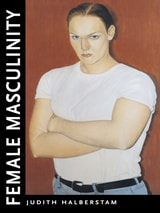
Female Masculinity
Jack Halberstam
Duke University Press, 1998
Through detailed textual readings as well as empirical research, Halberstam uncovers a hidden history of female masculinities while arguing for a more nuanced understanding of gender categories that would incorporate rather than pathologize them. She rereads Anne Lister’s diaries and Radclyffe Hall’s The Well of Loneliness as foundational assertions of female masculine identity. She considers the enigma of the stone butch and the politics surrounding butch/femme roles within lesbian communities. She also explores issues of transsexuality among “transgender dykes”—lesbians who pass as men—and female-to-male transsexuals who may find the label of “lesbian” a temporary refuge. Halberstam also tackles such topics as women and boxing, butches in Hollywood and independent cinema, and the phenomenon of male impersonators.
Female Masculinity signals a new understanding of masculine behaviors and identities, and a new direction in interdisciplinary queer scholarship. Illustrated with nearly forty photographs, including portraits, film stills, and drag king performance shots, this book provides an extensive record of the wide range of female masculinities. And as Halberstam clearly demonstrates, female masculinity is not some bad imitation of virility, but a lively and dramatic staging of hybrid and minority genders.
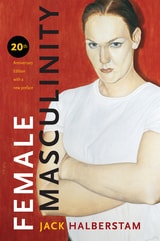
Female Masculinity
Jack Halberstam
Duke University Press, 1998
Through detailed textual readings as well as empirical research, Halberstam uncovers a hidden history of female masculinities while arguing for a more nuanced understanding of gender categories that would incorporate rather than pathologize them. He rereads Anne Lister's diaries and Radclyffe Hall's The Well of Loneliness as foundational assertions of female masculine identity; considers the enigma of the stone butch and the politics surrounding butch/femme roles within lesbian communities; and explores issues of transsexuality among “transgender dykes”—lesbians who pass as men—and female-to-male transsexuals who may find the label of “lesbian” a temporary refuge. Halberstam also tackles such topics as women and boxing, butches in Hollywood and independent cinema, and the phenomenon of male impersonators.
Featuring a new preface by the author, this twentieth anniversary edition of Female Masculinity remains as insightful, timely, and necessary as ever.
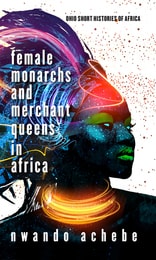
Female Monarchs and Merchant Queens in Africa
Nwando Achebe
Ohio University Press, 2020
Feminine Endings
Music, Gender, and SexualitySusan Mcclary
University of Minnesota Press, 2002

Feminism against Cisness
Emma Heaney, editor
Duke University Press, 2024
Contributors. Cameron Awkward-Rich, Marquis Bey, Kay Gabriel, Jules Gill-Peterson, Emma Heaney, Margaux L. Kristjansson, Greta LaFleur, Grace Lavery, Durba Mitra, Beans Velocci, Joanna Wuest
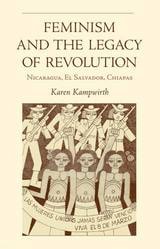
Feminism and the Legacy of Revolution
Nicaragua, El Salvador, ChiapasKaren Kampwirth
Ohio University Press, 2004
In many Latin American countries, guerrilla struggle and feminism have been linked in surprising ways. Women were mobilized by the thousands to promote revolutionary agendas that had little to do with increasing gender equality. They ended up creating a uniquely Latin American version of feminism that combined revolutionary goals of economic equality and social justice with typically feminist aims of equality, nonviolence, and reproductive rights.
Drawing on more than two hundred interviews with women in Nicaragua, El Salvador, and the Mexican state of Chiapas, Karen Kampwirth tells the story of how the guerrilla wars led to the rise of feminism, why certain women became feminists, and what sorts of feminist movements they built. Feminism and the Legacy of Revolution: Nicaragua, El Salvador, Chiapas explores how the violent politics of guerrilla struggle could be related to the peaceful politics of feminism. It considers the gains, losses, and internal conflicts within revolutionary women’s organizations.
Feminism and the Legacy of Revolution challenges old assumptions regarding revolutionary movements and the legacy of those movements for the politics of daily life. It will appeal to a broad, interdisciplinary audience in political science, sociology, anthropology, women’s studies, and Latin American studies as well as to general readers with an interest in international feminism.

Feminism and the Politics of Childhood
Friends or Foes?Edited by Rachel Rosen and Katherine Twamley
University College London, 2018

Feminism, Interrupted
Disrupting PowerLola Olufemi
Pluto Press, 2020
"Reading her is to believe that another world is possible."—The Guardian
More than just a slogan on a t-shirt, feminism is a radical tool for fighting back against structural violence and injustice. Feminism, Interrupted is a bold call to seize feminism back from the cultural gatekeepers and return it to its radical roots.
Writer and organizer Lola Olufemi explores state violence against women, the fight for reproductive justice, transmisogyny, gendered Islamophobia and solidarity with global struggles, showing that the fight for gendered liberation can change the world for everybody when we refuse to think of it solely as women's work. Chapters include:
*Know your history
*The sexist state
*The fight for reproductive justice
*The savior complex: Muslim women and gendered Islamophobia
*Complicated consent: How to support sex workers
*The answer to sexual violence is not more prisons
*Feminism and food
*Solidarity is a doing word
Including testimonials from Sisters Uncut, migrant groups working for reproductive justice, prison abolitionists and activists involved in the international fight for Kurdish and Palestinian rights, Olufemi emphasizes the link between feminism and grassroots organizing. Reclaiming feminism from the clutches of the consumerist, neoliberal model, Feminism, Interrupted shows that when “feminist” is more than a label, it holds the potential for radical transformative work.
Olufemi writes in her Introduction, "Feminism is a political project about what could be. It’s always looking forward, investing in future we can’t quite grasp yet. It’s a way of swishing, hoping, aiming at everything that has been deemed impossible. It’s a task that has to be approached seriously. This book is for anyone who is beginning to think critically….If this book makes you pick up another book, or watch a documentary, search the archive, reach for a poetry book—if it spars or reignites your interest in feminism, then it has served its purpose."

Feminist Connections
Rhetoric and Activism across Time, Space, and PlaceEdited by Katherine Fredlund, Kerri Hauman, and Jessica Ouellette
University of Alabama Press, 2020
Tracing the rhetoric of feminist activism across generations, cultures, and movements.
In 1917, Alice Paul and other suffragists famously picketed in front of the White House while holding banners with short, pithy sayings such as “Mr. President: How long must women wait for Liberty?” Their juxtaposition of this short phrase with the image of the White House (a symbol of liberty and justice) relies on the same rhetorical tactics as memes, a genre contemporary feminists use frequently to make arguments about reproductive rights, Black Lives Matter, sex-positivity, and more. Many such connections between feminists of different spaces, places, and eras have yet to be considered, let alone understood. Feminist Connections: Rhetoric and Activism across Time, Space, and Place reconsiders feminist rhetorical strategies as linked, intergenerational, and surprisingly consistent despite the emergence of new forms of media and intersectional considerations.
Contributors to this volume highlight continuities in feminist rhetorical practices that are often invisible to scholars, obscured by time, new media, and wildly different cultural, political, and social contexts. Thus, this collection takes a nonchronological approach to the study of feminist rhetoric, grouping chapters by rhetorical practice rather than time, content, or choice of media.
By connecting historical, contemporary, and future trajectories, this collection develops three feminist rhetorical frameworks: revisionary rhetorics, circulatory rhetorics, and response rhetorics. A theorization of these frameworks explains how feminist rhetorical practices (past and present) rely on similar but diverse methods to create change and fight oppression. Identifying these strategies not only helps us rethink feminist rhetoric from an academic perspective but also allows us to enact feminist activist rhetorics beyond the academy during a time in which feminist scholarship cannot afford to remain behind its hallowed yet insular walls.

Feminist Economics Today
Beyond Economic ManEdited by Marianne A. Ferber and Julie A. Nelson
University of Chicago Press, 2003

Feminist Locations
Global and Local, Theory and PracticeDeKoven, Marianne
Rutgers University Press, 2001
Contemporary feminist scholarship has done much to challenge the many binary constructions at the heart of Western culture: white/nonwhite, theory/practice, and, most notably, masculine/feminine. Feminist criticism has reshaped these conceptions by breaking them apart and reconfiguring them into intersecting, relational fields of difference. The contributors to this collection look to the future of feminist theory and practice, specifically in terms of their complex relationship with the global and local configurations of postmodernity.
In the first part of this book, current feminist theory is assessed for possible future directions. Part two focuses primarily on political issues and part three on questions of the body. Topics include feminist success versus social backlash, global womens human rights, postcolonial feminism, the politics of reproduction, and narratives of womens aging in postmodern culture.
Contributors: Karen Barad, Anne C. Bellows, Charlotte Bunch, Nao Bustamante, Elaine K. Chang, Marianne DeKoven, Leela Fernandes, Susan Stanford Friedman, Coco Fusco, Radha S. Hegde, Cheryl Johnson-Odim, E. Ann Kaplan, Debra J. Liebowitz, Rajeswari Sunder Rajan, Cynthia Saltzman, Lynne Segal

Feminist Surveillance Studies
Rachel E. Dubrofsky and Soshana Amielle Magnet, eds.
Duke University Press, 2015
Contributors. Seantel Anaïs, Mark Andrejevic, Paisley Currah, Sayantani DasGupta, Shamita Das Dasgupta, Rachel E. Dubrofsky, Rachel Hall, Lisa Jean Moore, Yasmin Jiwani, Ummni Khan, Shoshana Amielle Magnet, Kelli Moore, Lisa Nakamura, Dorothy Roberts, Andrea Smith, Kevin Walby, Megan M. Wood, Laura Hyun Yi Kang

Fighting for Recognition
Identity, Masculinity, and the Act of Violence in Professional WrestlingR. Tyson Smith
Duke University Press, 2014
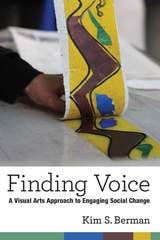
Finding Voice
A Visual Arts Approach to Engaging Social ChangeKim S. Berman
University of Michigan Press, 2017
Five Hundred Years of LGBTQIA+ History in Western Nicaragua
Victoria González-Rivera
University of Arizona Press, 2024
In this expansive history, González-Rivera documents connections between Indigeneity, local commerce, and femininity (cis and trans), demonstrating the long history of LGBTQIA+ Nicaraguans. She sheds light on historical events, such as Andres Caballero’s 1536 burning at the stake for sodomy. González-Rivera discusses how elite efforts after independence to “modernize” open-air markets led to increased surveillance of LGBTQIA+ working-class individuals. She also examines the 1960s and the Somoza dictatorship, when another wave of persecution emerged, targeting working-class gay men and trans women, leading to a more stringent anti-sodomy law.
The centuries prior to the post-1990 political movement for greater LGBTQIA+ rights demonstrate that, far from being marginal, LGBTQIA+ Nicaraguans have been active in every area of society for hundreds of years.

Fixing Sex
Intersex, Medical Authority, and Lived ExperienceKatrina Karkazis
Duke University Press, 2008
Drawing extensively on interviews with adults with intersex conditions, parents, and physicians, Karkazis moves beyond the heated rhetoric to reveal the complex reality of how intersexuality is understood, treated, and experienced today. As she unravels the historical, technological, social, and political forces that have culminated in debates surrounding intersexuality, Karkazis exposes the contentious disagreements among theorists, physicians, intersex adults, activists, and parents—and all that those debates imply about gender and the changing landscape of intersex management. She argues that by viewing intersexuality exclusively through a narrow medical lens we avoid much more difficult questions. Do gender atypical bodies require treatment? Should physicians intervene to control the “sex” of the body? As this illuminating book reveals, debates over treatment for intersexuality force reassessment of the seemingly natural connections between gender, biology, and the body.

Flourishing Thought
Democracy in an Age of Data HoardsRuth A. Miller
University of Michigan Press, 2016
Miller’s argument has shattering implications for the debates over the proper use and disposal of embryonic tissue, alarms about data gathering by the state and corporations, and other major ethical, social, and security issues.

For Dear Life
Women's Decriminalization and Human Rights in FocusCarol Jacobsen
University of Michigan Press, 2019
Forcing Divorce
Intimate and Non-Intimate Coercive Control in Marriage DissolutionPéter Berta
Rutgers University Press, 2027
Forcing Divorce seeks to contribute to a more nuanced understanding of what possible causes, motivations, constraints, and dynamics may lie behind forced divorce cases in various social and political contexts. This volume points out that coercive and controlling behavior plays a key role in forcing divorce and provides a detailed insight into the diverse set of strategies and tactics of marital coercive control, as well as the negative emotional, psychological, social, economic, legal , and physical consequences of their use. The chapters reveal that marital coercive control can develop not only in cases of forced divorce related to intimate partnerships, but also in non-intimate, large-scale social contexts, such as the relationship between the state and its citizens, or between religious leaders and their followers. They also highlight why contextual pressure is significant and how it operates, and why it is useful to distinguish between conducive contexts (soft contextual pressure) and coercive contexts (hard contextual pressure) in order to gain a more thorough understanding of the dynamics of restriction of individual marital choice and consent in cases of forced divorce.

Forget Me Not
The Rise of the British Literary Annual, 1823–1835Katherine D. Harris
Ohio University Press, 2015
By November 1822, the British reading public had already voraciously consumed both Walter Scott’s expensive novels and Rudolf Ackermann’s exquisite lithographs. The next decade, referred to by some scholars as dormant and unproductive, is in fact bursting with Forget Me Nots, Friendship’s Offerings, Keepsakes, and Literary Souvenirs. By wrapping literature, poetry, and art into an alluring package, editors and publishers saturated the market with a new, popular, and best-selling genre, the literary annual. In Forget Me Not, Katherine D. Harris assesses the phenomenal rise of the annual and its origins in other English, German, and French literary forms as well as its social influence on women, its redefinition of the feminine, and its effects on late nineteenth- and early twentieth-century print culture. Harris adopts an interdisciplinary approach that uses textual and social contexts to explore a forum of subversive femininity, where warfare and the masculine hero were not celebrated.
Initially published in diminutive, decoratively bound volumes filled with engravings of popularly recognized artwork and “sentimental” poetry and prose, the annuals attracted a primarily middle-class female readership. The annuals were released each November, making them an ideal Christmas gift, lover’s present, or token of friendship. Selling more than 100,000 copies during each holiday season, the annuals were accused of causing an epidemic and inspiring an “unmasculine and unbawdy age” that lasted through 1860 and lingered in derivative forms until the early twentieth century in both the United States and Europe. The annual thrived in the 1820s and after despite—or perhaps because of—its “feminine” writing and beautiful form.

Formulas for Motherhood in a Chinese Hospital
Suzanne Gottschang
University of Michigan Press, 2018
Formulas for Motherhood follows a group of women over eighteen months as they visited a Beijing Baby- Friendly Hospital over the course of their pregnancies and throughout their postpartum recoveries. The book shows how the space of the hospital operates as a microcosm of the larger social, political, and economic forces that urban Chinese women navigate in the process of becoming a mother. Relations between biomedical practices, heightened expectations of femininity and sexuality demanded by a consumer culture, alongside international and national agendas to promote maternal and child health, reveal new agents of maternal governance emerging at the very moment China’s economy heats up. This ethnography provides insight into how women’s creative pragmatism in a rapidly changing society leads to their views and decisions about motherhood.

Fortune Is a Woman
Gender and Politics in the Thought of Niccolo MachiavelliHanna Fenichel Pitkin
University of Chicago Press, 1999
Hanna Pitkin's provocative and enduring study of Machiavelli was the first to systematically place gender at the center of its exploration of his political thought. In this edition, Pitkin adds a new afterword, in which she discusses the book's critical reception and situates the book's arguments in the context of recent interpretations of Machiavelli's thought.
"A close and often brilliant exegesis of Machiavelli's writings."—The American Political Science Review

Fortune’s Wheel
Dickens and the Iconography of Women’s TimeElizabeth A. Campbell
Ohio University Press, 2003
In the first half of the nineteenth century, England became quite literally a world on wheels. The sweeping technological changes wrought by the railways, steam-powered factory engines, and progressively more sophisticated wheeled conveyances of all types produced a corresponding revolution in Victorian iconography: the image of the wheel emerged as a dominant trope for power, modernity, and progress.
In Fortune’s Wheel, an original and illuminating study, Elizabeth Campbell explores the ways in which Charles Dickens appropriated and made central to his novels the dominant symbol of his age. Between 1840 and 1860, a transformation took place in Dickens’ thinking about gender and time, and this revolution is recorded in iconographic representations of the goddess Fortune and wheel imagery that appear in his work.
Drawing on a rich history of both literary and visual representations of Fortune, Professor Campbell argues that Dickens’ contribution to both the iconographic and narrative traditions was to fuse the classical image of the wheel with the industrial one. As the wheel was increasingly identified as the official Victorian symbol for British industrial and economic progress, Dickens reacted by employing this icon to figure a more pessimistic historical vision—as the tragic symbol for human fate in the nineteenth century.
Fortune’s Wheel ably portrays the concept that, in both text and illustrations, images of fortune and the wheel in Dickens’ work record his abandonment of a linear, progressive, and arguably masculine view of history to embrace a cyclical model that has been identified with “women’s time.”
Framing Fat
Competing Constructions in Contemporary CultureKwan, Samantha
Rutgers University Press, 2013
Alongside public health officials at the Centers for Disease Control and Prevention are advertisers of the fashion-beauty complex, food industry advocates at the Center for Consumer Freedom, and activists at the National Association to Advance Fat Acceptance.
Framing Fat takes a bird’s-eye view of how these multiple actors construct the fat body by identifying the messages these groups put forth, particularly where issues of beauty, health, choice and responsibility, and social justice are concerned. Samantha Kwan and Jennifer Graves examine how laypersons respond to these conflicting messages and illustrate the gendered, raced, and classed implications within them. In doing so, they shed light on how dominant ideas about body fat have led to the moral indictment of body nonconformists, essentially “framing” them for their fat bodies.
Framing Silence
Revolutionary Novels by Haitian WomenChancy, Myriam J
Rutgers University Press, 1992
Raped and colonized, coerced and silenced--this has been the position of Haitian women within their own society, as well as how they have been seen by foreign occupiers. Romanticized symbols of nationhood, they have served, however unwillingly, as a politicized site of contestation between opposing forces.
In this first book-length study in English devoted exclusively to Haitian women's literature, Myriam Chancy finds that Haitian women have their own history, traditions, and stories to tell, tales that they are unwilling to suppress or subordinate to narratives of national autonomy. Issues of race, class, color, caste, nationality, and sexuality are all central to their fiction--as is an urgent sense of the historical place of women between the two U.S. occupations of the country. Their novels interrogate women's social and political stance in Haiti from an explicitly female point of view, forcefully responding to overt sexual and political violence within the nation's ambivalent political climate. Through daring and sensitive readings, simultaneously historical, fictional and autobiographical, Chancy explores this literature, seeking to uncover answers to the current crisis facing these women today, both within their country and in exile.The writers surveyed include Anne-christine d'Adesky, Ghislaine Rey Charlier, Marie Chauvet, Jan J. Dominique, Nadine Magloire, and Edwidge Danticat, whose work has recently achieved such high acclaim.
Framing the Rape Victim
Gender and Agency ReconsideredMardorossian, Carine M
Rutgers University Press, 2014
In recent years, members of legal, law enforcement, media and academic circles have portrayed rape as a special kind of crime distinct from other forms of violence. In Framing the Rape Victim, Carine M. Mardorossian argues that this differential treatment of rape has exacerbated the ghettoizing of sexual violence along gendered lines and has repeatedly led to women’s being accused of triggering, if not causing, rape through immodest behavior, comportment, passivity, or weakness.
Contesting the notion that rape is the result of deviant behaviors of victims or perpetrators, Mardorossian argues that rape saturates our culture and defines masculinity’s relation to femininity, both of which are structural positions rather than biologically derived ones. Using diverse examples throughout, Mardorossian draws from Hollywood film and popular culture to contemporary women’s fiction and hospitalized birth emphasizing that the position of dominant masculinity can be occupied by men, women, or institutions, while structural femininity is a position that may define and subordinate men, minorities, and other marginalized groups just as effectively as it does women. Highlighting the legacies of the politically correct debates of the 1990s and the terrorist attacks of 9/11, the book illustrates how the framing of the term “victim” has played a fundamental role in constructing notions of agency that valorize autonomy and support exclusionary, especially masculine, models of American selfhood.
The gendering of rape, including by well-meaning, sometimes feminist, voices that claim to have victims’ best interests at heart, ultimately obscures its true role in our culture. Both a critical analysis and a call to action, Framing the Rape Victim shows that rape is not a special interest issue that pertains just to women but a pervasive one that affects our society as a whole.

Frank Merriwell and the Fiction of All-American Boyhood
The Progressive Era Creation of the Schoolboy Sports StoryRyan K. Anderson
University of Arkansas Press, 2015
Merriwell came to symbolize the Progressive Era debate about how sport and school made boys into men. The saga featured the attractive Merriwell distinguishing between “good” and “bad” girls and focused on his squeaky-clean adventures in physical development and mentorship. By the serial’s conclusion, Merriwell had opened a school for “weak and wayward boys” that made him into a figure who taught readers how to approximate his example.
In Frank Merriwell and the Fiction of All-American Boyhood, Anderson treats Tip Top Weekly as a historical artifact, supplementing his reading of its text, illustrations, reader letters, and advertisements with his use of editorial correspondence, memoirs, trade journals, and legal documents. Anderson blends social and cultural history, with the history of business, gender, and sport, along with a general examination of childhood and youth in this fascinating study of how a fictional character was used to promote a homogeneous “normal” American boyhood rooted in an assumed pecking order of class, race, and gender.
Freaks of History
Two Performance TextsJames MacDonald
Intellect Books, 2017
MacDonald, who is cerebral palsied, recognizes that disability narratives are rarely written by and for disabled people. Therefore his plays, accompanied by critical essays and director’s notes, are a welcome addition to the emerging discourse of Crip theory, and essential reading for disability students and academics alike.
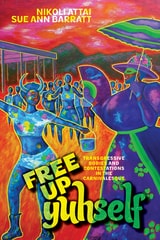
Free Up Yuhself
Transgressive Bodies and Contestations in the CarnivalesqueNikoli A. Attai
Rutgers University Press, 2025
Free Up Yuhself explores and theorizes what it means to embody and be empowered by the chaos of transgression, evaluating the implications for people who destabilize the Caribbean region’s dominant gender and sexuality politics within the Caribbean and the Caribbean diaspora. This book examines how people actively utilize the carnivalesque—spaces of festivity and places of excitement, the extraordinary, the ritualistic—to confront, negotiate, disrupt, and transgress normative trends, boundaries, and perspectives in the Caribbean and Caribbean diaspora communities. This book is particularly concerned with the ways that Caribbean people contest sexual and gendered expectations through their bodily performances across regional and diasporic festival spaces. Through illustrative, analytical, evaluative, and reflective chapters, the collection contemplates the themes of freedom, belonging, acceptance, and recognition as these affect the experience of people’s sense of being. The authors reflect on “freeing up” as a contentious politics, understanding that people have the capacity to enact their freedom through transgressive movements and performances that persistently grapple with notions of respectability, agency, empowerment, disruption, and the meanings and consequences of their varied social and political locations.

From Dead Ends to Cold Warriors
Constructing American Boyhood in Postwar Hollywood FilmsPeter W.Y. Lee
Rutgers University Press, 2021

Frontera Madre(hood)
Brown Mothers Challenging Oppression and Transborder Violence at the U.S.-Mexico BorderEdited by Cynthia Bejarano and Maria Cristina Morales
University of Arizona Press, 2024
Borderlands Regional Library Association Southwest Book Award Winner
2025 International Latino Book Award Winner
The topic of mothers and mothering transcends all spaces, from popular culture to intellectual thought and critique. This collection of essays bridges both methodological and theoretical frameworks to explore forms of mothering that challenge hegemonic understandings of parenting and traditional notions of Latinx womxnhood. It articulates the collective experiences of Latinx, Black, and Indigenous mothering from both sides of the U.S.-Mexico border.
Thirty contributors discuss their lived experiences, research, or community work challenging multiple layers of oppression, including militarization of the border, border security propaganda, feminicides, drug war and colonial violence, grieving and loss of a child, challenges and forms of resistance by Indigenous mothers, working mothers in maquiladoras, queer mothering, academia and motherhood, and institutional barriers by government systems to access affordable health care and environmental justice. Also central to this collection are questions on how migration and detention restructure forms of mothering. Overall, this collection encapsulates how mothering is shaped by the geopolitics of border zones, which also transcends biological, sociological, or cultural and gendered tropes regarding ideas of motherhood, who can mother, and what mothering personifies.
Contributors
Elva M. Arredondo
Cynthia Bejarano
Bertha A. Bermúdez Tapia
Margaret Brown Vega
Macrina Cárdenas Montaño
Claudia Yolanda Casillas
Luz Estela (Lucha) Castro
Marisa Elena Duarte
Taide Elena
Sylvia Fernández Quintanilla
Paula Flores Bonilla
Judith Flores Carmona
Sandra Gutiérrez
Ma. Eugenia Hernández Sánchez
Irene Lara
Leticia López Manzano
Mariana Martinez
Maria Cristina Morales
Paola Isabel Nava Gonzales
Olga Odgers-Ortiz
Priscilla Pérez
Silvia Quintanilla Moreno
Cirila Quintero Ramírez
Felicia Rangel-Samponaro
Coda Rayo-Garza
Shamma Rayo-Gutierrez
Marisol Rodríguez Sosa
Brenda Rubio
Ariana Saludares
Victoria M. Telles
Michelle Téllez
Marisa S. Torres
Edith Treviño Espinosa
Mariela Vásquez Tobon
Hilda Villegas
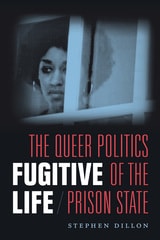
Fugitive Life
The Queer Politics of the Prison StateStephen Dillon
Duke University Press, 2018

Funk the Erotic
Transaesthetics and Black Sexual CulturesL.H. Stallings
University of Illinois Press, 2015
Stallings uses funk to highlight the importance of the erotic and eroticism in Black cultural and political movements, debunking "the truth of sex" and its histories. Brandishing funk as a theoretical tool, Stallings argues that Western theories of the erotic fail as universally applicable terms or philosophies, and thus lack utility in discussions of black bodies, subjects, and culture. In considering the Victorian concept of freak in black funk, Stallings proposes that black artists across all media have fashioned a tradition that embraces the superfreak, sexual guerrilla, sexual magic, mama's porn, black trans narratives, and sex work in a post-human subject position. Their goal: to ensure survival and evolution in a world that exploits black bodies in capitalist endeavors, imperialism, and colonization.
Revitalizing and wide-ranging, Funk the Erotic offers a needed examination of black sexual cultures, a discursive evolution of black ideas about eroticism, a critique of work society, a reexamination of love, and an articulation of the body in black movements.

Furious
Technological Feminism and Digital FuturesCaroline Bassett
Pluto Press, 2019

Furious
Technological Feminism and Digital FuturesCaroline Bassett
Pluto Press, 2019