73 books match the query 'German literature' and 3 start with f
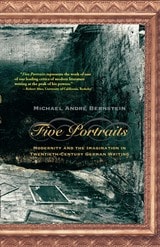
cover of Five Portraits: Modernity and the Imagination in Twentieth-Century German Writing

Five Portraits

Modernity and the Imagination in Twentieth-Century German Writing

Michael Bernstein

Northwestern University Press, 2000
In Five Portraits, one of the most acute critical thinkers of our time presents essays on five of the most important writers of the past hundred years: Rainer Maria Rilke, Paul Celan, Robert Musil, Martin Heidegger, and Walter Benjamin. The result is a remarkable examination of a moment when these writers, caught between the dream of creating an abiding masterpiece and the reality of a brutal culture fascinated by apocalyptic catastrophe, deliberately put themselves and their work at the center of the storm. Written in elegant and jargon-free prose, Michael Andre Bernstein's essays create a vivid image of an epoch whose aspirations and torments continues to shape the world we inhabit today.
[more]
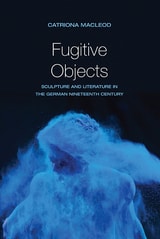
cover of Fugitive Objects: Sculpture and Literature in the German Nineteenth Century

Fugitive Objects

Sculpture and Literature in the German Nineteenth Century

Catriona MacLeod

Northwestern University Press, 2014

Winner of the 2014 Jean-Pierre Barricelli Prize for Best Book on Romanticism

In Fugitive Objects, Catriona MacLeod examines the question of why sculpture is both intensively discussed and yet rendered immaterial in German literature. She focuses on three forms of disappearance: sculpture’s vanishing as a legitimate art form at the beginning of the nineteenth century in German aesthetics, statues’ migration from the domain of high art into mass reproduction and popular culture, and sculpture’s dislodging and relocation into literary discourse. Through original readings of Clemens Brentano, Achim von Arnim, Adalbert Stifter, Leopold von Sacher-Masoch, and others, MacLeod reveals that if sculpture has disappeared from much of nineteenth-century German literature and aesthetics, it is a vanishing act that paradoxically relocates the statue back onto another cultural pedestal, attesting to the powerful force of the medium.
 
[more]
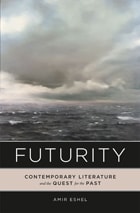
cover of Futurity: Contemporary Literature and the Quest for the Past

Futurity

Contemporary Literature and the Quest for the Past

Amir Eshel

University of Chicago Press, 2012

When looking at how trauma is represented in literature and the arts, we tend to focus on the weight of the past. In this book, Amir Eshel suggests that this retrospective gaze has trapped us in a search for reason in the madness of the twentieth century’s catastrophes at the expense of literature’s prospective vision. Considering several key literary works, Eshel argues in Futurity that by grappling with watershed events of modernity, these works display a future-centric engagement with the past that opens up the present to new political, cultural, and ethical possibilities—what he calls futurity.
 
Bringing together postwar German, Israeli, and Anglo-American literature, Eshel traces a shared trajectory of futurity in world literature. He begins by examining German works of fiction and the debates they spurred over the future character of Germany’s public sphere. Turning to literary works by Jewish-Israeli writers as they revisit Israel’s political birth, he shows how these stories inspired a powerful reconsideration of Israel’s identity. Eshel then discusses post-1989 literature—from Ian McEwan’s Black Dogs to J. M. Coetzee’s Diary of a Bad Year—revealing how these books turn to events like World War II and the Iraq War not simply to make sense of the past but to contemplate the political and intellectual horizon that emerged after 1989. Bringing to light how reflections on the past create tools for the future, Futurity reminds us of the numerous possibilities literature holds for grappling with the challenges of both today and tomorrow.
[more]