Results by title
2646 books match the query 'History & Criticism' and 120 start with f
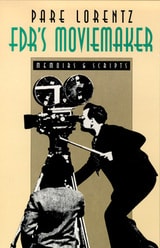
FDR's Moviemaker
Memoirs And ScriptsPare Lorentz
University of Nevada Press, 1992
"The films of Pare Lorentz are acknowledged masterpieces of world cinema. They are groundbreaking documentary records of our country in the hard years of the Depression." —William M. Drennen, Jr.
In the depths of the Great Depression, the U.S. Government produced a series of films about the pressing problems facing the nation—drought, flood, poverty, and slums. Starting with a minuscule initial budget of $6,000, Lorentz, a young film critic from New York who had never made a motion picture, was hired to head the project. The first fruit of his labor, The Plow That Broke the Plains, was a moving and dramatic account of the Dust Bowl that met with immediate and critical acclaim. Lorentz followed up his first film with The River, a history of the Mississippi River Basin and the effect of the Tennessee Valley Authority on the area. Both films demonstrated the potential of the documentary as a powerful impetus to social change, prompting widespread discussion not only of the problems they presented but also of the documentary form itself. This book combines the autobiographical history of a creative communicator and pioneer documentary filmmaker with the full scripts of The Plow That Broke the Plains, The River, Ecce Homo, and The Fight for Life.
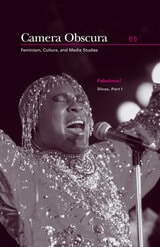
Fabulous! Divas, Part 1, Volume 22
Alexander Doty , ed.
Duke University Press, 0
The contributors to Fabulous! Divas I (the first in a two-part series) address how Baker’s dual image as sexualized black woman and multicultural mother has been used to question and invert stereotypes, how the diva witches in the Broadway musical Wicked have developed a cult following among adolescent girls, and how fans mix irony and sincerity in their admiration of daytime soap divas. One contributor explores the cultural work of camp, while another considers hair as a fetish item for diva devotees. Among the diva appreciations are a look at the life of the cross-dressing black disco diva Sylvester, a reading of Garland as a lesbian diva par excellence, an examination of Courtney Love as a martyr diva, and a consideration of how loving Julie Andrews can make people queer.
Contributors. Alexander Doty, Brett Farmer, Joshua Gamson, Chuck Jackson, Ramon Lobato, Edward R. O’Neill, Ann Pellegrini, Julie Levine Russo, Nick Salvato, Jeanne Scheper, Edward Baron Turk, Stacy Wolf
Fade to Gray
Aging in American CinemaTimothy Shary and Nancy McVittie
University of Texas Press, 2016
Winner, Choice Outstanding Academic Title, 2017
Americans are living longer and reinventing both work and retirement, but Hollywood movies barely hint at this reality of contemporary society. In many popular films, older characters fade into irrelevance, inactivity, or absurdity, or else they stay in the background as wise elders while younger characters provide the action. Most American films do not attempt to portray the rich variety of experiences or the sensitive aging issues that people confront in the years beyond fifty.
Fade to Gray offers one of the first extended studies of the portrayal of older people in American cinema from the silent era to the present. Writing in an accessible style for both general audiences and scholars, Timothy Shary and Nancy McVittie examine social attitudes toward aging through an analysis of hundreds of individual films, including such classics as You Can’t Take It With You (1938), Rosemary’s Baby (1968), Grumpy Old Men (1993), and Nebraska (2013). They show how representations of the aging process and depictions of older people embracing or enduring the various experiences of longer lives have evolved over the past century, as well as how film industry practices have both reflected and influenced perceptions of aging in American society. Exposing the social and political motivations for negative cinematic portrayals of the elderly, Fade to Gray also gives visibility to films that provide opportunities for better understanding and appreciation of the aged and the aging process.

Fan Phenomena
The Rocky Horror Picture ShowEdited by Marisa C. Hayes
Intellect Books, 2015
An homage to campy B-movies, sci-fi, and horror films, the movie was—and still is—more than the sum of its parts. Participatory and party-like, midnight showings attract moviegoers who dress as film characters, sing along with the catchy show tunes, and interact with the action on screen. In the four decades since its release, it has become a cultural phenomenon, not to mention one of the most commercially successful films of all time.
In Fan Phenomena: The Rocky Horror Picture Show, Marisa C. Hayes brings together a diverse group of writers who explore the film’s influence on the development of the pastiche tribute film, emerging queer activism of the 1970s, glam rock style, and the creative use of audience dialogue in recreating and interacting with the spoken and sung language of the film.
Spotlighting a cult phenomenon and its fans, many of who count the number of times they’ve seen the movie in the hundreds, this contribution to the Fan Phenomena series covers never-before-explored topics related to The Rocky Horror Picture Show. For anyone who has ever done the “Time Warp,” this will be essential reading.
Fancy's Image
Contexts, Settings, and Perspectives in Shakespeare and His ContemporariesCharles R Forker
Southern Illinois University Press, 1990
In ten essays spanning more than three decades of scholarship, Charles R. Forker, the author of Skull Beneath the Skin: The Achievement of John Webster, explores the dramatic and poetic styles of Shakespeare and his contemporaries in relation to Elizabethan ideas of space and time, image patterns and aesthetic form in drama, cultural contexts (the family, the state, the individual), and political and religious values.
Forker has divided his essays into three sections. The essays in the first section, "The Stage," explore theatrical self-consciousness; those in "The Green World" examine the use of pastoral and natural settings as significant factors in dramatization; the essays in the final section, "The Family," discuss ideas of dramatic engagement and disengagement in major Elizabethan playwrights other than Shakespeare.
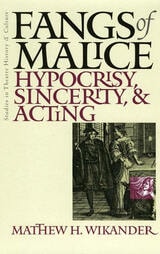
Fangs Of Malice
Hypocrisy Sincerity And ActingMatthew H Wikander
University of Iowa Press, 2002
The idea that actors are hypocrites and fakes and therefore dangerous to society was widespread in the seventeenth and eighteenth centuries. Fangs of Malice examines the equation between the vice of hypocrisy and the craft of acting as it appears in antitheatrical tracts, in popular and high culture, and especially in plays of the period. Rousseau and others argue that actors, expert at seeming other than they are, pose a threat to society; yet dissembling seems also to be an inevitable consequence of human social intercourse. The “antitheatrical prejudice” offers a unique perspective on the high value that modern western culture places on sincerity, on being true to one's own self.
Taking a cue from the antitheatrical critics themselves, Matthew Wikander structures his book in acts and scenes, each based on a particular slander against actors. A prologue introduces his main issues. Act One deals with the proposition “They Dress Up”: foppish slavery to fashion, cross-dressing, and dressing as clergy. Act Two treats the proposition “They Lie” by focusing on social dissembling and the phenomenon of the self-deceiving hypocrite and the public, princely hypocrite. Act Three, “They Drink,” examines a wide range of antisocial behavior ascribed to actors, such as drinking, gambling, and whoring. An epilogue ties the ancient ideas of possession and the panic that actors inspire to contemporary anxieties about representation not only in theatre but also in the visual and literary arts.
Fangs of Malice will be of great interest to scholars and students of drama as well as to theatre professionals and buffs.
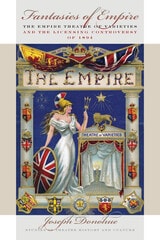
Fantasies of Empire
The Empire Theatre of Varieties and the Licensing Controversy of 1894Joseph Donohue
University of Iowa Press, 2005
Fantasies of Empire is the first book to recount in full the story of the Empire licensing controversy in all its captivating detail. Contemporaneous accounts are interwoven with Donohue’s identification and analysis of the larger issues raised: What the controversy reveals about contemporary sexual and social relations, what light it sheds on opposing views regarding the place of art and entertainment in modern society, and what it says about the pervasive effect of British imperialism on society’s behavior in the later years of Queen Victoria’s reign. Donohue connects the controversy to one of the most interesting developments in the history of modern theatre, the simultaneous emergence of a more sophisticated, varied, and moneyed audience and a municipal government insistent on its right to control and regulate that audience’s social and cultural character and even its moral behavior.
Rich in illustrations and entertainingly written, Fantasies of Empire will appeal to theatre, dance, and social historians and to students of popular entertainment, the Victorian period, urban studies, gender studies, leisure studies, and the social history of architecture.
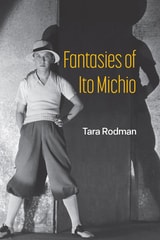
Fantasies of Ito Michio
Tara Rodman
University of Michigan Press, 2024
Winner of the 2025 Dance Studies Association Oscar Brockett Book Prize
Born in Japan and trained in Germany, dancer and choreographer Ito Michio (1893–1961) achieved prominence in London before moving to the U.S. in 1916 and building a career as an internationally acclaimed artist. During World War II, Ito was interned for two years, and then repatriated to Japan, where he contributed to imperial war efforts by creating propaganda performances and performing revues for the occupying Allied Forces in Tokyo. Throughout, Ito continually invented stories of voyages made, artists befriended, performances seen, and political activities carried out—stories later dismissed as false.
Fantasies of Ito Michio argues that these invented stories, unrealized projects, and questionable political affiliations are as fundamental to Ito’s career as his ‘real’ activities, helping us understand how he sustained himself across experiences of racialization, imperialism, war, and internment. Tara Rodman reveals a narrative of Ito’s life that foregrounds the fabricated and overlooked to highlight his involvement with Japanese artists, such as Yamada Kosaku and Ishii Baku, and global modernist movements. Rodman offers “fantasy” as a rubric for understanding how individuals such as Ito sustain themselves in periods of violent disruption and as a scholarly methodology for engaging the past.
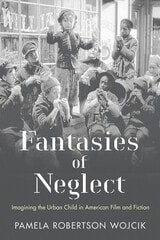
Fantasies of Neglect
Imagining the Urban Child in American Film and FictionPamela Robertson Wojcik
Rutgers University Press, 2016
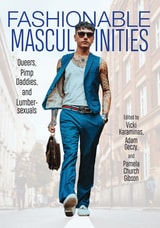
Fashionable Masculinities
Queers, Pimp Daddies, and LumbersexualsVicki Karaminas
Rutgers University Press, 2022
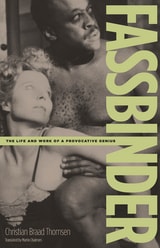
Fassbinder
The Life And Work Of A Provocative GeniusChristian Braad Thomsen
University of Minnesota Press, 2004
The revealing biography of this highly productive and radical film director
Rainer Werner Fassbinder was the most innovative practitioner of New German Cinema. He worked at breakneck speed and in fourteen years made forty-four films, including Ali: Fear Eats the Soul (1973) and The Marriage of Maria Braun (1978). Fassbinder ruthlessly attacked both German bourgeois society and the larger limitations of humanity, and his films detail the desperate yearning for love and freedom and the many ways in which society defeats that desire.
In Fassbinder, Christian Thomsen, a close friend of the director, illuminates Fassbinder’s body of work while revealing his insider views of a man who, despite a furious temper, manic working habits, and rampant drug addiction, supported an extended family—including his mother, a string of male lovers, lovelorn women, and even a pair of frustrated wives—with his intoxicating and prolific imagination. This book, like Fassbinder’s often-used image of the mirror, brilliantly reflects the sexual, political, and overwhelmingly human contradictions inherent in the life of this intensely creative man and the remarkable films he directed.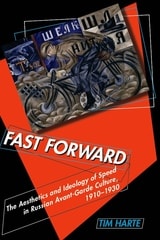
Fast Forward
The Aesthetics and Ideology of Speed in Russian Avant-Garde Culture, 1910–1930Tim Harte
University of Wisconsin Press, 2009
Although modernism arrived somewhat late in Russia, the increased tempo of life at the start of the twentieth century provided Russia’s avant-garde artists with an infusion of creative dynamism and crucial momentum for revolutionary experimentation. In Fast Forward Tim Harte presents a detailed examination of the images and concepts of speed that permeated Russian modernist poetry, visual arts, and cinema. His study illustrates how a wide variety of experimental artistic tendencies of the day—such as “rayism” in poetry and painting, the effort to create a “transrational” language (zaum’) in verse, and movements seemingly as divergent as neo-primitivism and constructivism—all relied on notions of speed or dynamism to create at least part of their effects.
Fast Forward reveals how the Russian avant-garde’s race to establish a new artistic and social reality over a twenty-year span reflected an ambitious metaphysical vision that corresponded closely to the nation’s rapidly changing social parameters. The embrace of speed after the 1917 Revolution, however, paradoxically hastened the movement’s demise. By the late 1920s, under a variety of historical pressures, avant-garde artistic forms morphed into those more compatible with the political agenda of the Russian state. Experimentation became politically suspect and abstractionism gave way to orthodox realism, ultimately ushering in the socialist realism and aesthetic conformism of the Stalin years.
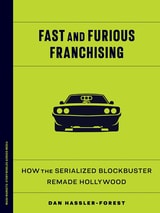
Fast and Furious Franchising
How the Serialized Blockbuster Remade HollywoodDan Hassler-Forest
University of Minnesota Press, 2026
What the popularity of the Fast and Furious film franchise says about Hollywood blockbusters and media production
Fast and Furious Franchising charts the transformation of Hollywood through the story of one of its most successful cinematic universes. Released in 2001, The Fast and the Furious became an unexpected hit, developing into a seven-billion-dollar media franchise with nine direct sequels (so far), one “sidequel,” copious spin-offs, and licensing deals from board games to theme park rides.
Dan Hassler-Forest shows how Fast and Furious paved the way for a new form of serialized storytelling that balanced new distribution practices and expansion into international markets with a savvy awareness of representational politics. By following the series’s development over the past twenty-five years, Fast and Furious Franchising reveals distinct phases that reflect larger media-industrial trends: the postclassical blockbuster era of the early 2000s; the emergence of the megafranchise between 2008 and 2014; the franchise’s “imperial” era, from 2015 through 2019; and the postpandemic crisis era of media saturation and franchise fatigue.
While examining this rapidly changing media landscape, Hassler-Forest offers lively, insightful analyses of the films as they have embraced ever-more-ludicrous plots and unlikely character turns while always maintaining their signature faith in the power of family. As he illuminates the role of the Fast and Furious movies in the global entertainment industry, Hassler-Forest shows how the films’ improbable success proves Dominic Toretto’s adage that, whether “you win by an inch or a mile . . . winning’s winning.”
Retail e-book files for this title are screen-reader friendly with images accompanied by short alt text and/or extended descriptions.
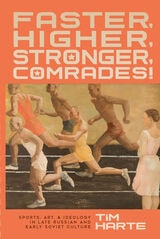
Faster, Higher, Stronger, Comrades!
Sports, Art, and Ideology in Late Russian and Early Soviet CultureTim Harte
University of Wisconsin Press, 2020
With interdisciplinary analysis of literature, painting, and film, Faster, Higher, Stronger, Comrades! traces how physical fitness had an even broader impact on culture and ideology in the Soviet Union than previously realized. From prerevolutionary writers and painters glorifying popular circus wrestlers to Soviet photographers capturing unprecedented athleticism as a means of satisfying their aesthetic ideals, the nation's artists embraced sports in profound, inventive ways. Though athletics were used for doctrinaire purposes, Tim Harte demonstrates that at their core, they remained playful, joyous physical activities capable of stirring imaginations and transforming everyday realities.
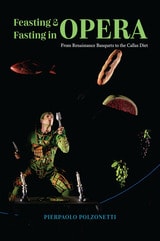
Feasting and Fasting in Opera
From Renaissance Banquets to the Callas DietPierpaolo Polzonetti
University of Chicago Press, 2021
In this book, opera scholar Pierpaolo Polzonetti explores how convivial culture shaped the birth of opera and opera-going rituals until the mid-nineteenth century, when eating and drinking at the opera house were still common. Through analyses of convivial scenes in operas, the book also shows how the consumption of food and drink, and sharing or the refusal to do so, define characters’ identity and relationships.
Feasting and Fasting in Opera moves chronologically from around 1480 to the middle of the nineteenth century, when Wagner’s operatic reforms banished refreshments during the performance and mandated a darkened auditorium and absorbed listening. The book focuses on questions of comedy, pleasure, embodiment, and indulgence—looking at fasting, poisoning, food disorders, body types, diet, and social, ethnic, and gender identities—in both tragic and comic operas from Monteverdi to Puccini. Polzonetti also sheds new light on the diet Maria Callas underwent in preparation for her famous performance as Violetta, the consumptive heroine of Verdi’s La traviata. Neither food lovers nor opera scholars will want to miss Polzonetti’s page-turning and imaginative book.
Federico Fellini as Auteur
Seven Aspects of His FilmsJohn C. Stubbs
Southern Illinois University Press, 2006
Federico Fellini as Auteur: Seven Aspects of His Films offers a comprehensive auteurist study of the renowned Italian director. Film scholar John C. Stubbs dispenses with a traditional film-career review of the man, focusing instead on the key elements of the filmmaker’s style, the influence of Carl Jung and dreams, the autobiographical depiction of childhood and adolescence, the portrait of the artist, the filmmaker’s working relationship with his wife, Fellini’s comic strategies, and his adaptation of works by others. Each of the aspects is fully contextualized. This examination of the critical elements in Fellini films offers a better understanding of the artistry that is uniquely Fellini.
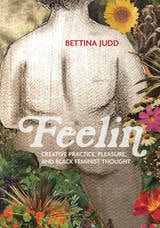
Feelin
Creative Practice, Pleasure, and Black Feminist ThoughtBettina Judd
Northwestern University Press, 2023
How creativity makes its way through feeling—and what we can know and feel through the artistic work of Black women
Feeling is not feelin. As the poet, artist, and scholar Bettina Judd argues, feelin, in African American Vernacular English, is how Black women artists approach and produce knowledge as sensation: internal and complex, entangled with pleasure, pain, anger, and joy, and manifesting artistic production itself as the meaning of the work. Through interviews, close readings, and archival research, Judd draws on the fields of affect studies and Black studies to analyze the creative processes and contributions of Black women—from poet Lucille Clifton and musician Avery*Sunshine to visual artists Betye Saar, Joyce J. Scott, and Deana Lawson.
Feelin: Creative Practice, Pleasure, and Black Feminist Thought makes a bold and vital intervention in critical theory’s trend toward disembodying feeling as knowledge. Instead, Judd revitalizes current debates in Black studies about the concept of the human and about Black life by considering how discourses on emotion as they are explored by Black women artists offer alternatives to the concept of the human. Judd expands the notions of Black women’s pleasure politics in Black feminist studies that include the erotic, the sexual, the painful, the joyful, the shameful, and the sensations and emotions that yet have no name. In its richly multidisciplinary approach, Feelin calls for the development of research methods that acknowledge creative and emotionally rigorous work as productive by incorporating visual art, narrative, and poetry.
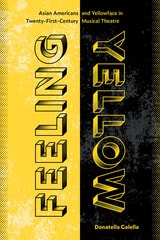
Feeling Yellow
Asian Americans and Yellowface in Twenty-First-Century Musical TheatreDonatella Galella
University of Michigan Press, 2026
Feeling Yellow examines how yellowface has persisted on the contemporary musical stage and how Asian Americans have contested yellowface, as they stake their own claim to the theatrical stage and nation state. Donatella Galella boldly argues that the pleasures of musical theatre and the disavowal of systemic anti-Asian racism enable the ongoing portrayal of Asian and Asian American characters by non-Asian actors. Galella offers two concepts to understand these phenomena: feeling yellow and yellowface without yellowed faces. Feeling yellow encapsulates the racialized anger, despair, and alienation of Asian American artists and audiences. Yellowface without yellowed faces denotes subtle ways of conveying Asianness, such as performing Asianness with exaggerated irony, using racialized costumes rather than yellow skin and slanted eye makeup, and setting musicals in fantasy Asian lands populated by multiracial casts.
Galella utilizes musicals such as Thoroughly Modern Millie, Anything Goes, The Mikado, and Soft Power, to understand how Asian and Asian American representation is connected to larger questions: How does racial identity shape emotional reactions to musical theatre? Why does yellowface and anti-Asian racism persist? What are the terms for Asian Americans belonging in the United States? Using a range of approaches from dramaturgy to auto-ethnography and materials from interviews to Reddit posts, Feeling Yellow spotlights Asian American affect, artistry, and activism.
Feeling the Future at Christian End-Time Performances
Jill Stevenson
University of Michigan Press, 2022
The book’s main focus is contemporary Christian End-Time performances and how they theatrically construct encounters with future time—not just images or ideas of a future, but viscerally and immediately real experiences of future time. Author Jill Stevenson’s examples are Hell Houses and Judgement Houses; Rapture House, a similarly styled “walk through drama” in North Carolina; Hell’s Gates, an “outdoor reality drama” in Dawsonville, Georgia; Ark Encounter, a full-size recreation of Noah’s Ark; and Tribulation Trail, an immersive thirteen-scene drama ministry based on the Book of Revelation. The book’s coda considers similarities between these Christian performances and secular survivalist prepper events, especially with respect to constructions of and language about time. In doing so, the author situates these performances within a larger tradition that challenges traditional secular/sacred distinctions and illuminates how the End Times has been employed in our current social and political moment.
Fellini's Films and Commercials
From Postwar to PostmodernFrank Burke
Intellect Books, 2020
Revisiting Burke’s 1996 monograph, this revised and updated edition includes a new preface and an additional chapter on the filmmaker’s work on commercials. Elegantly written and thoroughly researched, this book is essential reading for any Fellini fan or scholar.
Feminism And Documentary
Diane Waldman
University of Minnesota Press, 1999
The first book of essays to explore the intersection of these two vital disciplines.
Documentary and feminist film studies have long been separate or parallel universes that need to converse or collide. The essays in this volume, written by prominent scholars and filmmakers, demonstrate the challenges that feminist perspectives pose for documentary theory, history, and practice. They also show how fuller attention to documentary enriches and complicates feminist theory, especially regarding the relationship between gender and sexuality, race and ethnicity, class and nation.
Feminism and Documentary begins with a substantial historical introduction that highlights several of the specific areas that contributors address: debates over realism, the relationship between filmmaker and subject, historical thinking about documentary and thinking about the historical documentary, biography and autobiography, and the use of psychoanalysis. Other essays, most of which appear here for the first time, range from broad overviews to close analyses of particular films and videos and from discussions of well-known works such as Roger and Me and Don’t Look Back to lesser known texts that might revise the canon. The collection includes an extensive filmography and videography with useful distribution information and a bibliography of work in this neglected area of scholarship. Lucid, sophisticated, and eye-opening, this book will galvanize documentary studies and demonstrate the need for women’s and cultural studies to grapple with visual media. Contributors: Michelle Citron, Northwestern U; Gloria J. Gibson, Indiana U; Chris Holmlund, U of Tennessee; Alexandra Juhasz, Pitzer College; Ann Kaneko; Anahid Kassabian, Fordham U; David Kazanjian, U of California, Berkeley; Susan Knobloch; Silvia Kratzer-Juilfs; Deborah Lefkowitz; Julia Lesage, U of Oregon; Laura U. Marks, Carleton U, Ottawa; Paula Rabinowitz, U of Minnesota; Michael Renov, USC; Patricia R. Zimmermann, Ithaca College.
Feminist Comedy
Women Playwrights of LondonWillow White
University of Delaware Press, 2024
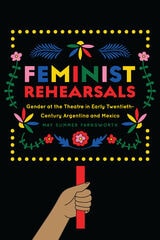
Feminist Rehearsals
Gender at the Theatre in Early Twentieth-Century Argentina and MexicoMay Summer Farnsworth
University of Iowa Press, 2023
2023 George Freedley Memorial Award, Finalist
As feminism gained prominence in twentieth-century popular culture, dramatic conventions progressed accordingly, offering larger and more diverse roles for women characters. Feminist Rehearsals documents the early stages of feminist theatre in Argentina and Mexico, revealing how various aspects of performance culture—spectator formation, playwriting, professional acting and directing, and dramatic techniques—paralleled political activism and championed the goals of the women’s rights movement. Through performance and protest, feminists enacted new identities and pushed for myriad social and legislative reforms during a time when women were denied suffrage and full citizenship status. Together, feminist theatre and demonstrations politicized women spectators’ collective presence and promoted women’s rights in the public sphere.
Fernando
A Song by ABBAKay Dickinson
Duke University Press, 2025
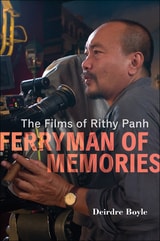
Ferryman of Memories
The Films of Rithy PanhDeirdre Boyle
Rutgers University Press, 2023
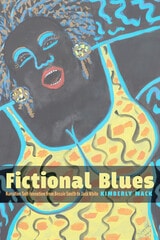
Fictional Blues
Narrative Self-Invention from Bessie Smith to Jack WhiteKimberly Mack
University of Massachusetts Press, 2020
The familiar story of Delta blues musician Robert Johnson, who sold his soul to the devil at a Mississippi crossroads in exchange for guitar virtuosity, and the violent stereotypes evoked by legendary blues “bad men” like Stagger Lee undergird the persistent racial myths surrounding “authentic” blues expression. Fictional Blues unpacks the figure of the American blues performer, moving from early singers such as Ma Rainey and Big Mama Thornton to contemporary musicians such as Amy Winehouse, Rhiannon Giddens, and Jack White to reveal that blues makers have long used their songs, performances, interviews, and writings to invent personas that resist racial, social, economic, and gendered oppression.
Using examples of fictional and real-life blues artists culled from popular music and literary works from writers such as Walter Mosley, Alice Walker, and Sherman Alexie, Kimberly Mack demonstrates that the stories blues musicians construct about their lives (however factually slippery) are inextricably linked to the “primary story” of the narrative blues tradition, in which autobiography fuels musicians' reclamation of power and agency.
Fidel between the Lines
Paranoia and Ambivalence in Late Socialist Cuban CinemaLaura-Zoë Humphreys
Duke University Press, 2019

Fifty Years of "The Battle of Algiers"
Past as PrologueSohail Daulatzai
University of Minnesota Press, 2016
The Battle of Algiers, a 1966 film that poetically captures Algerian resistance to French colonial occupation, is widely considered one of the greatest political films of all time. With an artistic defiance that matched the boldness of the anticolonial struggles of the time, it was embraced across the political spectrum—from leftist groups like the Black Panther Party and the Palestine Liberation Organization to right-wing juntas in the 1970s and later, the Pentagon in 2003. With a philosophical nod to Frantz Fanon, Sohail Daulatzai demonstrates that tracing the film’s afterlife reveals a larger story about how dreams of freedom were shared and crushed in the fifty years since its release. As the War on Terror expands and the “threat” of the Muslim looms, The Battle of Algiers is more than an artifact of the past—it’s a prophetic testament to the present and a cautionary tale of an imperial future, as perpetual war has been declared on permanent unrest.
Forerunners: Ideas First is a thought-in-process series of breakthrough digital publications. Written between fresh ideas and finished books, Forerunners draws on scholarly work initiated in notable blogs, social media, conference plenaries, journal articles, and the synergy of academic exchange. This is gray literature publishing: where intense thinking, change, and speculation take place in scholarship.
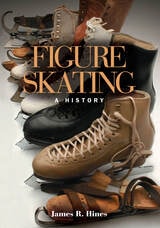
Figure Skating
A HIstoryJames R. Hines
University of Illinois Press, 2005
The only comprehensive history of figure skating in over forty years
Figure skating, unique in its sublimely beautiful combination of technical precision, musicality, and interpretive elements, has undergone many dramatic developments since the only previous history of the sport was published in 1959. This exciting and information-packed new history by James R. Hines explains skating’s many technical and artistic advances, its important figures, its intrigues and scandals, and the historical high points during its long evolution.
Hines divides his history into three periods separated by the World Wars. In the first section, he follows functional and recreational ice skating through its evolution into national schools, culminating in the establishment of the International Skating Union and the ascendancy of an international style of skating. The second section explains the changes that occurred as the sport expanded into the form we recognize and enjoy today, and the final section shows how skating became increasingly athletic, imaginative, and intense following World War II, as the main focus turns to skaters themselves. The profiles include some 148 World and Olympic Champions as well as others who, in Dick Button’s words, "left the sport better because they were in it."
Beginning with mythological tales from twelfth- and thirteenth-century Scandinavians, Hines describes hundreds who have contributed to the sport. They include figure skating’s patron saint Lydwina of Schiedam, whose late-fourteenth-century skating tumble has been documented in a woodcut; Ulrich Salchow and Axel Paulsen, who gave their names to distinctive jumps; Madge Syers, who entered and medaled at the previously all-male World Championships in 1902; and Sonja Henie, who took skating to the silver screen. The history ends with the 2002 skating season, when Maria Butyrskaya and Michelle Kwan commanded the most attention and an unfortunate judging decision rocked the pairs’ competition, resulting in the adoption of a new judging system.
Beyond the contributions of individual skaters, Figure Skating also traces the growth of competitions and show skating (professional and amateur), and discussions of relevant social, political, and ethical concerns that have affected the sport. Along with over seventy magnificent historical pictures spread throughout the book, a very special gallery features the picture of every world and Olympic champion. Figure Skating is an informative and inspiring resource, sure to be enjoyed by anyone who has ever skated recreationally or in competition as well as by the many fans who have this beautiful sport as spectators.
Figures of Resistance
Essays in Feminist TheoryTeresa de Lauretis. Edited and with an Introduction by Patricia White
University of Illinois Press, 2006
Figures of Time
Affect and the Television of PreemptionToni Pape
Duke University Press, 2019
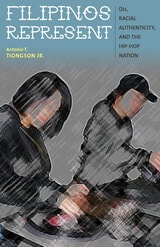
Filipinos Represent
DJs, Racial Authenticity, and the Hip-hop NationAntonio T. Tiongson Jr.
University of Minnesota Press, 2013
The “Hip-hop Nation” has been scouted, staked out, and settled by journalists and scholars alike. Antonio T. Tiongson Jr. steps into this well-mapped territory with questions aimed at interrogating how nation is conceptualized within the context of hip-hop. What happens, Tiongson asks, to notions of authenticity based on hip-hop’s apparent blackness when Filipino youth make hip-hop their own?
Tiongson draws on interviews with Bay Area–based Filipino American DJs to explore the authenticating strategies they rely on to carve out a niche within DJ culture. He shows how Filipino American youth involvement in DJing reconfigures the normal boundaries of Filipinoness predicated on nostalgia and cultural links with an idealized homeland. Filipinos Represent makes the case that while the engagement of Filipino youth with DJ culture speaks to the broadening racial scope of hip-hop—and of what it means to be Filipino—such involvement is also problematic in that it upholds deracialized accounts of hip-hop and renders difference benign.
Looking at the ways in which Filipino DJs legitimize their place in an expressive form historically associated with African Americans, Tiongson examines what these complex forms of identification reveal about the contours and trajectory of contemporary U.S. racial formations and discourses in the post–civil rights era.
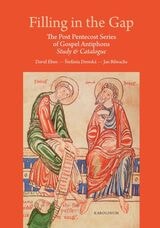
Filling in the Gap
The Post Pentecost Series of Gospel AntiphonesDavid Eben, Štefánia Hanusa Demská, and Jan Bilwachs
Karolinum Press, 2025
Provides insight into the world of the Carolingian monks and clerics who created the Liturgy of the Hours.
Filling in the Gap recounts the creative process behind a specific part of the Gregorian Office repertoire that has not been addressed so far. By linking historical and liturgical evidence with musical analysis, the study opens new avenues for grouping manuscripts and interpreting their interrelationships. The catalogue of melodies included in this volume contains transcriptions of the post-Pentecost antiphon repertoire from twenty-four manuscripts across Western Europe.
Film Blackness
American Cinema and the Idea of Black FilmMichael Boyce Gillespie
Duke University Press, 2016
Film Criticism in the Digital Age
Frey, Mattias
Rutgers University Press, 2015
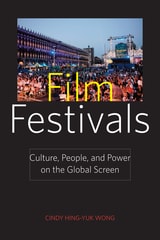
Film Festivals
Culture, People, and Power on the Global ScreenWong, Cindy H
Rutgers University Press, 2011
Movies, stars, auteurs, critics, and the sheer excitement of cinema come together in film festivals as quintessential constellations of art, business, and glamour. Yet, how well do we actually understand the forces and meanings that these events embody?
Film Festivals offers the first comprehensive overview of the history, people, films, and multiple functions of the festival world. From Sundance to Hong Kong, from the glitter of Cannes to edgier festivals that challenge boundaries or foster LGBTQ cultural production, film festivals celebrate art, promote business, bring cinema to diverse audiences, and raise key issues about how we see our world. Cindy Hing-Yuk Wong situates festivals within changing global practices of film, including their important ties to both Hollywood and independent cinema. She explores how these events have become central in the construction of cinema knowledge as well as the behind-the-scene mechanics of finance, distribution, and evaluation. By linking general structures and connections to specific films and auteurs, Wong addresses the components and creation of film festivals that continue to reshape filmmaking as art and business.

Film Genre Reader IV
Edited by Barry Keith Grant
University of Texas Press, 2012
From reviews of the third edition:
“Film Genre Reader III lives up to the high expectations set by its predecessors, providing an accessible and relatively comprehensive look at genre studies. The anthology’s consideration of the advantages and challenges of genre studies, as well as its inclusion of various film genres and methodological approaches, presents a pedagogically useful overview.” —Scope
Since 1986, Film Genre Reader has been the standard reference and classroom text for the study of genre in film, with more than 25,000 copies sold. Barry Keith Grant has again revised and updated the book to reflect the most recent developments in genre study. This fourth edition adds new essays on genre definition and cycles, action movies, science fiction, and heritage films, along with a comprehensive and updated bibliography. The volume includes more than thirty essays by some of film’s most distinguished critics and scholars of popular cinema, including Charles Ramírez Berg, John G. Cawelti, Celestino Deleyto, David Desser, Thomas Elsaesser, Steve Neale, Thomas Schatz, Paul Schrader, Vivian Sobchack, Janet Staiger, Linda Williams, and Robin Wood.

Film Hieroglyphs
Tom Conley
University of Minnesota Press, 2006
Film Language
A Semiotics of the CinemaChristian Metz
University of Chicago Press, 1990
"The semiology of film . . . can be held to date from the publication in 1964 of the famous essay by Christian Metz, 'Le cinéma: langue ou langage?'"—Geoffrey Nowell-Smith, Times Literary Supplement
"Modern film theory begins with Metz."—Constance Penley, coeditor of Camera Obscura
"Any consideration of semiology in relation to the particular field signifying practice of film passes inevitably through a reference to the work of Christian Metz. . . . The first book to be written in this field, [Film Language] is important not merely because of this primacy but also because of the issues it raises . . . issues that have become crucial to the contemporary argument."—Stephen Heath, Screen
Film Nation
Hollywood Looks at U.S. HistoryRobert Burgoyne
University of Minnesota Press, 1997
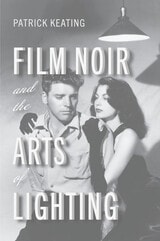
Film Noir and the Arts of Lighting
Patrick Keating
Rutgers University Press, 2024
Film Remakes and Franchises
Herbert, Daniel
Rutgers University Press, 2017
Film Remakes and Franchises examines how remakes and sequels have been central to the film industry from its very inception, yet also considers how the recent trends toward reboots and transmedia franchises depart from those historical precedents. Film scholar Daniel Herbert not only analyzes the film industry’s increasing reliance on recycled product, but also asks why audiences are currently so drawn to such movies. In addition, he explores how contemporary filmmakers have used reboots and franchise movies to inject timely social commentary and diversity into established media properties. A lively and accessible overview that covers everything from You’ve Got Mail to The Force Awakens, Film Remakes and Franchises raises important questions about the intersection of business and creativity in Hollywood today.
Film Stock
An International History of a Sensitive MediumAlice Lovejoy
University of Minnesota Press, 2027
A global collection exploring the vital significance of film’s materiality to the history of cinema
Made from animal bones, plant cellulose, and precious metals, photochemical film defined a century of cinema. Looking past Hollywood and beyond iconic companies like Eastman Kodak, Agfa, and Pathé, Film Stock travels to Argentina, India, Czechoslovakia, and other locales to offer a truly global history of the very material of film.
Engaging with cultural, political, economic, and environmental questions of significant contemporary concern, Film Stock shows the immense consequences of how film was made, handled, processed, destroyed, and archived. Individual essays explore how climate shaped film distribution in early twentieth-century Southeast Asia, unique film formats manufactured in China, early efforts to standardize the size of film stock in Hollywood, and how Eastman Kodak’s tropical research lab in Panama became a tool of cultural empire.
With a deep commitment to archival research and substantive engagement with primary materials, Film Stock is a major work that tells the international story of film’s physical life. Its innovative, groundbreaking essays make a compelling case for why, even in our digital age, motion picture film matters.
Retail e-book files for this title are screen-reader friendly with images accompanied by short alt text and/or extended descriptions.
Film Talk
Directors at WorkDixon, Wheeler Winston
Rutgers University Press, 2007
The answers to these questions, along with many more little-known facts and insights, can be found in Film Talk, an in-depth, behind-the-scenes look at filmmaking from the 1940s to the present. In eleven intimate and revealing interviews, contemporary film directors speak frankly about their work-their successes and their disappointments, their personal aspirations, struggles, relationships, and the politics that affect the industry.
A medley of directors including those working in pop culture and documentary, as well as feminist filmmakers, social satirists, and Hollywood mavericks recount stories that have never before been published. Among them are Monte Hellman, the auteur of the minimalist masterpiece Two-Lane Blacktop; Albert Maysles, who with his late brother David, created some of the most important documentaries of the 1960s, including Salesman and The Beatles: What's Happening?; Robert Downey Sr., whose social satires Putney Swope and Greaser's Palace paved the way for a generation of filmmakers; Bennett Miller, whose film Capote won an Academy Award in 2005; and Jamie Babbit, a lesbian crossover director whose low-budget film But I'm a Cheerleader! became a mainstream hit.
The candid conversations, complimented by more than fifty photographs, including many that are rare, make this book essential reading for aspiring moviemakers, film scholars, and everyone interested in the how movies are made and who the fascinating individuals are who make them.
Film and Authorship
Wexman, Virginia W
Rutgers University Press, 2003
During the 1960s, when cinema first entered the academy as a serious object of study, the primary focus was on auteurism, or on films authorship. Burgeoning cinema studies courses demonstrated how directors were the authors of work that undermined (or succeeded in spite of) all the constraints that Hollywood threw at them. New critical methods were introduced as the field matured, and studies of the author/director, for the most part, were considered obsolete.
Virginia Wright Wexman has pulled together some of the freshest writing available on the topic of film authorship. Spanning approaches including poststructuralism, feminism, queer theory, postcolonialism, and cultural studies, the contributors ask, what does auteurship look like today in light of all these developments? The contents of the volume are divided into three major sections: Theoretical Statements, Historical and Institutional Contexts, and Case Studies. Wexmans comprehensive introduction contextualizes the selections and summarizes the scholarly methods through which auteurism has been addressed in the past; it also provides a sketch of the history of media authorship. An extensive bibliography rounds off the volume.

Film and Everyday Resistance
Marguerite La Caze
Northwestern University Press, 2024
A philosophical exploration of how modern global cinema represents everyday means of resisting authoritarianism and totalitarianism
Václav Havel’s concept of “living within the truth” in an authoritarian regime frames Marguerite La Caze’s readings of international cinema, highlighting forms of resistance in which seemingly pre- or nonpolitical aspects of life—such as professional labor, exile, and truth telling—can be recognized as political when seen against a backdrop of general acquiescence. La Caze’s case studies cross genres, historical eras, and national contexts: the apartheid regime in South Africa, in A Dry White Season; post-Suharto Indonesia, in The Look of Silence; 1980s East Germany, in Barbara; the Chilean military dictatorship, in No; contemporary Iran, in A Separation; and current-day Saudi Arabia, in Wadjda. This book explores the films’ use of image, sound, narrative, and character in dialogue with the work of Simone de Beauvoir, Aimé Cesaire, Hannah Arendt, Sara Ahmed, and W. E. B. Du Bois to reveal how cinema depicts ordinary people enacting their own philosophies of defiance.
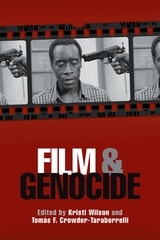
Film and Genocide
Kristi M. Wilson
University of Wisconsin Press, 2011
Film and Genocide brings together scholars of film and of genocide to discuss film representations, both fictional and documentary, of the Holocaust, the Armenian genocide, and genocides in Chile, Australia, Rwanda, and the United States. Since 1955, when Alain Resnais created his experimental documentary Night and Fog about the Nazis’ mass killings of Jews and other ostracized groups, filmmakers have struggled with using this medium to tell such difficult stories, to re-create the sociopolitical contexts of genocide, and to urge awareness and action among viewers. This volume looks at such issues as realism versus fiction, the challenge of depicting atrocities in a manner palatable to spectators and film distributors, the Holocaust film as a model for films about other genocides, and the role of new technologies in disseminating films about genocide.
Film and Genocide also includes interviews with three film directors, who discuss their experiences in working with deeply disturbing images and bringing hidden stories to life: Irek Dobrowolski, director of The Portraitist (2005) a documentary about Wilhelm Brasse, an Auschwitz-Birkenau prisoner ordered to take more than 40,000 photos at the camp; Nick Hughes, director of 100 Days (2005) a dramatic film about the Rwandan mass killings; and Greg Barker, director of Ghosts of Rwanda (2004), a television documentary for Frontline.
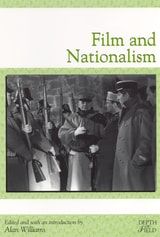
Film and Nationalism
Williams, Alan
Rutgers University Press, 2002
Film and Nationalism examines the ways in which cinema has been considered an arena of conflict and interaction between nations and nationhood. Each section of this volume explores a crucial aspect of the discussion. Is film an effective form of national propaganda? Are films losing the very notion of nationhood, in favor of a generalized, "global" cinematographic culture? What is films influence over "national character"? In addition, the volume explores the cultural and economic interactions between developed and underdeveloped countries. How have third world nations defined themselves in relation to hegemonic first world cultures, and how have their relations been changed through the dissemination of Western films? Throughout, Alan Williams chooses essays that enhance our understanding of how films help shape our sense of nationhood and self.
Film and Television After 9/11
Edited by Wheeler Winston Dixon
Southern Illinois University Press, 2004
In Film and Television After 9/11, editor Wheeler Winston Dixon and eleven other distinguished film scholars discuss the production, reception, and distribution of Hollywood and foreign films after the terrorist attacks of September 11, 2001, and examine how moviemaking has changed to reflect the new world climate.
While some contemporary films offer escapism, much of mainstream American cinema since 9/11 is centered on the desire for a “just war” in which military reprisals and escalation of warfare appear to be both inevitable and justified. Films of 2002 such as Black Hawk Down, Collateral Damage, and We Were Soldiers demonstrate a renewed audience appetite for narratives of conflict, reminiscent of the wave of filmmaking that surrounded American involvement in World War II.
The attacks on the World Trade Center and the Pentagon galvanized the American public initially, yet film critics wonder how this will play out over time. Film and Television After 9/11 is the first book to provide original insights into topics ranging from the international reception of post-9/11 American cinema, re-viewing films of our shared cinematic past in light of the attacks, and exploring parallels between post-9/11 cinema and World War II-era productions.
Film and the Anarchist Imagination
Expanded Second EditionRichard Porton
University of Illinois Press, 2020