Results by title
73 books match the query 'Indians of Central America' and 4 start with f
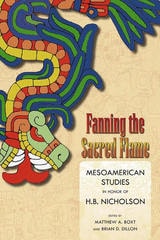
Fanning the Sacred Flame
Mesoamerican Studies in Honor of H. B. NicholsonMatthew A. Boxt
University Press of Colorado, 2020
Fanning the Sacred Flame: Mesoamerican Studies in Honor of H. B. Nicholson contains twenty-two original papers in tribute to H. B. "Nick" Nicholson, a pioneer of Mesoamerican research. His intellectual legacy is recognized by Mesoamerican archaeologists, art historians, ethnohistorians, and ethnographers--students, colleagues, and friends who derived inspiration and encouragement from him throughout their own careers. Each chapter, which presents original research inspired by Nicholson, pays tribute to the teacher, writer, lecturer, friend, and mentor who became a legend within his own lifetime.
Covering all of Mesoamerica across all time periods, contributors include Patricia R. Anawalt, Alfredo López Austin, Anthony Aveni, Robert M. Carmack, David C. Grove, Richard D. Hansen, Leonardo López Luján, Kevin Terraciano, and more. Eloise Quiñones Keber provides a thorough biographical sketch, detailing Nicholson's academic and professional journey. Publication supported, in part, by The Patterson Foundation and several private donors.
[more]
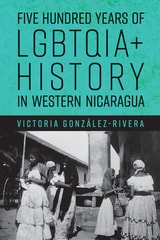
Five Hundred Years of LGBTQIA+ History in Western Nicaragua
Victoria González-Rivera
University of Arizona Press, 2024
This groundbreaking book reframes five hundred years of western Nicaraguan history by giving gender and sexuality the attention they deserve. Victoria González-Rivera decenters nationalist narratives of triumphant mestizaje and argues that western Nicaragua’s LGBTQIA+ history is a profoundly Indigenous one.
In this expansive history, González-Rivera documents connections between Indigeneity, local commerce, and femininity (cis and trans), demonstrating the long history of LGBTQIA+ Nicaraguans. She sheds light on historical events, such as Andres Caballero’s 1536 burning at the stake for sodomy. González-Rivera discusses how elite efforts after independence to “modernize” open-air markets led to increased surveillance of LGBTQIA+ working-class individuals. She also examines the 1960s and the Somoza dictatorship, when another wave of persecution emerged, targeting working-class gay men and trans women, leading to a more stringent anti-sodomy law.
The centuries prior to the post-1990 political movement for greater LGBTQIA+ rights demonstrate that, far from being marginal, LGBTQIA+ Nicaraguans have been active in every area of society for hundreds of years.
[more]
For All of Humanity
Mesoamerican and Colonial Medicine in Enlightenment GuatemalaMartha Few
University of Arizona Press, 2015
Smallpox, measles, and typhus. The scourges of lethal disease—as threatening in colonial Mesoamerica as in other parts of the world—called for widespread efforts and enlightened attitudes to battle the centuries-old killers of children and adults. Even before edicts from Spain crossed the Atlantic, colonial elites oftentimes embraced medical experimentation and reform in the name of the public good, believing it was their moral responsibility to apply medical innovations to cure and prevent disease. Their efforts included the first inoculations and vaccinations against smallpox, new strategies to protect families and communities from typhus and measles, and medical interventions into pregnancy and childbirth.
For All of Humanity examines the first public health campaigns in Guatemala, southern Mexico, and Central America in the eighteenth and early nineteenth centuries. Martha Few pays close attention to Indigenous Mesoamerican medical cultures, which not only influenced the shape and scope of those regional campaigns but also affected the broader New World medical cultures. The author reconstructs a rich and complex picture of the ways colonial doctors, surgeons, Indigenous healers, midwives, priests, government officials, and ordinary people engaged in efforts to prevent and control epidemic disease.
Few’s analysis weaves medical history and ethnohistory with social, cultural, and intellectual history. She uses prescriptive texts, medical correspondence, and legal documents to provide rich ethnographic descriptions of Mesoamerican medical cultures, their practitioners, and regional pharmacopeia that came into contact with colonial medicine, at times violently, during public health campaigns.
[more]
Framing Complexity in Formative Mesoamerica
Lisa Delance
University Press of Colorado, 2022
A fresh examination of variable social and economic processes, Framing Complexity in Formative Mesoamerica explores nascent social complexity during the Preclassic/Formative period in Mesoamerica and addresses broader social questions about egalitarian and transegalitarian prehispanic Mesoamerican cultural groups.
Contributors present multiple lines of evidence demonstrating the process of social complexity and reconsider a number of traditionally accepted models and presumed tenets as a result of the wealth of empirical data that has been gathered over the past four decades. Their chapters approach complexity as a process rather than a state of being by exploring social aggregation, the emergence of ethnic affiliations, and aspects of regional and macroregional variability.
Framing Complexity in Formative Mesoamerica presents some of the most recent data—and the implications of that data—for understanding the development of complex societies as human beings moved into urban environments. The book is an especially important volume for researchers and students working in Mesoamerica, as well as archaeologists taking a comparative approach to questions of complexity.
Contributors: Jaime J. Awe, Sarah B. Barber, Jeffrey S. Brezezinski, M. Kathryn Brown, Ryan H. Collins, Kaitlin Crow, Lisa DeLance, Gary M. Feinman, Sara Dzul Gongora, Guy David Hepp, Arthur A. Joyce, Rodrigo Martin Morales, George Micheletti, Deborah L. Nichols, Terry G. Powis, Zoe J. Rawski, Prudence M. Rice, Michael P. Smyth, Katherine E. South, Jon Spenard, Travis W. Stanton, Wesley D. Stoner, Teresa Tremblay Wagner
[more]