Results by title
174 books match the query 'Indigenous peoples' and 6 start with f
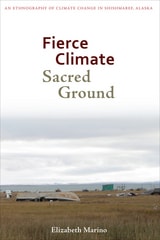
Fierce Climate, Sacred Ground
An Ethnography of Climate Change in Shishmaref, AlaskaElizabeth Marino
University of Alaska Press, 2015
Publications from the New York Times to Esquire have covered this disappearing village, yet few have taken the time to truly show the community and the two millennia of traditions at risk. In Fierce Climate, Sacred Ground, Elizabeth Marino brings Shishmaref into sharp focus as a place where people in a close-knit, determined community are confronting the realities of our changing planet every day. She shows how physical dangers challenge lives, while the stress and uncertainty challenge culture and identity. Marino also draws on Shishmaref’s experiences to show how disasters and the outcomes of climate change often fall heaviest on those already burdened with other social risks and often to communities who have contributed least to the problem. Stirring and sobering, Fierce Climate, Sacred Ground proves that the consequences of unchecked climate change are anything but theoretical.

First Light
Kanaka 'Oiwi Resistance to Settler Science at Mauna a WakeaIokepa Casumbal-Salazar
University of Minnesota Press, 2025
Understanding the Hawai‘i Island summit of Mauna a Wākea as a place of ancestral connection, cultural resurgence, and political resistance for Native Hawaiians
First Light is a site-specific study of Native Hawaiian resistance to the construction of the Thirty Meter Telescope (TMT) on the summit of Mauna a Wākea, the sacred mountain on the island of Hawai‘i. Drawing on personal interviews, oral histories, archival research, participant observation, and popular, legal, scientific, and Indigenous discourses, Iokepa Casumbal-Salazar explores both the campaign to build the observatory and the movement against it. He asks how astronomers have become stewards of Mauna a Wākea while Kānaka ‘Ōiwi (Aboriginal Hawaiians), in protest, are recast as obstructing progress and clinging to ancient superstitions.
Contextualizing contemporary resistance to telescope expansion within the past 132 years of struggle against U.S. empire in Hawai‘i, Casumbal-Salazar argues the Kanaka-led efforts to protect their ancestral lands did not begin with the TMT and only become legible when understood in the broader history of resistance to U.S. settler hegemony as told through the voices and actions of kiaʻi ʻāina (land defenders). First Light explores how settler science, capital, and law have been mobilized in ways that rationalize industrial development projects like the TMT and promote a vision of “coexistence” that enables the dehumanization of Kānaka ‘Ōiwi and their alienation from ʻāina.
Challenging the assumptions and aggressions of neoliberal environmental policy, settler multiculturalism, and U.S. military occupation, First Light reinforces calls for a moratorium on new telescope development and a literacy in Kanaka ‘Ōiwi movements for life, land, and ea (independence, sovereignty).
Retail e-book files for this title are screen-reader friendly with images accompanied by short alt text and/or extended descriptions.
Framing Complexity in Formative Mesoamerica
Lisa Delance
University Press of Colorado, 2022
Contributors present multiple lines of evidence demonstrating the process of social complexity and reconsider a number of traditionally accepted models and presumed tenets as a result of the wealth of empirical data that has been gathered over the past four decades. Their chapters approach complexity as a process rather than a state of being by exploring social aggregation, the emergence of ethnic affiliations, and aspects of regional and macroregional variability.
Framing Complexity in Formative Mesoamerica presents some of the most recent data—and the implications of that data—for understanding the development of complex societies as human beings moved into urban environments. The book is an especially important volume for researchers and students working in Mesoamerica, as well as archaeologists taking a comparative approach to questions of complexity.
Contributors: Jaime J. Awe, Sarah B. Barber, Jeffrey S. Brezezinski, M. Kathryn Brown, Ryan H. Collins, Kaitlin Crow, Lisa DeLance, Gary M. Feinman, Sara Dzul Gongora, Guy David Hepp, Arthur A. Joyce, Rodrigo Martin Morales, George Micheletti, Deborah L. Nichols, Terry G. Powis, Zoe J. Rawski, Prudence M. Rice, Michael P. Smyth, Katherine E. South, Jon Spenard, Travis W. Stanton, Wesley D. Stoner, Teresa Tremblay Wagner
From Enron to Evo
Pipeline Politics, Global Environmentalism, and Indigenous Rights in BoliviaDerrick Hindery; Foreword by Susanna B. Hecht
University of Arizona Press, 2013
Drawing upon extensive interviews and document analysis, Hindery argues that many of the structural conditions created by neoliberal policies—including partial privatization of the oil and gas sector—still persist under Morales. Tactics employed by both Morales and his neoliberal predecessors utilize the rhetoric of environmental protection and Indigenous rights to justify oil, gas, mining, and road development in Indigenous territories and sensitive ecoregions.
Indigenous peoples, while mindful of gains made during Morales’s tenure, are increasingly dissatisfied with the administration’s development model, particularly when it infringes upon their right to self-determination. From Enron to Evo demonstrates their dynamic and pragmatic strategies to cope with development and adversity, while also advancing their own aims.
Offering a critique of both free-market piracy and the dilemmas of resource nationalism, this is a groundbreaking book for scholars, policy-makers, and advocates concerned with Indigenous politics, social movements, environmental justice, and resistance in an era of expanding resource development.
From Time Immemorial
Indigenous Peoples and State SystemsBy Richard J. Perry
University of Texas Press, 1996
Around the globe, people who have lived in a place "from time immemorial" have found themselves confronted by and ultimately incorporated within larger state systems. During more than three decades of anthropological study of groups ranging from the Apache to the indigenous peoples of Kenya, Richard J. Perry has sought to understand this incorporation process and, more importantly, to identify the factors that drive it. This broadly synthetic and highly readable book chronicles his findings.
Perry delves into the relations between state systems and indigenous peoples in Canada, the United States, Mexico, and Australia. His explorations show how, despite differing historical circumstances, encounters between these state systems and native peoples generally followed a similar pattern: invasion, genocide, displacement, assimilation, and finally some measure of apparent self-determination for the indigenous people—which may, however, have its own pitfalls.
After establishing this common pattern, Perry tackles the harder question—why does it happen this way? Defining the state as a nexus of competing interest groups, Perry offers persuasive evidence that competition for resources is the crucial factor in conflicts between indigenous peoples and the powerful constituencies that drive state policies.
These findings shed new light on a historical phenomenon that is too often studied in isolated instances. This book will thus be important reading for everyone seeking to understand the new contours of our postcolonial world.
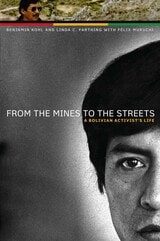
From the Mines to the Streets
A Bolivian Activist’s LifeBy Benjamin Kohl and Linda C. Farthing, with Félix Muruchi
University of Texas Press, 2011
From the Mines to the Streets draws on the life of Félix Muruchi to depict the greater forces at play in Bolivia and elsewhere in South America during the last half of the twentieth century. It traces Félix from his birth in an indigenous family in 1946, just after the abolition of bonded labor, through the next sixty years of Bolivia's turbulent history. As a teenager, Félix followed his father into the tin mines before serving a compulsory year in the military, during which he witnessed the 1964 coup d'état that plunged the country into eighteen years of military rule. He returned to work in the mines, where he quickly rose to become a union leader. The reward for his activism was imprisonment, torture, and exile. After he came home, he participated actively in the struggles against neoliberal governments, which led in 2006—the year of his sixtieth birthday—to the inauguration of Evo Morales as Bolivia's first indigenous president.
The authors weave Muruchi's compelling recollections with contextual commentary that elucidates Bolivian history. The combination of an unforgettable life story and in-depth text boxes makes this a gripping, effective account, destined to become a classic sourcebook.