Results by title
358 books match the query 'Labor & Industrial Relations' and 12 start with f
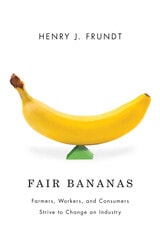
Fair Bananas!
Farmers, Workers, and Consumers Strive to Change an IndustryHenry J. Frundt
University of Arizona Press, 2009
Fair Bananas! is one of the first books to examine the issue of “fair-trade bananas.” Specifically, Henry Frundt analyzes whether a farmer-worker-consumer alliance can collaborate to promote a fair-trade label for bananas—much like those for fair-trade coffee and chocolate—that will appeal to North American shoppers. Researching the issue for more than ten years, Henry Frundt has elicited surprising and nuanced insights from banana workers, Latin American labor officials, company representatives, and fair-trade advocates.
Frundt writes with admirable clarity throughout the book, which he has designed for college students who are being introduced to the subject of international trade and for consumers who are interested in issues of development. Frankly, though, Fair Bananas! will appeal to anyone who wants to know more about bananas, including where they come from and how they get from there to here.

Fashioning China
Precarious Creativity and Women Designers in Shanzhai CultureSara Liao
Pluto Press, 2020
Broadening the digital labor debate beyond typical masculine and techno-utopic readings, Sara Liao studies the precarious practices of women trying to create sustainable and creative lives, vividly illustrating a fashion culture that exists online as a significant part of the digital economy.
Drawing on material from interviews, participant observation, archives, policy documents, films and advertisements, Liao takes a multi-disciplinary approach to the topic, charting out the politics of intellectual property rights, globalization, technocracy, patriarchy and nationalism in a non-Western context.
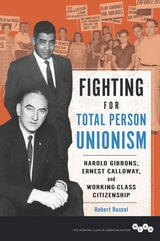
Fighting for Total Person Unionism
Harold Gibbons, Ernest Calloway, and Working-Class CitizenshipRobert Bussell
University of Illinois Press, 2015
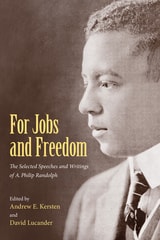
For Jobs and Freedom
Selected Speeches and Writings of A. Philip RandolphAndrew E. Kersten
University of Massachusetts Press, 2014
This volume documents Randolph's life and work through his own writings. The editors have combed through the files of libraries, manuscript collections, and newspapers, selecting more than seventy published and unpublished pieces that shed light on Randolph's most significant activities. The book is organized thematically around his major interests—dismantling workplace inequality, expanding civil rights, confronting racial segregation, and building international coalitions. The editors provide a detailed biographical essay that helps to situate the speeches and writings collected in the book. In the absence of an autobiography, this volume offers the best available presentation of Randolph's ideas and arguments in his own words.
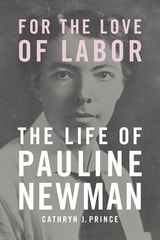
For the Love of Labor
The Life of Pauline NewmanCathryn J. Prince
University of Illinois Press, 2026
Prince follows Newman’s life from a youth split between Lithuania and New York City sweatshops to her work as an advisor to New Deal–era labor secretary Frances Perkins. Newman’s long hours at the Triangle Shirtwaist Factory informed her entrée into labor activism. In the following years, she tirelessly advocated for workers, ran for New York Secretary of State as a socialist, and became the first woman to serve as the ILGWU general organizer. Her interest in the health of workers led to service on the Joint Board of Sanitary Control and a decades-long term as education director of the ILGWU health center. Membership in Eleanor Roosevelt’s circle opened doors to government positions and advisory roles that continued into the postwar era. Prince also weaves in the details of Newman’s fifty-year relationship with a woman, her struggles with her sexual identity, and her final years.
Engaging and panoramic, For the Love of Labor is the first major biography of an important figure in labor and women’s history.
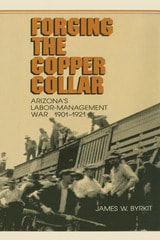
Forging the Copper Collar
Arizona's Labor-Management War of 1901–1921James W. Byrkit
University of Arizona Press, 1982
Just after dawn, two thousand armed vigilantes took to the streets of this remote Arizona mining town to round up members and sympathizers of the radical Industrial Workers of the World. Before the morning was over, nearly twelve hundred alleged Wobblies had been herded onto waiting boxcars. By day's end, they had been hauled off to New Mexico.
While the Bisbee Deportation was the most notorious of many vigilante actions of its day, it was more than the climax of a labor-management war—it was the point at which Arizona donned the copper collar. That such an event could occur, James Byrkit contends, was not attributable so much to the marshaling of public sentiment against the I.W.W. as to the outright manipulation of the state's political and social climate by Eastern business interests.
In Forging the Copper Collar, Byrkit paints a vivid picture of Arizona in the early part of this century. He demonstrates how isolated mining communities were no more than mercantilistic colonies controlled by Eastern power, and how that power wielded control over all the Arizona's affairs—holding back unionism, creating a self-serving tax structure, and summarily expelling dissidents.
Because the years have obscured this incident and its background, the writing of Copper Collar involved extensive research and verification of facts. The result is a book that captures not only the turbulence of an era, but also the political heritage of a state.
Fraying Fabric
How Trade Policy and Industrial Decline Transformed AmericaJames C. Benton
University of Illinois Press, 2022
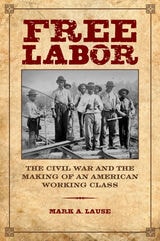
Free Labor
The Civil War and the Making of an American Working ClassMark A. Lause
University of Illinois Press, 2015
Mark A. Lause describes how the working class radicalized during the war as a response to economic crisis, the political opportunity created by the election of Abraham Lincoln, and the ideology of free labor and abolition. His account moves from battlefield and picket line to the negotiating table, as he discusses how leaders and the rank-and-file alike adapted tactics and modes of operation to specific circumstances. His close attention to women and African Americans, meanwhile, dismantles notions of the working class as synonymous with whiteness and maleness.
In addition, Lause offers a nuanced consideration of race's role in the politics of national labor organizations, in segregated industries in the border North and South, and in black resistance in the secessionist South, creatively reading self-emancipation as the largest general strike in U.S. history.
Free Labor
Workfare and the Contested Language of NeoliberalismJohn Krinsky
University of Chicago Press, 2008
At times the fight over workfare unfolded as an argument over who had the authority to define these terms, and in Free Labor, John Krinsky focuses on changes in the language and organization of the political coalitions on either side of the debate. Krinsky’s broadly interdisciplinary analysis draws from interviews, official documents, and media reports to pursue new directions in the study of the cultural and cognitive aspects of political activism. Free Labor will instigate a lively dialogue among students of culture, labor and social movements, welfare policy, and urban political economy.
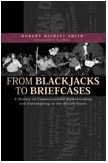
From Blackjacks to Briefcases
A History of Commercialized Strikebreaking and Unionbusting in the United StatesRobert Michael Smith
Ohio University Press, 2003
From the beginning of the Industrial Age and continuing into the twenty-first century, companies faced with militant workers and organizers have often turned to agencies that specialized in ending strikes and breaking unions. Although their secretive nature has made it difficult to fully explore the history of this industry, From Blackjacks to Briefcases does just that.
By digging through subpoenaed documents of strike-bound companies, their mercenaries, and the testimony of executive officers and rank-and-file strikebreakers, Robert Smith examines the inner workings of the antiunion industry. In a clear and lively style, he brings to life the violent armed guards employed on the picket line or in the coal camps; the ruffians who filled the armies marshaled by the “King of the Strikebreakers,” Pearl Bergoff; the labor spies who wrecked countless unions; and, after the Wagner Act, those who manipulated national labor law to serve their clients.
In From Blackjacks to Briefcases, Smith follows the history of this ongoing struggle and tells a compelling story that parallels the history of the United States over the last century and a half.
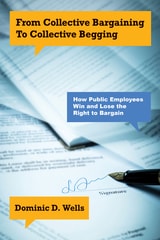
From Collective Bargaining to Collective Begging
How Public Employees Win and Lose the Right to BargainDominic D. Wells
Temple University Press, 2021
How do public employees win and lose their collective bargaining rights? And how can public sector labor unions protect those rights? These are the questions answered in From Collective Bargaining to Collective Begging. Dominic Wells takes a mixed-methods approach and uses more than five decades of state-level data to analyze the expansion and restriction of rights.
Wells identifies the factors that led states to expand collective bargaining rights to public employees, and the conditions under which public employee labor unions can defend against unfavorable state legislation. He presents case studies and coalition strategies from Ohio and Wisconsin to demonstrate how labor unions failed to protect their rights in one state and succeeded in another.
From Collective Bargaining to Collective Begging also provides a comprehensive quantitative analysis of the economic, political, and cultural factors that both led states to adopt policies that reduced the obstacles to unionization and also led other states to adopt policies that increased the difficulty to form and maintain a labor union. In his conclusion, Wells suggests the path forward for public sector labor unions and what policies need to be implemented to improve employee labor relations.
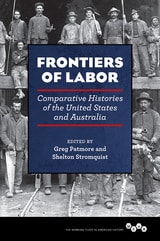
Frontiers of Labor
Comparative Histories of the United States and AustraliaEdited by Greg Patmore and Shelton Stromquist
University of Illinois Press, 2018
Greg Patmore and Shelton Stromquist curate innovative essays that use transnational and comparative analysis to explore the two nations’ differences. The contributors examine five major areas: World War I’s impact on labor and socialist movements; the history of coerced labor; patterns of ethnic and class identification; forms of working-class collective action; and the struggles related to trade union democracy and independent working-class politics. Throughout, many essays highlight how hard-won transnational ties allowed Australians and Americans to influence each other’s trade union and political cultures.
Contributors: Robin Archer, Nikola Balnave, James R. Barrett, Bradley Bowden, Verity Burgmann, Robert Cherny, Peter Clayworth, Tom Goyens, Dianne Hall, Benjamin Huf, Jennie Jeppesen, Marjorie A. Jerrard, Jeffrey A. Johnson, Diane Kirkby, Elizabeth Malcolm, Patrick O’Leary, Greg Patmore, Scott Stephenson, Peta Stevenson-Clarke, Shelton Stromquist, and Nathan Wise