Results by title
101 books match the query 'Liberty' and 13 start with f
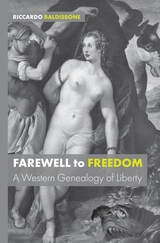
Farewell to Freedom
A Western Genealogy of LibertyRiccardo Baldissone
University of Westminster Press, 2018
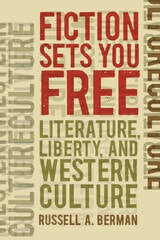
Fiction Sets You Free
Literature, Liberty, and Western CultureRussell A. Berman
University of Iowa Press, 2007
In what can only be called a genuine intellectual adventure, Russell Berman raises fundamental questions long ignored by literary scholars: Why does literature command our attention at all? Why would society want to cultivate a sphere of activity devoted to the careful study of literary ?ction? Written as a tonic to what he calls the debilitating cultural relativism of contemporary literary studies, Fiction Sets You Free advances the innovative argument that literature and capitalism, rather than representing merely commercialization, actually belie a long and positive association: literary autonomy is a central part of modern Western culture, thoroughly intertwined with political democracy and free-market capitalism.
Berman particularly challenges the issue of periodization, in which current scholarship emphasizes historical context over the integrity of a literary work and thus neglects the capacity of literature to remain interesting in other times and contexts. By moving from the origins of human language through the development of written alphabets and sacred texts, eventually probing the role of public literature in the creation of community, Berman elegantly and cogently surveys the intellectual landscape of Western societies. By giving us the license to dream and envision other worlds, literature sets us free.
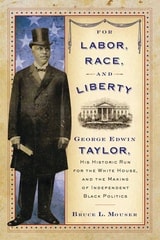
For Labor, Race, and Liberty
George Edwin Taylor, His Historic Run for the White House, and the Making of Independent Black PoliticsBruce L. Mouser
University of Wisconsin Press, 2010
More than one hundred years before Barack Obama, George Edwin Taylor made presidential history. Born in the antebellum South to a slave and a freed woman, Taylor became the first African American ticketed as a political party’s nominee for president of the United States, running against Theodore Roosevelt in 1904.
Orphaned as a child at the peak of the Civil War, Taylor spent several years homeless before boarding a Mississippi riverboat that dropped him in La Crosse, Wisconsin. Taken in by an African American farm family, Taylor attended a private school and eventually rose to prominence as the owner/editor of a labor newspaper and as a vocal leader in Wisconsin’s People’s Party. At a time when many African Americans felt allegiance to the Republican Party for its support of abolition, Taylor’s sympathy with the labor cause drew him first to the national Democratic Party and then to an African American party, the newly formed National Liberty Party, which in 1904 named him its presidential candidate. Bruce L. Mouser follows Taylor’s life and career in Arkansas, Illinois, Wisconsin, Iowa, and Florida, giving life to a figure representing a generation of African American idealists whose initial post-slavery belief in political and social equality in America gave way to the despair of the Jim Crow decades that followed.
Best Books for Special Interests, selected by the American Association for School Libraries
Best Books for Professional Use, selected by the American Association for School Libraries
Best Books for General Audiences, selected by the Public Library Association
Second Place, Biography, Society of Midland Authors
Honorable Mention, Benjamin F. Shambough Award, the State Historical Society of Iowa
Freedom
Zygmunt Bauman
University of Minnesota Press, 1989

Freedom Made Manifest
Peter Joseph Fritz
Catholic University of America Press, 2019
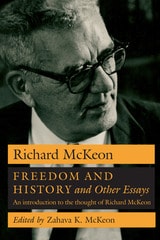
Freedom and History and Other Essays
An Introduction to the Thought of Richard McKeonRichard McKeon
University of Chicago Press, 1990
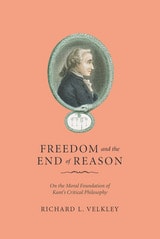
Freedom and the End of Reason
On the Moral Foundation of Kant's Critical PhilosophyRichard L. Velkley
University of Chicago Press, 1989
Freedom and the Human Person
Richard Velkley
Catholic University of America Press, 2007
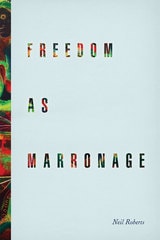
Freedom as Marronage
Neil Roberts
University of Chicago Press, 2015
Roberts examines the liminal and transitional space of slave escape in order to develop a theory of freedom as marronage, which contends that freedom is fundamentally located within this space—that it is a form of perpetual flight. He engages a stunning variety of writers, including Hannah Arendt, W. E. B. Du Bois, Angela Davis, Frederick Douglass, Samuel Taylor Coleridge, and the Rastafari, among others, to develop a compelling lens through which to interpret the quandaries of slavery, freedom, and politics that still confront us today. The result is a sophisticated, interdisciplinary work that unsettles the ways we think about freedom by always casting it in the light of its critical opposite.
Freedom's Moment
An Essay on the French Idea of Liberty from Rousseau to FoucaultPaul M. Cohen
University of Chicago Press, 1997
Arranged not according to the lives and times of its protagonists but to the narrative themes and structures they held in common, Cohen’s study discerns a single master narrative of liberty in modern France. He captures these radicals, whose tradition bids them to resist the authority of power structures and public opinion. They denounce bourgeois and utilitarian values, the power of Church and State, and the corrupting influence of everyday politics, and they dream of a revolutionary rupture, a fleeting instant of sometimes violent but always meaningful transgression.
An eloquent and insightful work on French political culture, Freedom's Moment also helps explain how France, even as it has oscillated between political stagnation and crisis, has held onto its faith that liberty, equality, and fraternity remain within its grasp.
Examines the ideas of Rousseau, Robespierre, Stendahl, Michelet, Bergson, Peguy, Sartre, and Foucault.
Freedom’s Ring
Literatures of Liberation from Civil Rights to the Second WaveJacqueline Foertsch
Rutgers University Press, 2021
From Liberty to Democracy
The Transformation of American GovernmentRandall G. Holcombe
University of Michigan Press, 2002
The government's activities during two world wars and the Great Depression greatly increased its involvement in people's economic affairs, and by the time of Lyndon Johnson's Great Society, the transformation was complete. By the end of the twentieth century, the fundamental principle underlying American government had been transformed to democracy, and public policy was designed to further the will of the majority. The result has been a government that is larger and broader in scope.
From Liberty to Democracy examines American political history using the framework of public choice theory to show how American government grew more democratic, and how this resulted in an increase in the size and scope of government. It should appeal to historians, political scientists, and economists who are interested in the evolution of American government but does not assume any specialized training and can be read by anyone interested in American political history.
Randall G. Holcombe is DeVoe Moore Professor of Economics, Florida State University
Fugitive Thought
Prison Movements, Race, And The Meaning Of JusticeMichael Hames-Garcia
University of Minnesota Press, 2004
Looks to the philosophy and experience of prisoners to reinvigorate our concepts of justice, solidarity, and freedom
In Fugitive Thought, Michael Hames-García argues that writings by prisoners are instances of practical social theory that seek to transform the world. Unlike other authors who have studied prisons or legal theory, Hames-García views prisoners as political and social thinkers whose ideas are as valuable as those of lawyers and philosophers.
As key moral terms like “justice,” “solidarity,” and “freedom” have come under suspicion in the post–Civil Rights era, political discussions on the Left have reached an impasse. Fugitive Thought reexamines and reinvigorates these concepts through a fresh approach to philosophies of justice and freedom, combining the study of legal theory and of prison literature to show how the critiques and moral visions of dissidents and participants in prison movements can contribute to the shaping and realization of workable ethical conceptions. Fugitive Thought focuses on writings by black and Latina/o lawyers and prisoners to flesh out the philosophical underpinnings of ethical claims within legal theory and prison activism.