Results by title
642 books match the query 'Linguistics' and 21 start with f

Fanti Kinship and the Analysis of Kinship Terminologies
David B. Kronenfeld
University of Illinois Press, 2008
This book examines Fanti kinship terminology from a variety of analytic and formal perspectives. Based on work with a broad number of informants, David B. Kronenfeld details and analyzes internal variation in usage within the Fanti community, shows the relationship between terminology and social groups and communicative usage, and relates these findings to major theoretical work on kinship and on the intersections of language, thought, and culture.
The terminological analysis in this study employs a great variety of formal approaches, assesses the strengths and weaknesses of each approach, and covers a wide range of types of usage. This work also performs a systematic, formal analysis of behavior patterns among kin, joining this approach with the analysis of a kinship terminological system. Rather than treating kinship terminology as a special, isolated piece of culture, this study also ties its analysis to more general semantic and cultural theoretical issues. Including computational and comparative studies of kinship terminologies, this volume represents the fullest analysis of any kinship terminological system in the ethnographic record.

Fatwas and Court Judgments
A Genre Analysis of Arabic Legal OpinionAhmed Fakhri
The Ohio State University Press, 2014
The differences between the two genres stem from elements of their socio-cultural context, such as the role relations of the participants and the characteristics of the institutions to which the genres belong. Moving beyond these contexts, Fatwas and Court Judgments reveals generic practices that have broad implications for understanding various aspects of wider Arab culture, including the tension between modern secular ideologies and traditional religious beliefs, the male-dominated access to discourse, and the prevalence of utilitarian attitudes exhibited in “fatwa shopping.”
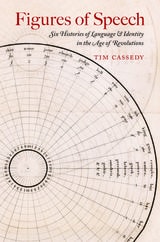
Figures of Speech
Six Histories of Language and Identity in the Age of RevolutionsTim Cassedy
University of Iowa Press, 2018
Tim Cassedy’s fascinating study examines the role that language played at the turn of the nineteenth century as a marker of one’s identity. During this time of revolution (U.S., French, and Haitian) and globalization, language served as a way to categorize people within a world that appeared more diverse than ever. Linguistic differences, especially among English-speakers, seemed to validate the emerging national, racial, local, and regional identity categories that took shape in this new world order.
Focusing on six eccentric characters of the time—from the woman known as “Princess Caraboo” to wordsmith Noah Webster—Cassedy shows how each put language at the center of their identities and lived out the possibilities of their era’s linguistic ideas. The result is a highly entertaining and equally informative look at how perceptions about who spoke what language—and how they spoke it—determined the shape of communities in the British American colonies and beyond.
This engagingly written story is sure to appeal to historians of literature, culture, and communication; to linguists and book historians; and to general readers interested in how ideas about English developed in the early United States and throughout the English-speaking world.

Finite-State Morphology
Kenneth R. Beesley and Lauri Karttunen
CSLI, 2003
Included are graded introductions, examples, and exercises suitable for individual study as well as formal courses. These take advantage of widely-tested lexc and xfst applications that are just becoming available for noncommercial use via the Internet.
Flexible Semantics for Reinterpretation Phenomena
Markus Egg
CSLI, 2005

Focus Projection in Serbo-Croatian
Svetlana Godjevac
CSLI, 2004
Svetlana Godjevac explores the development of focus projection. Further distinguishing her work from the numerous studies of the English language, she analyzes how focus projection in Serbo-Croatian also depends on the semantic type of the prominence bearing element. This volume is an innovative analysis of linguistic theory as well as a study of a lesser examined language.

Following Searle on Twitter
How Words Create Digital InstitutionsAdam Hodgkin
University of Chicago Press, 2017
Combining theoretical perspective with a down-to-earth exposition of present-day digital institutions, Following Searle on Twitter explores how all of our interactions with these emerging institutions are deeply rooted in language, and are the true foundation of social media and contemporary institutions.
Form and Meaning in Language, Volume II
Papers on Discourse and PragmaticsCharles J. Fillmore
CSLI, 2020
Divided into four parts, the papers collected in Volume II explore language in use; semantics and pragmatics; text and discourse; and language in society.

Form and Meaning in Language, Volume III
Papers on Linguistic Theory and ConstructionsCharles J. Fillmore
CSLI, 2020
Divided into four parts, the papers collected in Volume III explore the organization of linguistic knowledge; the foundations of constructing grammar; construction grammar analyses; and constructions and language in use.
Form and Meaning in Language
Volume I, Papers on Semantic RolesCharles Fillmore
CSLI, 2003

Form, Meaning, and Focus in American Sign Language
Miako N. P. Rankin
Gallaudet University Press, 2013
The meaning of any linguistic expression resides not only in the words, but also in the ways that those words are conveyed. In her new study, Miako N. P. Rankin highlights the crucial interrelatedness of form and meaning at all levels in order to consider specific types of American Sign Language (ASL) expression. In particular, Form, Meaning, and Focus in American Sign Language considers how ASL expresses non-agent focus, similar to the meaning of passive voice in English.
Rankin’s analyses of the form-meaning correspondences of ASL expressions of non-agent focus reveals an underlying pattern that can be traced across sentence and verb types. This pattern produces meanings with various levels of focus on the agent. Rankin has determined in her meticulous study that the pattern of form-meaning characteristic of non-agent focus in ASL is used prolifically in day-to-day language. The recognition of the frequency of this pattern holds implications regarding the acquisition of ASL, the development of curricula for teaching ASL, and the analysis of ASL discourse in effective interpretation.
Formal Issues in Lexical-Functional Grammar
Edited by Mary Dalrymple, Ronald M. Kaplan, John Maxwell III, and Annie Zaenen
CSLI, 1994

Formal Methods and Empirical Practices
Conversations with Patrick SuppesRoberta Ferrario and Viola Schiaffonati
CSLI, 2012

Formalizing the Dynamics of Information
Edited by Martina Faller, Stefan Kaufmann, and Marc Pauly
CSLI, 2000

Frequency of Occurrence and Ease of Articulation of Sign Language Handshapes
The Taiwanese ExampleJean Ann
Gallaudet University Press, 2006
Ann employs a straightforward methodology in her examination of the use of Taiwan Sign Language (TSL) handshapes in five succinct chapters. In the first chapter, she discusses the two approaches linguists have taken toward understanding languages, and how these theories have influenced sign language researchers’ consideration of the ease of articulation and frequency of handshapes. In her second chapter, Ann delineates the physiology of hands and explains why certain digits move with greater dexterity than others.
Ann applies this physiological information in the third chapter to construct a model for determining the ease of articulation of any logically possible handshape. She divides the handshapes into three categories, ranging from impossible to easy. In the fourth chapter, she applies her model to examine the patterns of TSL, first by describing the 56 handshapes identified in TSL, then determining how often each is used. She then compares the usage data to the handshapes’ ease of formation. The final chapter summarizes her findings and suggests implications of this work that are bound to generate further speculation and study on sign language handshapes in the future.
From Gesture to Language in Hearing and Deaf Children
Virginia Volterra
Gallaudet University Press, 1994
Renowned scholars contributing to this volume include Ursula Bellugi, Judy Snitzer Reilly, Susan Goldwin-Meadow, Andrew Lock, M. Chiara Levorato, and many others.

From Quirky Case to Representing Space
Papers in Honor of Annie ZaenenEdited by Tracy Holloway King and Valeria de Paiva
CSLI, 0

From Small Talk to Microaggression
A History of ScaleMichael Lempert
University of Chicago Press, 2024
In this ambitious, wide-ranging book, anthropologist Michael Lempert offers a conceptual history that explores how, why, and with what effects we have come to think of interactions as “scaled.” Focusing on the sciences of interaction in midcentury America, Lempert traces how they harnessed diverse tools and media technologies, from dictation machines to 16mm film, to study communication “microscopically.” In looking closely, many hoped to transform interaction: to improve efficiency, grow democracy, curb racism, and much else. Yet their descent into a microworld created troubles, with some critics charging that these scientists couldn’t see the proverbial forest for the trees. Exploring talk therapy and group dynamics studies, social psychology and management science, conversation analysis, “micropolitics,” and more, Lempert shows how scale became a defining problem across the behavioral sciences.
Ultimately, he argues, if we learn how our objects of study have been scaled in advance, we can better understand how we think and interact with them—and with each other—across disciplinary and ideological divides. Even as once-fierce debates over micro and macro have largely subsided, Lempert shows how scale lives on and continues to affect the ethics and politics of language and communication today.

From Syntax to Text
The Janus Face of Functional Sentence PerspectiveLibuse Dusková
Karolinum Press, 2015

From Topic Boundaries to Omission
New Research on InterpretationMelanie Metzger
Gallaudet University Press, 2003

Fundamental Issues in the Romance Languages
Edited by Danièle Godard
CSLI, 2010
Fundamental Issues in the Romance Languages compares six Romance languages—Catalan, French, Spanish, Italian, Portuguese, and Romanian—and summarizes the last thirty years of scholarship in the fields of morphology, syntax, semantics, and discourse for each language. The up-to-date analyses in this volume make it essential for undergraduate and graduate students as well as scholars of each language.