Results by title
1787 books match the query 'Literary Collections' and 57 start with f
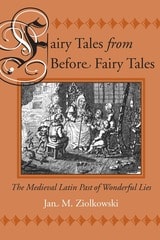
Fairy Tales from Before Fairy Tales
The Medieval Latin Past of Wonderful LiesJan M. Ziolkowski
University of Michigan Press, 2009
When did fairy tales begin? What qualifies as a fairy tale? Is a true fairy tale oral or literary? Or is a fairy tale determined not by style but by content? To answer these and other questions, Jan M. Ziolkowski not only provides a comprehensive overview of the theoretical debates about fairy tale origins but includes an extensive discussion of the relationship of the fairy tale to both the written and oral sources. Ziolkowski offers interpretations of a sampling of the tales in order to sketch the complex connections that existed in the Middle Ages between oral folktales and their written equivalents, the variety of uses to which the writers applied the stories, and the diverse relationships between the medieval texts and the expressions of the same tales in the "classic" fairy tale collections of the nineteenth century. In so doing, Ziolkowski explores stories that survive in both versions associated with, on the one hand, such standards of the nineteenth-century fairy tale as the Brothers Grimm, Hans Christian Andersen, and Carlo Collodi and, on the other, medieval Latin, demonstrating that the literary fairy tale owes a great debt to the Latin literature of the medieval period.
Faith and the Historian
CATHOLIC PERSPECTIVESEdited by Nick Salvatore
University of Illinois Press, 2006
Faith and the Historian collects essays from eight experienced historians discussing the impact of being "touched" by Catholicism on their vision of history. That first graduate seminar, these essays suggest, did not mark the inception of one's historical sensibilities; rather, that process had deeper, and earlier, roots. The authors--ranging from "cradle to the grave" Catholics to those who haven’t practiced for forty years, and everywhere in between--explicitly investigate the interplay between their personal lives and beliefs and the sources of their professional work. A variety of heartfelt, illuminating, and sometimes humorous experiences emerge from these stories of intelligent people coming to terms with their Catholic backgrounds as they mature and enter the academy. Contributors include: Philip Gleason, David Emmons, Maureen Fitzgerald, Joseph A. McCartin, Mario T. Garcia, Nick Salvatore, James R. Barrett, and Anne M. Butler.
Familiarity Is the Kingdom of the Lost
Dugmore Boetie
Ohio University Press, 2020

Families, Lovers, and their Letters
Italian Postwar Migration to CanadaSonia Cancian
University of Manitoba Press, 2010

Fanny Fern
An Independent WomanWarren, Joyce W
Rutgers University Press, 1992
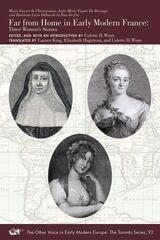
Far from Home in Early Modern France
Three Women’s StoriesMarie Guyart de l’Incarnation, Anne-Marie Fiquet du Boccage, and Henriette-Lucie Dillon de la Tour du Pin
Iter Press, 2022
This book showcases three Frenchwomen who ventured far from home at a time when such traveling was rare. In 1639, Marie de l’Incarnation embarked for New France where she founded the first Ursuline monastery in present-day Canada. In 1750, Madame du Boccage set out at the age of forty on her first “grand tour.” She visited England, the Netherlands, and Italy where she experienced firsthand the intellectual liberty offered there to educated women. As the Reign of Terror gripped France, the Marquise de la Tour du Pin fled to America with her husband and their two young children, where they ran a farm from 1794 to 1796. The writings these women left behind detailing their respective journeys abroad represent significant contributions to early modern travel literature. This book makes available to anglophone readers three texts that are rich in both historical and literary terms.

Fashion Projects
15 Years of Fashion in DialogueEdited by Francesca Granata
Intellect Books, 2025
Fashion Projects was founded in New York in 2005 as a zine. It gradually morphed into a larger journal straddling the academic and general interest worlds, with international distribution and an ardent readership. It served as a platform to highlight the importance of fashion within current critical discourses through long-form interviews with a range of curators, critics, artists, and designers. This book collects the best articles from the journal, most issues of which are now unavailable.
From exploring the rise of digital fashion media with Penny Martin (the founding editor-in-chief of SHOWstudio) to the continued importance of connoisseurship with Harold Koda (former curator-in-chief of the Met’s Costume Institute), the anthology records the increasing centrality of fashion to contemporary critical discourse. The book is an index of a particular time within the fashion studies landscape and the attendant fields of fashion writing, fashion curation, and critical fashion practice during which the field witnessed a meteoric rise.
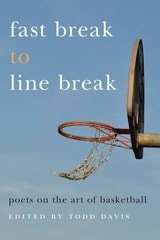
Fast Break to Line Break
Poets on the Art of BasketballTodd Davis
Michigan State University Press, 2012
If baseball is the sport of nostalgic prose, basketball’s movement, myths, and culture are truly at home in verse. In this extraordinary collection of essays, poets meditate on what basketball means to them: how it has changed their perspective on the craft of poetry; how it informs their sense of language, the body, and human connectedness; how their love of the sport made a difference in the creation of their poems and in the lives they live beyond the margins. Walt Whitman saw the origins of poetry as communal, oral myth making. The same could be said of basketball, which is the beating heart of so many neighborhoods and communities in this country and around the world. On the court and on the page, this “poetry in motion” can be a force of change and inspiration, leaving devoted fans wonderstruck.
Fatefully, Faithfully Feminist
A Critical History of Women, Patriarchy, and Mexican National DiscourseCarlos Monsiváis, edited by Norma Kahn and Ilana Luna
Vanderbilt University Press, 2024

Fear Icons
EssaysKisha Lewellyn Schlegel
The Ohio State University Press, 2018
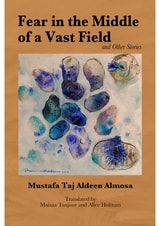
Fear in the Middle of a Vast Field and Other Stories
Mustafa Taj Aldeen Almosa; translated by Maisaa Tanjour and Alice Holttum
University of Texas Press, 2025
Short stories by a celebrated playwright bare the horrors of the Syrian civil war.
A selection of stories by Syrian author and playwright Mustafa Taj Aldeen Almosa about characters enduring the horrors of the Syrian civil war. With exquisite wit and lightness of touch, Almosa portrays the internal world of characters facing great physical violence or psychological pressures. Using both realism and fantastic elements, Almosa weaves short stories that are strange, violent, and delicate at the same time. This collection is an invaluable attempt to denounce war, to exist, to love life in all its manifestations and to learn how to cope with loss and disappointment. It is a cry against fear and death as much as it is an ode and a homage to life and love in times of both war and peace.
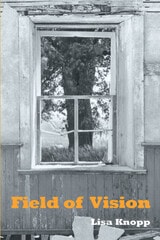
Field Of Vision
Lisa Knopp
University of Iowa Press, 1996
In this contemplative collection of essays, Lisa Knopp moves out from the prairies of Nebraska and Iowa to encompass a fully developed vision of light, memory, change, separateness, time, symbols, responsibility, and unity. Knopp charts a stimulating course among the individual, community, and culture that removes the boundaries between self and other, allowing one to become fully present in the world. Her keen vision sees beyond the ordinary to illuminate the mysteries and meanings of our personal and natural worlds.

Fields of Play
Constructing an Academic LifeRichardson, Laurel
Rutgers University Press, 1997
Deeply engaging, movingly written with grace, elegance, and clarity, the book stimulates readers to situate their own writing in personal, social, and political contexts.
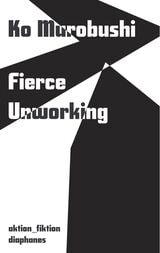
Fierce Unworking
Ko Murobushi
Diaphanes, 2025
Ko Murobushi was one of the most important performers and choreographers in the Japanese performance scene of the twenty-first century and a key figure in the mediation between the experimental Butoh tradition of Hijikata Tatsumi and anti-logocentric French avant-gardes such as Antonin Artaud and Gilles Deleuze. Radically positioned at the intersection of the two movements, Murobushi reveals himself as an extraordinary and poetic author in his “thinking of the body.”
Fierce Unworking highlights his role as an unparalleled pioneer of contemporary paradigms such as body language, the third space, and embodied knowledge. Published ten years after his death, this volume brings together writings, poems, and diary fragments—many of which are available in English for the first time—in collaboration with the Ko Murobushi Archive in Tokyo.

Fifty Fables of La Fontaine
Jean de La Fontaine. Translated by Norman R. Shapiro. Illustrated by Alan James Robinson
University of Illinois Press, 1988
Film Studies in China, Volume 2
Selected Writings from Contemporary CinemaEdited by Contemporary Cinema (China Film Archive)
Intellect Books, 2020
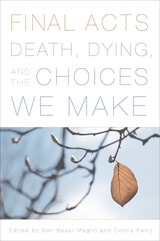
Final Acts
Death, Dying, and the Choices We MakeBauer-Maglin, Nan
Rutgers University Press, 2010
Contributors include patients, caretakers, physicians, journalists, lawyers, social workers, educators, hospital administrators, academics, psychologists, and a poet, and among them are ethicists, religious believers, and nonbelievers. Some write moving, personal accounts of "good" or 'bad" deaths; others examine the ethical, social, and political implications of slow dying. Essays consider death from natural causes, suicide, and aid-in-dying (assisted suicide).
Writing in a style free of technical jargon, the contributors discuss documents that should be prepared (health proxy, do-not-resuscitate order, living will, power of attorney); decision-making (over medical interventions, life support, hospice and palliative care, aid-in-dying, treatment location, speaking for those who can no longer express their will); and the roles played by religion, custom, family, friends, caretakers, money, the medical establishment, and the government.
For those who yearn for some measure of control over death, the essayists in Final Acts, from very different backgrounds and with different personal and professional experiences around death and dying, offer insight and hope.
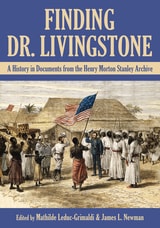
Finding Dr. Livingstone
A History in Documents from the Henry Morton Stanley ArchivesMathilde Leduc-Grimaldi
Ohio University Press, 2020
This eye-opening perspective on Stanley’s expedition reveals new details about the Victorian explorer and his African crew on the brink of the colonial Scramble for Africa.
In 1871, Welsh American journalist Henry M. Stanley traveled to Zanzibar in search of the “missing” Scottish explorer and missionary David Livingstone. A year later, Stanley emerged to announce that he had “found” and met with Livingstone on Lake Tanganyika. His alleged utterance there, “Dr. Livingstone, I presume,” was one of the most famous phrases of the nineteenth century, and Stanley’s book, How I Found Livingstone, became an international bestseller.
In this fascinating volume Mathilde Leduc-Grimaldi and James L. Newman transcribe and annotate the entirety of Stanley’s documentation, making available for the first time in print a broader narrative of Stanley’s journey that includes never-before-seen primary source documents—worker contracts, vernacular plant names, maps, ruminations on life, lines of poetry, bills of lading—all scribbled in his field notebooks.
Finding Dr. Livingstone is a crucial resource for those interested in exploration and colonization in the Victorian era, the scientific knowledge of the time, and the peoples and conditions of Tanzania prior to its colonization by Germany.
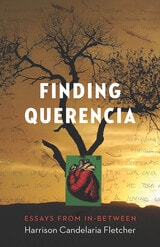
Finding Querencia
Essays from In-BetweenHarrison Candelaria Fletcher
The Ohio State University Press, 2022
With its roots in the Spanish verb querer—“to want, to love”—the term querencia has been called untranslatable but has come to mean a place of safety and belonging, that which we yearn for when we yearn for home. In this striking essay collection, Harrison Candelaria Fletcher shows that querencia is also a state of being: the peace that arises when we reconcile who we are. A New Mexican of mixed Latinx and white ethnicity, Candelaria Fletcher ventures into the fault lines of culture, landscape, and spirit to discover the source of his lifelong hauntings. Writing in the persona of coyote, New Mexican slang for “mixed,” he explores the hyphenated elements within himself, including his whiteness. Blending memory, imagination, form, and language, each essay spirals outward to investigate, accept, and embrace hybridity. Ultimately, Finding Querencia offers a new vocabulary of mixed-ness, a way to reconcile the crosscurrents of self and soul.
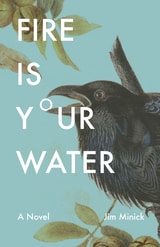
Fire Is Your Water
A NovelJim Minick
Ohio University Press, 2001
Sacred chants are Ada Franklin’s power and her medicine. By saying them, she can remove warts, stanch bleeding, and draw the fire from burns. At age twenty, her reputation as a faith healer defines her in her rural Pennsylvania community. But on the day in 1953 that her family’s barn is consumed by flame, her identity as a healer is upended. The heat, the roar of the blaze, and the bellows of the trapped cows change Ada. For the first time, she fears death and—for the first time—she doubts God. With her belief goes her power to heal. Then Ada meets an agnostic named Will Burk and his pet raven, Cicero.
Fire Is Your Water is acclaimed memoirist Jim Minick’s first novel. Built on magical realism and social observation in equal measure, it never gives way to sentimentality and provides an insider’s glimpse into the culture of Appalachia. A jealous raven, a Greek chorus of one, punctuates the story with its judgments on the characters and their actions, until a tragic accident brings Ada and Will together in a deeper connection.
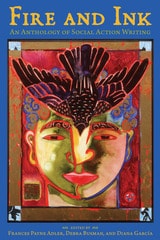
Fire and Ink
An Anthology of Social Action WritingEdited by Frances Payne Adler, Debra Busman, and Diana García
University of Arizona Press, 2009
Fire and Ink brings together, for the first time in one volume, politically engaged writing by poets, fiction writers, and essayists. Including many of our finest writers—Martín Espada, Adrienne Rich, June Jordan, Patricia Smith, Gloria Anzaldúa, Sharon Olds, Arundhati Roy, Sonia Sanchez, Carolyn Forche, Chitra Banerjee Divakaruni, Alice Walker, Linda Hogan, Gary Soto, Kim Blaeser, Minnie Bruce Pratt, Li-Young Lee, and Jimmy Santiago Baca, among others—this is an indispensable collection.
This groundbreaking anthology marks the emergence of social action writing as a distinct field within creative writing and literature. Featuring never-before-published pieces, as well as reprinted material, Fire and Ink is divided into ten sections focused on significant social issues, including identity, sexuality and gender, the environment, social justice, work, war, and peace. The pieces can often be gripping, such as “Frame,” in which Adrienne Rich confronts government and police brutality, or Chris Abani’s “Ode to Joy,” which documents great courage in the face of mortal danger.
Fire and Ink serves as a wonderful reader for a wide range of courses, from composition and rhetoric classes to courses in ethnic studies, gender studies, American studies, and even political science, by facing a past that was often accompanied by injustice and suffering. But beyond that, this collection teaches us that we all have the power to create a more equitable and just future.
First Days Of The Year
Helene Cixous
University of Minnesota Press, 1998
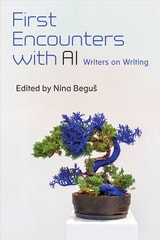
First Encounters with AI
Writers on WritingEdited by Nina Beguš
University of Michigan Press, 2026
First Encounters with AI gathers some of today’s most original literary minds to explore one of the central artistic and cultural questions of our era: What happens to writing when language is no longer used only by humans? As large language models enter the public imagination and everyday creative practice, writers across genres—novelists, poets, screenwriters, essayists, translators, scholars, technologists, language artists—are grappling with profound shifts in how stories are conceived, crafted, and shared.
Allison Parrish, Ted Chiang, Annelyse Gelman, Sasha Stiles, James Yu, Hannes Bajohr, Ken Liu, Qiufan Chen, Joseph Dumit, Gerardo Con Diaz, Iain S. Thomas, Sheila Heti, Nicholas Nardini, Jasmin B. Frelih, Katy Ilonka Gero, and Alex Saum-Pascual reflect on their early, intimate encounters with generative text at a moment when artificial intelligence feels at once thrilling, unsettling, and unavoidable. Their essays portray AI not as a monolith, but as a dynamic field of possibility and tension between creativity and computation, where longstanding human questions about intention, desire, authorship, labor, and value gain new urgency. Ranging from deeply personal meditations to critical provocations, from philosophical investigations to playful experiments, these writers reveal how writing tools shape writing itself—and what is at stake when those tools begin to imitate us. Curated and introduced by editor Nina Beguš, First Encounters with AI offers readers an essential guide to navigating this new literary landscape. Together, these essays map the terrain of our first contact zone with AI, offering clarity, insight, and imaginative depth at a moment of radical change.
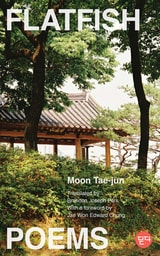
Flatfish
Poems, A Bilingual EditionMoon Tae-jun
Rutgers University Press, 2026
While Korea is certainly the setting of these poems, the works remain largely free of cultural-specific imagery and are, instead, naturalistic or universal. This first bilingual edition is a critical resource for students, poets, translators, and general readers alike.
English-Korean Bilingual Edition
영-한 이중언어판
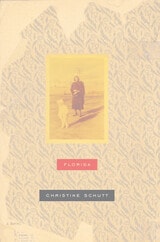
Florida
Christine Schutt
Northwestern University Press, 2003
Florida is the portrait of the artist as a young woman, an orphan's story full of loss and wonder, a familiar tale told in original language. Alice Fivey, fatherless at age seven, is left in the care of her relatives at ten when her love-wearied mother loses custody of her and submits to the sanitarium and years of psychiatric care. A namesake daughter locked in the orphan's move-around life, she must hold still while the seamstress pins her into someone not her mother. But they share the same name, so she is her mother, isn't she?
Alice finds consolation in books and she herself is a storyteller who must build a home for herself word by right word. Florida is her story, recalled in brief scenes of spare beauty and strangeness as Alice moves from house to house, ever further from the desolation of her mother's actions, ever closer to the meaning of her experience. In this most elegiac and luminous novel, Schutt gives voice to the feast of memory, the mystery of the mad and missing, and above all, the life-giving power of language.
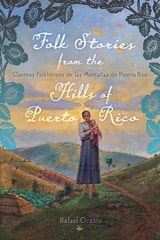
Folk Stories from the Hills of Puerto Rico / Cuentos folklóricos de las montañas de Puerto Rico
Rafael Ocasio
Rutgers University Press, 2021
Some stories provide a distinctive Caribbean twist on classic tales including “Snow White” and “Cinderella.” Others fictionalize the lives of local historical figures, such as infamous pirate Roberto Cofresí, rendered here as a Robin Hood figure who subverts the colonial social order. The collection also introduces such beloved local characters as Cucarachita Martina, the kind cockroach who falls in love with Ratoncito Pérez, her devoted mouse husband who brings her delicious food.
Including a fresh English translation of each folktale as well as the original Spanish version, the collection also contains an introduction from literary historian Rafael Ocasio that highlights the historical importance of these tales and the Jíbaro cultural values they impart. These vibrant, funny, and poignant stories will give readers unique insights into Puerto Rico’s rich cultural heritage.
Esta nueva y emocionante antología reúne cuentos populares puertorriqueños que fueron transmitidos oralmente durante generaciones antes de ser finalmente transcritos comenzando en 1914 por el equipo del famoso antropólogo Franz Boas. Estos encantadores cuentos ofrecen a los lectores un vistazo a la imaginación y las aspiraciones de los jíbaros, los campesinos de Puerto Rico.
Algunas historias brindan un distintivo toque caribeño a cuentos clásicos como "Blanca Nieves" y "Cenicienta". Otros ficcionalizan la vida de personajes históricos locales, como el famoso pirata Roberto Cofresí, representado como una figura al estilo de Robin Hood, quien subvierte el orden social colonial. La colección también presenta personajes locales tan queridos como Cucarachita Martina, la amable cucaracha que se enamora de Ratoncito Pérez, su devoto esposo ratón que le trae deliciosa comida.
Incluyendo una nueva traducción al inglés de estos cuentos populares, así como las versiones originales en español, la colección también contiene una introducción del historiador literario Rafael Ocasio, quien destaca la importancia histórica de estos cuentos y los valores culturales del jíbaro que éstos imparten en los relatos. Estas historias vibrantes, divertidas y conmovedoras brindarán a los lectores una visión única de la rica herencia cultural de Puerto Rico.
Introducción en español (https://d3tto5i5w9ogdd.cloudfront.net/wp-content/uploads/2021/02/03154419/Ocasio_Cuentos_Intro_Espan%CC%83ol.pdf)
Rafael Ocasio will discussing his book, 'Folk Stories from the Hills of Puerto Rico / Cuentos folklóricos de las montañas de Puerto Rico' at Biblioteca Juvenil de Mayagüez in Puerto Rico (https://youtu.be/o6Tub094EoI)
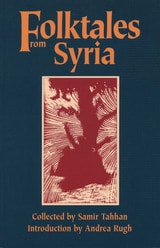
Folktales from Syria
Collected by Samir Tahhan
University of Texas Press, 2004
Syrian poet Samir Tahhan collected folktales from old men sitting outside their houses in Aleppo, drinking tea. Afraid these stories would disappear with the passing of this generation, Tahhan also went to halls and events to hear professional storytellers and record their performances. Anthropologist Andrea Rugh helped translate the resulting two volumes of stories from the original Arabic and wrote the informative introduction to this one-volume collection.
Some of the tales appeared in rhyming verse in Arabic and some were based on events that are said to have actually taken place in Aleppo. Rugh explains the concepts of the most popular types of Syrian story structures: the gissa, the hikaya, and the hudutha. With two of the poems, the Arabic and the English are shown side by side in order to demonstrate the internal poetic structures of the original rhymes.
With their emphasis on morality and social values, the tales will be familiar to Western audiences. Another value for the reader is finding the accepted social values and behaviors that Arab adults try to inculcate in their younger generation, often through complex characterizations. Teasing out these meanings gives the reader an appreciation for the act of translation and hints of the power of the Arabic language in prose and poetry.
Professional illustrator Douglas Rugh has provided the book's black-and-white prints based on the stories and his experiences as a child growing up in the Middle East.
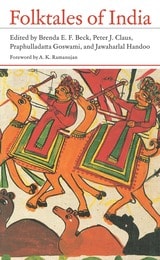
Folktales of India
Edited by Brenda E. F. Beck, Peter J. Claus, Praphulladatta Goswami, and Jawahar
University of Chicago Press, 1986

Folktales of India
Edited by Brenda E. F. Beck, Peter J. Claus, Praphulladatta Goswami, and Jawahar
University of Chicago Press, 1987
"This collection does an excellent job of representing India. . . . It is the type of book that can be enjoyed by all readers who love a well-told tale as well as by scholars of traditional narrative and scholars of India in general."—Hugh M. Flick, Jr., Asian Folklore Studies
"The stories collected here are representative, rich in structural subtlety, and endowed with fresh earthy humor."—Kunal Chakraborti, Contributions to Indian Sociology
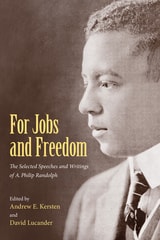
For Jobs and Freedom
Selected Speeches and Writings of A. Philip RandolphAndrew E. Kersten
University of Massachusetts Press, 2014
This volume documents Randolph's life and work through his own writings. The editors have combed through the files of libraries, manuscript collections, and newspapers, selecting more than seventy published and unpublished pieces that shed light on Randolph's most significant activities. The book is organized thematically around his major interests—dismantling workplace inequality, expanding civil rights, confronting racial segregation, and building international coalitions. The editors provide a detailed biographical essay that helps to situate the speeches and writings collected in the book. In the absence of an autobiography, this volume offers the best available presentation of Randolph's ideas and arguments in his own words.
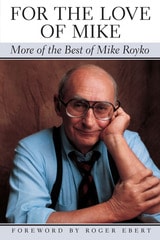
For the Love of Mike
More of the Best of Mike RoykoMike Royko
University of Chicago Press, 2001
Royko, a nationally syndicated Pulitzer Prize winner, wrote for three major Chicago newspapers in the course of his 34 years as a daily columnist. Chosen from more than 7,000 columns, For the Love of Mike brings back more than a hundred vintage Royko pieces-most of which have not appeared since their initial publication-for readers across the country to enjoy. This second collection includes Royko's riffs on the consequences of accepting a White House dinner invitation (not surprisingly, he turned it down); his explanation of the notorious Ex-Cub Factor in World Series play; and his befuddlement at a private screening of Beyond the Valley of the Dolls, to which he was invited by his pal Ebert, the screenplay's author. The new collection also illuminates Royko's favorite themes, topics he returned to again and again: his skewering of cultural trends, his love of Chicago, and his rage against injustice. By turns acerbic, hilarious, and deeply moving, Royko remains a writer of wit and passion who represents the best of urban journalism.
"To read these columns again is to have Mike back again, nudging, chuckling, wincing, deflating pomposity, sticking up for the little guy, defending good ideas against small-minded people," writes Roger Ebert in his foreword to the book. For the Love of Mike does indeed bring Mike back again, and until a Chicago newspaper takes up Ebert's suggestion that it begin reprinting each of Royko's columns, one a day, this collection will more than satisfy Royko's loyal readers.

Forever New
The Speeches of James Wright, President of Dartmouth College, 1998–2009James Wright
Dartmouth College Press, 2012

Forrest Gander
Poetry, Translation, EcologyEdited by Robert Baker
University of Michigan Press, 2026
Pulitzer Prize winner Forrest Gander is widely celebrated as a love poet, a meditative poet, and a poet of ecological awareness. He has always been a writer drawn to cross-cultural encounter, as active in translation as any poet of his generation. This collection of essays on his work brings together an international range of poets, novelists, critics, and translators, including Charles Altieri, Stephanie Burt, Julia Fiedorczuk, Jorie Graham, and Jeanette Winterson.
The collection features interviews as well as essays of different kinds—reviews, appreciations, and interpretations—and they address Gander’s poetry, fiction, and translations. They illuminate major concerns at the heart of all his work: eros, companionship, loss, renewal, an openness to the life all around us, and a rapt attention to the natural world.
Forty Years of Texas Storytelling
Historical and Contemporary Tales from Diverse Writers and PoetsTed Parkhurst
Parkhurst Brothers, Inc., 2024
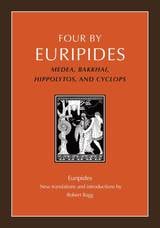
Four by Euripides
Medea, Bakkhai, Hippolytos, and CyclopsRobert Bagg
University of Massachusetts Press, 2019
Fourth Genre
Twenty-Five Essays from Our First Twenty-Five YearsJoey Franklin
Michigan State University Press, 2025
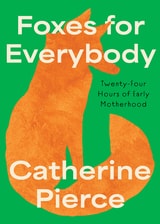
Foxes for Everybody
Twenty-Four Hours of Early MotherhoodCatherine Pierce
Northwestern University Press, 2026
Like a newborn’s patterns of sleeping and waking, the revelations of motherhood don’t follow a reasonable schedule, and there’s no clocking out. Organized around the hours of the day, Foxes for Everybody gives voice to the marvels, fears, absurdities, and astonishments of parenthood. These essays offer twenty-four glimpses into how we experience time, our families, our planet, and all of those small moments that aren’t small at all. In memories and reflections that weave through tornadoes and jellyfish, cemeteries and carousels, mortality, mental health, and the exquisite gift of a perfect sentence, acclaimed writer Catherine Pierce reminds us that fear and joy can and do live side by side, and urges us to stay awake—even when, especially when, we’re at the brink of exhaustion—to the possibility of wonder.
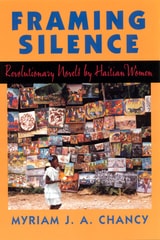
Framing Silence
Revolutionary Novels by Haitian WomenChancy, Myriam J
Rutgers University Press, 1992
Raped and colonized, coerced and silenced--this has been the position of Haitian women within their own society, as well as how they have been seen by foreign occupiers. Romanticized symbols of nationhood, they have served, however unwillingly, as a politicized site of contestation between opposing forces.
In this first book-length study in English devoted exclusively to Haitian women's literature, Myriam Chancy finds that Haitian women have their own history, traditions, and stories to tell, tales that they are unwilling to suppress or subordinate to narratives of national autonomy. Issues of race, class, color, caste, nationality, and sexuality are all central to their fiction--as is an urgent sense of the historical place of women between the two U.S. occupations of the country. Their novels interrogate women's social and political stance in Haiti from an explicitly female point of view, forcefully responding to overt sexual and political violence within the nation's ambivalent political climate. Through daring and sensitive readings, simultaneously historical, fictional and autobiographical, Chancy explores this literature, seeking to uncover answers to the current crisis facing these women today, both within their country and in exile.The writers surveyed include Anne-christine d'Adesky, Ghislaine Rey Charlier, Marie Chauvet, Jan J. Dominique, Nadine Magloire, and Edwidge Danticat, whose work has recently achieved such high acclaim.

Frank Waters
Man and MysticVine Deloria Jr.
Ohio University Press, 1993
“In addition to his accomplishments as a talented novelist, a thorough historian, and an excellent essayist, Frank Waters is that rare breed of man who has merged heart and mind early in his life and moved forward to confront ultimate questions. This dilemma of faith and heritage, religion and identity, and commitment and comfort has never been resolved intellectually. Even with profound faith and rigorous discipline of self, mystics have found it difficult to resolve through action and prayer…I look at the life and writing of Frank Waters…and find…a remarkable journey of inquiry spanning nearly a century and illuminating questions which I did not think possible to formulate.”
—Vine Deloria, Jr., editor
Contributors to this volume are Alvin M. Josephy, Jr., Bobby Bridger, Steven Wall, Will Wright, William Eastlake, Larry Evers, David Jongeward, Max Evans, Win Blevins, Barbara Waters, Rudolfo Anaya, Thomas J. Lyon, Joe Gordon, Robert Kostka, Charles Adams, Father Peter J. Powell, Quay Grigg, Alexander Blackburn, and T. N. Luther.
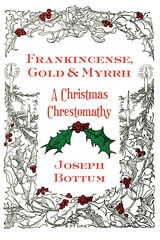
Frankincense, Gold, and Myrrh
A Christmas ChrestomathyJoseph Bottum
St. Augustine's Press, 2024
There’s the comic: “Tinsel. No one needs tinsel. Even the word is a tinselly kind of word.” There’s the sentimental: “Her hair was the same thin shade of gray as the weather-beaten pickets of the fence around her frozen garden.” There’s the reminiscent: “Christmas was books, and books Christmas, in those days now mostly washed down to the cold sea.” Along the way, there’s the theological, the learned, the mystical, and the musical.
“Tastefulness is just small-mindedness pretending to be art,” he writes in praise of mad and cluttered holidays. “Christmas will not be defined by our failures to apply its lessons and carols,” he explains about Yuletide poetry. To see these essays and short stories gathered in one place—in a beautiful illustrated edition from St. Augustine’s Press—is to see the whole of the vision that Joseph Bottum has been painting for decades: a picture of Christmas as a thin place in the wall between the natural and the numinous, where a burning grace slips into a cold winter world.
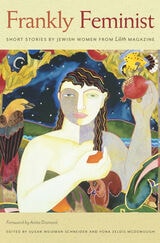
Frankly Feminist
Short Stories by Jewish Women from Lilith MagazineEdited by Susan Weidman Schneider and Yona Zeldis McDonough
Brandeis University Press, 2022
Short story collections focusing on Jewish writers have—no surprise—typically given women authors short shrift. This new volume represents the best Jewish feminist fiction published in Lilith magazine, and does what no other collection has done before in its geographic scope, its inclusion of twenty-first-century stories, and its Jewish feminist focus.
This collection showcases a wide range of stories offering variegated cultures and contexts and points of view: Persian Jews; a Biblical matriarch; an Ethiopian mother in modern Israel; suburban American teens; Eastern European academics; a sexual questioner; a Jew by choice; a new immigrant escaping her Lower East Side sweatshop; a Black Jewish marcher for justice; in Vichy France, a toddler’s mother hiding out; and more.
Organized by theme, the stories in this book emphasize a breadth of content, and our hope is that in reading you’ll appreciate the liveliness of the burgeoning self-awareness brought to life in each tale, and the occasional funny, call-your-friend-and-tell-her-about-it moment. Skip around, encounter an author whose other work you may know, be enticed by a title, or an opening line. We hope you’ll find both pleasure and enlightenment—and sometimes revelation—within these pages.
Free Verse
An Essay on ProsodyCharles O. Hartman
Northwestern University Press, 1996

Freedom In Our Lifetime
The Collected Writings Of Anton Muziwakhe LembedeAnton Muziwakhe Lembede
Ohio University Press, 1996
When a group of young political activists met in 1944 to launch the African National Congress Youth League, it included the nucleus of a remarkable generation of leaders who forged the struggle for freedom and equality in South Africa for the next half century: Nelson Mandela, Oliver Tambo, Walter Sisulu, Jordan Ngubane, Ellen Kuzwayo, Albertina Smith, A. P. Mda, Dan Tloome, and David Bopape. It was Anton Lembede, however whom they chose as their first president.
Lembede, who had just begun practicing law in Johannesburg, was known for his sharp intellect, fiery personality, and unwavering commitment to the struggle at hand. The son of farm laborers from the district of Georgedale, Natal, Lembede had worked tirelessly to put himself through school and college, and then to qualify for the bachelor of laws degree. When he began law practice in 1943, he had also earned the respect of his fellows, not only for his intellectual achievements (which were many), but also for his dedication to the cause of freedom in South Africa. “I am,” he explained, “Africa’s own child.”
His untimely death in 1947 at the age of 33 sent a wave of grief through the Congress Youth, who had looked to him for moral as well as political leadership. With the publication of Freedom In Our Lifetime, the editors acknowledge Lembede’s early contribution to the freedom movement, in particular his passionate and eloquent articulation of the African-centered philosophy he called “Africanism.”
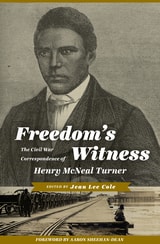
Freedom's Witness
The Civil War Correspondence of Henry McNeal TurnerJean Lee Cole
University of Delaware Press, 0
In a series of columns published in the African American newspaper the Christian Recorder, the young, charismatic preacher Henry McNeal Turner described his experience of the Civil War, first from the perspective of a civilian observer in Washington, DC, and later, as one of the Union army’s first Black chaplains.
In the halls of Congress, Turner witnessed the debates surrounding emancipation and Black enlistment. As army chaplain, Turner dodged “grape” and cannon, comforted the sick and wounded, and settled disputes between white southerners and their former slaves. He was dismayed by the destruction left by Sherman’s army in the Carolinas, but buoyed by the bravery displayed by Bck soldiers in battle. After the war ended, he helped establish churches and schools for the freedmen, who previously had been prohibited from attending either.
Throughout his columns, Turner evinces his firm belief in the absolute equality of Blacks with whites and insists on civil rights for all Black citizens. In vivid, detailed prose, laced with a combination of trenchant commentary and self-deprecating humor, Turner established himself as more than an observer: he became a distinctive and authoritative voice for the Black community and a leader in the African Methodist Episcopal church. After Reconstruction failed, Turner became disillusioned with the American dream and became a vocal advocate of black emigration to Africa, prefiguring black nationalists such as Marcus Garvey and Malcolm X. Here, however, we see Turner’s youthful exuberance and optimism and his open-eyed wonder at the momentous changes taking place in American society.
Well-known in his day, Turner has been relegated to the fringes of African American history, in large part because neither his views nor the forms in which he expressed them were recognized by either the black or white elite. With an introduction by Jean Lee Cole and a foreword by Aaron Sheehan-Dean, Freedom’s Witness: The Civil War Correspondence of Henry McNeal Turner restores this important figure to the historical and literary record.
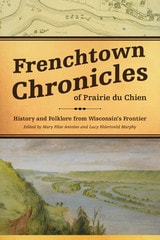
Frenchtown Chronicles of Prairie du Chien
History and Folklore from Wisconsin's FrontierMary Elise Antoine
Wisconsin Historical Society Press, 2016
Albert Coryer, the grandson of a fur trade voyageur-turned-farmer, had a gift for storytelling. Born in 1877, he grew up in Prairie du Chien hearing tales of days gone by from his parents, grandparents, and neighbors who lived in the Frenchtown area. Throughout his life, Albert soaked up the local oral traditions, including narratives about early residents, local landmarks, interesting and funny events, ethnic customs, myths, and folklore.
Late in life, this lively man who had worked as a farm laborer and janitor drew a detailed illustrated map of the Prairie du Chien area and began to write his stories out longhand, in addition to sharing them in an interview with a local historian and folklore scholar. The map, stories, and interview transcript provide a colorful account of Prairie du Chien in the late nineteenth century, when it was undergoing significant demographic, social, and economic change. With sharp historical context provided by editors Lucy Eldersveld Murphy and Mary Elise Antoine, Coryer’s tales offer an unparalleled window into the ethnic community comprised of the old fur trade families, Native Americans, French Canadian farmers, and their descendants.
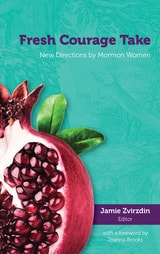
Fresh Courage Take
New Directions by Mormon WomenJamie Zvirzdin
Signature Books, 2015
The twelve essays in this anthology provide a refreshing array of female perspectives, personalities, and circumstances. Along with an introduction by Jamie Zvirzdin, the essays invite readers to recognize and own their personal struggles, gifts, faults, and desires and to accept where they stand on the spectrum of humanity. Fresh Courage Take demonstrates that the road to heaven is not a conveyor belt powered by a checklist of religious obligations, cooked casseroles, and a collection of children. If anything, it is a complex network of interchanges and decisions … including long, often solitary paths.
The authors span a wide range of views and situations in life: politically conservative to progressive, single to married with many children, highly educated to working-class, stay-at-home moms to the professionally successful, of European or African heritage, religiously orthodox to heterodox. In short, they define, from their diversity, what being a Mormon woman means and what type of path they feel they must take to be true to themselves and their beliefs.
Authors include Carli Anderson, Rachael Decker Bailey, Erika Ball, Rachel Brown, Karen Critchfield, Ashley Mae Hoiland, Sylvia Lankford, Marcee Ludlow, Brooke Stoneman, Camille Strate Fairbanks, Colleen Whitley, and Jamie Zvirzdin.
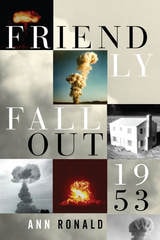
Friendly Fallout 1953
Ann Ronald
University of Nevada Press, 2011
Friendly Fallout 1953 is a hybrid work of literature that combines the actual history of aboveground atomic testing in the Nevada desert in 1953 with fictional vignettes that explore the impact of the tests on the people who participated in them and on civilian "downwinders." The book brings to life a turbulent era when Cold War fears, patriotic enthusiasm, scientific progress, and unacknowledged political agendas often collided with the welfare of ordinary citizens and the environment.
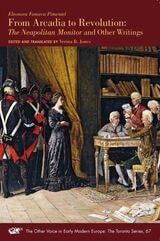
From Arcadia to Revolution
The Neapolitan Monitor and Other WritingsEleonora Fonseca Pimentel
Iter Press, 2019
The Other Voice in Early Modern Europe: The Toronto Series, Volume 67
From Bondage to Belonging
The Worcester Slave NarrativesB. Eugene McCarthy
University of Massachusetts Press, 2007
First published between 1842 and 1895, the autobiographical narratives gathered in this volume document the experiences of eight former slaves who eventually took up residence in Worcester, Massachusetts. Each narrative tells a gripping individual story, its author clearly visible in the dress of his or her own words. Together they illuminate not only the inhumanity of slavery but also the dreams and dilemmas of emancipation, tracing the personal journeys of seven men and one woman from bondage to freedom.
In their well-researched introduction, B. Eugene McCarthy and Thomas L. Doughton situate the Worcester slave narratives within a broader historical framework and analyze their meaning and significance. Drawing on a wide range of sources, they reconstruct the black community of Worcester and compare it with other New England black communities of the time, describing how the town evolved from a society with slaves in the colonial era to a hub for free blacks by the eve of the Civil War. They explain why these writings must be understood as part of a long-established tradition of African American self-representation, and show how the four narratives published before 1865 focus on the experience of slavery, while the four written after the war offer the fresh perspective of living in freedom. Headnotes describe the distinctive literary features of each narrative and provide additional information about the lives of the authors. The editors discuss why these ex-slaves came to Worcester, the circumstances in which each wrote his or her narrative, and the audiences they had in mind. No other collection of slave narratives offers such a diverse range of testimony within a specific historical and literary context, or a more compelling account of the transition from bondage to belonging.

From Curlers to Chainsaws
Women and Their MachinesJoyce Dyer
Michigan State University Press, 2016
From Curlers to Chainsaws is a groundbreaking collection of lyrical and illuminating essays about the serious, silly, seductive, and sometimes sorrowful relationships between women and their machines. This collection explores in depth objects we sometimes take for granted, focusing not only on their functions but also on their powers to inform identity.
For each writer, the device moves beyond the functional to become a symbolic extension of the writer’s own mind—altering and deepening each woman’s concept of herself.