Results by title
716 books match the query 'Literary Figures' and 21 start with f

F. Scott Fitzgerald - American Writers 15
University of Minnesota Pamphlets on American WritersCharles E. Shain
University of Minnesota Press, 1961
F. Scott Fitzgerald - American Writers 15 was first published in 1961. Minnesota Archive Editions uses digital technology to make long-unavailable books once again accessible, and are published unaltered from the original University of Minnesota Press editions.
F. Scott Fitzgerald
A Composite BiographyNiklas Salmose
University of Minnesota Press, 2023
A comprehensive study of the life of F. Scott Fitzgerald, related in two-year chapters by twenty-three leading writers on the Jazz Age author
“There never was a good biography of a novelist,” F. Scott Fitzgerald wrote in The Crack-Up. “There couldn’t be. He is too many people, if he’s any good.” Fitzgerald, a good novelist by any measure, has tested this challenge to the biographer’s art. A new star illuminating the literary scene; a chronicler of the Jazz Age in all its brilliance and tarnish; a romantic symbol of the American century; an acute observer of society’s best and worst, and of his own star-crossed career; a midlife burnout at forty-four, leaving an unfinished masterpiece in his wake—he was a man of many aspects, a writer whose complexity and multitudes this composite biography finally aptly portrays.
Bringing together twenty-three leading writers and scholars on Fitzgerald, each focusing on two years of his life, this volume takes its cue from Henry James’s remark, cited by preeminent Fitzgerald biographer Scott Donaldson: “The whole of anything is never told; you can only take what groups together.” F. Scott Fitzgerald: A Composite Biography presents a new way of “grouping together” biographical material and perspectives, considering from various angles the author's best-known works as well as understudied writings, including neglected stories and forays into autobiography such as “What I Think and Feel at 25” and “How to Live on $36,000 a Year.” The glamor and fame that made F. Scott and Zelda mythic figures of their time appear here alongside the personal experiences that he occasionally included in his writing: the beginnings as well as the poignant end; the literary relationships that informed and framed his work, set against solitary effort, fame, and failures. This remarkable study of F. Scott Fitzgerald reflects the multifaceted whole of a “life in many parts” in new and revelatory ways.
Contributors: Jade Broughton Adams; Ronald Berman; William Blazek, Liverpool Hope U; Elisabeth Bouzonviller, Jean Monnet U; Jackson Bryer, U of Maryland; Kirk Curnutt, Troy U; Catherine Delesalle-Nancey, U Jean Moulin Lyon 3; Scott Donaldson; Kayla Forrest; Marie-Agnès Gay, U Jean Moulin Lyon 3; Joel Kabot, U of Maryland, Baltimore; Sara Kosiba; Arne Lunde, U of California, Los Angeles; Bryant Mangum, Virginia Commonwealth U; Martina Mastandrea; Philip McGowan, Queen’s U Belfast; David Page; Walter Raubicheck, Pace U; Ross Tangedal, U of Wisconsin–Stevens Point; Helen Turner, Linnaeus U; James L. W. West III, Pennsylvania State U.
Fanning the Spark
A MemoirMary Ward Brown
University of Alabama Press, 2009
Where ordinary lives kindle extraordinary reckonings.
In 1986, after years of publishing stories in literary magazines and periodicals, Mary Ward Brown published her first book, the story collection Tongues of Flame. It soon received regional and national attention, and the following year won the PEN/Hemingway Award for fiction. Mary Ward Brown was sixty-nine years old. Though she would go on to write and publish many more stories and a well-received second collection, It Wasn’t All Dancing, Mary Ward Brown’s late acclaim hardly hints at the rich and varied life that prepared the way for her success.
Fanning the Spark is the story of her life as a writer—her upbringing in rural Alabama; the joys of college, marriage, and motherhood; the sorrows of becoming a widow; and a lifelong devotion to writing, writers, and literature, and the company of those who shared those loves, nurturing and feeding her interior life in the face of many challenges, losses, and obstacles, both emotional and material.
Here, in prose every bit as eloquent, evocative, and incisive as her stories, are her remembrances of loved ones; her letters fraught with worry to her son in Vietnam; periods of emotional isolation and unbidden silence; her invaluable friendships with renowned writers, editors, and agents; her love of community and place; and immeasurable delight with every award, speech, and public reading, the many recognitions she has garnered late in life. Above all, it is the story of the competing demands of art and of life, the constant struggle between her need to write and the practicalities of family, duty, and day to day living.
Father and Son
Kingsley Amis, Martin Amis, and the British Novel since 1950Gavin Keulks
University of Wisconsin Press, 2004
Fighting Theory
Avital Ronell, in conversation with Anne Dufourmantelle
University of Illinois Press, 2010
International interest in the work of Avital Ronell has expressed itself in reviews, articles, essays, and dissertations. For Fighting Theory, psychoanalyst and philosopher Anne Dufourmantelle conducted twelve interviews with Ronell, each focused on a key topic in one of Ronell's books or on a set of issues that run throughout her work.
What do philosophy and literary studies have to learn from each other? How does Ronell place her work within gender studies? What does psychoanalysis have to contribute to contemporary thought? What propels one in our day to Nietzsche, Derrida, Nancy, Bataille, and other philosophical writers? How important are courage and revolt? Ronell's discussions of such issues are candid, thoughtful, and often personal, bringing together elements from several texts, illuminating hints about them, and providing her up-to-date reflections on what she had written earlier.
Intense and often ironic, Fighting Theory is a poignant self-reflection of the worlds and walls against which Avital Ronell crashed.
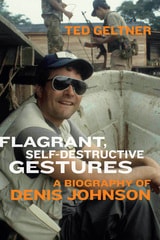
Flagrant, Self-Destructive Gestures
A Biography of Denis JohnsonTed Geltner
University of Iowa Press, 2025
The year was 1988, and Denis Johnson was at a low point. He caught malaria on a reporting trip into the jungles of the Philippines and was nearly pronounced dead. The disease left him unable to write. His second wife left him. He didn’t have enough money to pay his taxes. His publisher was waiting for a book that he hadn’t started. But in the life of Denis Johnson, when things were at their bleakest, something good was usually waiting around the next corner. This time, what emerged from the chaos was his masterpiece Jesus’ Son, a book that would tap into the zeitgeist of the 1990s and become a bible for Generation X and an American classic.
Flagrant, Self-Destructive Gestures tells the complete story of Johnson’s fascinating life, his thrill-seeking trips into war zones as a magazine correspondent, his battles with addiction, his live-it-before-you-write-it style of fiction. It follows the arc of his tremendous body of work as a novelist, journalist, poet, and playwright, and in the process recovers the true stories from the hazy myths that one of our most beloved, yet enigmatic, writers left behind.
Flannery O’Connor - American Writers 54
University of Minnesota Pamphlets on American WritersStanley Edgar Hyman
University of Minnesota Press, 1966
Flannery O'Connor - American Writers 54 was first published in 1966. Minnesota Archive Editions uses digital technology to make long-unavailable books once again accessible, and are published unaltered from the original University of Minnesota Press editions.
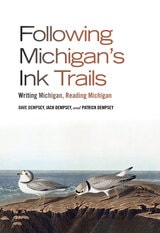
Following Michigan's Ink Trails
Writing Michigan, Reading MichiganDave Dempsey
Michigan State University Press, 2027
Michigan is renowned for its natural beauty and automotive history, yet its rich literary heritage often goes unrecognized. This engaging and extensively researched book aims to change that by providing vivid portraits of both well-known and overlooked authors. It also offers an enjoyable tour through the state’s libraries and bookstores. The book takes readers on a fascinating journey across the back roads and highways of Michigan writing, showcasing the remarkable diversity of authors who have called the state home as well as those who have found it inspirational. It is perfect for anyone interested in reading, Michigan’s literary heritage, and its culture.
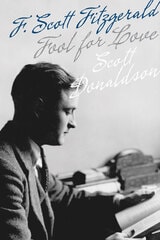
Fool for Love
F. Scott FitzgeraldScott Donaldson
University of Minnesota Press, 2012
Fool for Love is Scott Donaldson’s masterful biography of F. Scott Fitzgerald—written from a fresh and highly intimate perspective. Fool for Love follows Fitzgerald from his birthplace in St. Paul, Minnesota, to Princeton and upward into the highest reaches of literary and public success—and ultimately to Fitzgerald’s untimely death in Hollywood at the age of forty-four, broke and nearly forgotten. This engrossing, definitive study explores two classic Fitzgerald themes throughout—love and class—and the result is a striking portrayal of one of the twentieth century’s greatest writers, whose legacy and influence only continue to grow.
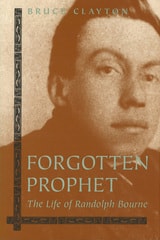
Forgotten Prophet
The Life of Randolph BourneBruce Clayton
University of Missouri Press, 1998
Rarely has an individual's life been so inseparable from his writing as was Randolph Bourne's. His work reveals not only his political viewpoints but also his humanistic personality and the tumultuous era during which he lived. Forgotten Prophet carefully examines the intellect and personality of the "born essayist" who saw clearly both his century's potential for harmony and the danger that it faced from the lingering tides of nineteenth-century European nationalism.
Disfigured and hunchbacked, Bourne reacted to his disability not with bitterness or self-pity, but rather with an exuberant love for beauty and a compassion for humanity that created in him a longing for a truly cosmopolitan society—a "trans-national America" that would draw its strength from ethnic diversity and political pluralism. Nearly alone among American intellectuals, Bourne actively denounced involvement in World War I. He foresaw that, beyond the horrible cost in young lives, the war would bring in its wake the spiritual impoverishment of the nation and the disillusionment of its youth; it would strangle reform and social tolerance, exacerbate racism and nativism, and plant the seeds for further international instability. Although derided and largely ignored at the time they were written, Bourne's fearful predictions would all too quickly be confirmed in the dissolute frenzy of the jazz age, the turmoil of the 1930s, and the social chaos that brought about the rise of fascism in Europe and, soon, an even more destructive war.
Bourne did not live to witness this terrifying unfolding of events. His career as a social critic was brief but prolific. When he died in 1918 at the age of thirty-two, a victim of the flu epidemic, he had completed three books and more than a hundred essays. His first book, Youth and Life, is considered by some to be the original manifesto of the counterculture. From his earliest years as a writer, Bourne was identified as a voice for youth, idealism, and progress in human relations. Forgotten Prophet characterizes Bourne not just as a foreseer of this century's bloodshed but, equally important, as an apostle of hope—a champion of what was best, most truthful in the arts, in politics, and in the conduct of our daily lives.
Frank Norris - American Writers 68
University of Minnesota Pamphlets on American WritersW.M. Frohock
University of Minnesota Press, 1968
Frank Norris - American Writers 68 was first published in 1968. Minnesota Archive Editions uses digital technology to make long-unavailable books once again accessible, and are published unaltered from the original University of Minnesota Press editions.
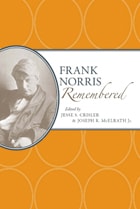
Frank Norris Remembered
Edited by Jesse S. Crisler and Joseph R. McElrath Jr.
University of Alabama Press, 2013
Frank Norris Remembered is a collection of reminiscences by Norris’s contemporaries, friends, and family that illuminate the life of a popular American novelist.
Considering his undergraduate education spent studying art at Académie Julian in Paris and creative writing at Harvard and his journalism career reporting from the far reaches of South Africa and Cuba, it is difficult to fathom how Frank Norris also found time to compose seven novels during the course of his brief life. But despite his adventures abroad, Norris turned out novels at a dizzying pace. He published Moran of the Lady Letty in 1898, McTeague early in 1899, Blix later that year, A Man’s Woman in February 1900, and The Octopus, the first in his ultimately unfinished “Epic of the Wheat” trilogy, in 1901. By informing his novels with his own experiences abroad, Norris composed works that were politically charged and culturally relevant and that made considerable contributions to the character of American literature in the twentieth century.
Frank Norris died at the age of thirty-two in 1902 from peritonitis resulting from a burst appendix, leaving behind a wife, a daughter, and an unfinished series of novels (two of which, The Pit and Vandover and the Brute, were published posthumously). The aim of Frank Norris Remembered, edited by Jesse S. Crisler and Joseph R. McElrath Jr., is to re-create the short, spectacular life of this American author through the eyes of those who knew him best. The fifty reminiscences included in this book feature the voices of Frank N. Doubleday; William Dean Howells; Hamlin Garland; Norris’s wife, Jeannette; and many others who were lucky enough to form a relationship with this vital twentieth-century American author, artist, and adventurer.
Frank O'Hara
Poet Among PaintersMarjorie Perloff
University of Chicago Press, 1997
"A groundbreaking study. [This book] is a genuine work of criticism. . . . Through Marjorie Perloff's book we see an O'Hara perhaps only his closer associates saw before: a poet fully aware of the traditions and techniques of his craft who, in a life tragically foreshortened, produced an adventurous if somewhat erratic body of American verse."—David Lenson, Chronicle of Higher Education
"Perloff is a reliable, well-informed, discreet, sensitive . . . guide. . . . She is impressive in the way she deals with O'Hara's relationship to painters and paintings, and she does give first-rate readings of four major poems."—Jonathan Cott, New York Times Book Review
Frank O'Hara
The Poetics of CoterieLytle Shaw
University of Iowa Press, 2006
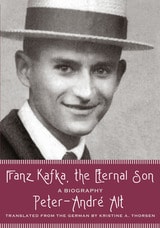
Franz Kafka, the Eternal Son
A BiographyPeter-André Alt, Translated from the German by Kristine A. Thorsen
Northwestern University Press, 2018
Franz Kafka remains one of the most influential writers of the twentieth century. His novels, stories, and letters are still regarded today as the epitome of the dark, fascinating, and uncanny, a model of the modernist aesthetic. Peter-André Alt’s landmark biography, Franz Kafka, the Eternal Son, recounts and explores Kafka’s life and literary work throughout the cultural and political upheavals of central Europe.
Alt’s biography explores Franz Kafka’s own view of life and writing as a unity that shaped his identity. He locates links and echoes among the author’s work, life, and surroundings, situating him within the traditions of Prague's German literature, modernity, psychoanalysis, and philosophy as well as within its Jewish culture, arts, theater, and intellectual tradition.
In this biographical tour de force, Kafka emerges as an observant flaneur and wistful loner, an anxious ascetic, an ecstatic and skeptic, a specialist in terror, and a master of irony. Alt masterfully illuminates Kafka's life not as source material but as a mirror of his literary genius. Readers begin to see Kafka’s unforgettable novels and stories as shards reflecting the life of their creator.
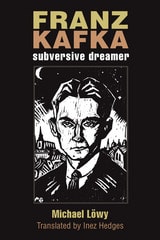
Franz Kafka
Subversive DreamerMichael Löwy, translated by Inez Hedges
University of Michigan Press, 2016
Frederik Pohl
Michael Page
University of Illinois Press, 2015
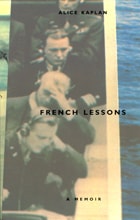
French Lessons
A MemoirAlice Kaplan
University of Chicago Press, 1993
The daughter of a Jewish lawyer who prosecuted Nazi war criminals at Nuremburg, Kaplan grew up in the 1960s in the Midwest. After her father's death when she was seven, French became her way of "leaving home" and finding herself in another language and culture. In spare, midwestern prose, by turns intimate and wry, Kaplan describes how, as a student in a Swiss boarding school and later in a junior year abroad in Bordeaux, she passionately sought the French "r," attentively honed her accent, and learned the idioms of her French lover.
When, as a graduate student, her passion for French culture turned to the elegance and sophistication of its intellectual life, she found herself drawn to the language and style of the novelist Louis-Ferdinand Celine. At the same time she was repulsed by his anti-Semitism. At Yale in the late 70s, during the heyday of deconstruction she chose to transgress its apolitical purity and work on a subject "that made history impossible to ignore:" French fascist intellectuals. Kaplan's discussion of the "de Man affair" — the discovery that her brilliant and charismatic Yale professor had written compromising articles for the pro-Nazi Belgian press—and her personal account of the paradoxes of deconstruction are among the most compelling available on this subject.
French Lessons belongs in the company of Sartre's Words and the memoirs of Nathalie Sarraute, Annie Ernaux, and Eva Hoffman. No book so engrossingly conveys both the excitement of learning and the moral dilemmas of the intellectual life.
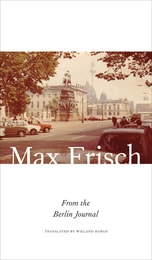
From the Berlin Journal
Max Frisch
Seagull Books, 2017
Max Frisch (1911–91) was a giant of twentieth-century German literature. When Frisch moved into a new apartment in Berlin’s Sarrazinstrasse, he began keeping a journal, which he came to call the Berlin Journal. A few years later, he emphasized in an interview that this was by no means a “scribbling book,” but rather a book “fully composed.” The journal is one of the great treasures of Frisch’s literary estate, but the author imposed a retention period of twenty years from the date of his death because of the “private things” he noted in it. From the Berlin Journal now marks the first publication of excerpts from Frisch’s journal. Here, the unmistakable Frisch is back, full of doubt, with no illusions, and with a playfully sharp eye for the world.
From the Berlin Journal pulls from the years 1946–49 and 1966–71. Observations about the writer’s everyday life stand alongside narrative and essayistic texts, as well as finely-drawn portraits of colleagues like Günter Grass, Uwe Johnson, Wolf Biermann, and Christa Wolf, among others. Its foremost quality, though, is the extraordinary acuity with which Frisch observed political and social conditions in East Germany while living in West Berlin.
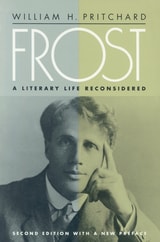
Frost
A Literary Life ReconsideredWilliam H. Pritchard
University of Massachusetts Press, 1993
Although this book does not attempt to revive the image of Frost as a benign, white-haired sage, it does present him in a strikingly different light than did Lawrence Thompson’s controversial three-volume biography. William H. Pritchard sees Frost whole, demonstrating the complex interaction between the poet’s life and work. Based not only on the poetry, but on letters, notebooks, recorded interviews, and public appearances as well, Frost: A Literary Life Reconsidered examines the most interesting and significant aspects of Frost’s life and poetry and offers an attentive, sensitive portrait of an artist whose critical reputation continues to grow.
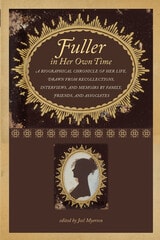
Fuller in Her Own Time
A Biographical Chronicle of Her Life, Drawn from Recollections, Interviews, and Memoirs by Family, Friends, and AssociatesJoel Myerson
University of Iowa Press, 2008
The forty-one remembrances from Nathaniel Hawthorne, Oliver Wendell Holmes, Ralph Waldo Emerson, Thomas Carlyle, Harriet Martineau, Henry James, and twenty-four others chart Fuller’s expanding influence from schooldays in Boston, meetings at the Transcendental Club, teaching in Providence and Boston, work on the New York Tribune, publications and conversations, travels in the British Isles, and life and love in Italy before her tragic early death. Joel Myerson’s perceptive introduction assesses the pre- and postmortem building of Fuller’s reputation as well as her relationship to the prominent Transcendentalists, reformers, literati, and other personalities of her time, and his headnotes to each selection present valuable connecting contexts.
The woman who admitted that “at nineteen she was the most intolerable girl that ever took a seat in a drawing-room,” whose Woman in the Nineteenth Century is considered the first major book-length feminist call to action in America, never conformed to nineteenth-century expectations of self-effacing womanhood. The fascinating contradictions revealed by these narratives create a lively, lifelike biography of Fuller’s “rare gifts and solid acquirements . . . and unfailing intellectual sympathy.”