Results by title
268 books match the query 'Mass media' and 13 start with f
Fame and Fandom
Functioning On and OfflineCelia Lam
University of Iowa Press, 2022
In case studies including Supernatural, Harry Styles, YouTube influencers, film location sites, Keanu Reeves, and celebrities as fans, readers find new approaches to fan/celebrity encounters and parasocial relationships. This is the go-to volume on the symbiotic relationship between fame and fandom.
Fandom, Now in Color
A Collection of VoicesRukmini Pande
University of Iowa Press, 2020
Fandom, Now in Color gathers together seemingly contradictory narratives that intersect at the (in)visibility of race/ism in fandom and fan studies. This collection engages the problem by undertaking the different tactics of decolonization—diversifying methodologies, destabilizing canons of “must-read” scholarship by engaging with multiple disciplines, making whiteness visible but not the default against which all other kinds of racialization must compete, and decentering white fans even in those fandoms where they are the assumed majority. These new narratives concern themselves with a broad swath of media, from cosplay and comics to tabletop roleplay and video games, and fandoms from Jane the Virgin to Japan’s K-pop scene. Fandom, Now in Color asserts that no one answer or approach can sufficiently come to grips with the shifting categories of race, racism, and racial identity.
Contributors: McKenna Boeckner, Angie Fazekas, Monica Flegel, Elizabeth Hornsby, Katherine Anderson Howell, Carina Lapointe, Miranda Ruth Larsen, Judith Leggatt, Jenni Lehtinen, joan miller, Swati Moitra, Samira Nadkarni, Indira Neill Hoch, Sam Pack, Rukmini Pande, Deepa Sivarajan, Al Valentín
Fandom, the Next Generation
Bridget Kies
University of Iowa Press, 2022
Contributors:
Maria Alberto, University of Utah
Mélanie Bourdaa, University of Bordeaux Montaigne
Meredith Dabek, Maynooth University
Simone Driessen, Erasmus University Rotterdam
Yektanurşin Duyan, Mardin Artuklu University
Dan Golding, Swinburne University of Technology
Bethan Jones, Aberdale, Wales (UK)
Siobhan Lyons, Sydney, New South Wales (Australia)
L. N. Rosales, University of Nebraska, Lincoln
Andrew Scahill, University of Colorado, Denver
Janelle Vermaak, Nelson Mandela University
Cynthia W. Walker, St. Peter’s University
Dawn Walls-Thumma, independent scholar
Neta Yodovich, University of Haifa
Feeling Media
Potentiality and the Afterlife of ArtMiryam Sas
Duke University Press, 2022

Film Criticism in the Digital Age
Frey, Mattias
Rutgers University Press, 2015
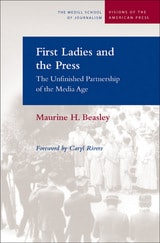
First Ladies and the Press
The Unfinished Partnership of the Media AgeMaurine H. Beasley
Northwestern University Press, 2005
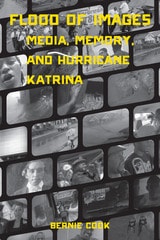
Flood of Images
Media, Memory, and Hurricane KatrinaBy Bernie Cook
University of Texas Press, 2015
Anyone who was not in New Orleans during Hurricane Katrina and the subsequent flooding of the city experienced the disaster as a media event, a flood of images pouring across television and computer screens. The twenty-four-hour news cycle created a surplus of representation that overwhelmed viewers and complicated understandings of the storm, the flood, and the aftermath. As time passed, documentary and fictional filmmakers took up the challenge of explaining what had happened in New Orleans, reaching beyond news reports to portray the lived experiences of survivors of Katrina. But while these narratives presented alternative understandings and more opportunities for empathy than TV news, Katrina remained a mediated experience.
In Flood of Images, Bernie Cook offers the most in-depth, wide-ranging, and carefully argued analysis of the mediation and meanings of Katrina. He engages in innovative, close, and comparative visual readings of news coverage on CNN, Fox News, and NBC; documentaries including Spike Lee’s When the Levees Broke and If God Is Willing and Da Creek Don’t Rise, Tia Lessin and Carl Deal’s Trouble the Water, and Dawn Logsdon and Lolis Elie’s Faubourg Treme; and the HBO drama Treme. Cook examines the production practices that shaped Katrina-as-media-event, exploring how those choices structured the possible memories and meanings of Katrina and how the media’s memory-making has been contested. In Flood of Images, Cook intervenes in the ongoing process of remembering and understanding Katrina.

Framing Abuse
Media Influence and Public Understanding of Sexual Violence Against ChildrenJenny Kitzinger
Pluto Press, 2004
Which stories attract attention and why? What strategies do journalists and campaigners use to persuade people and how do we respond? Answering these and other questions, Kitzinger demonstrates how media reporting can impact on people's knowledge of the 'facts', perceptions of risk, sense of appropriate policy responses and even how we interpret our own experiences.
Kitzinger examines feminist initiatives to challenge sexual violence, the emergence of incest as a social problem and the development of new survivor identities. She also explores stereotypes around sex offenders,interrogates protests against 'paedophiles-in-the-community' and presents a detailed analysis of the impact of scandals about disputed abuse accusations.
This book is essential reading for anyone interested in theories of media influence, identity and social change or who wishes to encourage responsible journalism. It is also a key resource for anyone concerned about sexual violence and the protection of children or who is attempting to design intervention strategies.
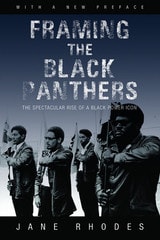
Framing the Black Panthers
The Spectacular Rise of a Black Power IconJane Rhodes
University of Illinois Press, 2017
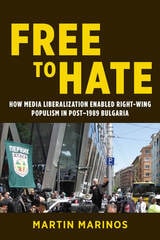
Free to Hate
How Media Liberalization Enabled Right-Wing Populism in Post-1989 BulgariaMartin Marinos
University of Illinois Press, 2023
Bulgaria’s media-driven pivot to right-wing populism parallels political developments taking place around the world. Martin Marinos applies a critical political economy approach to place Bulgarian right-wing populism within the structural transformation of the country’s media institutions. As Marinos shows, media concentration under Western giants like Westdeutsche Allgemeine Zeitung and News Corporation have led to a neoliberal turn of commercialization, concentration, and tabloidization across media. The Right have used the anticommunism and racism bred by this environment to not only undermine traditional media but position their own outlets to boost new political entities like the nationalist party Ataka. Marinos’s ethnographic observations and interviews with local journalists, politicians, and media experts add on-the-ground detail to his account. He also examines several related issues, including the performative appeal of populist media and the money behind it.
A timely and innovative analysis, Free to Hate reveals where structural changes in media intersect with right-wing populism.

From Tian'anmen to Times Square
Transnational China and the Chinese Diaspora on Global Screens, 1989-1997Gina Marchetti
Temple University Press, 2006
In From Tian'anmen to Times Square, leading film scholar Gina Marchetti considers the complex changes in the ways that China and the Chinese have been portrayed in cinema and media arts since the Tian'anmen revolt. Drawing on her interviews with leading contemporary Chinese filmmakers, Marchetti looks at a wide range of work by Chinese and non-Chinese media artists working in China, Hong Kong, Taiwan, and Singapore and on transnational co-productions involving those places. Focusing on the intersections of race, ethnicity, gender, and sexuality on global screens, Marchetti traces the momentous political, cultural, social, and economic forces confronting contemporary media artists and filmmakers working within "Greater China."
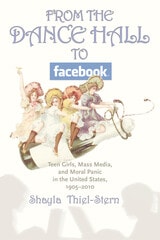
From the Dance Hall to Facebook
Teen Girls, Mass Media, and Moral Panic in the United States, 1905-2010Shayla Thiel-Stern
University of Massachusetts Press, 2014
In From the Dance Hall to Facebook, Shayla Thiel-Stern takes a close look at several historical snapshots, including working-class girls in dance halls of the early 1900s; girls' track and field teams in the 1920s to 1940s; Elvis Presley fans in the mid-1950s; punk rockers in the late 1970s and early 1980s; and girls using the Internet in the early twenty-first century. In each case, issues of gender, socioeconomic status, and race are explored within their historical context. The book argues that by marginalizing and stereotyping teen girls over the past century, mass media have perpetuated a pattern of gendered crisis that ultimately limits the cultural and political power of the young women it covers.

From the Far Right to the Mainstream
Islamophobia in Party Politics and the MediaEdited by Humayun Ansari and Farid Hafez
Campus Verlag, 2012