Results by title
138 books match the query 'Meaning' and 10 start with f

Faith and Meaning in the Southern Uplands
Loyal Jones
University of Illinois Press, 1999
In Faith and Meaning, one of Appalachian religion's most eloquent spokesmen reveals a people devoted to and thoughtful about their religion, and profoundly influenced by it. Loyal Jones's three decades of conversations and interviews, supplemented by documents such as sermons, testimonies, and articles of faith, articulate Southern Upland views on basic issues of the human condition—faith, God, the world, the Word, and the devil—as well as on community issues such as racial integration and women in the church. In their own voices these people describe their beliefs, their churches, and their lives, exposing a deep conviction tempered with humanity and humor.
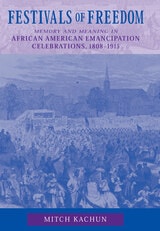
Festivals of Freedom
Memory and Meaning in African American Emancipation Celebrations, 1808-1915Mitch Kachun
University of Massachusetts Press, 2003
With the abolition of the transatlantic slave trade in 1808, many African Americans began calling for “a day of publick thanksgiving” to commemorate this important step toward freedom. During the ensuing century, black leaders built on this foundation and constructed a distinctive and vibrant tradition through their celebrations of the end of slavery in New York State, the British West Indies, and eventually the United States as a whole. In this revealing study, Mitch Kachun explores the multiple functions and contested meanings surrounding African American emancipation celebrations from the abolition of the slave trade to the fiftieth anniversary of U.S. emancipation.
Excluded from July Fourth and other American nationalist rituals for most of this period, black activists used these festivals of freedom to encourage community building and race uplift. Kachun demonstrates that, even as these annual rituals helped define African Americans as a people by fostering a sense of shared history, heritage, and identity, they were also sites of ambiguity and conflict. Freedom celebrations served as occasions for debate over black representations in the public sphere, struggles for group leadership, and contests over collective memory and its meaning.
Based on extensive research in African American newspapers and oration texts, this book retraces a vital if often overlooked tradition in African American political culture and addresses important issues about black participation in the public sphere. By illuminating the origins of black Americans' public commemorations, it also helps explain why there have been increasing calls in recent years to make the "Juneteenth" observance of emancipation an American—not just an African American—day of commemoration.

Fictive Kinship
Family Reunification and the Meaning of Race and Nation in American ImmigrationCatherine Lee
Russell Sage Foundation, 2013
Finding Thoreau
The Meaning of Nature in the Making of an Environmental IconRichard W. Judd
University of Massachusetts Press, 2018
In his 1862 eulogy for Henry David Thoreau, Ralph Waldo Emerson reflected that his friend “dedicated his genius with such entire love to the fields, hills, and waters of his native town, that he made them known and interesting to all reading Americans, and to people over the sea.” Finding Thoreau traces the reception of Thoreau's work from the time of his death to his ascendancy as an environmental icon in the 1970s, revealing insights into American culture's conception of the environment.
Moving decade by decade through this period, Richard W. Judd unveils a cache of commentary from intellectuals, critics, and journalists to demonstrate the dynamism in the idea of nature, as Americans defined and redefined the organic world around them amidst shifting intellectual, creative, and political forces. This book tells the captivating story of one writer's rise from obscurity to fame through a cultural reappraisal of the work he left behind.
Form and Meaning in Language, Volume II
Papers on Discourse and PragmaticsCharles J. Fillmore
CSLI, 2020
Divided into four parts, the papers collected in Volume II explore language in use; semantics and pragmatics; text and discourse; and language in society.
Form and Meaning in Language, Volume III
Papers on Linguistic Theory and ConstructionsCharles J. Fillmore
CSLI, 2020
Divided into four parts, the papers collected in Volume III explore the organization of linguistic knowledge; the foundations of constructing grammar; construction grammar analyses; and constructions and language in use.
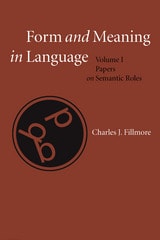
Form and Meaning in Language
Volume I, Papers on Semantic RolesCharles Fillmore
CSLI, 2003
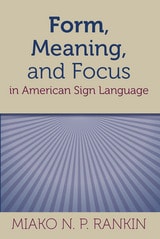
Form, Meaning, and Focus in American Sign Language
Miako N. P. Rankin
Gallaudet University Press, 2013
The meaning of any linguistic expression resides not only in the words, but also in the ways that those words are conveyed. In her new study, Miako N. P. Rankin highlights the crucial interrelatedness of form and meaning at all levels in order to consider specific types of American Sign Language (ASL) expression. In particular, Form, Meaning, and Focus in American Sign Language considers how ASL expresses non-agent focus, similar to the meaning of passive voice in English.
Rankin’s analyses of the form-meaning correspondences of ASL expressions of non-agent focus reveals an underlying pattern that can be traced across sentence and verb types. This pattern produces meanings with various levels of focus on the agent. Rankin has determined in her meticulous study that the pattern of form-meaning characteristic of non-agent focus in ASL is used prolifically in day-to-day language. The recognition of the frequency of this pattern holds implications regarding the acquisition of ASL, the development of curricula for teaching ASL, and the analysis of ASL discourse in effective interpretation.
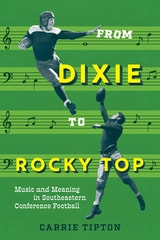
From Dixie to Rocky Top
Music and Meaning in Southeastern Conference FootballCarrie Tipton
Vanderbilt University Press, 2023
The first book to explore the history of college fight songs as a culturally important phenomenon, From Dixie to Rocky Top zeroes in on the US South, where college football has forged a powerful, quasi-religious sense of meaning and identity throughout the region.
Tracing the story of Southeastern Conference (SEC) fight songs from the late nineteenth to the early twenty-first century, author Carrie Tipton places this popular repertory within the broader commercial music industry and uses fight songs to explore themes of authorship and copyright; the commodification of school spirit; and the construction of race, gender, and regional identity in Southern football culture.
This book unearths the history embedded in SEC football’s music traditions, drawing from the archives of the seventeen universities currently or formerly in the conference. Alongside rich primary sources, Tipton incorporates approaches and literature from sports history, Southern and American history, Southern and American studies, and musicology.
Chronicling iconic Southern fight songs’ origins, dissemination, meanings, and cultural reception over a turbulent century, From Dixie to Rocky Top weaves a compelling narrative around a virtually unstudied body of popular music.
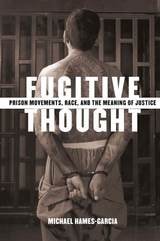
Fugitive Thought
Prison Movements, Race, And The Meaning Of JusticeMichael Hames-Garcia
University of Minnesota Press, 2004
Looks to the philosophy and experience of prisoners to reinvigorate our concepts of justice, solidarity, and freedom
In Fugitive Thought, Michael Hames-García argues that writings by prisoners are instances of practical social theory that seek to transform the world. Unlike other authors who have studied prisons or legal theory, Hames-García views prisoners as political and social thinkers whose ideas are as valuable as those of lawyers and philosophers.
As key moral terms like “justice,” “solidarity,” and “freedom” have come under suspicion in the post–Civil Rights era, political discussions on the Left have reached an impasse. Fugitive Thought reexamines and reinvigorates these concepts through a fresh approach to philosophies of justice and freedom, combining the study of legal theory and of prison literature to show how the critiques and moral visions of dissidents and participants in prison movements can contribute to the shaping and realization of workable ethical conceptions. Fugitive Thought focuses on writings by black and Latina/o lawyers and prisoners to flesh out the philosophical underpinnings of ethical claims within legal theory and prison activism.