Results by title
1415 books match the query 'Medical' and 50 start with f

Face/On
Face Transplants and the Ethics of the OtherSharrona Pearl
University of Chicago Press, 2017
The first comprehensive cultural study of face transplant surgery, Face/On reveals our true relationships to faces and facelessness, explains the significance we place on facial manipulation, and decodes how we understand loss, reconstruction, and transplantation of the face. To achieve this, Pearl draws on a vast array of sources: bioethical and medical reports, newspaper and television coverage, performances by pop culture icons, hospital records, personal interviews, films, and military files. She argues that we are on the cusp of a new ethics, in an opportune moment for reframing essentialist ideas about appearance in favor of a more expansive form of interpersonal interaction. Accessibly written and respectfully illustrated, Face/On offers a new perspective on face transplant surgery as a way to consider the self and its representation as constantly present and evolving. Highly interdisciplinary, this study will appeal to anyone wishing to know more about critical interventions into recent medicine, makeover culture, and the beauty industry.
Faculty of Color in the Health Professions
Stories of Survival and SuccessDena Hassouneh
Dartmouth College Press, 2017
Faith and Mental Health
Religious Resources for HealingHarold G. Koenig
Templeton Press, 2005
Dr. Harold Koenig opens a window on mental health, providing an unprecedented source of practical information about the relationship between religion and mental health. He examines how Christianity and other world religions deliver mental health services today, and he makes recommendations, based on research, expertise, and experience, for new programs to meet local needs.
Meticulously researched and documented, Faith and Mental Health includes
- Research on the relationship between religion and positive emotions, psychiatric illnesses, and severe and persistent mental disorders
- Ways in which religion has influenced mental health historically, and how now and in the future it can be involved with mental health
- A comprehensive description and categorization of Christian and non-Christian faith-based organizations that provide mental health resources
- Resources for religious professionals and faith communities on how to design effective programs
Presenting a combination of the history and current research of mental health and religion along with a thorough examination of faith-based organizations operating in the field, this book is a one-of-a-kind resource for the healthcare community; its valuable research and insights will benefit medical and religious professionals, and anyone concerned with the future of mental health care.
Faith and the Pursuit of Health
Cardiometabolic Disorders in SamoaHardin, Jessica
Rutgers University Press, 2019
False Dawn
The Rise and Decline of Public Health NursingKaren Buhler-Wilkerson
Rutgers University Press, 2021

False Hopes
Overcoming the Obstacles to a Sustainable, Affordable MedicineCallahan, Daniel
Rutgers University Press, 1999
Familial Fitness
Disability, Adoption, and Family in Modern AmericaSandra M. Sufian
University of Chicago Press, 2022
Disability and child welfare, together and apart, are major concerns in American society. Today, about 125,000 children in foster care are eligible and waiting for adoption, and while many children wait more than two years to be adopted, children with disabilities wait even longer. In Familial Fitness, Sandra M. Sufian uncovers how disability operates as a fundamental category in the making of the American family, tracing major shifts in policy, practice, and attitudes about the adoptability of disabled children over the course of the twentieth century.
Chronicling the long, complex history of disability, Familial Fitness explores how notions and practices of adoption have—and haven’t—accommodated disability, and how the language of risk enters into that complicated relationship. We see how the field of adoption moved from widely excluding children with disabilities in the early twentieth century to partially including them at its close. As Sufian traces this historical process, she examines the forces that shaped, and continue to shape, access to the social institution of family and invites readers to rethink the meaning of family itself.
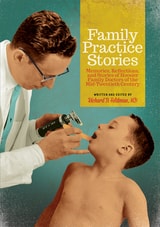
Family Practice Stories
Memories, Reflections, and Stories of Hoosier Family Doctors of the Mid-Twentieth CenturyRichard Feldman
Indiana Historical Society Press, 2013

Family Trouble
Middle-Class Parents, Children's Problems, and the Disruption of Everyday LifeFrancis, Ara
Rutgers University Press, 2015
Francis interviewed the mothers and fathers of children with such problems as depression, bi-polar disorder, autism, learning disabilities, drug addiction, alcoholism, fetal alcohol syndrome, and cerebral palsy. Children’s problems, she finds, profoundly upset the foundations of parents’ everyday lives, overturning taken-for-granted expectations, daily routines, and personal relationships. Indeed, these problems initiated a chain of disruption that moved through parents’ lives in domino-like fashion, culminating in a crisis characterized by uncertainty, loneliness, guilt, grief, and anxiety. Francis looks at how mothers and fathers often differ in their interpretation of a child’s condition, discusses the gendered nature of child rearing, and describes how parents struggle to find effective treatments and to successfully navigate medical and educational bureaucracies. But above all, Family Trouble examines how children’s problems disrupt middle-class dreams of the “normal” family. It captures how children’s problems “radiate” and spill over into other areas of parents’ lives, wreaking havoc even on their identities, leading them to reevaluate deeply held assumptions about their own sense of self and what it means to achieve the good life.
Engagingly written, Family Trouble offers insight to professionals and solace to parents. The book offers a clear message to anyone in the throes of family trouble: you are in good company, and you are not as different as you might feel...

Farmcarts to Fords
A History of the Military Ambulance, 1790-1925John S. Haller
Southern Illinois University Press, 1992
This book is the first history of the techniques, systems, and technologies used to evacuate wounded from the battlefield. Historically, the word ambulance described those facilities that provided temporary assistance to the wounded, thus distinguishing them from stationary hospitals where military personnel received more permanent care. Americans and British, however, applied the term to the two-to four-wheeled transport conveyances that carried wounded from the battlefield to the war hospitals.
With the aid of fifty-four illustrations, John S. Haller traces the histories of both meanings of the word from the Napoleonic era through the Great War and its aftermath. He concentrates on the development of British and American evacuation procedures and technology with a focus on hand conveyances and wheeled vehicles. His intent is not to cover all aspects of medical evacuation but to accurately recount the common medical evacuation problems, incongruities, and controversies that existed for warring nations.
Fault Lines of Care
Gender, HIV, and Global Health in BoliviaHeckert, Carina
Rutgers University Press, 2018
The HIV epidemic in Bolivia has received little attention on a global scale in light of the country’s low HIV prevalence rate. However, by profiling the largest city in this land-locked Latin American country, Carina Heckert shows how global health-funded HIV care programs at times clash with local realities, which can have catastrophic effects for people living with HIV who must rely on global health resources to survive. These ethnographic insights, as a result, can be applied to AIDS programs across the globe.
In Fault Lines of Care, Heckert provides a detailed examination of the effects of global health and governmental policy decisions on the everyday lives of people living with HIV in Santa Cruz. She focuses on the gendered dynamics that play a role in the development and implementation of HIV care programs and shows how decisions made from above impact what happens on the ground.
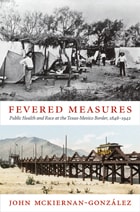
Fevered Measures
Public Health and Race at the Texas-Mexico Border, 1848–1942John Mckiernan-González
Duke University Press, 2012
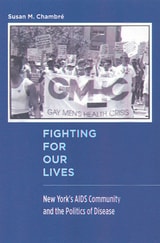
Fighting For Our Lives
New York's AIDS Community and the Politics of DiseaseChambré, Susan M
Rutgers University Press, 2006
In the first decade of the AIDS epidemic, New York City was struck like no other. By the early nineties, it was struggling with more known cases than the next forty most infected cities, including San Francisco, combined.
Fighting for Our Lives is the first comprehensive social history of New York's AIDS community-a diverse array of people that included not only gay men, but also African Americans, Haitians, Latinos, intravenous drug users, substance abuse professionals, elite supporters, and researchers. Looking back over twenty-five years, Susan Chambré focuses on the ways that these disparate groups formed networks of people and organizations that-both together and separately-supported persons with AIDS, reduced transmission, funded research, and in the process, gave a face to an epidemic that for many years, whether because of indifference, homophobia, or inefficiency, received little attention from government or health care professionals.
Beyond the limits of New York City, and even AIDS, this case study also shows how any epidemic provides a context for observing how societies respond to events that expose the inadequacies of their existing social and institutional arrangements. By drawing attention to the major faults of New York's (and America's) response to a major social and health crisis at the end of the twentieth century, the book urges more effective and sensitive actions-both governmental and civil-in the future.
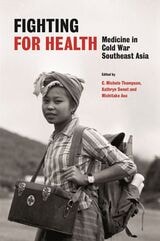
Fighting for Health
Medicine in Cold War Southeast AsiaEdited by C. Michele Thompson, Kathryn Sweet, and Michitake Aso
National University of Singapore Press, 2024
For far too long, Southeast Asia has been treated as a static backdrop for the exploits and discoveries of Western biomedical doctors. Yet, Southeast Asians have been vital to the significant developments in the prevention and treatment of diseases that have taken place in the region and beyond. Many of the institutions and people that shaped subsequent responses to outbreaks, epidemics, and pandemics first began their work in Southeast Asia during the Cold War. The diversity of approaches to health and medicine during that era also reminds us of the possibilities, and limits, of human intervention in the face of political, social, economic, and microbial realities. The people and places of Southeast Asia have provided clinical trials for different health regimes. Fighting for Health highlights new perspectives and methods that have evolved from research presented at regional conferences, including the History of Medicine in Southeast Asia (HOMSEA) series. These insights serve to challenge dominant models of the medical humanities.

Fighting the Plague in Seventeenth-Century Italy
Carlo M. Cipolla
University of Wisconsin Press, 1981
After the great pandemic of 1348, the plague became endemic in Europe, affecting life at every level for more than three hundred years. In attempting to fight the dread enemy, the North Italian states had developed, by the early sixteenth century, a highly sophisticated system of public health. Special permanent magistracies combining legislative and executive powers were established to administer all public health matters.
In this volume, Carlo M. Cipolla throws new light on the subject, utilizing newly uncovered and significant archival material.
In the first essay, the author analyzes the complex set of interrelationships that existed between theory and practice in Renaissance epidemiology. The significance of this essay goes beyond the history of public health and extends to the larger history of science.
In the second essay, Cipolla studies a case in which health matters became the object of intense diplomatic activity. In that instance, fully sovereign states envisaged interstate controls and relinquished discretionary powers for the sake of the “common health.” Although the concerted effort was short-lived, it does represent an attempt at international health cooperation that was unmatched for another two centuries, until the first International Sanitary Conference, held in Paris in 1851.
In the third essay, unusually detailed statistical documentation allows the author to analyze in detail the demographic, economic, and social aspects of the fight against the plague in a Tuscan city—Pistoia—during the epidemic of 1630–31.
A richly documented appendix, forming an essay in itself, illustrates present knowledge of the clinical, pathological, and epidemiological features of the plague in the sixteenth and seventeenth centuries in Europe.
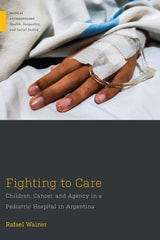
Fighting to Care
Children, Cancer, and Agency in a Pediatric Hospital in ArgentinaRafael E. Wainer
Rutgers University Press, 2027
Fighting to Care explores the lived experiences of children with pediatric blood cancer in Argentina, centering the struggles to care from the moment a child is labelled as experiencing "strangeness in the blood.” The book focuses on the notion of "permeable bodies" to understand children’s corporeal and subjective dynamic experience of cancer treatment and interpersonal care. Despite their vulnerability, throughout the course of demanding treatment, children display significant agency, actively navigating their medical journeys through various forms of communication and action. Fighting to Care also highlights the collective forms of care and the personal and interpersonal pain experienced by children, their families, and healthcare professionals in contexts of urgency and against health bureaucracies. In Argentina, caregiving, that is, fighting to care, is deeply intertwined with fighting for health rights within a public healthcare system that, while historically universal and free, is complex and impacted by recurring economic crises and social inequalities.
Final Acts
Death, Dying, and the Choices We MakeBauer-Maglin, Nan
Rutgers University Press, 2010
Contributors include patients, caretakers, physicians, journalists, lawyers, social workers, educators, hospital administrators, academics, psychologists, and a poet, and among them are ethicists, religious believers, and nonbelievers. Some write moving, personal accounts of "good" or 'bad" deaths; others examine the ethical, social, and political implications of slow dying. Essays consider death from natural causes, suicide, and aid-in-dying (assisted suicide).
Writing in a style free of technical jargon, the contributors discuss documents that should be prepared (health proxy, do-not-resuscitate order, living will, power of attorney); decision-making (over medical interventions, life support, hospice and palliative care, aid-in-dying, treatment location, speaking for those who can no longer express their will); and the roles played by religion, custom, family, friends, caretakers, money, the medical establishment, and the government.
For those who yearn for some measure of control over death, the essayists in Final Acts, from very different backgrounds and with different personal and professional experiences around death and dying, offer insight and hope.
Financing Medicaid
Federalism and the Growth of America's Health Care Safety NetShanna Rose
University of Michigan Press, 2013
Conventional wisdom holds that programs for the poor are vulnerable to instability and retrenchment. Medicaid, however, has grown into the nation’s largest intergovernmental grant program, accounting for nearly half of all federal funding to state and local governments. Medicaid’s generous open-ended federal matching grants have given governors a powerful incentive to mobilize on behalf of its maintenance and expansion, using methods ranging from lobbying and negotiation to creative financing mechanisms and waivers to maximize federal financial assistance. Perceiving federal retrenchment efforts as a threat to states’ finances, governors, through the powerful National Governors’ Association, have repeatedly worked together in bipartisan fashion to defend the program against cutbacks.
Financing Medicaidengagingly intertwines theory, historical narrative, and case studies, drawing on sources including archival materials from the National Governors’ Association and gubernatorial and presidential libraries, Centers for Medicare and Medicaid Services data, the Congressional Record, and interviews.

Finding Einstein's Brain
Lepore, Frederick E
Rutgers University Press, 2018
Following his death in 1955, Einstein’s brain was removed and preserved, but has never been fully or systematically studied. In fact, the sections are not even all in one place, and some are mysteriously unaccounted for! In this compelling tale, Frederick E. Lepore delves into the strange, elusive afterlife of Einstein’s brain, the controversy surrounding its use, and what its study represents for brain and/or intelligence studies.
Carefully reacting to the skepticism of 21st century neuroscience, Lepore more broadly examines the philosophical, medical, and scientific implications of brain-examination. Is the brain simply a computer? If so, how close are we to artificially creating a human brain? Could scientists create a second Einstein? This “biography of a brain” attempts to answer these questions, exploring what made Einstein’s brain anatomy exceptional, and how “found” photographs--discovered more than a half a century after his death--may begin to uncover the nature of genius.
First, Do No Harm
Power, Oppression, and Violence in HealthcareEdited by Nancy L. Diekelmann
University of Wisconsin Press, 2002
First, Do No Harm shows how health care professionals, with the best intentions of providing excellent, holistic health care, can nonetheless perpetuate violence against vulnerable patients. The essays investigate the need to rethink contemporary healthcare practices in ways that can bring the art and science of medicine back into sorely needed balance.
These ground-breaking studies by noted scholars question commonly held assumptions in contemporary healthcare that underlie oppressive power dynamics and even violence for patients and their families. The contributors discuss such topics as women and violence, life-support technologies, and healthcare professionals’ own experiences as patients. First, Do No Harm opens the discourse for reaching new understandings, from reassessing the meaning of "quality of life" to questioning the appropriateness of the very language used by healthcare professionals. It will be welcomed by healthcare workers and by scholars in nursing, medicine, and the allied health sciences.
Fistula Politics
Birthing Injuries and the Quest for Continence in NigerHeller, Alison
Rutgers University Press, 2019

Fit to Be Tied
Sterilization and Reproductive Rights in America, 1950-1980Kluchin, Rebecca M
Rutgers University Press, 2011
During the first half of the twentieth century, sterilization (tubal ligation and vasectomy) was a tool of eugenics. Individuals who endorsed crude notions of biological determinism sought to control the reproductive decisions of women they considered "unfit" by nature of race or class, and used surgery to do so. Incorporating first-person narratives, court cases, and official records, Rebecca M. Kluchin examines the evolution of forced sterilization of poor women, especially women of color, in the second half of the century and contrasts it with demands for contraceptive sterilization made by white women and men. She chronicles public acceptance during an era of reproductive and sexual freedom, and the subsequent replacement of the eugenics movement with "neo-eugenic" standards that continued to influence American medical practice, family planning, public policy, and popular sentiment.

Fixing Sex
Intersex, Medical Authority, and Lived ExperienceKatrina Karkazis
Duke University Press, 2008
Drawing extensively on interviews with adults with intersex conditions, parents, and physicians, Karkazis moves beyond the heated rhetoric to reveal the complex reality of how intersexuality is understood, treated, and experienced today. As she unravels the historical, technological, social, and political forces that have culminated in debates surrounding intersexuality, Karkazis exposes the contentious disagreements among theorists, physicians, intersex adults, activists, and parents—and all that those debates imply about gender and the changing landscape of intersex management. She argues that by viewing intersexuality exclusively through a narrow medical lens we avoid much more difficult questions. Do gender atypical bodies require treatment? Should physicians intervene to control the “sex” of the body? As this illuminating book reveals, debates over treatment for intersexuality force reassessment of the seemingly natural connections between gender, biology, and the body.
Flatlined
Resuscitating American MedicineClifton, Guy L
Rutgers University Press, 2008
Flatlined lifts the veil of secrecy on twenty-first century health care and delves into the realities of good people caught in a bad medical system. Dr. Guy L. Clifton, a practitioner as well as a policy advocate, reveals first-hand accounts of needless tragedy, such as the young man who died after a car wreck for lack of a bed in a qualified hospital and the surgeon who was dejected by the scarcity of resources needed to enable him to perform heart surgery on an uninsured man.
Arguing that a lack of coordinated care and quality medical practice benchmarks result in high levels of redundancy and ineffectiveness, Clifton proposes that the key to reducing health care costs, improving quality, and financially protecting the uninsured, is to reduce wastefulness, and offers a solution for achieving success.
Flatlined sounds the warning call: By 2018 Medicare and Medicaid will consume about one-third of the federal budget. American businesses now pay three times as much of their payroll for health care as global competitors, expected to worsen as health care grows at twice the rate of the U.S. economy. Based on his years of experience in policy and medicine, Clifton offers an attainable solution through the development of an American Medical Quality System.
For the Good of Humanity
Ludwik Rajchman, Medical StatesmanMarta A. Balinska
Central European University Press, 1998
Forbidden Knowledge
Medicine, Science, and Censorship in Early Modern ItalyHannah Marcus
University of Chicago Press, 2020
Forbidden Knowledge explores the censorship of medical books from their proliferation in print through the prohibitions placed on them during the Counter-Reformation. How and why did books banned in Italy in the sixteenth century end up back on library shelves in the seventeenth? Historian Hannah Marcus uncovers how early modern physicians evaluated the utility of banned books and facilitated their continued circulation in conversation with Catholic authorities.
Through extensive archival research, Marcus highlights how talk of scientific utility, once thought to have begun during the Scientific Revolution, in fact, began earlier, emerging from ecclesiastical censorship and the desire to continue to use banned medical books. What’s more, this censorship in medicine, which preceded the Copernican debate in astronomy by sixty years, has had a lasting impact on how we talk about new and controversial developments in scientific knowledge. Beautiful illustrations accompany this masterful, timely book about the interplay between efforts at intellectual control and the utility of knowledge.

Forensic Epidemiology
A Comprehensive Guide for Legal and Epidemiology ProfessionalsSana Loue
Southern Illinois University Press, 1999
Sana Loue explores the concepts of legal and epidemiological causation, the use of epidemiological data based on populations to determine causation in an individual case, and the use of epidemiological evidence in litigation, including the reliance on experts and expert witnesses.
Loue provides a guide for the attorney with little or no background in epidemiological theory and for the epidemiologist contemplating a new role as an expert witness. She assumes of her readers a working knowledge of the Federal Rules of Civil Procedure and the Federal Rules of Evidence.
Discussing the epidemiologist as expert witness, Loue covers the nature of that testimony, the purpose of the testimony, and the qualifications necessary to be regarded as an expert witness. She examines various legal theories of causation, primarily in the context of product liability and toxic tort, and addresses epidemiological principles and methods used in the process of causal inference.
Loue also focuses on legal mechanisms used to assess causation. Her concern here is with depositions and testimony and the preparation of epidemiology experts. She concludes her study by comparing the legal and epidemiological concepts of causation, using actual legal cases as examples.
Throughout the text, Loue incorporates excerpts from depositions, interrogatories, and trial testimony to provide concrete examples. She also sets up an appendix to provide nonattorney readers with an overview of the legal system. Ultimately, her goal is to foster a greater understanding between law and epidemiology.

Forget Burial
HIV Kinship, Disability, and Queer/Trans Narratives of CareMarty Fink
Rutgers University Press, 2021
Queers and trans people in the 1980s and early ‘90s were dying of AIDS and the government failed to care. Lovers, strangers, artists, and community activists came together take care of each other in the face of state violence. In revisiting these histories alongside ongoing queer and trans movements, this book uncovers how early HIV care-giving narratives actually shape how we continue to understand our genders and our disabilities. The queer and trans care-giving kinships that formed in response to HIV continue to inspire how we have sex and build chosen families in the present. In unearthing HIV community newsletters, media, zines, porn, literature, and even vampires, Forget Burial bridges early HIV care-giving activisms with contemporary disability movements. In refusing to bury the legacies of long-term survivors and of those we have lost, this book brings early HIV kinships together with ongoing movements for queer and trans body self-determination.
Forgive and Remember
Managing Medical Failure, 2nd EditionCharles L. Bosk
University of Chicago Press, 2003
Forgotten Bodies
Imperialism, Chuukese Migration, and Stratified Reproduction in GuamSarah A. Smith
Rutgers University Press, 2024

Formative Years
Children's Health in the United States, 1880-2000Alexandra Minna Stern and Howard Markel, Editors
University of Michigan Press, 2004
Much has changed in the lives of children, and in the health care provided to them, over the past century. Formative Years explores how children's lives have become increasingly medicalized, traces the emergence of the fields of pediatrics and child health, and offers fascinating case studies of important and timely issues.
With contributions from historians and physicians, this collection illuminates some of the most important transformations in children's health in the United States since the 1880s. Opening with a history of pediatrics as a medical specialty, the book addresses such topics as the formulation of normal growth curves, Better Babies contests at county fairs, the "discovery" of the sexual abuse of children, and the political radicalism of the founder of pediatrics, Dr. Abraham Jacobi.
One of the first long-term historical and analytical overviews of pediatrics and child health in the twentieth century, Formative Years will be a welcome addition to several fields, including the history of medicine and technology, the history of childhood, modern U.S. history, women's history, and American studies. It also has ramifications for policymakers concerned with child welfare and development and poses important questions about the direction of children's health in the twenty-first century.

Formulas for Motherhood in a Chinese Hospital
Suzanne Gottschang
University of Michigan Press, 2018
Formulas for Motherhood follows a group of women over eighteen months as they visited a Beijing Baby- Friendly Hospital over the course of their pregnancies and throughout their postpartum recoveries. The book shows how the space of the hospital operates as a microcosm of the larger social, political, and economic forces that urban Chinese women navigate in the process of becoming a mother. Relations between biomedical practices, heightened expectations of femininity and sexuality demanded by a consumer culture, alongside international and national agendas to promote maternal and child health, reveal new agents of maternal governance emerging at the very moment China’s economy heats up. This ethnography provides insight into how women’s creative pragmatism in a rapidly changing society leads to their views and decisions about motherhood.

Foundation of Urology at the University of Michigan
Emergence of a Medical Specialty, 1919–1970David A. Bloom
Michigan Publishing Services, 2027
In 1919, urology came to the University of Michigan when Hugh Cabot arrived from Boston, attracted by the fulltime position of surgery chair. The celebrity urologist created a multi-specialty surgery department and, two years later, became the Dean of the Medical School. He trained Reed Nesbit who became the Chief of Urology in 1930; Nesbit made Ann Arbor an epicenter of international urological practice, education, and research until his retirement in 1967. In this history of urology at the university, David Bloom recounts Cabot and Nesbit’s careers, the introduction of hemodialysis to Michigan, and the role of the Ann Arbor Sarns corporation in worldwide hemodialysis technology.
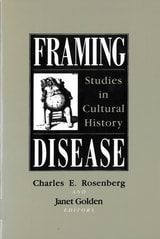
Framing Disease
Studies in Cultural HistoryRosenberg, Charles E
Rutgers University Press, 1992
"In some ways disease does not exist until we have agreed that it does, by perceiving, naming, and responding to it, " writes Charles E. Rosenberg in his introduction to this stimulating set of essays. Disease is both a biological event and a social phenomenon. Patient, doctor, family, and social institutions—including employers, government, and insurance companies—all find ways to frame the biological event in terms that make sense to them and serve their own ends.
Many diseases discussed here—endstage renal disease, rheumatic fever, parasitic infectious diseases, coronary thrombosis—came to be defined, redefined, and renamed over the course of several centuries. As these essays show, the concept of disease has also been used to frame culturally resonant behaviors: suicide, homosexuality, anorexia nervosa, chronic fatigue syndrome. Disease is also framed by public policy, as the cases of industrial disability and of forensic psychiatry demonstrate. Medical institutions, as managers of people with disease, come to have vested interests in diagnoses, as the histories of facilities to treat tuberculosis or epilepsy reveal. Ultimately, the existence and conquest of disease serves to frame a society's sense of its own "healthiness" and to give direction to social reforms.
The contributors include Steven J. Peitzman, Peter C. English, John Farley, Christopher Lawrence, Michael MacDonald, Bert Hansen, Joan Jacobs Brumberg, Robert A. Aronowitz, Gerald Markowitz, David Rosner, Janet A. Tighe, Barbara Bates, Ellen Dwyer, John M. Eyler, and Elizabeth Fee. For any student of disease and society, this book is essential, compelling reading.

Frankenstein
Penetrating the Secrets of NatureLederer, Susan E
Rutgers University Press, 2002
As science penetrates the secrets of nature, with each discovery generating new questions, Mary Shelley's Frankenstein will sound its note of warning. Many scientific developments have provoked references to Frankenstein, a story that, for nearly two centuries, has gripped our imaginations and haunted our nightmares. How can society balance the benefits of medical discoveries against the ethical or spiritual questions posed?
Frankenstein: Penetrating the Secrets of Nature accompanies a traveling exhibit of the same name. This lavishly illustrated volume begins by highlighting Shelley's novel and the context in which she conceived it. It next focuses on the redefinition of the Frankenstein myth in popular culture. Here, the fate of the monster becomes a moral lesson illustrating the punishment for ambitious scientists who seek to usurp the place of God by creating life. The final section examines the continuing power of the Frankenstein story to articulate present-day concerns raised by new developments in biomedicine such as cloning and xenografting (the use of animal organs in human bodies), and the role scientists and citizens play in determining acceptable limits of scientific and medical advances.
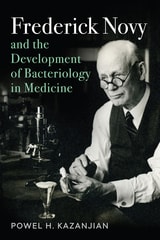
Frederick Novy and the Development of Bacteriology in Medicine
Kazanjian, Powel H
Rutgers University Press, 2017
In Frederick Novy and the Development of Bacteriology in Medicine, medical historian, medical researcher, and clinician Powel H. Kazanjian uses Novy’s archived letters, laboratory notebooks, lecture notes, and published works to examine medical research and educational activities at the University of Michigan and other key medical schools during a formative period in modern medical science.
From Crisis to Catastrophe
Care, COVID, and Pathways to ChangeMignon Duffy
Rutgers University Press, 2023

From Humors to Medical Science
A HISTORY OF AMERICAN MEDICINEJohn Duffy
University of Illinois Press, 1993
John Duffy's classic history, formerly titled The Healers, has
been thoroughly revised and updated for this second edition, which includes
new chapters on women and minorities in medicine and on the challenges
currently facing the health care field.
"This remains the only comprehensive history of American medicine.
The treatment of the emergence of modern medicine and the flowering of
surgery is especially fresh and well done. As one of the respected scholars
in our profession, John Duffy has again demonstrated his wide knowledge
of the subject."
-- Thomas N. Brunner, author of To the Ends of the Earth: Women's
Search for Education in Medicine
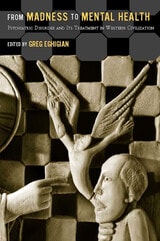
From Madness to Mental Health
Psychiatric Disorder and Its Treatment in Western CivilizationEghigian, Greg
Rutgers University Press, 2009
Greg Eghigian has compiled a unique anthology of readings, from ancient times to the present, that includes Hippocrates; Julian of Norwich's Revelations of Divine Love, penned in the 1390s; Dorothea Dix; Aaron T. Beck; Carl Rogers; and others, culled from religious texts, clinical case studies, memoirs, academic lectures, hospital and government records, legal and medical treatises, and art collections. Incorporating historical experiences of medical practitioners and those deemed mentally ill, From Madness to Mental Health also includes an updated bibliography of first-person narratives on mental illness compiled by Gail A. Hornstein.
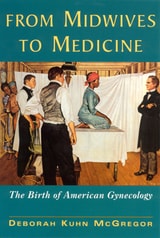
From Midwives to Medicine
The Birth of American GynecologyMcGregor, Deborah K
Rutgers University Press, 1998
Using patient records and archival material from the female governors and administrators at the hospital, From Midwives to Medicine shows how a new medical practice developed out of the changing patterns and historical experiences of childbirth, as well as out of the context of the social relations f the sexes. Sim's patients were slave women in the antebellum South, poor Irish immigrants in the industrial North, and upper-class white. Protestant, Manhattan socialites who sought help for their "hysterical" symptoms. During his career, which began in the South and flourished at the Women's Hospital in New York. Sims performed and perfected his technique to "cure" vesico-vaginal fistulas, the tears of childbirth, from which so many women suffered. But Sims achieved these successes on the operating table only after years of practicing his "silver suture" technique on unanesthetized slave women, who he believed "by the nature of their race... had a specific physiological tolerance for pain unknown to whites."

From Pink to Green
Disease Prevention and the Environmental Breast Cancer MovementLey, Barbara L
Rutgers University Press, 2009
Challenging the broader cultural milieu of pink ribbon symbolism and breast cancer "awareness" campaigns, this movement has grown from a handful of community-based organizations into a national entity, shaping the cultural, political, and public health landscape. Much of the activists' everyday work revolves around describing how the so called "cancer industry" downplays possible environmental links to protect their political and economic interests and they demand that the public play a role in scientific, policy, and public health decision-making to build a new framework of breast cancer prevention.
From Pink to Green successfully explores the intersection between breast cancer activism and the environmental health sciences, incorporating public and scientific debates as well as policy implications to public health and environmental agendas.
From Popular Medicine to Medical Populism
Doctors, Healers, and Public Power in Costa Rica, 1800–1940Steven Palmer
Duke University Press, 2003
Steven Palmer breaks with the view of popular and professional medicine as polar opposites—where popular medicine is seen as representative of the authentic local community and as synonymous with oral tradition and religious and magical beliefs and professional medicine as advancing neocolonial interests through the work of secular, trained academicians. Arguing that there was significant and formative overlap between these two forms of medicine, Palmer shows that the relationship between practitioners of each was marked by coexistence, complementarity, and dialogue as often as it was by rivalry. Palmer explains that while the professionalization of medical practice was intricately connected to the nation-building process, the Costa Rican state never consistently displayed an interest in suppressing the practice of popular medicine. In fact, it persistently found both tacit and explicit ways to allow untitled healers to practice. Using empirical and archival research to bring people (such as the famous healer or curandero Professor Carlos Carbell), events, and institutions (including the Rockefeller Foundation) to life, From Popular Medicine to Medical Populism demonstrates that it was through everyday acts of negotiation among agents of the state, medical professionals, and popular practitioners that the contours of Costa Rica’s modern, heterogeneous health care system were established.
From Residency to Retirement
Physicians' Careers over a Professional LifetimeTerry Mizrahi
Rutgers University Press, 2021
Mizrahi observed and interviewed these physicians in six timeframes ending in 2016. Beginning with medical school in the mid-1970s, these physicians reveal the myriad fluctuations and uncertainties in their professional practice, working conditions, collegial relationships, and patient interactions. In their own words, they provide a “view from the front lines” both in academic and community settings. They disclose the satisfactions and strains in coping with macro policies enacted by government and insurance companies over their career trajectory.
They describe their residency in internal medicine in a large southern urban medical center as a “siege mentality” which lessened as they began their careers, in Getting Rid of Patients, the title of Mizrahi’s first book (1986). As these doctors moved on in their professional lives more of their experiences were discussed in terms of dissatisfaction with financial remuneration, emotional gratification, and intellectual fulfillment. Such moments of career frustration, however, were also interspersed with moments of satisfaction at different stages of their medical careers. Particularly revealing was whether they were optimistic about the future at each stage of their career and whether they would recommend a medical career to their children. Mizrahi's subjects also divulge their private feelings of disillusionment and fear of failure given the malpractice epidemic and lawsuits threatened or actually brought against so many doctors. Mizrahi’s work, covering almost fifty years, provides rarely viewed insights into the lives of physicians over a professional life span.
From Skepticism to Competence
How American Psychiatrists Learn PsychotherapyMariana Craciun
University of Chicago Press, 2024
While many medical professionals can physically examine the body to identify and understand its troubles—a cardiologist can take a scan of the heart, an endocrinologist can measure hormone levels, an oncologist can locate a tumor—psychiatrists have a much harder time unlocking the inner workings of the brain or its metaphysical counterpart, the mind.
In From Skepticism to Competence, sociologist Mariana Craciun delves into the radical uncertainty of psychiatric work by following medical residents in the field as they learn about psychotherapeutic methods. Most are skeptical at the start. While they are well equipped to treat brain diseases through prescription drugs, they must set their expectations aside and learn how to navigate their patients’ minds. Their instructors, experienced psychotherapists, help the budding psychiatrists navigate this new professional terrain by revealing the inner workings of talk and behavioral interventions and stressing their utility in a world dominated by pharmaceutical treatments. In the process, the residents examine their own doctoring assumptions and develop new competencies in psychotherapy. Exploring the world of contemporary psychiatric training, Craciun illuminates novice physicians’ struggles to understand the nature and meaning of mental illness and, with it, their own growing medical expertise.

From the Midwife's Bag to the Patient's File
Public Health in Eastern and Southeastern EuropeSara Bernasconi
Central European University Press, 2018
Frontiers in Comparative Medicine
W.I.B. Beveridge
University of Minnesota Press, 1972

Frozen Embryos
A Catholic Moral Evaluation of Embryo Adoption, Cryopreservation, Rehydration & Artifical WombsIrene Alexander
Catholic University of America Press, 2027

Fuckology
Critical Essays on John Money's Diagnostic ConceptsLisa Downing, Iain Morland, and Nikki Sullivan
University of Chicago Press, 2014
In Fuckology, the authors contextualize and interrogate Money's writings and practices. The book focuses on his three key diagnostic concepts, “hermaphroditism,” “transsexualism,” and “paraphilia,” but also addresses his lesser-known work on topics ranging from animal behavior to the philosophy of science. The result is a comprehensive collection of new insights for researchers and students within cultural, historical, and gender studies, as well as for practitioners and activists in sexology, psychology, and patient rights.
Future Medicine
Ethical Dilemmas, Regulatory Challenges, and Therapeutic Pathways to Health Care and Healing in Human TransformationMichael H. Cohen
University of Michigan Press, 2002