Results by title
85 books match the query 'Men's Studies' and 3 start with f
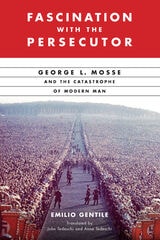
Fascination with the Persecutor
George L. Mosse and the Catastrophe of Modern ManEmilio Gentile and and Stanley G. Payne, translated by John and Anne Tedeschi
University of Wisconsin Press, 2021
In 1933, George L. Mosse fled Berlin and settled in the United States, where he went on to become a renowned historian at the University of Wisconsin–Madison. Through rigorous and innovative scholarship, Mosse uncovered the forces that spurred antisemitism, racism, nationalism, and populism. His transformative work was propelled by a desire to know his own persecutors and has been vital to generations of scholars seeking to understand the cultural and intellectual origins and mechanisms of Nazism.
This translation makes Emilio Gentile’s groundbreaking study of Mosse’s life and work available to English language readers. A leading authority on fascism, totalitarianism, and Mosse’s legacy, Gentile draws on a wealth of published and unpublished material, including letters, interviews, lecture plans, and marginalia from Mosse’s personal library. Gentile details how the senior scholar eschewed polemics and employed rigorous academic standards to better understand fascism and the “catastrophe of the modern man”—how masculinity transformed into a destructive ideology. As long as wars are waged over political beliefs in popular culture, Mosse’s theories of totalitarianism will remain as relevant as ever.
This translation makes Emilio Gentile’s groundbreaking study of Mosse’s life and work available to English language readers. A leading authority on fascism, totalitarianism, and Mosse’s legacy, Gentile draws on a wealth of published and unpublished material, including letters, interviews, lecture plans, and marginalia from Mosse’s personal library. Gentile details how the senior scholar eschewed polemics and employed rigorous academic standards to better understand fascism and the “catastrophe of the modern man”—how masculinity transformed into a destructive ideology. As long as wars are waged over political beliefs in popular culture, Mosse’s theories of totalitarianism will remain as relevant as ever.
[more]
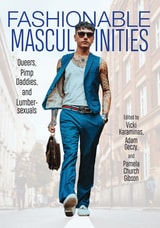
Fashionable Masculinities
Queers, Pimp Daddies, and LumbersexualsVicki Karaminas
Rutgers University Press, 2022
Fashionable Masculinities explores the expression of masculinities through constructions of fashion, identity, style and appearance as the third decade of the new millennium begins: a contradictory and precarious moment when masculinities are defined by protests and pandemics whilst being problematized across class, ethnicity, race, gender and sexuality. Whilst a majority of men might still define themselves as ‘traditional,’ post-millennials are now talking about how they envision a future without gender boundaries and borders. Rather than being defined as a gender, masculinity has now become a style that can be worn and performed as traditional and normative codes of masculinity are modulated and manipulated. This volume includes original essays on musical pop sensation Harry Styles, rapper and producer “Puff Daddy” Sean Combs, lumbersexuals, spornosexuals, sexy daddies, and aging cool black daddies. Bringing together contributions from leading scholars, this book interrogates and challenges the meaning of masculinities and the ways that they are experienced and lived.
[more]
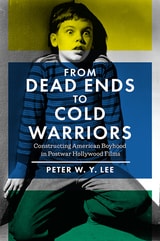
From Dead Ends to Cold Warriors
Constructing American Boyhood in Postwar Hollywood FilmsPeter W.Y. Lee
Rutgers University Press, 2021
After World War II, studies examining youth culture on the silver screen start with James Dean. But the angst that Dean symbolized—anxieties over parents, the “Establishment,” and the expectations of future citizen-soldiers—long predated Rebels without a Cause. Historians have largely overlooked how the Great Depression and World War II impacted and shaped the Cold War, and youth contributed to the national ideologies of family and freedom. From Dead Ends to Cold Warriors explores this gap by connecting facets of boyhood as represented in American film from the 1930s to the postwar years. From the Andy Hardy series to pictures such as The Search, Intruder in the Dust, and The Gunfighter, boy characters addressed larger concerns over the dysfunctional family unit, militarism, the “race question,” and the international scene as the Korean War began. Navigating the political, social, and economic milieus inside and outside of Hollywood, Peter W.Y. Lee demonstrates that continuities from the 1930s influenced the unique postwar moment, coalescing into anticommunism and the Cold War.
[more]