Results by title
683 books match the query 'Middle East' and 12 start with f

Failing Peace
Gaza and the Palestinian-Israeli ConflictSara Roy
Pluto Press, 2006
The book focuses on the Gaza Strip, an area that remains consistently neglected and misunderstood despite its political centrality. Drawing on more than two thousand interviews and extensive firsthand experience, Sara Roy chronicles the impact of Israeli occupation in Palestine over nearly a generation.
Exploring the devastating consequences of socio-economic and political decline, this is a unique and powerful account of the reality of life in the West Bank and Gaza. Written by one of the world's foremost scholars of the region, it offers an unrivalled breadth of scholarship and insight.
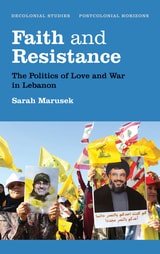
Faith and Resistance
The Politics of Love and War in LebanonSarah Marusek
Pluto Press, 2018
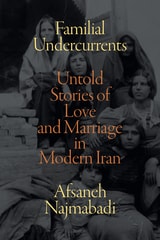
Familial Undercurrents
Untold Stories of Love and Marriage in Modern IranAfsaneh Najmabadi
Duke University Press, 2022
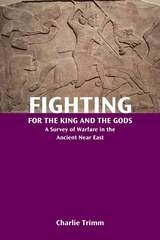
Fighting for the King and the Gods
A Survey of Warfare in the Ancient Near EastCharlie Trimm
SBL Press, 2017
The most up-to-date sourcebook on warfare in the ancient Near East
Fighting for the King and the Gods provides an introduction to the topic of war and the variety of texts concerning many aspects of warfare in the ancient Near East. These texts illustrate various viewpoints of war and show how warfare was an integral part of life. Trimm examines not only the victors and the famous battles, but also the hardship that war brought to many. While several of these texts treated here are well known (i.e., Ramses II's battle against the Hittites at Qadesh), others are known only to specialists. This work will allow a broader audience to access and appreciate these important texts as they relate to the history and ideology of warfare.
Features
- References to recent secondary literature for further study
- Early Greek and Chinese illustrative texts for comparisons with other cultures
- Indices to help guide the reader
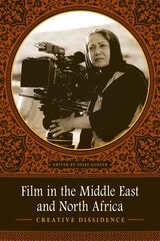
Film in the Middle East and North Africa
Creative DissidenceEdited by Josef Gugler
University of Texas Press, 2011
This is the first study to cover cinemas from Iran to Morocco. Nine essays present the region's major national cinemas, devoting special attention to the work of directors who have given image and voice to dissent from political regimes, from patriarchal customs, from fundamentalist movements, and from the West. These country essays are complemented by in-depth discussions of eighteen films that have been selected for both their excellence and their critical engagement with pressing current issues. The introduction provides a comprehensive overview of filmmaking throughout the region, including important films produced outside the national cinemas. The long history of Iranian cinema, its international renown, and the politics of directors confronting the state, earns it a special place in this volume. The other major emphasis is on the Israel/Palestine conflict, featuring films by Palestinian directors, Israelis, and an Egyptian working in Syria.
Nineteen authors collaborated on this book, among them Walter Armbrust, Roy Armes, Kevin Dwyer, Eric Egan, Nurith Gertz, Lina Khatib, Florence Martin, and Nadia Yaqub. About half of the contributors are film scholars; the others range across literary studies and the social sciences to two film directors and a novelist. Beyond differences in disciplinary orientation, there is considerable variation among contributors in the perspectives that inform their writing. They offer an illuminating range of approaches to the cinemas of the region.
The book is richly illustrated with posters of the featured films, photos of their directors at work, and stills illustrating critical arguments in the film essays.
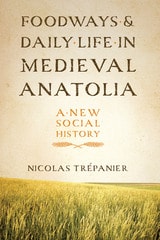
Foodways and Daily Life in Medieval Anatolia
A New Social HistoryBy Nicolas Trépanier
University of Texas Press, 2014
Byzantine rule over Anatolia ended in the eleventh century, leaving the population and its Turkish rulers to build social and economic institutions throughout the region. The emerging Anatolian society comprised a highly heterogeneous population of Christians and Muslims whose literati produced legal documents in Arabic, literary texts in Persian, and some of the earliest written works in the Turkish language. Yet the cultural landscape that emerged as a result has received very little attention—until now.
Investigating daily life in Anatolia during the fourteenth century, Foodways and Daily Life in Medieval Anatolia draws on a creative array of sources, including hagiographies, archaeological evidence, Sufi poetry, and endowment deeds, to present an accessible portrait of a severely under-documented period. Grounded in the many ways food enters the human experience, Nicolas Trépanier’s comprehensive study delves into the Anatolian preparation of meals and the social interactions that mealtime entails—from a villager’s family supper to an elaborately arranged banquet—as well as the production activities of peasants and gardeners; the marketplace exchanges of food between commoners, merchants, and political rulers; and the religious landscape that unfolded around food-related beliefs and practices. Brimming with enlightening details on such diverse topics as agriculture, nomadism, pastoralism, medicine, hospitality, and festival rituals, Foodways and Daily Life in Medieval Anatolia presents a new understanding of communities that lived at a key juncture of world history.
Foucault in Iran
Islamic Revolution after the EnlightenmentBehrooz Ghamari-Tabrizi
University of Minnesota Press, 2016
Were the thirteen essays Michel Foucault wrote in 1978–1979 endorsing the Iranian Revolution an aberration of his earlier work or an inevitable pitfall of his stance on Enlightenment rationality, as critics have long alleged? Behrooz Ghamari-Tabrizi argues that the critics are wrong. He declares that Foucault recognized that Iranians were at a threshold and were considering if it were possible to think of dignity, justice, and liberty outside the cognitive maps and principles of the European Enlightenment.
Foucault in Iran centers not only on the significance of the great thinker’s writings on the revolution but also on the profound mark the event left on his later lectures on ethics, spirituality, and fearless speech. Contemporary events since 9/11, the War on Terror, and the Arab Uprisings have made Foucault’s essays on the Iranian Revolution more relevant than ever. Ghamari-Tabrizi illustrates how Foucault saw in the revolution an instance of his antiteleological philosophy: here was an event that did not fit into the normative progressive discourses of history. What attracted him to the Iranian Revolution was precisely its ambiguity.
Theoretically sophisticated and empirically rich, this interdisciplinary work will spark a lively debate in its insistence that what informed Foucault’s writing was not an effort to understand Islamism but, rather, his conviction that Enlightenment rationality has not closed the gate of unknown possibilities for human societies.
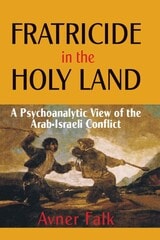
Fratricide in the Holy Land
A Psychoanalytic View of the Arab-Israeli ConflictAvner Falk
University of Wisconsin Press, 2004
Falk suggests that a way to understand and explain such irrational matters is to examine the unconscious aspects of the conflict. He examines large-group psychology, nationalism, group narcissism, psychogeography, the Arab and Israeli minds, and suicidal terrorism, and he offers psychobiographical studies of Ariel Sharon and Yasser Arafat, two key players in this tragic conflict today.
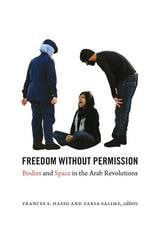
Freedom without Permission
Bodies and Space in the Arab RevolutionsFrances S. Hasso and Zakia Salime, editors
Duke University Press, 2016
From Coexistence to Conquest
International Law and the Origins of the Arab-Israeli Conflict, 1891-1949Victor Kattan
Pluto Press, 2009
From Coexistence to Conquest seeks to explain how the Arab-Israeli conflict developed by looking beyond strict legalism to the men behind the policies adopted by the Great Powers at the dawn of the twentieth century. It controversially argues that Zionism was adopted by the British Government in its 1917 Balfour Declaration primarily as an immigration device and that it can be traced back to the 1903 Royal Commission on Alien Immigration and the Alien’s Act 1905.
The book places the violent reaction of the Palestine Arabs to mass Jewish immigration in the context of Zionism, highlighting the findings of several British commissions of inquiry which recommended that Britain abandon its policy. The book also revisits the controversies over the question of self-determination, and the partition of Palestine.
The Chapter on the 1948 conflict seeks to update international lawyers on the scholarship of Israel’s ‘new’ historians and reproduces some of the horrific accounts of the atrocities that took place. The penultimate chapter argues that Israel was created through an act of conquest or subjugation. The book concludes with a sobering analysis of the conflict arguing that neither Jews nor Arabs were to blame for starting it.
From Mesopotamia to Iraq
A Concise HistoryHans J. Nissen and Peter Heine
University of Chicago Press, 2009
The recent reopening of Iraq’s National Museum attracted worldwide attention, underscoring the country’s dual image as both the cradle of civilization and a contemporary geopolitical battleground. A sweeping account of the rich history that has played out between these chronological poles, From Mesopotamia to Iraq looks back through 10,000 years of the region’s deeply significant yet increasingly overshadowed past.
Hans J. Nissen and Peter Heine begin by explaining how ancient Mesopotamian inventions—including urban society, a system of writing, and mathematical texts that anticipated Pythagoras—profoundly influenced the course of human history. These towering innovations, they go on to reveal, have sometimes obscured the major role Mesopotamia continued to play on the world stage. Alexander the Great, for example, was fascinated by Babylon and eventually died there. Seventh-century Muslim armies made the region one of their first conquests outside the Arabian peninsula. And the Arab caliphs who ruled for centuries after the invasion built the magnificent city of Baghdad, attracting legions of artists and scientists. Tracing the evolution of this vibrant country into a contested part of the Ottoman Empire, a twentieth-century British colony, a republic ruled by Saddam Hussein, and the democracy it has become, Nissen and Heine repair the fragmented image of Iraq that has come to dominate our collective imagination.
In hardly any other continuously inhabited part of the globe can we chart such developments in politics, economy, and culture across so extended a period of time. By doing just that, the authors illuminate nothing less than the forces that have made the world what it is today.
From the Sultan to Atatürk
TurkeyAndrew Mango
Haus Publishing, 2009