Results by title
618 books match the query 'Motion pictures' and 38 start with f
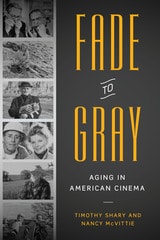
Fade to Gray
Aging in American CinemaTimothy Shary and Nancy McVittie
University of Texas Press, 2016
Winner, Choice Outstanding Academic Title, 2017
Americans are living longer and reinventing both work and retirement, but Hollywood movies barely hint at this reality of contemporary society. In many popular films, older characters fade into irrelevance, inactivity, or absurdity, or else they stay in the background as wise elders while younger characters provide the action. Most American films do not attempt to portray the rich variety of experiences or the sensitive aging issues that people confront in the years beyond fifty.
Fade to Gray offers one of the first extended studies of the portrayal of older people in American cinema from the silent era to the present. Writing in an accessible style for both general audiences and scholars, Timothy Shary and Nancy McVittie examine social attitudes toward aging through an analysis of hundreds of individual films, including such classics as You Can’t Take It With You (1938), Rosemary’s Baby (1968), Grumpy Old Men (1993), and Nebraska (2013). They show how representations of the aging process and depictions of older people embracing or enduring the various experiences of longer lives have evolved over the past century, as well as how film industry practices have both reflected and influenced perceptions of aging in American society. Exposing the social and political motivations for negative cinematic portrayals of the elderly, Fade to Gray also gives visibility to films that provide opportunities for better understanding and appreciation of the aged and the aging process.

Fan Phenomena
The Rocky Horror Picture ShowEdited by Marisa C. Hayes
Intellect Books, 2015
An homage to campy B-movies, sci-fi, and horror films, the movie was—and still is—more than the sum of its parts. Participatory and party-like, midnight showings attract moviegoers who dress as film characters, sing along with the catchy show tunes, and interact with the action on screen. In the four decades since its release, it has become a cultural phenomenon, not to mention one of the most commercially successful films of all time.
In Fan Phenomena: The Rocky Horror Picture Show, Marisa C. Hayes brings together a diverse group of writers who explore the film’s influence on the development of the pastiche tribute film, emerging queer activism of the 1970s, glam rock style, and the creative use of audience dialogue in recreating and interacting with the spoken and sung language of the film.
Spotlighting a cult phenomenon and its fans, many of who count the number of times they’ve seen the movie in the hundreds, this contribution to the Fan Phenomena series covers never-before-explored topics related to The Rocky Horror Picture Show. For anyone who has ever done the “Time Warp,” this will be essential reading.
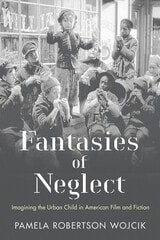
Fantasies of Neglect
Imagining the Urban Child in American Film and FictionPamela Robertson Wojcik
Rutgers University Press, 2016
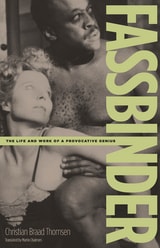
Fassbinder
The Life And Work Of A Provocative GeniusChristian Braad Thomsen
University of Minnesota Press, 2004
The revealing biography of this highly productive and radical film director
Rainer Werner Fassbinder was the most innovative practitioner of New German Cinema. He worked at breakneck speed and in fourteen years made forty-four films, including Ali: Fear Eats the Soul (1973) and The Marriage of Maria Braun (1978). Fassbinder ruthlessly attacked both German bourgeois society and the larger limitations of humanity, and his films detail the desperate yearning for love and freedom and the many ways in which society defeats that desire.
In Fassbinder, Christian Thomsen, a close friend of the director, illuminates Fassbinder’s body of work while revealing his insider views of a man who, despite a furious temper, manic working habits, and rampant drug addiction, supported an extended family—including his mother, a string of male lovers, lovelorn women, and even a pair of frustrated wives—with his intoxicating and prolific imagination. This book, like Fassbinder’s often-used image of the mirror, brilliantly reflects the sexual, political, and overwhelmingly human contradictions inherent in the life of this intensely creative man and the remarkable films he directed.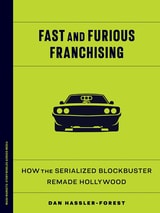
Fast and Furious Franchising
How the Serialized Blockbuster Remade HollywoodDan Hassler-Forest
University of Minnesota Press, 2026
What the popularity of the Fast and Furious film franchise says about Hollywood blockbusters and media production
Fast and Furious Franchising charts the transformation of Hollywood through the story of one of its most successful cinematic universes. Released in 2001, The Fast and the Furious became an unexpected hit, developing into a seven-billion-dollar media franchise with nine direct sequels (so far), one “sidequel,” copious spin-offs, and licensing deals from board games to theme park rides.
Dan Hassler-Forest shows how Fast and Furious paved the way for a new form of serialized storytelling that balanced new distribution practices and expansion into international markets with a savvy awareness of representational politics. By following the series’s development over the past twenty-five years, Fast and Furious Franchising reveals distinct phases that reflect larger media-industrial trends: the postclassical blockbuster era of the early 2000s; the emergence of the megafranchise between 2008 and 2014; the franchise’s “imperial” era, from 2015 through 2019; and the postpandemic crisis era of media saturation and franchise fatigue.
While examining this rapidly changing media landscape, Hassler-Forest offers lively, insightful analyses of the films as they have embraced ever-more-ludicrous plots and unlikely character turns while always maintaining their signature faith in the power of family. As he illuminates the role of the Fast and Furious movies in the global entertainment industry, Hassler-Forest shows how the films’ improbable success proves Dominic Toretto’s adage that, whether “you win by an inch or a mile . . . winning’s winning.”
Retail e-book files for this title are screen-reader friendly with images accompanied by short alt text and/or extended descriptions.
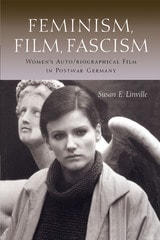
Feminism, Film, Fascism
Women's Auto/biographical Film in Postwar GermanyBy Susan E. Linville
University of Texas Press, 1998
German society's inability and/or refusal to come to terms with its Nazi past has been analyzed in many cultural works, including the well-known books Society without the Father and The Inability to Mourn. In this pathfinding study, Susan Linville challenges the accepted wisdom of these books by focusing on a cultural realm in which mourning for the Nazi past and opposing the patriarchal and authoritarian nature of postwar German culture are central concerns—namely, women's feminist auto/biographical films of the 1970s and 1980s.
After a broad survey of feminist theory, Linville analyzes five important films that reflect back on the Third Reich through the experiences of women of different ages—Marianne Rosenbaum's Peppermint Peace, Helma Sanders-Brahms's Germany, Pale Mother, Jutta Brückner's Hunger Years, Margarethe von Trotta's Marianne and Juliane, and Jeanine Meerapfel's Malou. By juxtaposing these films with the accepted theories on German culture, Linville offers a fresh appraisal not only of the films' importance but especially of their challenge to misogynist interpretations of the German failure to grieve for the horrors of its Nazi past.
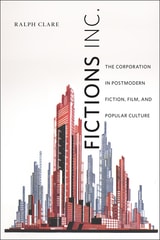
Fictions Inc.
The Corporation in Postmodern Fiction, Film, and Popular CultureClare, Ralph
Rutgers University Press, 2014
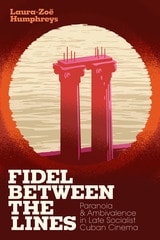
Fidel between the Lines
Paranoia and Ambivalence in Late Socialist Cuban CinemaLaura-Zoë Humphreys
Duke University Press, 2019

Fiery Cinema
The Emergence of an Affective Medium in China, 1915–1945Weihong Bao
University of Minnesota Press, 2015
What was cinema in modern China? It was, this book tells us, a dynamic entity, not strictly tied to one media technology, one mode of operation, or one system of aesthetic code. It was, in Weihong Bao’s term, an affective medium, a distinct notion of the medium as mediating environment with the power to stir passions, frame perception, and mold experience. In Fiery Cinema, Bao traces the permutations of this affective medium from the early through the mid-twentieth century, exploring its role in aesthetics, politics, and social institutions.
Mapping the changing identity of cinema in China in relation to Republican-era print media, theatrical performance, radio broadcasting, television, and architecture, Bao has created an archaeology of Chinese media culture. Within this context, she grounds the question of spectatorial affect and media technology in China’s experience of mechanized warfare, colonial modernity, and the shaping of the public into consumers, national citizens, and a revolutionary collective subject. Carrying on a close conversation with transnational media theory and history, she teases out the tension and affinity between vernacular, political modernist, and propagandistic articulations of mass culture in China’s varied participation in modernity.
Fiery Cinema advances a radical rethinking of affect and medium as a key insight into the relationship of cinema to the public sphere and the making of the masses. By centering media politics in her inquiry of the forgotten future of cinema, Bao makes a major intervention into the theory and history of media.
Film Criticism in the Digital Age
Frey, Mattias
Rutgers University Press, 2015
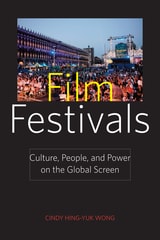
Film Festivals
Culture, People, and Power on the Global ScreenWong, Cindy H
Rutgers University Press, 2011
Movies, stars, auteurs, critics, and the sheer excitement of cinema come together in film festivals as quintessential constellations of art, business, and glamour. Yet, how well do we actually understand the forces and meanings that these events embody?
Film Festivals offers the first comprehensive overview of the history, people, films, and multiple functions of the festival world. From Sundance to Hong Kong, from the glitter of Cannes to edgier festivals that challenge boundaries or foster LGBTQ cultural production, film festivals celebrate art, promote business, bring cinema to diverse audiences, and raise key issues about how we see our world. Cindy Hing-Yuk Wong situates festivals within changing global practices of film, including their important ties to both Hollywood and independent cinema. She explores how these events have become central in the construction of cinema knowledge as well as the behind-the-scene mechanics of finance, distribution, and evaluation. By linking general structures and connections to specific films and auteurs, Wong addresses the components and creation of film festivals that continue to reshape filmmaking as art and business.
Film Language
A Semiotics of the CinemaChristian Metz
University of Chicago Press, 1990
"The semiology of film . . . can be held to date from the publication in 1964 of the famous essay by Christian Metz, 'Le cinéma: langue ou langage?'"—Geoffrey Nowell-Smith, Times Literary Supplement
"Modern film theory begins with Metz."—Constance Penley, coeditor of Camera Obscura
"Any consideration of semiology in relation to the particular field signifying practice of film passes inevitably through a reference to the work of Christian Metz. . . . The first book to be written in this field, [Film Language] is important not merely because of this primacy but also because of the issues it raises . . . issues that have become crucial to the contemporary argument."—Stephen Heath, Screen

Film Programming for Public Libraries
Kati Irons
American Library Association, 2014
Film Talk
Directors at WorkDixon, Wheeler Winston
Rutgers University Press, 2007
The answers to these questions, along with many more little-known facts and insights, can be found in Film Talk, an in-depth, behind-the-scenes look at filmmaking from the 1940s to the present. In eleven intimate and revealing interviews, contemporary film directors speak frankly about their work-their successes and their disappointments, their personal aspirations, struggles, relationships, and the politics that affect the industry.
A medley of directors including those working in pop culture and documentary, as well as feminist filmmakers, social satirists, and Hollywood mavericks recount stories that have never before been published. Among them are Monte Hellman, the auteur of the minimalist masterpiece Two-Lane Blacktop; Albert Maysles, who with his late brother David, created some of the most important documentaries of the 1960s, including Salesman and The Beatles: What's Happening?; Robert Downey Sr., whose social satires Putney Swope and Greaser's Palace paved the way for a generation of filmmakers; Bennett Miller, whose film Capote won an Academy Award in 2005; and Jamie Babbit, a lesbian crossover director whose low-budget film But I'm a Cheerleader! became a mainstream hit.
The candid conversations, complimented by more than fifty photographs, including many that are rare, make this book essential reading for aspiring moviemakers, film scholars, and everyone interested in the how movies are made and who the fascinating individuals are who make them.
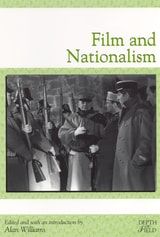
Film and Nationalism
Williams, Alan
Rutgers University Press, 2002
Film and Nationalism examines the ways in which cinema has been considered an arena of conflict and interaction between nations and nationhood. Each section of this volume explores a crucial aspect of the discussion. Is film an effective form of national propaganda? Are films losing the very notion of nationhood, in favor of a generalized, "global" cinematographic culture? What is films influence over "national character"? In addition, the volume explores the cultural and economic interactions between developed and underdeveloped countries. How have third world nations defined themselves in relation to hegemonic first world cultures, and how have their relations been changed through the dissemination of Western films? Throughout, Alan Williams chooses essays that enhance our understanding of how films help shape our sense of nationhood and self.
Film and Television After 9/11
Edited by Wheeler Winston Dixon
Southern Illinois University Press, 2004
In Film and Television After 9/11, editor Wheeler Winston Dixon and eleven other distinguished film scholars discuss the production, reception, and distribution of Hollywood and foreign films after the terrorist attacks of September 11, 2001, and examine how moviemaking has changed to reflect the new world climate.
While some contemporary films offer escapism, much of mainstream American cinema since 9/11 is centered on the desire for a “just war” in which military reprisals and escalation of warfare appear to be both inevitable and justified. Films of 2002 such as Black Hawk Down, Collateral Damage, and We Were Soldiers demonstrate a renewed audience appetite for narratives of conflict, reminiscent of the wave of filmmaking that surrounded American involvement in World War II.
The attacks on the World Trade Center and the Pentagon galvanized the American public initially, yet film critics wonder how this will play out over time. Film and Television After 9/11 is the first book to provide original insights into topics ranging from the international reception of post-9/11 American cinema, re-viewing films of our shared cinematic past in light of the attacks, and exploring parallels between post-9/11 cinema and World War II-era productions.
Film and the American Moral Vision of Nature
Theodore Roosevelt to Walt DisneyRonald B. Tobias
Michigan State University Press, 2011
Film and the German Left in the Weimar Republic
From Caligari to Kuhle WampeBy Bruce Murray
University of Texas Press, 1990
The Weimar Republic of Germany, covering the post-World War I period of civil and governmental strife, witnessed a great struggle among a variety of ideologies, a struggle for which the arts provided one important arena. Leftist individuals and organizations critiqued mainstream art production and attempted to counter what they perceived as its conservative-to-reactionary influence on public opinion. In this groundbreaking study, Bruce Murray focuses on the leftist counter-current in Weimar cinema, offering an alternative critical approach to the traditional one of close readings of the classical films.
Beginning with a brief review of pre-Weimar cinema (1896-1918), he analyzes the film activity of the Social Democratic Party, the German Communists, and independent leftists in the Weimar era. Leftist filmmakers, journalists, and commentators, who in many cases contributed significantly to marginal leftist as well as mainstream cinema, have, until now, received little scholarly attention. Drawing on exhaustive archival research and personal interviews, Murray shows how the plurality of aesthetic models represented in the work of individuals who participated in leftist experiments with cinema in the 1920S collapsed as Germany underwent the transition from parliamentary democracy to fascist dictatorship. He suggests that leftists shared responsibility for that collapse and asserts the value of such insights for those who contemplate alternatives to institutional forms of cinematic discourse today.
Film as Argument
The Secret to Feature Film StorytellingDarren Paul Fisher
Rutgers University Press, 2025
Is it to entertain? To move and audience? To tell a powerful story? For fame and fortune?
You may have answered yes to each, but those answers don’t account for the practice overall. Most books about screenwriting and directing are primarily concerned with craft and technique, but how can you truly understand filmmaking – or make the best films - unless you know what purpose it really serves.
So what’s the secret? As the title of this book suggests, making feature films is fundamentally the practice of making a very specific type of argument. To see how this works, we will deep-dive into how filmmakers are trained and taught to think about filmmaking, and what traditions they knowingly or unknowingly follow. We will look at hundreds of films and some major case studies, including Toy Story 3, Schindler’s List, Raiders of the Lost Ark, Amour, and mother!, to explore how and what films argue, and why knowing this can both unlock both a greater appreciation of the form, and improve the impact your films make.
Film in the Middle East and North Africa
Creative DissidenceEdited by Josef Gugler
University of Texas Press, 2011
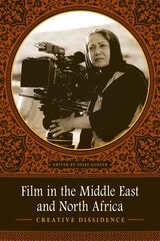
This is the first study to cover cinemas from Iran to Morocco. Nine essays present the region's major national cinemas, devoting special attention to the work of directors who have given image and voice to dissent from political regimes, from patriarchal customs, from fundamentalist movements, and from the West. These country essays are complemented by in-depth discussions of eighteen films that have been selected for both their excellence and their critical engagement with pressing current issues. The introduction provides a comprehensive overview of filmmaking throughout the region, including important films produced outside the national cinemas. The long history of Iranian cinema, its international renown, and the politics of directors confronting the state, earns it a special place in this volume. The other major emphasis is on the Israel/Palestine conflict, featuring films by Palestinian directors, Israelis, and an Egyptian working in Syria.
Nineteen authors collaborated on this book, among them Walter Armbrust, Roy Armes, Kevin Dwyer, Eric Egan, Nurith Gertz, Lina Khatib, Florence Martin, and Nadia Yaqub. About half of the contributors are film scholars; the others range across literary studies and the social sciences to two film directors and a novelist. Beyond differences in disciplinary orientation, there is considerable variation among contributors in the perspectives that inform their writing. They offer an illuminating range of approaches to the cinemas of the region.
The book is richly illustrated with posters of the featured films, photos of their directors at work, and stills illustrating critical arguments in the film essays.
Film on The Faultline
Edited by Alan Wright
Intellect Books, 2015
Film's Ghosts
Tatsumi Hijikata's Butoh and the Transmutation of 1960s JapanStephen Barber
Diaphanes, 2019
Filmed Thought
Cinema as Reflective FormRobert B. Pippin
University of Chicago Press, 2020
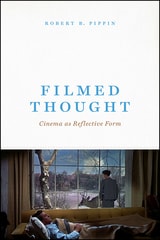
Filmed Thought examines questions of morality in Almodóvar’s Talk to Her, goodness and naïveté in Hitchcock’s Shadow of a Doubt, love and fantasy in Sirk’s All That Heaven Allows, politics and society in Polanski’s Chinatown and Malick’s The Thin Red Line, and self-understanding and understanding others in Nicholas Ray’s In a Lonely Place and in the Dardennes brothers' oeuvre. In each reading, Pippin pays close attention to what makes these films exceptional as technical works of art (paying special attention to the role of cinematic irony) and as intellectual and philosophical achievements. Throughout, he shows how films offer a view of basic problems of human agency from the inside and allow viewers to think with and through them. Captivating and insightful, Filmed Thought shows us what it means to take cinema seriously not just as art, but as thought, and how this medium provides a singular form of reflection on what it is to be human.
Filming the City
Urban Documents, Design Practices and Social Criticism through the LensEdited by Edward Clift, Mirko Guaralda, and Ari Mattes
Intellect Books, 2016
Films That Spill
Beyond the Cinema of TransgressionMarie Sophie Beckmann
Rutgers University Press, 2025
Flamboyant Fictions
The Failed Art of PassingIan Fleishman
Northwestern University Press, 2025
Exposes a stylistic tradition of flamboyantly failed passing in queer literature and film
This book posits formal experimentation as an index for evolving expressions of male homosexuality from literary modernism to the German New Wave and the present day. Ian Fleishman exposes a tradition of flamingly failed passing that is itself a surreptitious mode of passing: the flaunting of queer style as an intentionally unconvincing cover for queer content. Exploring a corpus of films and novels by André Gide, Jean Genet, Rainer Werner Fassbinder, Werner Schroeter, François Ozon, and Xavier Dolan, among others, Flamboyant Fictions: The Failed Art of Passing intervenes in trenchant debates about queer agency, visibility, negativity, and disidentification. Mapping queer strategies of storytelling onto queer practices of self-invention, Flamboyant Fictions wagers that it is precisely in instances of conflict between these auteurs and their inventions that narrative becomes a laboratory for testing the sovereignty and self-determination of queer identity.
Flatlining on the Field of Dreams
Cultural Narratives in the Films of President Reagan's AmericaNadel, Alan
Rutgers University Press, 1997
-Film Quarterly
"From Back to the Future to Forrest Gump, Nadel shows not only how notions of cinematic time re-script political change but how our very conceptualizations of change are thematized by our experiences of watching movies. This is not simply film history, or film as history, but film affirming "history" in the same way that Ronald Reagan affirmed film narratives."
-Susan Jeffords, University of Washington
"Flatlining on the Field of Dreams brilliantly restages the cultural narratives associated with Reaganism within a neo-imperialist cinematic space and reveals the heretofore unexamined role class played in the reproduction of those narratives."
-Donald E. Pease, Dartmouth College
Flatlining on the Field of Dreams demonstrates, with witty prose and careful analysis, how the overindulgent, image-conscious years of the Reagan administration are reflected in sundry aspects of American films produced during that era. Discussing dozens of films, including Home Alone, Beetlejuice, Ghost, The Little Mermaid, Working Girl, Who Framed Roger Rabbit?, and Trading Places, Alan Nadel identifies narratives about credit, deregulation, gender, race, and masculinity that defined "President Reagan's America." Linking the way Hollywood films work to the stories they tell, he explains how the ideas and values of Reaganism became the symbolic food of a hyper-consumptive society. The book provides hard-to-ignore demonstrations of the extensive synergy between politics, history, and popular culture.
Flickering Shadows
Cinema and Identity in Colonial ZimbabweJ. M. Burns
Ohio University Press, 2002
Flickers of Film
Nostalgia in the Time of Digital CinemaSperb, Jason
Rutgers University Press, 2015
In Flickers of Film, Jason Sperb offers nuanced and unexpected answers to these questions, examining the benefits of certain types of film nostalgia, while also critiquing how Hollywood’s nostalgic representations of old technologies obscure important aspects of their histories. He interprets this affection for the prehistory and infancy of digital technologies in relation to an industry-wide anxiety about how the digital has grown to dominate Hollywood, pushing it into an uncertain creative and economic future. Yet he also suggests that Hollywood’s nostalgia for old technologies ignores the professionals who once employed them, as well as the labor opportunities that have been lost through the computerization and outsourcing of film industry jobs.
Though it deals with nostalgia, Flickers of Film is strikingly cutting-edge, one of the first studies to critically examine Pixar’s role in the film industry, cinematic representations of videogames, and the economic effects of participatory culture. As he takes in everything from Terminator: Salvation to The Lego Movie, Sperb helps us see what’s distinct about this recent wave of self-aware nostalgic films—how Hollywood nostalgia today isn’t what it used to be.
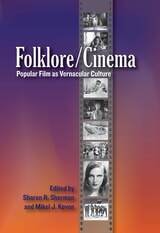
Folklore/Cinema
Popular Film as Vernacular CultureSharon R. Sherman and Mikel J. Koven
Utah State University Press, 2007
Interest in the conjunctions of film and folklore is stronger and more diverse than ever. Documentaries on folk life and expression remain a vital genre, but scholars such as Sharon Sherman and Mikel Koven also are exploring how folklore elements appear in, and merge with, popular cinema. They look at how movies, a popular culture medium, can as well be both a medium and type of folklore, playing cultural roles and conveying meanings customarily found in other folkloric forms. They thus use the methodology of folklore studies to analyze films made for commercial distribution.
The contributors to this book look at film and folklore convergences, showing how cinema conveys vernacular culture in traditional and popular venues. Folklore/Cinema will be of interest to scholars from many fields---folklore, film studies, popular culture, American studies, history, anthropology, and literature among them---and will help introduce students in various courses to intersections of film and culture.
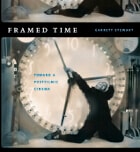
Framed Time
Toward a Postfilmic CinemaGarrett Stewart
University of Chicago Press, 2007

Framing the Past
The Historiograpy of German Cinema and TelevisionEdited by Bruce A. Murray and Christopher J. Wickham
Southern Illinois University Press, 1992
This collection of essays was selected from those presented in October 1988 at a conference sponsored by the National Endowment for the Humanities, "Concepts of History in German Cinema." The contributors include notable historians, film scholars, and German studies specialists who explore the complex network of social, political, and religious institutions that have influenced the historiography of German cinema and television.
Before the turn of the century, Germans began to employ the medium of film to represent the past when they attempted to document their Prussian heritage. Since then, German cinema and television have promoted history as a component of personal, cultural, and national identity by consistently providing prominent treatment of historical subjects.
Although it is relatively easy to document changes in the selection and handling of these subjects, it is more difficult to determine precisely which factors have motivated those changes.
In attempting to define these factors, the link between German cinema, television, and history has developed around three interrelated issues: (1) the reception of Weimar cinema, which for most film scholars continues to be mediated to one extent or another by Siegfried Kracauer’s work; (2) the inscribing of fascism in cinema and television; and (3) the nature of, and potential for, alternatives to mainstream cinema and television.
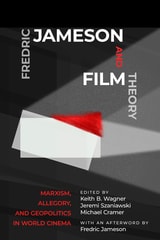
Fredric Jameson and Film Theory
Marxism, Allegory, and Geopolitics in World CinemaKeith B. Wagner
Rutgers University Press, 2022
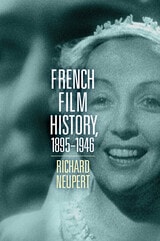
French Film History, 1895–1946
Richard Neupert
University of Wisconsin Press, 2022
Neupert explains the contexts behind the rise of cinema in France, including groundbreaking work by the Lumière family, Georges Méliès, and Alice Guy; the powerhouse studios of Pathé and Gaumont; directors such as René Clair, Germaine Dulac, Marcel Pagnol, and Jean Renoir; and an array of stars, including Max Linder, Jean Gabin, Josephine Baker, and Michèle Morgan. The first fifty years of French film practice established cinema’s cultural and artistic potential, setting the stage for the global post–World War II explosion in commercial movies and art cinema alike. French film and its rich history remain at the heart of cinematic storytelling and our moviegoing pleasure.
From Dead Ends to Cold Warriors
Constructing American Boyhood in Postwar Hollywood FilmsPeter W.Y. Lee
Rutgers University Press, 2021
From Light to Byte
Toward an Ethics of Digital CinemaMarkos Hadjioannou
University of Minnesota Press, 2012
Cinema has been undergoing a profound technological shift: celluloid film is being replaced by digital media in the production, distribution, and reception of moving images. Concerned with the debate surrounding digital cinema’s ontology and the interrelationship between cinema cultures, From Light to Byte investigates the very idea of change as it is expressed in the current technological transition. Markos Hadjioannou asks what is different in the way digital movies depict the world and engage with the individual and how we might best address the issue of technological shift within media archaeologies.
Hadjioannou turns to the technical basis of the image as his first point of departure, considering the creative and perceptual activities of moviemakers and viewers. Grounded in film history, film theory, and philosophy, he explores how the digital configures its engagement with reality and the individual while simultaneously replaying and destabilizing celluloid’s own structures. He observes that, where film’s photographic foundation encourages an existential association between individual and reality, digital representations are graphic renditions of mathematical codes whose causal relations are more difficult to trace.
Throughout this work Hadjioannou examines how the two technologies set themselves up with reference to reality, physicality, spatiality, and temporality, and he concludes that the question concerning digital cinema is ultimately one of ethical implications—a question, that is, of the individual’s ability to respond to the image of the world.
Frontiers of Screen History
Imagining European Borders in Cinema, 1945-2010Edited by Raita Merivirta, Kimmo Ahonen, Heta Mulari, and Rami Mähkä
Intellect Books, 2013
Futures of the Flesh
An Experiment in Film WritingDomietta Torlasco
Northwestern University Press, 2026
Exploring alternative possibilities of viewpoint through cinematic experimentation
In this boldly multidimensional work, Domietta Torlasco alternates between theoretical writings, film essays, and fragmented excerpts from an original screenplay to construct a temporal as well as spatial architecture for her critical intervention. Futures of the Flesh posits that cinematic experimentation holds the strongest potential to reimagine life—its forms, rhythms, and affects—beyond the division between subject and object, human and animal, animate and inanimate. Such potential cannot be clearly located in either space or time but, on the contrary, requires that we think according to momentum, diffraction, and difference.
As a novel notion and the formative medium of both subject and object, the flesh affirms the openness and indefinite generativity of being, allowing for the appearance of new perceptual relations and forms of kinship. Torlasco stages a dialogue between thinkers including Hortense Spillers and Maurice Merleau-Ponty and turns to canonical films, including Blade Runner and Solaris, classic sci-fi literature, such as Octavia Butler’s Kindred, and contemporary video art to elucidate how these media imaginatively rework the distinction between categories of being. This book endeavors to redefine the relation between theory and practice, analysis and creation, to name the primary relations that, under specific techno-aesthetic conditions, enable the emergence of porous, un-bordered forms of life.