Results by title
111 books match the query 'Museum Studies' and 4 start with f

From Hedge to Living Bridge
Re-Imagining the Kirstenbosch National Botanical GardenMelanie Boehi
University of Michigan Press, 2027
Offering a micro-history of the Kirstenbosch National Botanical Garden in Cape Town, From Hedge to Living Bridge situates the botanical garden in the context of colonial botany and local and global struggles to decolonize space and place. At the time of its establishment in 1913, the botanical garden was imagined as a vehicle to promote white South African nationalism. During the apartheid era, the state deployed the botanical garden in international image campaigns to counter international isolation. In the post-apartheid period, the botanical garden attempted to transform its colonial and apartheid displays to accommodate the new democratic nation.
Melanie Boehi reveals that while the botanical garden was designed as a white space, Black people always claimed belonging to it, as it was built on land shaped by Indigenous presence, slavery, and apartheid forced removals.
Drawing from multispecies ethnography, Boehi expands the conventional concept of the archive to include the landscape and the garden’s plants. While the botanical garden was imagined as a colonial tool of separation, it also has the potential to function as a living bridge between people who were segregated by colonialism and apartheid, as well as between humans and nonhuman nature.
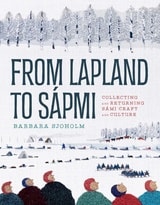
From Lapland to Sápmi
Collecting and Returning Sámi Craft and CultureBarbara Sjoholm
University of Minnesota Press, 2023
A cultural history of Sápmi and the Nordic countries as told through objects and artifacts
Material objects—things made, used, and treasured—tell the story of a people and place. So it is for the Indigenous Sámi living in Norway, Sweden, Finland, and Russia, whose story unfolds across borders and centuries, in museums and private collections. The objects created by the Sámi for daily and ceremonial use were purchased and taken by Scandinavians and foreign travelers in Lapland from the seventeenth century to the present, and the collections described in From Lapland to Sápmi map a complex history that is gradually shifting to a renaissance of Sámi culture and craft, along with the return of many historical objects to Sápmi, the Sámi homeland.
The Sámi objects first collected in Lapland by non-Indigenous people were drums and other sacred artifacts, but later came to include handmade knives, decorated spoons, clothing, and other domestic items owned by Sámi reindeer herders and fishers, as well as artisanal crafts created for sale. Barbara Sjoholm describes how these objects made their way via clergy, merchants, and early scientists into curiosity cabinets and eventually to museums in Copenhagen, Stockholm, Oslo, and abroad. Musicians, writers, and tourists also collected Sámi culture for research and enjoyment. Displays of Sámi material culture in Scandinavia and England, Germany, and other countries in museums, exhibition halls, and even zoos often became part of racist and colonial discourse as examples of primitive culture, and soon figured in the debates of ethnographers and curators over representations of national folk traditions and “exotic” peoples. Sjoholm follows these objects and collections from the Age of Enlightenment through the twentieth century, when artisanship took on new forms in commerce and museology and the Sámi began to organize politically and culturally. Today, several collections of Sámi objects are in the process of repatriation, while a new generation of artists, activists, and artisans finds inspiration in traditional heritage and languages.
Deftly written and amply illustrated, with contextual notes on language and Nordic history, From Lapland to Sápmi brings to light the history of collecting, displaying, and returning Sámi material culture, as well as the story of Sámi creativity and individual and collective agency.
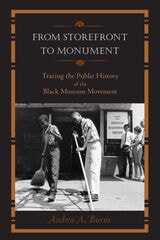
From Storefront to Monument
Tracing the Public History of the Black Museum MovementAndrea A. Burns
University of Massachusetts Press, 2013
Winner of the 2015 National Council on Public History Book Award
Today well over two hundred museums focusing on African American history and culture can be found throughout the United States and Canada. Many of these institutions trace their roots to the 1960s and 1970s, when the struggle for racial equality inspired a movement within the black community to make the history and culture of African America more “public.”
This book tells the story of four of these groundbreaking museums: the DuSable Museum of African American History in Chicago (founded in 1961); the International Afro-American Museum in Detroit (1965); the Anacostia Neighborhood Museum in Washington, D.C. (1967); and the African American Museum of Philadelphia (1976). Andrea A. Burns shows how the founders of these institutions, many of whom had ties to the Black Power movement, sought to provide African Americans with a meaningful alternative to the misrepresentation or utter neglect of black history found in standard textbooks and most public history sites. Through the recovery and interpretation of artifacts, documents, and stories drawn from African American experience, they encouraged the embrace of a distinctly black identity and promoted new methods of interaction between the museum and the local community.
Over time, the black museum movement induced mainstream institutions to integrate African American history and culture into their own exhibits and educational programs. This often controversial process has culminated in the creation of a National Museum of African American History and Culture, now scheduled to open in the nation's capital in 2015.
From the Skin
Defending Indigenous Nations Using Theory and PraxisEdited by J. Jeffery Clark and Elise Boxer; Foreword by Nick Estes
University of Arizona Press, 2023
In this volume, contributors demonstrate the real-world application of Indigenous theory to the work they do in their own communities and how this work is driven by urgency, responsibility, and justice—work that is from the skin.
In From the Skin, contributors reflect on and describe how they apply the theories and concepts of Indigenous studies to their communities, programs, and organizations, and the ways the discipline has informed and influenced the same. They show the ways these efforts advance disciplinary theories, methodologies, and praxes. Chapters cover topics including librarianship, health programs, community organizing, knowledge recovery, youth programming, and gendered violence. Through their examples, the contributors show how they negotiate their peoples’ knowledge systems with knowledge produced in Indigenous studies programs, demonstrating how they understand the relationship between their people, their nations, and academia.
Editors J. Jeffery Clark and Elise Boxer propose and develop the term practitioner-theorist to describe how the contributors theorize and practice knowledge within and between their nations and academia. Because they live and exist in their community, these practitioner-theorists always consider how their thinking and actions benefit their people and nations. The practitioner-theorists of this volume envision and labor toward decolonial futures where Indigenous peoples and nations exist on their own terms.
Contributors
Randi Lynn Boucher-Giago
Elise Boxer
Shawn Brigman
J. Jeffery Clark
Nick Estes
Eric Hardy
Shalene Joseph
Jennifer Marley
Brittani R. Orona
Alexander Soto