344 books match the query 'Nationalism' and 8 start with f

cover of Fields of Wheat, Hills of Blood: Passages to Nationhood in Greek Macedonia, 1870-1990

Fields of Wheat, Hills of Blood

Passages to Nationhood in Greek Macedonia, 1870-1990

Anastasia N. Karakasidou

University of Chicago Press, 1997

Deftly combining archival sources with evocative life histories, Anastasia Karakasidou brings welcome clarity to the contentious debate over ethnic identities and nationalist ideologies in Greek Macedonia. Her vivid and detailed account demonstrates that contrary to official rhetoric, the current people of Greek Macedonia ultimately derive from profoundly diverse ethnic and cultural backgrounds. Throughout the last century, a succession of regional and world conflicts, economic migrations, and shifting state formations has engendered an intricate pattern of population movements and refugee resettlements across the region. Unraveling the complex social, political, and economic processes through which these disparate peoples have become culturally amalgamated within an overarchingly Greek national identity, this book provides an important corrective to the Macedonian picture and an insightful analysis of the often volatile conjunction of ethnicities and nationalisms in the twentieth century.

"Combining the thoughtful use of theory with a vivid historical ethnography, this is an important, courageous, and pioneering work which opens up the whole issue of nation-building in northern Greece."—Mark Mazower, University of Sussex
[more]
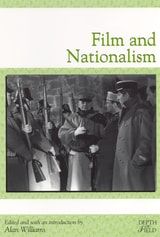
cover of Film and Nationalism

Film and Nationalism

Williams, Alan

Rutgers University Press, 2002

Today there is much debate over an increasingly "global economy." But commercial cinema has been, from the very beginnings of its existence, "globalized." From the mediums inception, films have defined and reinforced the core values and social structures of countries. They have also helped definesocially and culturallywhat is to be considered "outside" the nation and what it is to be shunned.

Film and Nationalism examines the ways in which cinema has been considered an arena of conflict and interaction between nations and nationhood. Each section of this volume explores a crucial aspect of the discussion. Is film an effective form of national propaganda? Are films losing the very notion of nationhood, in favor of a generalized, "global" cinematographic culture? What is films influence over "national character"? In addition, the volume explores the cultural and economic interactions between developed and underdeveloped countries. How have third world nations defined themselves in relation to hegemonic first world cultures, and how have their relations been changed through the dissemination of Western films? Throughout, Alan Williams chooses essays that enhance our understanding of how films help shape our sense of nationhood and self.
[more]
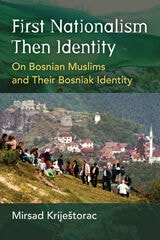
cover of First Nationalism Then Identity: On Bosnian Muslims and Their Bosniak Identity

First Nationalism Then Identity

On Bosnian Muslims and Their Bosniak Identity

Mirsad Kriještorac

University of Michigan Press, 2022

First Nationalism Then Identity focuses on the case of Bosnian Muslims, a rare historic instance of a new nation emerging. Although for Bosnian Muslims the process of national emergence and the assertion of a new salient identity have been going on for over two decades, Mirsad Kriještorac is the first to explain the significance of the whole process and how the adoption of their new Bosniak identity occurred. He provides a historical overview of Yugoslav and Bosnian Slavic Muslims’ transformation into a full-fledged distinct and independent national group as well as addresses the important question in the field of nationalism studies about the relationship between and workings of nationalism and identity. While this book is noteworthy for ordinary readers interested in the case of Bosnian Muslims, it is an important contribution to the scholarly debate on the role of nationalism in the political life of a group and adds an interdisciplinary perspective to comparative politics scholarship by drawing from anthropology, history, geography, and sociology.
[more]
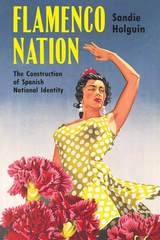
cover of Flamenco Nation: The Construction of Spanish National Identity

Flamenco Nation

The Construction of Spanish National Identity

Sandie Holguín

University of Wisconsin Press, 2019

How did flamenco—a song and dance form associated with both a despised ethnic minority in Spain and a region frequently derided by Spaniards—become so inexorably tied to the country’s culture? Sandie Holguín focuses on the history of the form and how reactions to the performances transformed from disgust to reverance over the course of two centuries.
​
Holguín brings forth an important interplay between regional nationalists and image makers actively involved in building a tourist industry. Soon they realized flamenco performances could be turned into a folkloric attraction that could stimulate the economy. Tourists and Spaniards alike began to cultivate flamenco as a representation of the country's national identity. This study reveals not only how Spain designed and promoted its own symbol but also how this cultural form took on a life of its own.
[more]
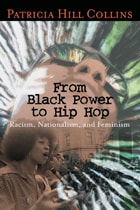
cover of From Black Power to Hip Hop: Racism, Nationalism, and Feminism

From Black Power to Hip Hop

Racism, Nationalism, and Feminism

Patricia Hill Collins

Temple University Press, 2006
Despite legislation designed to eliminate unfair racial practices, the United States continues to struggle with a race problem. Some thinkers label this a "new" racism and call for new political responses to it. Using the experiences of African American women and men as a touchstone for analysis, Patricia Hill Collins examines new forms of racism as well as political responses to it.In this incisive and stimulating book, renowned social theorist Patricia Hill Collins investigates how nationalism has operated and re-emerged in the wake of contemporary globalization and offers an interpretation of how black nationalism works today in the wake of changing black youth identity. Hers is the first study to analyze the interplay of racism, nationalism, and feminism in the context of twenty-first century black America.From Black Power to Hip Hop covers a wide range of topics including the significance of race and ethnicity to the American national identity; how ideas about motherhood affect population policies; African American use of black nationalism ideologies as anti-racist practice; and the relationship between black nationalism, feminism and women in the hip-hop generation.
[more]
cover of From Culture to Ethnicity to Conflict: An Anthropological Perspective on Ethnic Conflict

From Culture to Ethnicity to Conflict

An Anthropological Perspective on Ethnic Conflict

Jack David Eller

University of Michigan Press, 1999
In the post-Cold War era, the most common and often the most violent conflicts are ethnic conflicts. Many people, including many scholars, see ethnic conflicts as a return to the past, as contests between ancient and well-defined groups with long-standing grievances and animosities. Jack David Eller argues instead that these conflicts are a defining phenomenon of the "new world order"--that they are, in many ways, modern-day inventions based only loosely on "traditional" cultures and hostilities. From Culture to Ethnicity to Conflict presents in-depth case studies on Sri Lanka, the Kurds, Rwanda and Burundi, Bosnia, and Quebec, along with two theoretical introductory chapters that offer the reader the tools to understand the relationship between "culture" or "tradition" and contemporary ethnic conflicts. Eller finds that ethnicity is not a simple instantiation of "traditional" culture, nor is conflict a simple consequence of ethnicity. Rather, each is constructed out of certain raw cultural materials, through a process of remembering, forgetting, interpreting, and inventing. Ultimately, Eller demonstrates, these groups are fighting not about culture, but with culture. No other book combines the level of analysis offered here with in-depth case studies of several important examples. It will appeal to anyone with an interest in understanding these conflicts. It will be assigned reading for students and scholars of cultural diversity and ethnic conflict in anthropology, history, political science, and peace and conflict studies. Jack David Eller is Assistant Professor of Anthropology, University of Colorado, Denver/Teikyo Loretto Heights University.
[more]
cover of From Tribalism to Nationalism: The Anthropological Turn in Laos – A Tribute to Grant Evans

From Tribalism to Nationalism

The Anthropological Turn in Laos – A Tribute to Grant Evans

Edited by Yves Goudineau and Vanina Bouté

National University of Singapore Press, 2022
Laos has long been considered by ethnologists as a unique place of study. To this day, diverse ethnic minorities make up over half the country’s population. In earlier times, several good ethnographies were made but usually they were narrow in scope. War and revolution then made fieldwork impossible in Laos until the 1990s, when some international researchers returned, often in difficult and precarious conditions, bringing new theoretical perspectives. This volume brings together several such studies by this new generation of researchers, their fieldwork often joint projects in collaboration with Lao researchers. Published in collaboration with the École française d’Extrême-Orient (EFEO), the book is a tribute to the late Grant Evans, whose work remains emblematic of this ‘anthropological turn’ in Lao studies.
[more]
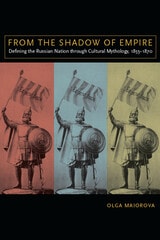
cover of From the Shadow of Empire: Defining the Russian Nation through Cultural Mythology, 1855–1870

From the Shadow of Empire

Defining the Russian Nation through Cultural Mythology, 1855–1870

Olga Maiorova

University of Wisconsin Press, 2010

As nationalism spread across nineteenth-century Europe, Russia’s national identity remained murky: there was no clear distinction between the Russian nation and the expanding multiethnic empire that called itself “Russian.” When Tsar Alexander II’s Great Reforms (1855–1870s) allowed some freedom for public debate, Russian nationalist intellectuals embarked on a major project—which they undertook in daily press, popular historiography, and works of fiction—of finding the Russian nation within the empire and rendering the empire in nationalistic terms.
    From the Shadow of Empire traces how these nationalist writers refashioned key historical myths—the legend of the nation’s spiritual birth, the tale of the founding of Russia, stories of Cossack independence—to portray the Russian people as the ruling nationality, whose character would define the empire. In an effort to press the government to alter its traditional imperial policies, writers from across the political spectrum made the cult of military victories into the dominant form of national myth-making: in the absence of popular political participation, wars allowed for the people’s involvement in public affairs and conjured an image of unity between ruler and nation. With their increasing reliance on the war metaphor, Reform-era thinkers prepared the ground for the brutal Russification policies of the late nineteenth century and contributed to the aggressive character of twentieth-century Russian nationalism.
[more]