Results by title
405 books match the query 'Natural history' and 18 start with f
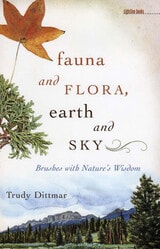
Fauna and Flora, Earth and Sky
Brushes with Nature's WisdomTrudy Dittmar
University of Iowa Press, 2003
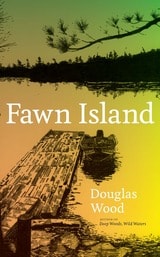
Fawn Island
Douglas Wood
University of Minnesota Press, 2018
Fawn Island is a place where crows serve as alarm clocks, white-throated sparrows leave the tracks of their songs upon the evening hush, and chickadees help a woodsman learn to whistle. The island is also a jumping-off place for journeys large and small, earthly and spiritual-to nearby Mallard Island, Gull Island, or Bald Rock, by sea kayak into the wild recesses of sprawling Voyageurs National Park, or on a midnight paddle in which the paddler can reach the silent wilderness of the stars themselves. In his latest book, best-selling author Douglas Wood guides the reader on a deep journey into the heart of the North Woods.
For Wood, Fawn Island is not merely a charming wilderness hideaway; it is the entry to realms of thought and meaning as well. From its pine-clad shores he probes for insights into the nature of neighborliness and independence, of community and solitude. Out of an ancient Ojibwe legend comes an exploration of personal loss and life after death. Wood questions the notion of being a “force of nature” and the concept of the passage of time in the context of seemingly eternal trees, lakes, rock ledges, and stars. From beneath the ascending trunks of pines comes an inquiry into the principles of optimism and, finally, a personal response to the eternal question: Is the universe a friendly place?
Embedded in the text like roots of the island’s pines is Wood’s gentle, self-effacing humor and the author’s own original pen-and-ink drawings that superbly evoke the poetry and mystery of this “small bit of rock and tree,” this “lucky place” in the wilderness.
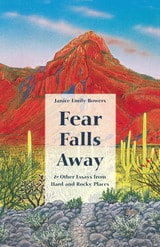
Fear Falls Away
and Other Essays from Hard and Rocky PlacesJanice Emily Bowers
University of Arizona Press, 1997
Faced with the prospect of moving to another place, Bowers finds herself thinking about the familiar world in new and unfamiliar ways. Through her eyes, too, we see how an interest in nature and the outdoors developed from early childhood and how simple curiosity has led her to the most surprising discoveries. At odd and unexpected moments, her work also seems to bring new insights into herself and her life as a writer, a wife, and a mother. These pages promise a new adventure at every turn in the trail. For sheer terror, there's a climb up the face of Baboquivari, for laughs, there's the great bagworm caper, and for some quiet truths, there are themes of gain and loss, of connection and reconcilliation. Crunching through winter snow or sweating under summer sun, we know we're in the hands of an experienced guide. And we know we couldn't ask for a better companion.
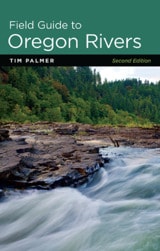
Field Guide to Oregon Rivers
Tim Palmer
Oregon State University Press, 2024
Field Of Vision
Lisa Knopp
University of Iowa Press, 1996
In this contemplative collection of essays, Lisa Knopp moves out from the prairies of Nebraska and Iowa to encompass a fully developed vision of light, memory, change, separateness, time, symbols, responsibility, and unity. Knopp charts a stimulating course among the individual, community, and culture that removes the boundaries between self and other, allowing one to become fully present in the world. Her keen vision sees beyond the ordinary to illuminate the mysteries and meanings of our personal and natural worlds.
Fields of Sun and Grass
An Artist's Journal of the New Jersey MeadowlandsQuinn, John R
Rutgers University Press, 1997
The setting is the New Jersey Meadowlands, a wild and reedy tract located a mere six miles west of New York's Times Square. It is considered by many as nothing more than a "toxic wasteland," but is in fact home to a dazzling array of often overlooked plants and animals. While there is little doubt that many of the life forms that once thrived here are long gone, many others remain, and these are the primary focus of this book. Many, many species are discussed; far too many to list here. Suffice it to say Quinn leaves no stones unturned.
The book has three central parts, respectively called "Yesterday," "Today," and "Tomorrow." Each covers a different time period in the ecological life of the Meadowlands. There also is an "Introduction," a "Starting Point," an "Epilogue," a bibliography, an index, and an interesting sort of "hands-on" chapter called "Exploring the Meadowlands." This will be of particular interest to anyone who lives within traveling distance of the region. It gives helpful and experienced advice on enjoyed the Meadowlands firsthand through boating, fishing, hiking, and the visiting of local parks.
Fields of Vision
Essays on the Travels of William BartramEdited by Kathryn E. Holland Braund and Charlotte M. Porter
University of Alabama Press, 2010
A classic work of history, ethnography, and botany, and an examination of the life and environs of the 18th-century south
William Bartram was a naturalist, artist, and author of Travels through North and South Carolina, Georgia, East and West Florida, the Cherokee Country, the ExtensiveTerritories of the Muscogulees, or Creek Confederacy, and the Country of the Choctaws. The book, based on his journey across the South, reflects a remarkable coming of age. In 1773, Bartram departed his family home near Philadelphia, Pennsylvania, as a British colonist; in 1777, he returned as a citizen of an emerging nation of the United States. The account of his journey, published in 1791, established a national benchmark for nature writing and remains a classic of American literature, scientific writing, and history. Brought up as a Quaker, Bartram portrayed nature through a poetic lens of experience as well as scientific observation, and his work provides a window on 18th-century southern landscapes. Particularly enlightening and appealing are Bartram’s detailed accounts of Seminole, Creek, and Cherokee peoples.The Bartram Trail Conference fosters Bartram scholarship through biennial conferences held along the route of his travels. This richly illustrated volume of essays, a selection from recent conferences, brings together scholarly contributions from history, archaeology, and botany. The authors discuss the political and personal context of his travels; species of interest to Bartram; Creek architecture; foodways in the 18th-century south, particularly those of Indian groups that Bartram encountered; rediscovery of a lost Bartram manuscript; new techniques for charting Bartram’s trail and imaging his collections; and a fine analysis of Bartram’s place in contemporary environmental issues.
Finding Thoreau
The Meaning of Nature in the Making of an Environmental IconRichard W. Judd
University of Massachusetts Press, 2018
In his 1862 eulogy for Henry David Thoreau, Ralph Waldo Emerson reflected that his friend “dedicated his genius with such entire love to the fields, hills, and waters of his native town, that he made them known and interesting to all reading Americans, and to people over the sea.” Finding Thoreau traces the reception of Thoreau's work from the time of his death to his ascendancy as an environmental icon in the 1970s, revealing insights into American culture's conception of the environment.
Moving decade by decade through this period, Richard W. Judd unveils a cache of commentary from intellectuals, critics, and journalists to demonstrate the dynamism in the idea of nature, as Americans defined and redefined the organic world around them amidst shifting intellectual, creative, and political forces. This book tells the captivating story of one writer's rise from obscurity to fame through a cultural reappraisal of the work he left behind.
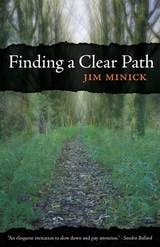
Finding a Clear Path
JIM MINICK
West Virginia University Press, 2006
Finding a Clear Path intertwines literature, agriculture, and ecology as author Jim Minick takes the reader on many journeys, allowing you to float on a pond, fly with a titmouse, gather ginseng, and grow the lowly potato. The reader visits monarch butterflies and morel mushrooms, encountering beavers, black snakes, and bloodroot along the way. Using his background as a blueberry farmer, gardener and naturalist, Minick explores the Appalachian region and also introduces information that can be appreciated from a scientific point of view, explaining, for example, the ears of an owl, or the problems with the typical Christmas tree. Reading this collection of essays invites you to search for ways to better understand and appreciate this marvelous world, opening paths for journeys of your own.
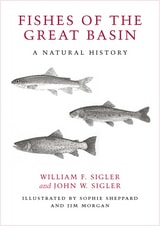
Fishes of the Great Basin
A Natural HistoryJohn W. Sigler
University of Nevada Press, 2014
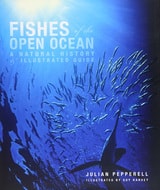
Fishes of the Open Ocean
A Natural History and Illustrated GuideJulian Pepperell
University of Chicago Press, 2010
Between the surface of the sea and depths of two hundred meters lies a remarkable range of fish, generally known as pelagics, or open-ocean dwellers. These creatures are among the largest, fastest, highest-leaping, and most migratory fish on the entire planet. Beautifully adapted to their world, they range from tiny drift fish and plankton-straining whale sharks to more streamlined predators such as tuna, marlin, sailfish, and wahoo.
Fishes of the Open Ocean, from leading marine biologist and world authority on the subject Julian Pepperell, is the first book to comprehensively describe these fishes and explore the complex and often fragile world in which they live. In what will be the definitive book on the subject for years to come—and, with over three hundred color images, the most lavishly produced as well—Pepperell details the environment and biology of every major species of fish that inhabits the open ocean, an expanse that covers 330 million cubic miles and is the largest aquatic habitat on the Earth. The first section of the book introduces the various evolutionary forms these fish have taken, as well as the ways in which specific species interact and coevolve with others in the food web. A chapter on commercial and sport fisheries explores the human element in this realm and considers such issues as sustainability, catch-and-release initiatives, and the risks of extinction.
The second section of the book provides species accounts of open ocean dwellers organized by group, with overviews and general descriptions that are inclusive of range and distribution, unique physiological and morphological attributes, and the role of each species within its ecosystem. Global distribution maps, original illustrations from renowned artist and scientist Guy Harvey, and truly stunning images from some of the world’s leading underwater photographers round out this copiously illustrated volume.
Florentine Codex
Book 2: The CeremoniesBernardino de Sahagun
University of Utah Press, 1981
Two of the world’s leading scholars of the Aztec language and culture have translated Sahagún’s monumental and encyclopedic study of native life in Mexico at the time of the Spanish Conquest. This immense undertaking is the first complete translation into any language of Sahagún’s Nahuatl text, and represents one of the most distinguished contributions in the fields of anthropology, ethnography, and linguistics.
Written between 1540 and 1585, the Florentine Codex (so named because the manuscript has been part of the Laurentian Library’s collections since at least 1791) is the most authoritative statement we have of the Aztecs’ lifeways and traditions—a rich and intimate yet panoramic view of a doomed people.
The Florentine Codex is divided by subject area into twelve books and includes over 2,000 illustrations drawn by Nahua artists in the sixteenth century.
Book Two gives comprehensive accounts of the religious ceremonies and days of feasting during the time of the Aztecs, including prayers, songs, and the duties and roles of Aztecs inside the temples during the ceremonies. This book also details the various tributes and sacrifices given to specific gods.
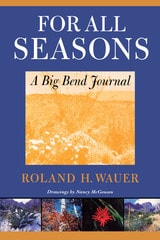
For All Seasons
A Big Bend JournalBy Roland H. Wauer
University of Texas Press, 1997
Something about Big Bend National Park draws visitors again and again. Maybe it's the spare beauty of the mountains and desert, the dawn chorus of birds, or the vivid stars in the velvet night. All of these things have made it Roland Wauer's favorite place. In this book, he shares his love of the Big Bend through journal entries that chronicle a year in the life of the park.
Wauer worked as Chief Park Naturalist from 1966 to 1972 and has visited the park frequently ever since. His journal entries span these thirty years, providing not only a composite portrait of a typical year but also a clear sense of how the park's natural history has changed over three decades. He spices his account with anecdotes, often humorous, ranging from stumbling across a herd of javelinas to being trailed by a mountain lion in the dark to discovering new species of plants and animals.
Few authors know the Big Bend as Roland Wauer does or have written about it in a more engaging way. This beautifully illustrated book is the perfect companion for a visit to the park, whether in person or by armchair.
For Love of the World
Essays on Nature WritersSherman Paul
University of Iowa Press, 1992
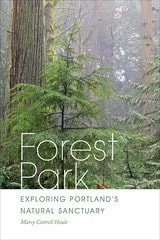
Forest Park
Exploring Portland's Natural SanctuaryMarcy Cottrell Houle
Oregon State University Press, 2023
Situated in the rugged hills west of downtown Portland, Forest Park is the nation’s premier urban natural sanctuary. It supports essential habitat for hundreds of native plants and animals, including species at risk, and is one of the largest city parks in the world. While extending critical ecosystem services to the region, it offers miles of outstanding hiking trails, all within minutes of the downtown core.
Forest Park: Exploring Portland’s Natural Sanctuary showcases this treasure in new light, offering a compendium of the most up-to-date and comprehensive information available. Twenty-one hikes covering 75 miles bring a full awareness of the park’s outstanding attributes. Hikes are grouped by theme to encourage people to explore Forest Park’s watersheds; geology; lichens and mosses; vegetation; amphibians and reptiles; pollinators; native wildlife; and wildlife corridors. Beautiful photographs and full-color maps accompany each trail description.
Forest Park is a shining example of the Pacific Northwest western hemlock community--an ecosystem unique among all temperate forests of the world. It is also an exciting model for a future Urban Biodiversity Reserve, a concept under development recognizing the park’s scientific, natural, and cultural qualities. Forest Park: Exploring Portland’s Natural Sanctuary will help all visitors discover the beauty and wonders of this extraordinary natural resource.
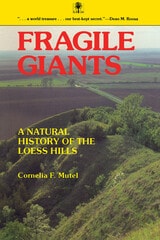
Fragile Giants
A Natural History of the Loess HillsCornelia F. Mutel
University of Iowa Press, 1989
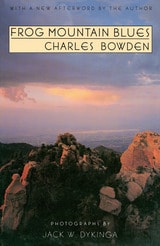
Frog Mountain Blues
Charles Bowden; Photographs by Jack W. Dykinga
University of Arizona Press, 1994
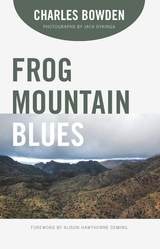
Frog Mountain Blues
Charles Bowden; Photographs by Jack Dykinga; Foreword by Alison Hawthorne Deming
University of Arizona Press, 2018
When it was first published in 1987, Frog Mountain Blues documented the creeping sprawl of new development up the Catalinas’ foothills. Today, that development is fully visible, but Charles Bowden’s prescience of the urgency to preserve and protect a sacred recreational space remains as vivid as ever. Accompanied by Jack W. Dykinga’s photographs from the original work, this book continues to convey the natural beauty of the Catalinas and warns readers that this unique wilderness could easily be lost.
As Alison Hawthorne Deming writes in the new foreword, “Frog Mountain Blues continues to be an important book for learning to read this place through the eyes of experience and history, and Bowden remains a sobering voice for facing our failures in protecting what we love in this time of global destruction, for taking seriously the power of language to set ourselves right again with the enormous task of living with purpose and presence and care on the land.”