Results by title
75 books match the query 'Nigeria' and 6 start with f
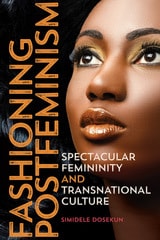
Fashioning Postfeminism
Spectacular Femininity and Transnational CultureSimidele Dosekun
University of Illinois Press, 2020
Simidele Dosekun's interviews and critical analysis consider the female subjectivities these women are performing and desiring. She finds that the women embody the postfeminist idea that their unapologetically immaculate beauty signals—but also constitutes—feminine power. As empowered global consumers and media citizens, the women deny any need to critique their culture or to take part in feminism's collective political struggle. Throughout, Dosekun unearths evocative details around the practical challenges to attaining their style, examines the gap between how others view these women and how they view themselves, and engages with ideas about postfeminist self-fashioning and subjectivity across cultures and class.
Intellectually provocative and rich with theory, Fashioning Postfeminism reveals why women choose to live, embody, and even suffer for a fascinating performative culture.

Fela
Life And Times Of An AfricanMichael Veal
Temple University Press, 2000
Although harassed, beaten, and jailed by Nigerian authorities, he continued his outspoken and derisive criticism of political corruption at home and economic exploitation from abroad. A volatile mixture of personal characteristics -- charisma, musical talent, maverick lifestyle, populist ideology, and persistence in the face of persecution -- made him a legend throughout Africa and the world. Celebrated during the 1970s as a musical innovator and spokesman for the continent's oppressed masses, he enjoyed worldwide celebrity during the 1980s and was recognized in the 1990s as a major pioneer and elder statesman of African music. By the time of his death in 1997 from AIDS-related complications, Fela had become something of a Nigerian institution.
In Africa, the idea of transnational alliance, once thought to be outmoded, has gained new currency. In African America, during a period of increasing social conservatism and ethnic polarization, Africa has re-emerged as a symbol of cultural affirmation. At such an historical moment, Fela's music offers a perspective on race, class, and nation on both sides of the Atlantic. As Professor Veal demonstrates, over three decades Fela synthesized a unique musical language while also clearing -- if only temporarily -- a space for popular political dissent and a type of counter-cultural expression rarely seen in West Africa. In the midst of political turmoil in Africa, as well as renewal of pro-African cultural nationalism throughout the diaspora, Fela's political music functions as a post-colonial art form that uses cross-cultural exchange to voice a unique and powerful African essentialism.

Fine Boys
A NovelEghosa Imasuen
Ohio University Press, 2021
A coming-of-age tale told from the perspective of Nigeria’s Generation X, caught amid the throes of a nascent pro-democracy movement, demoralizing corruption, and campus violence.
Ewaen is a Nigerian teenager, bored at home in Warri and eager to flee from his parents’ unhappy marriage and incessant quarreling. When Ewaen is admitted to the University of Benin, he makes new friends who, like him, are excited about their newfound independence. They hang out in parking lots, trading gibes in pidgin and English and discovering the pleasures that freedom affords them. But when university strikes begin and ruthlessly violent confraternities unleash mayhem on their campus, Ewaen and his new friends must learn to adapt—or risk becoming the confras' next unwilling recruits.
In his trademark witty, colloquial style, critically acclaimed author Eghosa Imasuen presents everyday Nigerian life against the backdrop of the pro-democracy riots of the 1980s and 1990s, the lost hopes of June 12 (Nigeria’s Democracy Day), and the terror of the Abacha years. Fine Boys is a chronicle of time, not just in Nigeria, but also for its budding post-Biafran generation.

Fine Dreams
Linda N. Masi
University of Massachusetts Press, 2024
Longlisted for the 2025 Nigeria Prize for Literature
A 2024 Foreword INDIES Finalist
Set in a fictional town, at a fictional school, Linda N. Masi’s debut novel, Fine Dreams, rewrites myth and history. Framed by a ghost’s first-person narrative, the book centers on four young friends, the stars of their school’s track team. While studying for exams, they are kidnapped and taken to a terrorist encampment. Two are claimed as “wives” by their captors, one is forced to wear a suicide vest, and each is subjected to appalling violence and terror. While their stories resonate with a widely publicized 2014 abduction, these four young women could have been taken in any of the many incidents that have plagued the Nigerian people for years.
Even though they are abducted and abused by men in power and forced to survive in a dark place like Persephone, Masi’s protagonists offer new endings for Persephone’s story. In Masi’s telling, these resilient young women recover their dreams and hopes to live in daylight once again. No matter where they travel or where they stay, they gain self-determination and reclaim their dreams.

For Women and the Nation
FUNMILAYO RANSOME-KUTI OF NIGERIACheryl Johnson-Odim and Nina Emma Mba
University of Illinois Press, 1997
For Women and the Nation is the story of this courageous woman. One of a handful of full-length biographies of African women, let alone of African women activists, it will be welcomed by students of women's studies, African history, and biography, as well as by those interested in exploring the historical background of Nigeria.
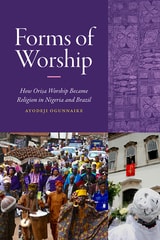
Forms of Worship
How Orisa Worship Became Religion in Nigeria and BrazilAyodeji Ogunnaike
Duke University Press, 2026