83 books match the query 'Northeast' and 5 start with f
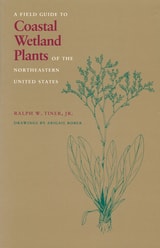
cover of Field Guide to Coastal Wetland Plants of the Northeastern United States

Field Guide to Coastal Wetland Plants of the Northeastern United States

Ralph W. Tiner

University of Massachusetts Press, 1987

Coastal wetlands are among our most important fish and wildlife habitats. For example, over two-thirds of our recreationally and commercially important marine fishes depend on coastal marshes and associated waters for nursery and spawning grounds.

This book is arranged in four major sections: (1) Coastal Wetland Ecology: A General Overview, (2) Identification of Coastal Wetland Plants, (3) Wetland Plant Descriptions and Illustrations, and (4) Places to Observe Coastal Wetlands, and (5) Sources of Other Information. In addition , a list of references used in preparing this book and a glossary of technical terms are provided.
[more]
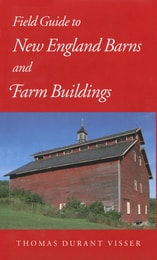
cover of Field Guide to New England Barns and Farm Buildings

Field Guide to New England Barns and Farm Buildings

Thomas Durant Visser

University Press of New England, 1997
The quintessential New England barn–photogenic, full of character, and framed by flaming autumn foliage–is an endangered species. Of some 30,000 barns in Vermont alone, nearly a thousand a year are lost to fire, collapse, or bulldozers. Thomas Durant Visser’s field guide to the barns, silos, sugar houses, granaries, tobacco barns, and potato houses of New England is an attempt to document not just their structure but their traditions and innovations before the surviving architectural evidence of this rich rural heritage is lost forever. A recognized authority on historic barn preservation, Visser has combed the six-state region for representative barns and outbuildings, and 200 of his photographs are reproduced here. The text, which includes accounts from 18th– and 19th–century observers, describes key architectural characteristics, historic uses, and geographic distribution as well as specific features like timbers and frames, sheathings, doors, and cupolas. From English barns to bank barns, from ice houses to outhouses, these irreplaceable assets, Visser writes, “linger as vulnerable survivors of the past. Yet before these buildings vanish, each has a story to tell.” Travelers, residents, and scholars alike will find Visser’s text invaluable in uncovering, understanding, and appreciating the stories inherent in these dwindling cultural artifacts.
[more]
cover of Flora of the Northeast: A Manual of the Vascular Flora of New England and Adjacent New York

Flora of the Northeast

A Manual of the Vascular Flora of New England and Adjacent New York

Dennis W. Magee

University of Massachusetts Press, 2007

Designed as both a reference work and a year-round field manual, this volume contains more than 2,400 range maps and 995 line drawings, designed to clarify descriptions used in the keys. For botanists, naturalists, and students interested in an up-to-date treatment of the vascular flora of greater New England, it has proved to be an invaluable resource. The geographic scope of the work extends from the Canadian border south through Long Island and west to the Hudson River.

The "General Keys" section contains fourteen keys that include such groups as aquatic plants, vines, and woody plants in winter condition. For both woody and herbaceous families, the keys cover flowering as well as fruiting conditions and rely heavily on the use of vegetative features to extend the utility of the book beyond the reproductive period.The "Descriptive Flora" section includes keys to all of the genera and species, descriptions of the families and genera, and accounts of the individual species. The latter incorporates information on wetland site index, rare status, wildlife food value, food and medicinal value for humans, and poisonous or hallucinogenic properties.

This revised edition includes an updating of plant scientific names that changed since the first edition and an alphabetized list of plant families with page numbers on the inside front cover for easy reference. Additional resources will soon be available on the publisher's website, including a multiple-entry identification guide, hundreds of accompanying photographic images of genera, an illustrated glossary, and page reference numbers to genus descriptions in the manual. Presenting a wealth of scientifically accurate information in a precise and clear format, this volume serves as a reference work, as a textbook for classes in plant identification, and as a field manual.
[more]
cover of Forgotten Towns of Southern New Jersey

Forgotten Towns of Southern New Jersey

Beck, Henry

Rutgers University Press, 1983

Composed, for the most part, from sketches that were published in the Courier-Post newspapers of Camden, New Jersey, Beck provides us with a series of stories of towns too tiny or uncertain for today's maps.  Together, these sketches help to create a more complete picture of the history of New Jersey.  A connecting skein of untold or little known wartime history--the Revolution, the War of 1812, and the conflict of North against South--runs through most of the sketches.  Many of the sketches concern the pine towns and their people, "the pineys" who lived in the Jersey pine barrens.
[more]
cover of Freshwater Wetlands: A Guide to Common Indicator Plants of the Northeast

Freshwater Wetlands

A Guide to Common Indicator Plants of the Northeast

Dennis W. Magee

University of Massachusetts Press, 1981

Although public interest in wetlands has grown considerably in recent years, the associated issues of legislation and environmental policy are often confused by the need to correctly define a wetland area. Much of the difficulty comes from an inability to identify wetland indicator species and to determine whether a given area contains a significant proportion of such plants. The 182 species treated in this work represent the fast majority of genera commonly encountered in freshwater wetlands throughout the Northeast, consequently, this will prove an invaluable book for those concerned with how a correct definition of wetland areas affects decisions about land use, development, and/or conservation.

Following a brief introduction that discusses the functional values of wetlands and describes their various types, the manual is organized into two major components, the first consisting of keys that are based on life form and arrangement of plant parts, the second consisting of a description of each species. Such factors as range, habitat, general characteristics, stem, leaves, inflorescence, fruit, and similar species are covered in the descriptions.
[more]