310 books match the query 'Performance' and 5 start with f
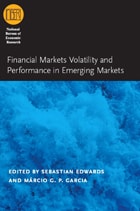
cover of Financial Markets Volatility and Performance in Emerging Markets

Financial Markets Volatility and Performance in Emerging Markets

Edited by Sebastian Edwards and Márcio G. P. Garcia

University of Chicago Press, 2008

Capital mobility is a double-edged sword for emerging economies, as governments must weigh the benefits of investment against the potential economic costs and political consequences of currency crises, devaluations, and instability. Financial Markets Volatility and Performance in Emerging Markets addresses the delicate balance between capital mobility and capital controls as developing countries navigate the convoluted global network of private investors, hedge funds, large corporations, and international institutions such as the International Monetary Fund.

A group of experts here examine rapidly globalizing financial markets with regard to capital flows and crises, domestic credit, international financial integration, and economic policy. Featuring detailed analyses and cross-national comparisons of countries such as Brazil, Argentina, Uruguay, and Korea, this book will shape economists’ and policymakers’ understanding of the effectiveness of restrictions on capital mobility in the world’s most fragile economies.

 
[more]
cover of Fiscal Institutions and Fiscal Performance

Fiscal Institutions and Fiscal Performance

Edited by James M. Poterba and Jürgen von Hagen

University of Chicago Press, 1999

The unprecedented rise and persistence of large-scale budget deficits in many developed and developing nations during the past three decades has caused great concern. The widespread presence of such deficits has proved difficult to explain. Their emergence in otherwise diverse nations defies particularistic explanations aimed at internal economic developments within a specific country.

Fiscal Institutions and Fiscal Performance shifts emphasis away from narrow economic factors to more broadly defined political and institutional factors that affect government policy and national debt. This collection brings together new theoretical models, empirical evidence, and a series of in-depth case studies to analyze the effect of political institutions, fiscal regulations, and policy decisions on accumulating deficits. It provides a fascinating overview of the political and economic issues involved and highlights the role of budgetary institutions in the formation of budget deficits.
[more]
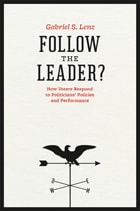
cover of Follow the Leader?: How Voters Respond to Politicians' Policies and Performance

Follow the Leader?

How Voters Respond to Politicians' Policies and Performance

Gabriel S. Lenz

University of Chicago Press, 2012
In a democracy, we generally assume that voters know the policies they prefer and elect like-minded officials who are responsible for carrying them out. We also assume that voters consider candidates' competence, honesty, and other performance-related traits. But does this actually happen? Do voters consider candidates’ policy positions when deciding for whom to vote? And how do politicians’ performances in office factor into the voting decision?
 
In Follow the Leader?, Gabriel S. Lenz sheds light on these central questions of democratic thought. Lenz looks at citizens’ views of candidates both before and after periods of political upheaval, including campaigns, wars, natural disasters, and episodes of economic boom and bust. Noting important shifts in voters’ knowledge and preferences as a result of these events, he finds that, while citizens do assess politicians based on their performance, their policy positions actually matter much less. Even when a policy issue becomes highly prominent, voters rarely shift their votes to the politician whose position best agrees with their own. In fact, Lenz shows, the reverse often takes place: citizens first pick a politician and then adopt that politician’s policy views. In other words, they follow the leader.
 
Based on data drawn from multiple countries, Follow the Leader? is the most definitive treatment to date of when and why policy and performance matter at the voting booth, and it will break new ground in the debates about democracy.
[more]
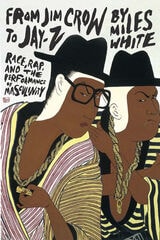
cover of From Jim Crow to Jay-Z: Race, Rap, and the Performance of Masculinity

From Jim Crow to Jay-Z

Race, Rap, and the Performance of Masculinity

Miles White

University of Illinois Press, 2011

This multilayered study of the representation of black masculinity in musical and cultural performance takes aim at the reduction of African American male culture to stereotypes of deviance, misogyny, and excess. Broadening the significance of hip-hop culture by linking it to other expressive forms within popular culture, Miles White examines how these representations have both encouraged the demonization of young black males in the United States and abroad and contributed to the construction of their identities.

From Jim Crow to Jay-Z traces black male representations to chattel slavery and American minstrelsy as early examples of fetishization and commodification of black male subjectivity. Continuing with diverse discussions including black action films, heavyweight prizefighting, Elvis Presley's performance of blackness, and white rappers such as Vanilla Ice and Eminem, White establishes a sophisticated framework for interpreting and critiquing black masculinity in hip-hop music and culture. Arguing that black music has undeniably shaped American popular culture and that hip-hop tropes have exerted a defining influence on young male aspirations and behavior, White draws a critical link between the body, musical sound, and the construction of identity.

[more]
cover of From Page to Performance: Essays in Early English Drama

From Page to Performance

Essays in Early English Drama

John A. Alford

Michigan State University Press, 1995

This book is a collection of 22 essays by scholars in the field of Medieval Drama, mostly relating to performance both past and present. Alford wrote one essay in the book.
[more]