Results by title
3258 books match the query 'Performing Arts' and 162 start with f
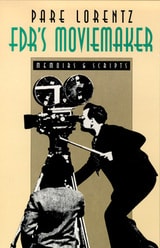
FDR's Moviemaker
Memoirs And ScriptsPare Lorentz
University of Nevada Press, 1992
"The films of Pare Lorentz are acknowledged masterpieces of world cinema. They are groundbreaking documentary records of our country in the hard years of the Depression." —William M. Drennen, Jr.
In the depths of the Great Depression, the U.S. Government produced a series of films about the pressing problems facing the nation—drought, flood, poverty, and slums. Starting with a minuscule initial budget of $6,000, Lorentz, a young film critic from New York who had never made a motion picture, was hired to head the project. The first fruit of his labor, The Plow That Broke the Plains, was a moving and dramatic account of the Dust Bowl that met with immediate and critical acclaim. Lorentz followed up his first film with The River, a history of the Mississippi River Basin and the effect of the Tennessee Valley Authority on the area. Both films demonstrated the potential of the documentary as a powerful impetus to social change, prompting widespread discussion not only of the problems they presented but also of the documentary form itself. This book combines the autobiographical history of a creative communicator and pioneer documentary filmmaker with the full scripts of The Plow That Broke the Plains, The River, Ecce Homo, and The Fight for Life.
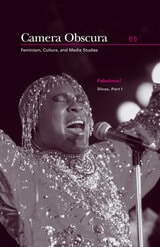
Fabulous! Divas, Part 1, Volume 22
Alexander Doty , ed.
Duke University Press, 0
The contributors to Fabulous! Divas I (the first in a two-part series) address how Baker’s dual image as sexualized black woman and multicultural mother has been used to question and invert stereotypes, how the diva witches in the Broadway musical Wicked have developed a cult following among adolescent girls, and how fans mix irony and sincerity in their admiration of daytime soap divas. One contributor explores the cultural work of camp, while another considers hair as a fetish item for diva devotees. Among the diva appreciations are a look at the life of the cross-dressing black disco diva Sylvester, a reading of Garland as a lesbian diva par excellence, an examination of Courtney Love as a martyr diva, and a consideration of how loving Julie Andrews can make people queer.
Contributors. Alexander Doty, Brett Farmer, Joshua Gamson, Chuck Jackson, Ramon Lobato, Edward R. O’Neill, Ann Pellegrini, Julie Levine Russo, Nick Salvato, Jeanne Scheper, Edward Baron Turk, Stacy Wolf
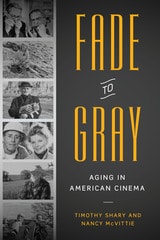
Fade to Gray
Aging in American CinemaTimothy Shary and Nancy McVittie
University of Texas Press, 2016
Winner, Choice Outstanding Academic Title, 2017
Americans are living longer and reinventing both work and retirement, but Hollywood movies barely hint at this reality of contemporary society. In many popular films, older characters fade into irrelevance, inactivity, or absurdity, or else they stay in the background as wise elders while younger characters provide the action. Most American films do not attempt to portray the rich variety of experiences or the sensitive aging issues that people confront in the years beyond fifty.
Fade to Gray offers one of the first extended studies of the portrayal of older people in American cinema from the silent era to the present. Writing in an accessible style for both general audiences and scholars, Timothy Shary and Nancy McVittie examine social attitudes toward aging through an analysis of hundreds of individual films, including such classics as You Can’t Take It With You (1938), Rosemary’s Baby (1968), Grumpy Old Men (1993), and Nebraska (2013). They show how representations of the aging process and depictions of older people embracing or enduring the various experiences of longer lives have evolved over the past century, as well as how film industry practices have both reflected and influenced perceptions of aging in American society. Exposing the social and political motivations for negative cinematic portrayals of the elderly, Fade to Gray also gives visibility to films that provide opportunities for better understanding and appreciation of the aged and the aging process.
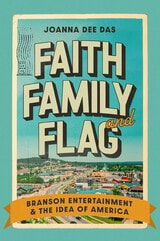
Faith, Family, and Flag
Branson Entertainment and the Idea of AmericaJoanna Dee Das
University of Chicago Press, 2025
Branson, Missouri, the Ozark Mountain mecca of wholesome entertainment, has been home to countless stage shows espousing patriotism and Christianity, welcoming over ten million visitors a year. Some consider it “God’s Country” and others “as close to Hell as anything on Earth.” For Joanna Dee Das, Branson is a political, religious, and cultural harbinger of a certain enduring dream of what America is. She takes Branson more seriously than the light-hearted fun it advertises—and maybe we should too.
For Das, Branson’s performers offer visions of the American Dream that embody a set of values known as the three Fs: faith, family, and flag. Branson boosters insist that these are universal values that welcome all people; the city aims to capture as many tourists as possible. But over the past several decades, faith, family, and flag have become markers of contemporary conservatism. The shows and culture of Branson, for all their fun and laughter, have been a galvanizing political force for white, working-and-middle class, Christian Americans. For social and economic conservatives alike, Branson is practically proof-of-concept for America as they want it to be.
Faith, Family, and Flag is a comprehensive history of the Branson entertainment industry, within the context of America’s long culture wars. Das reveals how and why a town known for popular entertainment, a domain associated most often with the political left (“Hollywood liberals”), came to be so important to the political right and its vision for America.
Faith, Family, and Flag
Branson Entertainment and the Idea of AmericaJoanna Dee Das
University of Chicago Press, 2025
Sons of Britches. The Great American Chuckwagon Dinner Show. The Haygoods. The Grand Jubilee. These are just a couple of the many shows performed in Branson, MO, a popular tourist destination that has played a role in the nation’s culture wars for over one hundred years.
Branson, Missouri, the Ozark Mountain mecca of wholesome entertainment, has been home to countless stage shows espousing patriotism and Christianity, welcoming over ten million visitors a year. Some consider it “God’s Country” and others “as close to Hell as anything on Earth.” For Joanna Dee Das, Branson is a political, religious, and cultural harbinger of a certain enduring dream of what America is. She takes Branson more seriously than the light-hearted fun it advertises—and maybe we should too.
For Das, Branson’s performers offer visions of the American Dream that embody a set of values known as the three Fs: faith, family, and flag. Branson boosters insist that these are universal values that welcome all people; the city aims to capture as many tourists as possible. But over the past several decades, faith, family, and flag have become markers of contemporary conservatism. The shows and culture of Branson, for all their fun and laughter, have been a galvanizing political force for white, working-and-middle class, Christian Americans. For social and economic conservatives alike, Branson is practically proof-of-concept for America as they want it to be.
Faith, Family, and Flag is a comprehensive history of the Branson entertainment industry, within the context of America’s long culture wars. Das reveals how and why a town known for popular entertainment, a domain associated most often with the political left (“Hollywood liberals”), came to be so important to the political right and its vision for America.

Fan Phenomena
Audrey HepburnEdited by Jacqui Miller
Intellect Books, 2014
What gives this slight starlet such staying power? A talented actress, an icon of fashion, a loving mother, and an active humanitarian, Hepburn remains one of the world’s most beloved women even two decades after her death. Ranked as the third greatest screen star of all time by the American Film Institute, she possessed grace and beauty that still enchant us today. The winner of the 1953 Academy Award for her role as Princess Ann in Roman Holiday, she received further Academy Award nominations for Sabrina, Breakfast at Tiffany's, and Wait Until Dark. Her timeless, iconic style, both on and off screen, has long been admired, and she is seen by many as the epitome of grace, class, and elegance.
Fan Phenomena: Audrey Hepburn focuses on the transformative nature of Hepburn’s star persona, exploring her journey from ingénue to UNICEF ambassador. The book looks at her iconographic relationship with female culture and fashion and situates Breakfast at Tiffany’s alongside the works of Edith Wharton and Sex and the City.
Fan Phenomena
Buffy the Vampire SlayerEdited by Jennifer K. Stuller
Intellect Books, 2013
Fan Phenomena
Doctor WhoEdited by Paul Booth
Intellect Books, 2013
Fan Phenomena
Marilyn MonroeEdited by Marcelline Block
Intellect Books, 2015
The essays here explore representations of Monroe in visual culture by looking at the ways she is reimagined in visual art while also considering how her posthumous appearance and image are appropriated in current advertisements. With an inside look at the universe of Marilyn Monroe impersonators and look-alike contests for both males and females, the book also explores numerous homages to Monroe in music, from the 1979 opera Marilyn by Lorenzo Ferrero to Nicki Minaj’s song “Marilyn Monroe.” The definitive guide to one of the most famous women who ever lived, the book will be essential reading for any scholar of twentieth-century American popular culture.
Fan Phenomena
Sherlock HolmesEdited by Tom Ue and Jonathan Cranfield
Intellect Books, 2014
The contributors to this book discuss the ways in which various fan cultures have sprung up around the stories and how they have proved to be a strong cultural paradigm for the ways in which phenomena functions in the twentieth and twenty-first centuries. Essays explore the numerous adaptations, rewritings, rip-offs, role-playing, wiki and crowdsourced texts, virtual realities, and faux scholarship Sherlock Holmes has inspired. Though fervid fan behavior is often mischaracterized as a modern phenomenon, the historical roots of fan manifestations that have been largely forgotten are revived in this thrilling book.
Complete with interviews with writers who have famously brought the character of Holmes back to life, the collection benefits from the vast knowledge of its contributors, including academics who teach in the field, archivists, and a number of writers who have been involved in the enactment of Holmes stories on stage, screen, and radio. The release of Fan Phenomena: Sherlock Holmes coincides with Holmes’s 160th birthday, so it is no mystery that it will make a welcome addition to the burgeoning scholarship on this timeless detective.
Fan Phenomena
SupernaturalEdited by Lynn Zubernis and Katherine Larsen
Intellect Books, 2014
Fan Phenomena: Supernatural explores the ongoing fascination and passion for a show that developed a relationship with fans through eight seasons and continues to have an impact on fan culture to the present day. Essays here explore the rich dynamic that has developed between fans and producers, actors, writers, directors, the show creator, and showrunners through online interactions on Twitter and Facebook, face-to-face exchanges at conventions, and representations of fandom within the show's meta-episodes. Contributors also explore gender and sexuality in the show and in fan art; the visual dynamics, cinematography, and symbolism in the episodes as well as the fan videos they inspire; and the culture of influence, learning, and teaching in the series.
Fan Phenomena
The Big LebowskiEdited by Zachary Ingle
Intellect Books, 2014
Fan Phenomena: The Big Lebowski examines how this quirky movie evolved from its underwhelming debut to attract a mass following on par with that of The Rocky Horror Picture Show. Contributors take a close look at the film’s phenomenal impact on popular culture and language and examine the script’s rich philosophical implications, whether it is the nihilism within the film itself or the Dudeism that Jeff Bridges’s God-like character has bred (the “Church of the Latter-Day Dude” has attracted more than 70,000 official adherents through its online ordination process). Covering issues concerning gender and sexuality within the film, such as Maude’s feminist art and Jackie Treehorn’s Malibu garden party, the essays here also explore the gender divides the film has created in today’s society, such as male versus female fandom rivalry at festivals. These gatherings—part costume contest, part bowling tournament, part trivia contest, part fan meet-up—have, since their debut in Louisville, KY, in 2002, sprung up all around America and have even expanded globally, and the book takes an inside look at these events and includes interviews with Lebowski festival organizers and authors of other fan books and academic treatises.
In all, these essays are an essential companion for one of the greatest films ever made, in the parlance of our times.
Fan Phenomena
The Hunger GamesEdited by Nicola Balkind
Intellect Books, 2014
Fan Phenomena: The Hunger Games charts the series’s success through the increasingly vocal online communities that drive the young adult book market. Essays here consider the fashion that the series has created and how the costumes, memorabilia, merchandising, and branding have become an ever bigger part of the fandom experience. Issues explored include debates over the movie stars’ race and size, which tap into greater issues within the fan community and popular culture in general and the current argument that has divided fans and critics: whether or not the third book, Mockingjay, should be split into two films.
With this scholarly compendium, navigating the postapocalyptic landscape of Panem will be as effortless as Katniss Everdeen’s archery and ensure that the odds will be forever in your favor.
Fan Phenomena
The Rocky Horror Picture ShowEdited by Marisa C. Hayes
Intellect Books, 2015
An homage to campy B-movies, sci-fi, and horror films, the movie was—and still is—more than the sum of its parts. Participatory and party-like, midnight showings attract moviegoers who dress as film characters, sing along with the catchy show tunes, and interact with the action on screen. In the four decades since its release, it has become a cultural phenomenon, not to mention one of the most commercially successful films of all time.
In Fan Phenomena: The Rocky Horror Picture Show, Marisa C. Hayes brings together a diverse group of writers who explore the film’s influence on the development of the pastiche tribute film, emerging queer activism of the 1970s, glam rock style, and the creative use of audience dialogue in recreating and interacting with the spoken and sung language of the film.
Spotlighting a cult phenomenon and its fans, many of who count the number of times they’ve seen the movie in the hundreds, this contribution to the Fan Phenomena series covers never-before-explored topics related to The Rocky Horror Picture Show. For anyone who has ever done the “Time Warp,” this will be essential reading.
Fan Phenomena
Twin PeaksEdited by Marisa C. Hayes and Franck Boulègue
Intellect Books, 2013
Fan Phenomena: Twin Peaks is the first book of its kind to revisit Lynch and Frost's groundbreaking series and explore how the show's cult status continues to thrive in the digital era. In ten essays, the contributors take a deeper look at Twin Peaks' rich cast of characters, iconic locations, and its profound impact on television programming, as well as the impact of new media and fan culture on the show’s continued relevance. Written by fans for fans, Fan Phenomena: Twin Peaks is an intelligent yet accessible guide to the various aspects of the show and its subsequent film. Featuring commentary from both first generation and more recent followers, these essays capture the endlessly fascinating universe of Twin Peaks, from Audrey Horne's keen sense of style to Agent Cooper's dream psychology.
The first non-academic collection that speaks to the show's fan base rather than a scholarly audience, this book is more approachable than previous Twin Peaks critical studies volumes and features color images of the series, film, and fan media. It will be welcomed by anyone seduced by the strangeness and camp of Lynch’s seminal series.
Fancy's Image
Contexts, Settings, and Perspectives in Shakespeare and His ContemporariesCharles R Forker
Southern Illinois University Press, 1990
In ten essays spanning more than three decades of scholarship, Charles R. Forker, the author of Skull Beneath the Skin: The Achievement of John Webster, explores the dramatic and poetic styles of Shakespeare and his contemporaries in relation to Elizabethan ideas of space and time, image patterns and aesthetic form in drama, cultural contexts (the family, the state, the individual), and political and religious values.
Forker has divided his essays into three sections. The essays in the first section, "The Stage," explore theatrical self-consciousness; those in "The Green World" examine the use of pastoral and natural settings as significant factors in dramatization; the essays in the final section, "The Family," discuss ideas of dramatic engagement and disengagement in major Elizabethan playwrights other than Shakespeare.
Fangs Of Malice
Hypocrisy Sincerity And ActingMatthew H Wikander
University of Iowa Press, 2002
The idea that actors are hypocrites and fakes and therefore dangerous to society was widespread in the seventeenth and eighteenth centuries. Fangs of Malice examines the equation between the vice of hypocrisy and the craft of acting as it appears in antitheatrical tracts, in popular and high culture, and especially in plays of the period. Rousseau and others argue that actors, expert at seeming other than they are, pose a threat to society; yet dissembling seems also to be an inevitable consequence of human social intercourse. The “antitheatrical prejudice” offers a unique perspective on the high value that modern western culture places on sincerity, on being true to one's own self.
Taking a cue from the antitheatrical critics themselves, Matthew Wikander structures his book in acts and scenes, each based on a particular slander against actors. A prologue introduces his main issues. Act One deals with the proposition “They Dress Up”: foppish slavery to fashion, cross-dressing, and dressing as clergy. Act Two treats the proposition “They Lie” by focusing on social dissembling and the phenomenon of the self-deceiving hypocrite and the public, princely hypocrite. Act Three, “They Drink,” examines a wide range of antisocial behavior ascribed to actors, such as drinking, gambling, and whoring. An epilogue ties the ancient ideas of possession and the panic that actors inspire to contemporary anxieties about representation not only in theatre but also in the visual and literary arts.
Fangs of Malice will be of great interest to scholars and students of drama as well as to theatre professionals and buffs.
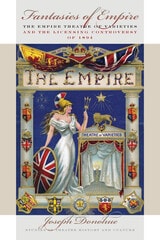
Fantasies of Empire
The Empire Theatre of Varieties and the Licensing Controversy of 1894Joseph Donohue
University of Iowa Press, 2005
Fantasies of Empire is the first book to recount in full the story of the Empire licensing controversy in all its captivating detail. Contemporaneous accounts are interwoven with Donohue’s identification and analysis of the larger issues raised: What the controversy reveals about contemporary sexual and social relations, what light it sheds on opposing views regarding the place of art and entertainment in modern society, and what it says about the pervasive effect of British imperialism on society’s behavior in the later years of Queen Victoria’s reign. Donohue connects the controversy to one of the most interesting developments in the history of modern theatre, the simultaneous emergence of a more sophisticated, varied, and moneyed audience and a municipal government insistent on its right to control and regulate that audience’s social and cultural character and even its moral behavior.
Rich in illustrations and entertainingly written, Fantasies of Empire will appeal to theatre, dance, and social historians and to students of popular entertainment, the Victorian period, urban studies, gender studies, leisure studies, and the social history of architecture.
Fantasies of Ito Michio
Tara Rodman
University of Michigan Press, 2024
Winner of the 2025 Dance Studies Association Oscar Brockett Book Prize
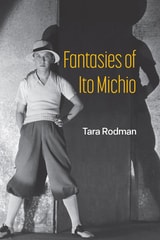
Born in Japan and trained in Germany, dancer and choreographer Ito Michio (1893–1961) achieved prominence in London before moving to the U.S. in 1916 and building a career as an internationally acclaimed artist. During World War II, Ito was interned for two years, and then repatriated to Japan, where he contributed to imperial war efforts by creating propaganda performances and performing revues for the occupying Allied Forces in Tokyo. Throughout, Ito continually invented stories of voyages made, artists befriended, performances seen, and political activities carried out—stories later dismissed as false.
Fantasies of Ito Michio argues that these invented stories, unrealized projects, and questionable political affiliations are as fundamental to Ito’s career as his ‘real’ activities, helping us understand how he sustained himself across experiences of racialization, imperialism, war, and internment. Tara Rodman reveals a narrative of Ito’s life that foregrounds the fabricated and overlooked to highlight his involvement with Japanese artists, such as Yamada Kosaku and Ishii Baku, and global modernist movements. Rodman offers “fantasy” as a rubric for understanding how individuals such as Ito sustain themselves in periods of violent disruption and as a scholarly methodology for engaging the past.
Fantasies of Neglect
Imagining the Urban Child in American Film and FictionPamela Robertson Wojcik
Rutgers University Press, 2016

Fantastic Planets, Forbidden Zones, and Lost Continents
The 100 Greatest Science-Fiction FilmsBy Douglas Brode
University of Texas Press, 2015
Whether you judge by box office receipts, industry awards, or critical accolades, science fiction films are the most popular movies now being produced and distributed around the world. Nor is this phenomenon new. Sci-fi filmmakers and audiences have been exploring fantastic planets, forbidden zones, and lost continents ever since George Méliès’ 1902 film A Trip to the Moon. In this highly entertaining and knowledgeable book, film historian and pop culture expert Douglas Brode picks the one hundred greatest sci-fi films of all time.
Brode’s list ranges from today’s blockbusters to forgotten gems, with surprises for even the most informed fans and scholars. He presents the movies in chronological order, which effectively makes this book a concise history of the sci-fi film genre. A striking (and in many cases rare) photograph accompanies each entry, for which Brode provides a numerical rating, key credits and cast members, brief plot summary, background on the film’s creation, elements of the moviemaking process, analysis of the major theme(s), and trivia. He also includes fun outtakes, including his top ten lists of Fifties sci-fi movies, cult sci-fi, least necessary movie remakes, and “so bad they’re great” classics—as well as the ten worst sci-fi movies (“those highly ambitious films that promised much and delivered nil”). So climb aboard spaceship Brode and journey to strange new worlds from Metropolis (1927) to Guardians of the Galaxy (2014).
Fashioning Celebrity
Eighteenth-Century British Actresses and Strategies for Image MakingLaura Engel
The Ohio State University Press, 2011
Fassbinder
The Life And Work Of A Provocative GeniusChristian Braad Thomsen
University of Minnesota Press, 2004
The revealing biography of this highly productive and radical film director
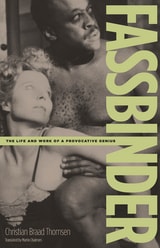
Rainer Werner Fassbinder was the most innovative practitioner of New German Cinema. He worked at breakneck speed and in fourteen years made forty-four films, including Ali: Fear Eats the Soul (1973) and The Marriage of Maria Braun (1978). Fassbinder ruthlessly attacked both German bourgeois society and the larger limitations of humanity, and his films detail the desperate yearning for love and freedom and the many ways in which society defeats that desire.
In Fassbinder, Christian Thomsen, a close friend of the director, illuminates Fassbinder’s body of work while revealing his insider views of a man who, despite a furious temper, manic working habits, and rampant drug addiction, supported an extended family—including his mother, a string of male lovers, lovelorn women, and even a pair of frustrated wives—with his intoxicating and prolific imagination. This book, like Fassbinder’s often-used image of the mirror, brilliantly reflects the sexual, political, and overwhelmingly human contradictions inherent in the life of this intensely creative man and the remarkable films he directed.
Fast Forward
The Aesthetics and Ideology of Speed in Russian Avant-Garde Culture, 1910–1930Tim Harte
University of Wisconsin Press, 2009
Although modernism arrived somewhat late in Russia, the increased tempo of life at the start of the twentieth century provided Russia’s avant-garde artists with an infusion of creative dynamism and crucial momentum for revolutionary experimentation. In Fast Forward Tim Harte presents a detailed examination of the images and concepts of speed that permeated Russian modernist poetry, visual arts, and cinema. His study illustrates how a wide variety of experimental artistic tendencies of the day—such as “rayism” in poetry and painting, the effort to create a “transrational” language (zaum’) in verse, and movements seemingly as divergent as neo-primitivism and constructivism—all relied on notions of speed or dynamism to create at least part of their effects.
Fast Forward reveals how the Russian avant-garde’s race to establish a new artistic and social reality over a twenty-year span reflected an ambitious metaphysical vision that corresponded closely to the nation’s rapidly changing social parameters. The embrace of speed after the 1917 Revolution, however, paradoxically hastened the movement’s demise. By the late 1920s, under a variety of historical pressures, avant-garde artistic forms morphed into those more compatible with the political agenda of the Russian state. Experimentation became politically suspect and abstractionism gave way to orthodox realism, ultimately ushering in the socialist realism and aesthetic conformism of the Stalin years.
Fast and Furious Franchising
How the Serialized Blockbuster Remade HollywoodDan Hassler-Forest
University of Minnesota Press, 2026
What the popularity of the Fast and Furious film franchise says about Hollywood blockbusters and media production
Fast and Furious Franchising charts the transformation of Hollywood through the story of one of its most successful cinematic universes. Released in 2001, The Fast and the Furious became an unexpected hit, developing into a seven-billion-dollar media franchise with nine direct sequels (so far), one “sidequel,” copious spin-offs, and licensing deals from board games to theme park rides.
Dan Hassler-Forest shows how Fast and Furious paved the way for a new form of serialized storytelling that balanced new distribution practices and expansion into international markets with a savvy awareness of representational politics. By following the series’s development over the past twenty-five years, Fast and Furious Franchising reveals distinct phases that reflect larger media-industrial trends: the postclassical blockbuster era of the early 2000s; the emergence of the megafranchise between 2008 and 2014; the franchise’s “imperial” era, from 2015 through 2019; and the postpandemic crisis era of media saturation and franchise fatigue.
While examining this rapidly changing media landscape, Hassler-Forest offers lively, insightful analyses of the films as they have embraced ever-more-ludicrous plots and unlikely character turns while always maintaining their signature faith in the power of family. As he illuminates the role of the Fast and Furious movies in the global entertainment industry, Hassler-Forest shows how the films’ improbable success proves Dominic Toretto’s adage that, whether “you win by an inch or a mile . . . winning’s winning.”
Retail e-book files for this title are screen-reader friendly with images accompanied by short alt text and/or extended descriptions.
Faster, Higher, Stronger, Comrades!
Sports, Art, and Ideology in Late Russian and Early Soviet CultureTim Harte
University of Wisconsin Press, 2020
With interdisciplinary analysis of literature, painting, and film, Faster, Higher, Stronger, Comrades! traces how physical fitness had an even broader impact on culture and ideology in the Soviet Union than previously realized. From prerevolutionary writers and painters glorifying popular circus wrestlers to Soviet photographers capturing unprecedented athleticism as a means of satisfying their aesthetic ideals, the nation's artists embraced sports in profound, inventive ways. Though athletics were used for doctrinaire purposes, Tim Harte demonstrates that at their core, they remained playful, joyous physical activities capable of stirring imaginations and transforming everyday realities.
Federico Fellini as Auteur
Seven Aspects of His FilmsJohn C. Stubbs
Southern Illinois University Press, 2006
Federico Fellini as Auteur: Seven Aspects of His Films offers a comprehensive auteurist study of the renowned Italian director. Film scholar John C. Stubbs dispenses with a traditional film-career review of the man, focusing instead on the key elements of the filmmaker’s style, the influence of Carl Jung and dreams, the autobiographical depiction of childhood and adolescence, the portrait of the artist, the filmmaker’s working relationship with his wife, Fellini’s comic strategies, and his adaptation of works by others. Each of the aspects is fully contextualized. This examination of the critical elements in Fellini films offers a better understanding of the artistry that is uniquely Fellini.
Feedback
The Video Data Bank Catalog of Video Art and Artist InterviewsKate Horsfield
Temple University Press, 2006
Feelin
Creative Practice, Pleasure, and Black Feminist ThoughtBettina Judd
Northwestern University Press, 2023
How creativity makes its way through feeling—and what we can know and feel through the artistic work of Black women
Feeling is not feelin. As the poet, artist, and scholar Bettina Judd argues, feelin, in African American Vernacular English, is how Black women artists approach and produce knowledge as sensation: internal and complex, entangled with pleasure, pain, anger, and joy, and manifesting artistic production itself as the meaning of the work. Through interviews, close readings, and archival research, Judd draws on the fields of affect studies and Black studies to analyze the creative processes and contributions of Black women—from poet Lucille Clifton and musician Avery*Sunshine to visual artists Betye Saar, Joyce J. Scott, and Deana Lawson.
Feelin: Creative Practice, Pleasure, and Black Feminist Thought makes a bold and vital intervention in critical theory’s trend toward disembodying feeling as knowledge. Instead, Judd revitalizes current debates in Black studies about the concept of the human and about Black life by considering how discourses on emotion as they are explored by Black women artists offer alternatives to the concept of the human. Judd expands the notions of Black women’s pleasure politics in Black feminist studies that include the erotic, the sexual, the painful, the joyful, the shameful, and the sensations and emotions that yet have no name. In its richly multidisciplinary approach, Feelin calls for the development of research methods that acknowledge creative and emotionally rigorous work as productive by incorporating visual art, narrative, and poetry.
Feeling Yellow
Asian Americans and Yellowface in Twenty-First-Century Musical TheatreDonatella Galella
University of Michigan Press, 2026
Feeling Yellow examines how yellowface has persisted on the contemporary musical stage and how Asian Americans have contested yellowface, as they stake their own claim to the theatrical stage and nation state. Donatella Galella boldly argues that the pleasures of musical theatre and the disavowal of systemic anti-Asian racism enable the ongoing portrayal of Asian and Asian American characters by non-Asian actors. Galella offers two concepts to understand these phenomena: feeling yellow and yellowface without yellowed faces. Feeling yellow encapsulates the racialized anger, despair, and alienation of Asian American artists and audiences. Yellowface without yellowed faces denotes subtle ways of conveying Asianness, such as performing Asianness with exaggerated irony, using racialized costumes rather than yellow skin and slanted eye makeup, and setting musicals in fantasy Asian lands populated by multiracial casts.
Galella utilizes musicals such as Thoroughly Modern Millie, Anything Goes, The Mikado, and Soft Power, to understand how Asian and Asian American representation is connected to larger questions: How does racial identity shape emotional reactions to musical theatre? Why does yellowface and anti-Asian racism persist? What are the terms for Asian Americans belonging in the United States? Using a range of approaches from dramaturgy to auto-ethnography and materials from interviews to Reddit posts, Feeling Yellow spotlights Asian American affect, artistry, and activism.
Feeling the Future at Christian End-Time Performances
Jill Stevenson
University of Michigan Press, 2022
The book’s main focus is contemporary Christian End-Time performances and how they theatrically construct encounters with future time—not just images or ideas of a future, but viscerally and immediately real experiences of future time. Author Jill Stevenson’s examples are Hell Houses and Judgement Houses; Rapture House, a similarly styled “walk through drama” in North Carolina; Hell’s Gates, an “outdoor reality drama” in Dawsonville, Georgia; Ark Encounter, a full-size recreation of Noah’s Ark; and Tribulation Trail, an immersive thirteen-scene drama ministry based on the Book of Revelation. The book’s coda considers similarities between these Christian performances and secular survivalist prepper events, especially with respect to constructions of and language about time. In doing so, the author situates these performances within a larger tradition that challenges traditional secular/sacred distinctions and illuminates how the End Times has been employed in our current social and political moment.
Fellini's Films and Commercials
From Postwar to PostmodernFrank Burke
Intellect Books, 2020
Revisiting Burke’s 1996 monograph, this revised and updated edition includes a new preface and an additional chapter on the filmmaker’s work on commercials. Elegantly written and thoroughly researched, this book is essential reading for any Fellini fan or scholar.
Feminism And Documentary
Diane Waldman
University of Minnesota Press, 1999
The first book of essays to explore the intersection of these two vital disciplines.
Documentary and feminist film studies have long been separate or parallel universes that need to converse or collide. The essays in this volume, written by prominent scholars and filmmakers, demonstrate the challenges that feminist perspectives pose for documentary theory, history, and practice. They also show how fuller attention to documentary enriches and complicates feminist theory, especially regarding the relationship between gender and sexuality, race and ethnicity, class and nation.
Feminism and Documentary begins with a substantial historical introduction that highlights several of the specific areas that contributors address: debates over realism, the relationship between filmmaker and subject, historical thinking about documentary and thinking about the historical documentary, biography and autobiography, and the use of psychoanalysis. Other essays, most of which appear here for the first time, range from broad overviews to close analyses of particular films and videos and from discussions of well-known works such as Roger and Me and Don’t Look Back to lesser known texts that might revise the canon. The collection includes an extensive filmography and videography with useful distribution information and a bibliography of work in this neglected area of scholarship. Lucid, sophisticated, and eye-opening, this book will galvanize documentary studies and demonstrate the need for women’s and cultural studies to grapple with visual media. Contributors: Michelle Citron, Northwestern U; Gloria J. Gibson, Indiana U; Chris Holmlund, U of Tennessee; Alexandra Juhasz, Pitzer College; Ann Kaneko; Anahid Kassabian, Fordham U; David Kazanjian, U of California, Berkeley; Susan Knobloch; Silvia Kratzer-Juilfs; Deborah Lefkowitz; Julia Lesage, U of Oregon; Laura U. Marks, Carleton U, Ottawa; Paula Rabinowitz, U of Minnesota; Michael Renov, USC; Patricia R. Zimmermann, Ithaca College.
Feminism and the Cinema of Experience
Lori Jo Marso
Duke University Press, 2024
Feminism, Film, Fascism
Women's Auto/biographical Film in Postwar GermanyBy Susan E. Linville
University of Texas Press, 1998
German society's inability and/or refusal to come to terms with its Nazi past has been analyzed in many cultural works, including the well-known books Society without the Father and The Inability to Mourn. In this pathfinding study, Susan Linville challenges the accepted wisdom of these books by focusing on a cultural realm in which mourning for the Nazi past and opposing the patriarchal and authoritarian nature of postwar German culture are central concerns—namely, women's feminist auto/biographical films of the 1970s and 1980s.
After a broad survey of feminist theory, Linville analyzes five important films that reflect back on the Third Reich through the experiences of women of different ages—Marianne Rosenbaum's Peppermint Peace, Helma Sanders-Brahms's Germany, Pale Mother, Jutta Brückner's Hunger Years, Margarethe von Trotta's Marianne and Juliane, and Jeanine Meerapfel's Malou. By juxtaposing these films with the accepted theories on German culture, Linville offers a fresh appraisal not only of the films' importance but especially of their challenge to misogynist interpretations of the German failure to grieve for the horrors of its Nazi past.
Feminist Comedy
Women Playwrights of LondonWillow White
University of Delaware Press, 2024
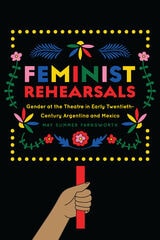
Feminist Rehearsals
Gender at the Theatre in Early Twentieth-Century Argentina and MexicoMay Summer Farnsworth
University of Iowa Press, 2023
2023 George Freedley Memorial Award, Finalist
As feminism gained prominence in twentieth-century popular culture, dramatic conventions progressed accordingly, offering larger and more diverse roles for women characters. Feminist Rehearsals documents the early stages of feminist theatre in Argentina and Mexico, revealing how various aspects of performance culture—spectator formation, playwriting, professional acting and directing, and dramatic techniques—paralleled political activism and championed the goals of the women’s rights movement. Through performance and protest, feminists enacted new identities and pushed for myriad social and legislative reforms during a time when women were denied suffrage and full citizenship status. Together, feminist theatre and demonstrations politicized women spectators’ collective presence and promoted women’s rights in the public sphere.
Feminist Theories for Dramatic Criticism
Gayle Austin
University of Michigan Press, 1990
Feminist Theories for Dramatic Criticism provides a number of useful approaches for analyzing works for the stage from a feminist perspective. Each chapter outlines key feminist theories in a specific field, covering literary criticisms, anthropology, psychology, and film, and then applies these theories in a detailed criticism of one or two plays. Plays by Eugene O'Neill, Arthur Miller, Lillian Hellman, Jane Bowles, Sam Shepard, and Alice Childress—all produced after World War II—are reexamined through the lenses of feminist theorist Judith Fetterley, Gayle Rubin, Nancy Chodorow, and Laura Mulvey, each a key figure in her respective field.
The introduction provides a framework for the discussion of feminist dramatic criticism by presenting the multiple political perspectives within feminism. The contributions of black and lesbian feminists to the question of theory are explored, as are the evolutionary stages of feminist criticism as they have been occurring in other fields. Theater has been slower than most fields to move through these stages, and its trajectory thus far is briefly traced. For the sake of clarity, each of the central chapters treats theories from a particular discipline, but the conclusion reminds us that in practice the theories are most often combined.
The book will appeal to theater scholars and practitioners interested in finding their way into feminist theory for the first time, or in expanding their knowledge of its insights for use in teaching, research, and production. Those in women's studies and other fields will find it shows ways to include plays among the texts they analyze.
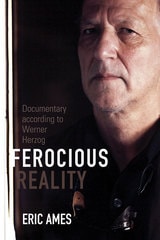
Ferocious Reality
Documentary according to Werner HerzogEric Ames
University of Minnesota Press, 2012
Over the course of his career Werner Herzog, known for such visionary masterpieces as Aguirre: The Wrath of God (1972) and The Enigma of Kaspar Hauser (1974), has directed almost sixty films, roughly half of which are documentaries. And yet, in a statement delivered during a public appearance in 1999, the filmmaker declared: “There are deeper strata of truth in cinema, and there is such a thing as poetic, ecstatic truth. It is mysterious and elusive, and can be reached only through fabrication and imagination and stylization.” Ferocious Reality is the first book to ask how this conviction, so hostile to the traditional tenets of documentary, can inform the work of one of the world’s most provocative documentarians.
Herzog, whose Cave of Forgotten Dreams was perhaps the most celebrated documentary of 2010, may be the most influential filmmaker missing from major studies and histories of documentary. Examining such notable films as Lessons of Darkness (1992) and Grizzly Man (2005), Eric Ames shows how Herzog dismisses documentary as a mode of filmmaking in order to creatively intervene and participate in it. In close, contextualized analysis of more than twenty-five films spanning Herzog’s career, Ames makes a case for exploring documentary films in terms of performance and explains what it means to do so. Thus his book expands the field of cinema studies even as it offers an invaluable new perspective on a little studied but integral part of Werner Herzog’s extraordinary oeuvre.
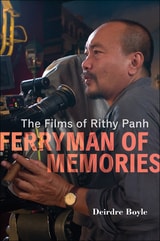
Ferryman of Memories
The Films of Rithy PanhDeirdre Boyle
Rutgers University Press, 2023
Fictions of the Bad Life
The Naturalist Prostitute and Her Avatars in Latin American Literature, 1880–2010Claire Thora Solomon
The Ohio State University Press, 2014
Fictions of the Bad Life illustrates how at very different moments—the turn of the twentieth century, the 1920s–30s, and finally the turn of the twenty-first century—the past is rewritten to accommodate contemporary desires for historical belonging and national identity, even as these efforts inevitably re-inscribe the repressed colonial history they wish to change.
Fictions of the Real
Synergies Between Screen and Stage in Argentine PerformanceBrenda Werth
University of Michigan Press, 2026
Brenda Werth’s Fictions of the Real traces the transformation of “the real” and its transnational conceptualization by Argentine artists in the twenty-first century, focusing on artists who engage in both documentary theater and filmmaking. Werth places the work of Lola Arias, Romina Paula, Federico León, Mariano Pensotti, and Grupo Krapp in dialogue with the distinct but intertwined lineages of theater and film, exploring the intermedial dimensions of these artists’ theatrical work, resonances in their documentary films, and the transmedial relationships between their documentary plays and films. Focusing on the dynamic and shifting context of Argentina between 1998 and 2023, a period roughly bookmarked by the economic crisis of 2001 and the COVID-19 pandemic, this book explores how these artists disrupt the relations of power and counter political manipulation with their own evocative fictions of the real as they engage in the roles of translators, curators, researchers, archivists, and collaborators.
Fidel between the Lines
Paranoia and Ambivalence in Late Socialist Cuban CinemaLaura-Zoë Humphreys
Duke University Press, 2019
Fierce Unworking
Ko Murobushi
Diaphanes, 2025
Ko Murobushi was one of the most important performers and choreographers in the Japanese performance scene of the twenty-first century and a key figure in the mediation between the experimental Butoh tradition of Hijikata Tatsumi and anti-logocentric French avant-gardes such as Antonin Artaud and Gilles Deleuze. Radically positioned at the intersection of the two movements, Murobushi reveals himself as an extraordinary and poetic author in his “thinking of the body.”
Fierce Unworking highlights his role as an unparalleled pioneer of contemporary paradigms such as body language, the third space, and embodied knowledge. Published ten years after his death, this volume brings together writings, poems, and diary fragments—many of which are available in English for the first time—in collaboration with the Ko Murobushi Archive in Tokyo.
Fierce and Delicate
Essays on Dance and IllnessRenée K. Nicholson
West Virginia University Press, 2021
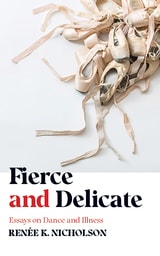
Renée Nicholson’s professional training in ballet had both moments of magnificence and moments of torment, from fittings of elaborate platter tutus to strange language barriers and unrealistic expectations of the body. In Fierce and Delicate, she looks back on the often confused and driven self she had been shaped into—always away from home, with friends who were also rivals, influenced by teachers in ways sometimes productive and at other times bordering on sadistic—and finds beauty in the small roles she performed. When, inevitably, Nicholson moved on from dancing, severed from her first love by illness, she discovered that she retained the lyricism and narrative of ballet itself as she negotiated life with rheumatoid arthritis.
An intentionally fractured memoir-in-essays, Fierce and Delicate navigates the traditional geographies of South Florida, northern Michigan, New York City, Milwaukee, West Virginia, and also geographies of the body—long, supple limbs; knee replacements; remembered bodies and actual. It is a book about the world of professional dance and also about living with chronic disease, about being shattered yet realizing the power to assemble oneself again, in a new way.
Fierce and True
Plays for Teen AudiencesChildren’s Theatre Children’s Theatre Company
University of Minnesota Press, 2010
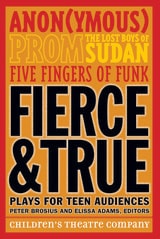
In an effort to reach out to and engage these young people, the CTC began to commission and produce plays aimed at a twelve- to eighteen-year-old audience, focusing on the complexities, idiosyncrasies, and epic dilemmas in the lives of young people. Fierce and True collects four of these critically acclaimed plays: Anon(ymous) by Naomi Iizuka, The Lost Boys of Sudan by Lonnie Carter, Five Fingers of Funk by Will Power, and Prom by Whit MacLaughlin and New Paradise Laboratories.
Professional, full-length works not about teens so much as they are written for them. Ambitious, surprising, and complex, these plays speak directly to teens without pandering to them; they engage, challenge, and respect teenage minds. Diverse and utterly unique, these playwrights are bound together by the excellence of their craft and the power of their storytelling. Fierce and True both redefines the field of theater for young people and provides an invaluable resource for theater professionals, educators, and the teens they serve.

Fifty Years of "The Battle of Algiers"
Past as PrologueSohail Daulatzai
University of Minnesota Press, 2016
The Battle of Algiers, a 1966 film that poetically captures Algerian resistance to French colonial occupation, is widely considered one of the greatest political films of all time. With an artistic defiance that matched the boldness of the anticolonial struggles of the time, it was embraced across the political spectrum—from leftist groups like the Black Panther Party and the Palestine Liberation Organization to right-wing juntas in the 1970s and later, the Pentagon in 2003. With a philosophical nod to Frantz Fanon, Sohail Daulatzai demonstrates that tracing the film’s afterlife reveals a larger story about how dreams of freedom were shared and crushed in the fifty years since its release. As the War on Terror expands and the “threat” of the Muslim looms, The Battle of Algiers is more than an artifact of the past—it’s a prophetic testament to the present and a cautionary tale of an imperial future, as perpetual war has been declared on permanent unrest.
Forerunners: Ideas First is a thought-in-process series of breakthrough digital publications. Written between fresh ideas and finished books, Forerunners draws on scholarly work initiated in notable blogs, social media, conference plenaries, journal articles, and the synergy of academic exchange. This is gray literature publishing: where intense thinking, change, and speculation take place in scholarship.
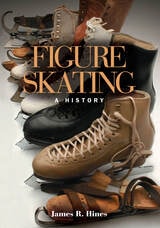
Figure Skating
A HIstoryJames R. Hines
University of Illinois Press, 2005
The only comprehensive history of figure skating in over forty years
Figure skating, unique in its sublimely beautiful combination of technical precision, musicality, and interpretive elements, has undergone many dramatic developments since the only previous history of the sport was published in 1959. This exciting and information-packed new history by James R. Hines explains skating’s many technical and artistic advances, its important figures, its intrigues and scandals, and the historical high points during its long evolution.
Hines divides his history into three periods separated by the World Wars. In the first section, he follows functional and recreational ice skating through its evolution into national schools, culminating in the establishment of the International Skating Union and the ascendancy of an international style of skating. The second section explains the changes that occurred as the sport expanded into the form we recognize and enjoy today, and the final section shows how skating became increasingly athletic, imaginative, and intense following World War II, as the main focus turns to skaters themselves. The profiles include some 148 World and Olympic Champions as well as others who, in Dick Button’s words, "left the sport better because they were in it."
Beginning with mythological tales from twelfth- and thirteenth-century Scandinavians, Hines describes hundreds who have contributed to the sport. They include figure skating’s patron saint Lydwina of Schiedam, whose late-fourteenth-century skating tumble has been documented in a woodcut; Ulrich Salchow and Axel Paulsen, who gave their names to distinctive jumps; Madge Syers, who entered and medaled at the previously all-male World Championships in 1902; and Sonja Henie, who took skating to the silver screen. The history ends with the 2002 skating season, when Maria Butyrskaya and Michelle Kwan commanded the most attention and an unfortunate judging decision rocked the pairs’ competition, resulting in the adoption of a new judging system.
Beyond the contributions of individual skaters, Figure Skating also traces the growth of competitions and show skating (professional and amateur), and discussions of relevant social, political, and ethical concerns that have affected the sport. Along with over seventy magnificent historical pictures spread throughout the book, a very special gallery features the picture of every world and Olympic champion. Figure Skating is an informative and inspiring resource, sure to be enjoyed by anyone who has ever skated recreationally or in competition as well as by the many fans who have this beautiful sport as spectators.
Figures of Resistance
Essays in Feminist TheoryTeresa de Lauretis. Edited and with an Introduction by Patricia White
University of Illinois Press, 2006
Figures of Time
Affect and the Television of PreemptionToni Pape
Duke University Press, 2019