Results by title
314 books match the query 'Plants' and 37 start with f
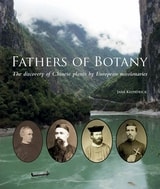
Fathers of Botany
The Discovery of Chinese Plants by European MissionariesJane Kilpatrick
Royal Botanic Gardens, Kew, 2014
But as Jane Kilpatrick shows in Fathers of Botany, the first Westerners to come upon and document this bounty were in fact cut from a different cloth: the clergy. Following the Opium Wars, European missionaries were the first explorers to dig further into the Chinese interior and send home evidence of one of the richest and most varied floras ever seen, and it was their discoveries that caused a sensation among Western plantsmen. Both men of faith and talented botanists alike, these missionaries lent their names to many of the plants they discovered, but their own stories disappeared into the leaf litter of history. Drawing on their letters and contemporary accounts, Kilpatrick focuses on the lives of four great French missionary botanists—Pères Armand David (of Davidia involucrata—the dove tree—and discoverer of the giant panda), Jean Marie Delavay, Paul Guillaume Farges, and Jean André Soulié—as well as a group of other French priests, Franciscan missionaries, and a single German Protestant pastor who all amassed significant plant collections, as she unearths a lost chapter of botanical history. In so doing, she reminds today’s gardeners and botanists—and any of us who stop to smell the roses—of the enormous debt owed to these obscure fathers of botany.

Feeding Strategy
Jennifer Owen
University of Chicago Press, 1982
Among both plants and animals elaborate strategies have evolved for exploring the surrounding life as food. The feeding behavior of predators is based on a search and strike strategy. In contrast, grazers live surrounded by their food and are relatively immobile. Such animals as impalas and grasshoppers, whose persistent feeding make them ready prey, have evolved means of avoiding the notice of predators or methods of speedy escape. Plants that digest animal tissue have evolved complex and devious means to attract prey.
The variations in style of these feeding encounters and the precision involved in some of the feeding mechanisms are the themes of Feeding Strategy.
Ferns
Robert H. Mohlenbrock
Southern Illinois University Press, 1999
Perhaps no other group of plants attracts more interest among both professional and amateur botanists than ferns. As early as 1846, when one of the first lists of Illinois plants was published, sixteen species of ferns were already known in the state. The longtime interest of a great many people makes the distribution of ferns better known than that of any other group of plants in Illinois.
This detailed account of ferns and fern-allies was first published in 1967 as the first volume in the series The Illustrated Flora of Illinois. Eminent botanist Robert H. Mohlenbrock has now revised Ferns to include twenty-five additional taxa of ferns that have since been discovered in Illinois. In addition, numerous nomenclatural changes have occurred for plants already known in the state.
The introductory information of Ferns includes discussions of the morphology and life history of the ferns and fern-allies, the taxonomic history of the group in Illinois, and the habitats where they can be found.
The semitechnical keys and descriptions, familiar to the professional botanist, have been simplified for the novice and are accompanied by a glossary and a profuse use of illustrations. A new key has been included for the additional ferns. Two general keys enable the reader to identify the order and the genus of the fern or fern-ally in question. One of these is designed for use with specimens that have sporangia; the other is for use with sterile specimens. The keys are composed of a hierarchy of characteristics for determining the order, family, and genus of any given specimen. Once a genus is ascertained, the reader can apply its key to more than one species of the same genus.
Each species has its own description, statement of habitat and range, Illinois distribution, map, discussion, synonymy, and full-page line illustration showing its diagnostic characteristics.
Field Guide to Coastal Wetland Plants of the Northeastern United States
Ralph W. Tiner
University of Massachusetts Press, 1987
Coastal wetlands are among our most important fish and wildlife habitats. For example, over two-thirds of our recreationally and commercially important marine fishes depend on coastal marshes and associated waters for nursery and spawning grounds.
This book is arranged in four major sections: (1) Coastal Wetland Ecology: A General Overview, (2) Identification of Coastal Wetland Plants, (3) Wetland Plant Descriptions and Illustrations, and (4) Places to Observe Coastal Wetlands, and (5) Sources of Other Information. In addition , a list of references used in preparing this book and a glossary of technical terms are provided.

Field Guide to Tidal Wetland Plants of the Northeastern United States and Neighboring Canada
Vegetation of Beaches, Tidal Flats, Rocky Shores, Marshes, Swamps, and Coastal PondsRalph W. Tiner
University of Massachusetts Press, 2009
First published in 1987, Ralph W. Tiner's A Field Guide to Coastal Wetland Plants of the Northeastern United States soon established itself as the definitive work on its subject. Now Tiner has prepared a revised and expanded edition, broadening the coverage both botanically and geographically. It emphasizes plant identification and includes descriptions of over 700 species and illustrations of approximately 550 species. More tidal wetland types are covered (beaches, rocky shores, and tidal swamps) and the geographic scope extends as far north as Canada's Maritime Provinces.
Field Guide to Wildflowers of Nebraska and the Great Plains
Second EditionJon Farrar
University of Iowa Press, 2012
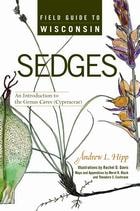
Field Guide to Wisconsin Sedges
An Introduction to the Genus Carex (Cyperaceae)Andrew L. Hipp; Illustrations by Rachel D. Davis; Maps and Appendices by Merel R. Black and Theodore S. Cochrane
University of Wisconsin Press, 2008
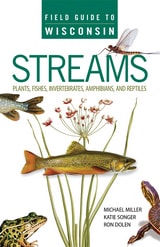
Field Guide to Wisconsin Streams
Plants, Fishes, Invertebrates, Amphibians, and ReptilesMichael A. Miller, Katie Songer, and Ron Dolen
University of Wisconsin Press, 2014
More than 1,000 images illustrate the species in this field guide. These images are augmented by detailed ecological and taxonomic notes, descriptions of look-alike species, and distribution maps. The guide identifies:
• more than 130 common plants
• all 120 fishes known to inhabit Wisconsin streams
• 8 crayfishes
• 50 mussels
• 10 amphibians
• 17 reptiles
• 70 families of insects
• other commonly found invertebrates.
Best Regional General Interest Books, selected by the American Association of School Librarians
Best Regional General Interest Books, selected by the Public Library Reviewers
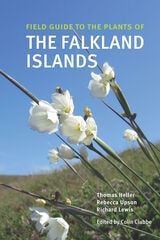
Field Guide to the Plants of the Falkland Islands
Thomas Heller, Rebecca Upson, and Richard Lewis
Royal Botanic Gardens, Kew, 2018
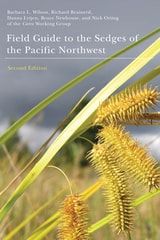
Field Guide to the Sedges of the Pacific Northwest
Second EditionBarbara J. Wilson, Richard Brainerd, Danny Lytjen, Bruce Newhouse, and Nick Otting of the Carex Working Group
Oregon State University Press, 2014
Sedges can be difficult to identify, with differences between species based on small, technical characters. This comprehensive guide contains identification keys, descriptions, more than 650 color photographs, and distribution maps for each species, providing users with helpful tools and tips for identifying the plants in this challenging group. Information about sedge ecology, habitat, management and restoration, ethnobotanical uses, and propagation enhances the guide’s utility.
Field Guide to the Sedges of the Pacific Northwest provides an invaluable resource for botanists, land managers, restoration ecologists, and plant enthusiasts. And, as the genus Carex becomes increasingly important amongst landscapers, nurseries, and gardeners, the guide will serve as a handy tool for choosing Northwest natives for the garden.
Field Guide to the Wild Flowers of the Western Mediterranean, Second Edition
Chris Thorogood
Royal Botanic Gardens, Kew, 2021
The western Mediterranean—running from Italy to Portugal and encompassing Corsica, Sardinia, the Balearic Islands, and coastal North Africa—is one of the most biodiverse regions in the world, home to more than 10,000 plant species. This updated edition of the Field Guide to the Wild Flowers of the Western Mediterranean is the most comprehensive plant identification guide to the area. Covering more than 2,500 plants, this accessible guide focuses on the most common and conspicuous species that occur in the area, with descriptions, color photographs, and illustrations throughout. The book also includes sections on where to find native plants in the wild, as well as a glossary of terms. An ideal companion for wildlife and plant enthusiasts, this guide will enable even the most botanically blind to reliably identify native flora in the sunny and coastal climes of the western Mediterranean.
Field Guide to the Wild Plants of Oman
Helen Pickering and Annette Patzelt
Royal Botanic Gardens, Kew, 2008
This compact volume is a handy, thorough guide to the wild plants found in the small Middle Eastern nation of Oman. A short introduction provides an overview of Oman’s geography and remarkable environmental diversity, followed by catalog of more than 250 common species of plants, enhanced by color photographs designed to assist with quick identification in the field. Descriptive accounts—including details of habitat, uses, and worldwide distribution—round out the individual entries, while a glossary of botanical terms, a bibliography, and an index of scientific and vernacular names combine to make this an invaluable reference.
Field Guide to the Wildflowers of the Western Mediterranean
Chris Thorogood
Royal Botanic Gardens, Kew, 2016
Field Manual of Michigan Flora
Edward G. Voss and Anton A. Reznicek
University of Michigan Press, 2012
Field Manual of Michigan Flora is the most up-to-date guide available for all seed plants growing wild in Michigan. Significantly expanding and updating the three-volume Michigan Flora, the book incorporates the discoveries of numerous additional species, recent systematic research, and a vast trove of new information on the shifting distributions of Michigan species. It presents concise identification keys, information about habitats, and completely updated distribution maps for all the seed plants, native or naturalized, that have been recorded from the state, fully treating over 2,700 species. All non-native species are included with notes on their first discovery in the state and comments on invasive tendencies. Rare native species that appear to be declining or to have shrinking ranges are also noted. This book is an essential reference for anyone interested in appreciating Michigan's natural heritage and understanding our ever-changing environment.
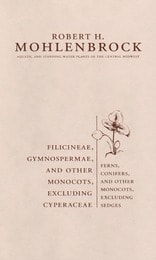
Filicineae, Gymnospermae and Other Monocots Excluding Cyperaceae
Ferns, Conifers, and Other Monocots Excluding SedgesRobert H. Mohlenbrock
Southern Illinois University Press, 2006
The second in a series of four illustrated guides to identifying aquatic and standing water plants in the central Midwest, this convenient reference volume includes descriptions, nomenclature, ecological information, and identification keys to plants in all of the monocot families except sedges—which are covered in the first volume in the series—that are found in Kentucky (except for the Cumberland region), Ohio, Indiana, Illinois, Iowa, Missouri, Kansas, and Nebraska.
Monocots covered in this volume include ferns, conifers, grasses, rushes, orchids, duckweeds, irises, sweet flags, arrowheads, aroids, flowering rushes, pipeworts, frog-bits, arrowgrasses, naiads, pickerelweeds, pondweeds, bur reeds, cattails, and yellow-eyed grasses. Robert H. Mohlenbrock includes three types of plants: submergents, those that spend their entire lives with their vegetative parts either completely submerged or at least floating on the water’s surface; emergents, which are typically rooted underwater with their vegetative parts standing out of water; and a third category of plants that live most of their lives out of water, but which may live in water at least three months a year.
With taxa arranged alphabetically, the volume is well organized and easy to use. In addition, basic synonymy, description, distribution, comments, and line drawings show the habits and distinguishing features for each plant. Habitat and nomenclatural notes are also listed, as are the official wetland designations given by the U.S. Fish and Wildlife Service.
Filicineae, Gymnospermae, and Other Monocots, Excluding Cyperaceae is a useful standard reference for state and federal employees who deal with both aquatic and wetland plants and environmental conservation and mitigation issues. It is furthermore an essential guide for students and instructors in college and university courses focusing on the identification of aquatic and wetland plants.
Flora Zambesiaca Volume 13 (3) Hyancinthaceae
Edited by Benoit Loeuille
Royal Botanic Gardens, Kew, 2023
The Flora Zambesiaca series provides comprehensive descriptive accounts of the flowering plants and ferns native and naturalized in Zambia, Malawi, Mozambique, Zimbabwe, Botswana, and the Caprivi Strip. Volume 14 covers the Hyancinthaceae in its entirety, including detailed plant descriptions and botanical illustrations to aid identification.
Flora Zambesiaca Volume 3 Part 4
Papilionoideae: IndigofereaeEdited by J. R. Timberlake and E. S. Martins
Royal Botanic Gardens, Kew, 2013

Flora Zambesiaca Volume 8 Part 5
Acanthaceae: Pseudocalyx to CrossandraEdited by J. R. Timberlake and E. S. Martins
Royal Botanic Gardens, Kew, 2013

Flora Zambesiaca Volume 8 Part 8
Labiatae, Pogostemonoideae to Nepetoideae Tribe MentheaeEdited by J. R. Timberlake and E. S. Martins
Royal Botanic Gardens, Kew, 2013
Published in paperback following a modified Bentham & Hooker system, as parts or as whole volumes as and when they are complete.
Flora of the Guianas Series A
Phanerogams Fascicle 29: 127 SapindaceaeEdited by Sylvia Mota de Oliveira
Royal Botanic Gardens, Kew, 2013
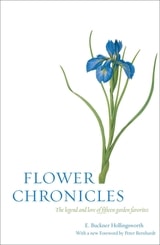
Flower Chronicles
E. Buckner Hollingsworth
University of Chicago Press, 2004
A tremendously entertaining and charming book, not only for its richness of information but because Hollingsworth clearly enjoys her material, Flower Chronicles has an antiquarian feel about it-with line drawings, woodcuts, and translations from the Greek—but the text never feels dated. Out of print for nearly thirty years, Flower Chronicles reemerges as a garden literature classic.
"With humor and literary taste, Mrs. Hollingworth has compiled an astonishing amount of scholarly yet entertaining material from her studies in archaeology and mythology and her researches in ancient pharmacopeias, botanies, cookbooks, herbals, and stillroom books."-New Yorker
"Mrs. Hollingsworth writes gaily and quotes from old books, with a wonderful taste for the curious English of Elizabethan gardeners, and sharp notice of what poets and translators of talent have set down. To this she has added the excitement of discovery of forms not noticed by her predecessors."-New York Herald Tribune Book Review

Flower Day
A Story of 24 Hours and 24 Floral LivesSandra Knapp
University of Chicago Press, 2025
Is it 4 AM or chicory o’clock? In this short book, botanist and award-winning author Sandra Knapp walks us through a day in a global garden. Each chapter of Flower Day introduces a single flower during a single hour, highlighting twenty-four different species from around the world.
Beginning at midnight in the Americas, we spot the long tubular flowers of the moonflower, Ipomoea alba; they attract a frenzy of hawk moths before the dawn arrives and the flowers wither and collapse. As day breaks, dandelions and chicory open their heads—actually made up of many individual flowers tightly packed together—and flies and bees visit to get the energy they need to lay eggs and raise their young. Later, at eight o’clock in the morning, the sun rises over the watery Amazon basin, and we meet the giant waterlily, slowly turning from white to pink and purple. Trapped inside are the beetles who feasted on the flowers during the night. That evening, at seven o’clock, we travel to the Caribbean to smell night-blooming jessamine’s powerful—some may say nauseating—sweet scent. But this member of the nightshade family isn’t just a thing of beauty—it has a reputation as both a poison and invasive species, crowding out endangered native trees.
For each hour in our flower day, celebrated artist Katie Scott has depicted these scenes with gorgeous pen-and-ink illustrations. Working closely together to narrate and illustrate these unique moments in time, Knapp and Scott have created an engaging read that is a perfect way to spend an hour or two—and a true gift for amateur botanists, gardeners, and anyone who wants to stop and appreciate the flowers.
Flowering Plants
Asteraceae, Part 1Robert H. Mohlenbrock
Southern Illinois University Press, 2015
This, the first of three volumes on the aster family planned for the Illustrated Flora of Illinois series, recognizes 388 species in 119 genera, as well as 20 hybrids and 73 lesser taxa. In Asteraceae, Part 1, author Robert Mohlenbrock presents new and historic information in a clear and easy-to-read style. The volume provides an easy-to-use key to the genera and species and a complete description and nomenclatural and habitat notes for each plant, including its usefulness, if applicable. New nomenclatural combinations are shown for several species. The precise illustrations and detailed information allow for the identification of some of the most difficult to identify plants in the state—goldenrods, asters, artemisias, and fleabanes, among others. Includes 128 original illustrations by Paul Nelson.
Flowering Plants
Asteraceae, Part 2Robert H. Mohlenbrock
Southern Illinois University Press, 2019
In addition, Mohlenbrock has identified the overall range for each species in Illinois, compiled from various sources, including examinations of herbarium material and Mohlenbrock’s own field studies. The range is given from the northeastern to the northwestern extremities, south to the southwestern limit, and then eastward to the southeastern limit.
As important to amateurs interested in wildflower identification as to botanists and land planners, this second volume of Mohlenbrock’s Asteraceae is an essential addition to the esteemed Illustrated Flora of Illinois series.
Flowering Plants
Asteraceae, Part 3Robert H. Mohlenbrock
Southern Illinois University Press, 2017
In addition, Mohlenbrock has identified the overall range for each species in Illinois, compiled from various sources, including examinations of herbarium material and Mohlenbrock’s own field studies. The overall range for each species is given from the northeastern to the northwestern extremities, south to the southwestern limit, then eastward to the southeastern limit.
As important to amateurs interested in wildflower identification as to professional botanists and land planners, this last volume of Mohlenbrock’s Asteraceae is an essential addition to the esteemed Illustrated Flora of Illinois series.
Flowering Plants
Basswoods to SpurgesRobert H. Mohlenbrock
Southern Illinois University Press, 1982
This is the fourth volume in The Illustrated Flora of Illinois devoted to dicotyledons, or dicot plants. Dicots are the greatest group of flowering plants, exceeding the monocotyledons, or monocots. Dicots produce a pair of seed leaves during germination while monocots produce only a single seed leaf.
This volume contains four orders and ten families of dicots. The orders included in this volume are Malvales, Urticales, Rhamnales, and Euphorbiales. Within the Malvales are the families Tiliaceae, Sterculiaceae, and Malvaceae. The families Ulmaceae, Moraceae, and Urticaceae comprise the Urticales. Rhamnaceae and Elaeagnaceae make up the Rhamnales. The Euphorbiales include only the Thymelaeceae and the Euphorbiaceae.
Flowering Plants
Lilies to OrchidsRobert H. Mohlenbrock
Southern Illinois University Press, 1970
A continuation of “The Illustrated Flora of Illinois” series, this volume features Illinois flowering plants. This series is designed to provide a working reference for the identification and classification of all the plant forms found in the state. This series is the first of its kind, as no other study of this sort has been undertaken in any other state, and as such, is an unparalleled contribution to its field.
In his introduction to this volume, Mr. Mohlenbrock discusses some of the terms and procedures used in the identification and classification of the plants. He outlines the life histories and morphologies of some of the representative monocots, and also illustrates some of their habits and frequencies in Illinois. Since these volumes are meant to be used by the amateur as well as the professional botanist, the methods and terms used in the text are explained. The directions for the use of the various identification keys are given so that even the novice plant lover will be able to identify the species encountered. For the uninitiated, a glossary is provided which gives definitions for all terms that might be unfamiliar.
All necessary aids to identification are included in the text itself. The identification keys make it initially possible to classify the plants according to order, family, genus and finally, species and the identifying characteristics of each descending class are given in detail. The morphology of each species is outlined, along with data on frequency of occurrence, related soil and climate conditions and history of past collections, and history of past collections. An illustration showing the more important features of the species in detail is included with the description, as well as a map indicating its geographical locations in Illinois.
This book will be invaluable to students, teachers and professionals; particularly those who are interested in observing the plants in their natural habitat. Those who use it will find it possible to obtain a broad view of changing plant forms as they relate to soil and climate variations throughout the state. And it will provide a delightful diversion for all who enjoy viewing beautiful forms in nature. A walk through the forest will become an opportunity for discovery and appreciation.
Flowering Plants
Magnolias to Pitcher PlantsRobert H. Mohlenbrock
Southern Illinois University Press, 1981
This volume, the eighth devoted to flowering plants in the Illustrated Flora of Illinois series, is the third of several devoted to dicotyledons, which include such well-known plants as roses, peas, mustards, mints, nightshades, milkweeds, and asters. Mohlenbrock here represents four orders (Annonales, Berberidales, Nymphaeales, and Sarraceniales) and fifteen families of plants. As in previous volumes in this series, the common names are those used locally in Illinois. An illustration of each species depicts the distinguishing features and the habitat in Illinois.
Flowering Plants
Nightshades to MistletoeRobert H. Mohlenbrock
Southern Illinois University Press, 1990
This sixth volume of dicots contains three orders and eight families. The orders included are Solanales, Campanulales, and Santalales. Within the Solanales are the families Solanaceae, Convolvulaceae, Cuscutaceae, and Polemoniaceae. The Campanulales contain only the family Campanulaceae. The Santalales include the families Celastraceae, Santalaceae, and Viscaceae. As with each volume in this series Mohlenbrock includes a complete plant description, illustrations showing diagnostic features, distribution maps, and ecological notes.
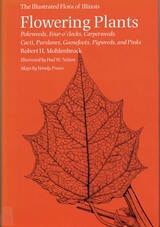
Flowering Plants
Pokeweeds, Four-o'clocks, Carpetweeds, Cacti, Purslanes, Goosefoots, Pigweeds, and PinksRobert H. Mohlenbrock
Southern Illinois University Press, 2001
Robert H. Mohlenbrock provides a definitive account of the pokeweed, four-o'clock, carpetweed, cactus, purslane, goosefoot, pigweed, and pink families in Illinois.
Flowering Plants: Pokeweeds, Four-o’clocks, Carpetweeds, Cacti, Purslanes, Goosefoots, Pigweeds, and Pinks is the fifteenth volume of the Illustrated Flora of Illinois series and the ninth devoted to dicots, or plants that have two seed-leaves, or cotyledons, upon germination. Each of the 141 plants is beautifully illustrated by Paul W. Nelson.
Nelson shows the full habitat of the plant and close-ups of various vegetative and reproductive structures that are crucial for the identification of individual species. Each illustration includes detailed drawings of the flowers, fruits, and seeds of the plant covered. Mohlenbrock provides a complete description of each species as well as a discussion of the nomenclature and habitats, and his fifty-three years of experience enable him to present little-known diagnostic features for many species. Range maps show the county distribution of each species in Illinois. Mohlenbrock includes a statement giving the overall range of each species in the United States as well as a detailed key for the identification of the species.
Flowering Plants contains many plants whose obscure flower parts make them exceedingly difficult to identify. The close-up illustrations of these parts will aid the user of the book immensely in identification of the species. Included are several species previously unknown in Illinois.
New illustrations, which include detailed drawings of the flowers, fruits, and seeds are presented for each species covered in this book. Mohlenbrock’s fifty-three years of experience enable him to present little-known diagnostic features for many species.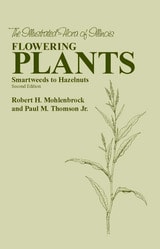
Flowering Plants
Smartweeds to HazelnutsRobert H. Mohlenbrock and Paul M. Thomson Jr.
Southern Illinois University Press, 2009
Since the publication of the first edition of Smartweeds to Hazelnuts in 1987, thirteen additional species and one hybrid have been discovered in Illinois. In addition, numerous nomenclatural changes have occurred for plants already known.
This second edition updates the status of the Polygonaceae, Hamamelidaceae, Platanaceae, Fagaceae, Betulaceae, and Corylaceae in Illinois. Each of the newly discovered species has been added and is fully illustrated. Updated nomenclature as well as Illinois distributional data are included for each species. In addition to the fourteen new plant illustrations, the appendix contains new information on the descriptions and the geographical locations of plants in the first edition, and revised identification keys.
Robert H. Mohlenbrock and Paul M. Thomson Jr. have included a complete description, illustrations showing diagnostic features, distribution maps, and ecological notes for each plant included in this volume.
This new edition will be invaluable to scholars of botany as well as laypersons interested in observing plants in their natural habitat.
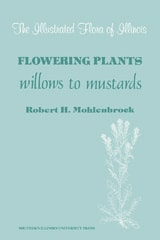
Flowering Plants
Willows to MustardsRobert H. Mohlenbrock
Southern Illinois University Press, 1980
This eighth volume in the comprehensive Illustrated Flora of Illinois series is the seventh volume devoted to flowering plants (the eighth volume is devoted to ferns) and the second treating dicotyledons, which include such well-known plants as roses, peas, mustards, mints, nightshades, milkweeds, and asters. The previous volume on dicots, Flowering Plants: Hollies to Loasas, was published in 1978.
In the present volume, Mohlenbrock includes three orders of vascular plants encompassing five families. The orders are Salicales and Tamaricales, of the Salicaceae and Tamaricaceae families, and Capparidales, of the Capparidaceae, Resedaceae, and Brassicaceae families. In all, 44 genera and 117species are treated in this volume, each species illustrated in detail.
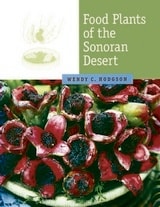
Food Plants of the Sonoran Desert
Wendy C. Hodgson
University of Arizona Press, 2001
The seemingly inhospitable Sonoran Desert has provided sustenance to indigenous peoples for centuries. Although it is to all appearances a land bereft of useful plants, fully one-fifth of the desert's flora are edible.
This volume presents information on nearly 540 edible plants used by people of more than fifty traditional cultures of the Sonoran Desert and peripheral areas. Drawing on thirty years of research, Wendy Hodgson has synthesized the widely scattered literature and added her own experiences to create an exhaustive catalog of desert plants and their many and varied uses.
Food Plants of the Sonoran Desert includes not only plants such as gourds and legumes but also unexpected food sources such as palms, lilies, and cattails, all of which provided nutrition to desert peoples. Each species entry lists recorded names and describes indigenous uses, which often include nonfood therapeutic and commodity applications. The agave, for example, is cited for its use as food and for alcoholic and nonalcoholic beverages, syrup, fiber, cordage, clothing, sandals, nets, blankets, lances, fire hearths, musical instruments, hedgerows, soap, and medicine, and for ceremonial purposes. The agave entry includes information on harvesting, roasting, and consumption—and on distinguishing between edible and inedible varieties.
No other source provides such a vast amount of information on traditional plant uses for this region. Written to be easily accessible to general readers, the book is an invaluable compendium for anyone interested in the desert's hidden bounty.
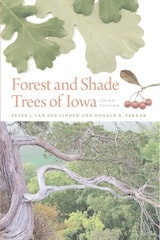
Forest and Shade Trees of Iowa
Peter J. van der Linden
University of Iowa Press, 2011
@font-face { font-family: "Times";}@font-face { font-family: "Palatino";}p.MsoNormal, li.MsoNormal, div.MsoNormal { margin: 0in 0in 0.0001pt; font-size: 12pt; font-family: "Times New Roman"; }div.Section1 { page: Section1; }
Back in print at last in a third edition, the classic Forest and Shade Trees of Iowa now has a wealth of full-color photographs and updated, reorganized information that will please both new and returning readers.
Part 1 of this guide focuses on identification, with user-friendly keys to both summer and winter trees and illustrated descriptions of more than one hundred common species. The trees are arranged according to similarities in foliage; each entry includes a large scan of a leafy branch along with two or three smaller photos of buds, flowers, fruits, and winter twigs. The text contains a description of the species, its geographical distribution, and notes on how to distinguish it from similar species. Part 2 is divided into conifers and flowering trees and includes all trees native to Iowa, trees that are widely planted, invasive species, some less commonly planted trees, and tall native shrubs that might be mistaken for trees. The authors provide information about the natural history of individual trees, their ecological requirements, pests and diseases that affect them, and their usefulness for such different purposes as windbreaks, landscaping, wildlife plantings, fuel, lumber, and food. Following these two main parts, three shorter sections describe the planting and care of trees, Iowa’s forest communities, and good places to see trees in the state; a glossary and a bibliography are also included.
A complete guide to Iowa’s trees, both native and introduced, full of hundreds of color photos, this new edition of Forest and Shade Trees of Iowa will be immensely useful to arborists, foresters, horticulturists, landscape architects, gardeners, and all Iowans and midwesterners who appreciate the beauty and value of trees and want to learn more about them.

Foundations of Tropical Forest Biology
Classic Papers with CommentariesEdited by Robin L. Chazdon and T. C. Whitmore
University of Chicago Press, 2002
Foundations of Tropical Forest Biology makes essential works in the development of tropical biology available in a convenient form to both senior scholars interested in the roots of their discipline and to students encountering the field for the first time, as well as to everyone concerned with tropical conservation.
Freshwater Wetlands
A Guide to Common Indicator Plants of the NortheastDennis W. Magee
University of Massachusetts Press, 1981
Following a brief introduction that discusses the functional values of wetlands and describes their various types, the manual is organized into two major components, the first consisting of keys that are based on life form and arrangement of plant parts, the second consisting of a description of each species. Such factors as range, habitat, general characteristics, stem, leaves, inflorescence, fruit, and similar species are covered in the descriptions.
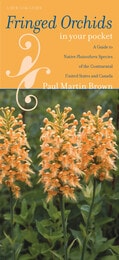
Fringed Orchids in Your Pocket
A Guide to Native Platanthera Species of the Continental United States and CanadaPaul Martin Brown
University of Iowa Press, 2009
Brown provides a description, general distributional information, time of flowering, and habitat requirements for each species as well as a complete list of hybrids and the many different growth and color forms that can make identifying orchids so challenging. For the fringed-lipped orchids, which make up some of the most intriguing and richly colored of all wild orchids, he includes information on fourteen species and thirteen hybrids.
The genus Platanthera is the largest genus of orchids to be found in North America north of Mexico; the fringe-lipped group is found primarily in the eastern U.S. and Canada, extending west to the prairies and Great Plains. The fringed orchids, so-called because of the delicately fringed petals and lips on many of the species, comprise some of the largest and showiest native orchids found in our region. Most of these species are easy to identify based upon their general appearance, range, and time of flowering. Answering three simple questions—when, where, and how does it grow?—and comparing the living plants with the striking photos in the backpack-friendly laminated guide and the information in the simple key should enable both professional and amateur naturalists to achieve the satisfaction of identifying a specific orchid.